WomenInTech. How women from Central Asia are driving innovation and reshaping perceptions of IT

This article tells the stories of two young women from Central Asia who turned their interest in new opportunities into careers in IT and the creation of their own projects. Their experiences are about courage, curiosity, and the desire to change the rules of the game.
Bonu Boboeva, city — Xuzhou, Chief Operating Officer, LinkedIn
About me
I am the Chief Operating Officer at zehnlab.ai. We create AI models and architectures that work not only in typical conditions but also in non-standard situations — for example, when data is scarce, user behavior is unexpected, or requests do not fit into standard patterns.
To prepare models for such scenarios, we use synthetic data — specifically created, realistic examples of complex cases. This allows us to train AI so that it confidently handles reality, not just "laboratory" data.
We apply this approach in various fields — from language models and predictive analytics to computer vision. Our goal is to ensure that AI is not just smart, but truly ready for an unpredictable world.
How I entered the IT profession
My path into technology did not begin with code or mathematics, but with diplomacy. I studied in China, majoring in international relations, and at that time, nine years ago, IT seemed like something completely distant to me. Deep down, I believed in the common stereotype: "humanities and technology are incompatible." But the more I thought about it, the stronger the desire became to prove to myself that this was not true.
In 2020, I started working at Alif Bank — one of the largest and most technologically advanced banks in Tajikistan. Initially, I worked in customer service, and then I moved to HR. It was there that I first encountered analytical tasks and felt a genuine interest: it was important to me not just to communicate with people, but to understand patterns, work with data, and see how numbers turn into decisions.
Later, I moved to the bank's product team, then worked as a middle analyst in a large corporation in Moscow, and after returning to Tajikistan, I joined the team at zypl.ai, and today — I continue my journey at zehn.
My path into IT began with curiosity. While working in HR at Alif Bank, I took on analytical tasks — analyzing data on hiring, performance, and trends. It was like solving a puzzle: the more I dug in, the more interesting it became. I realized I wanted to know more and started learning — I completed top online courses in analytics and programming, as well as offline programs like "Alif Academy" and "Humo Academy." These knowledge opened the door to the bank's product department, where I began working directly with technology. Then came my experience in Moscow as a middle analyst, followed by my return home and work at zypl.ai. For me, IT is not just a job, but a way to constantly challenge myself and grow.

About stereotypes
I have not faced open prejudice. But I clearly remember the general background: especially five or six years ago in Central Asia, IT was considered a "non-female" field. Girls more often chose humanities majors, and the very fact that you were interested in technology caused surprise.
I did not argue. I simply did my job. Each task I solved, each step to a new level — that was my answer.
My story is not about fighting prejudices, but about how you can quietly, consistently, and confidently change the rules around you. Now I see how quickly everything is changing. More and more girls are entering technology not as an exception, but as a norm. And this is the best confirmation that the time of old stereotypes is passing.

Barriers for women in IT
Women in IT sometimes face invisible barriers: their competence may be questioned more often, and their chances for leadership roles may be underestimated. This is not always open discrimination, but rather a quiet expectation that you must prove more than others. I got around this by focusing on my results and constantly learning, so that my skills spoke for themselves. I also sought allies — people who believe in me and provide honest feedback. The most important thing is not to be afraid to speak up about yourself and your ideas.
Recommendations for those just starting their journey
1. Take a step, even if you are afraid: IT is not a closed club; it is an open door. Do not wait for the perfect moment — it will not come. Courage always precedes confidence.
2. Learn quickly — but alongside the right people: your environment is a powerful factor. It either accelerates or slows you down. If those around you doubt themselves and you — you will start to doubt. If those around you are developing, sharing knowledge, and supporting — you will grow too. I was lucky — at every job I had a manager who saw potential in me and gave me space to grow. This is huge support and motivation, which I sincerely appreciate. And it is exactly these people that make the path into IT much easier.
3. Do not strive to be perfect — strive to be curious: mistakes are not failures, but proof that you are moving forward. Ask questions, even if they seem "stupid." It is stupid not to ask when you have the opportunity to learn.
4. Do not conform — show yourself: if you stay silent, stereotypes speak for you. Let your voice be louder. Sometimes one proposed solution is enough to break someone's perception of who "can" succeed in IT.
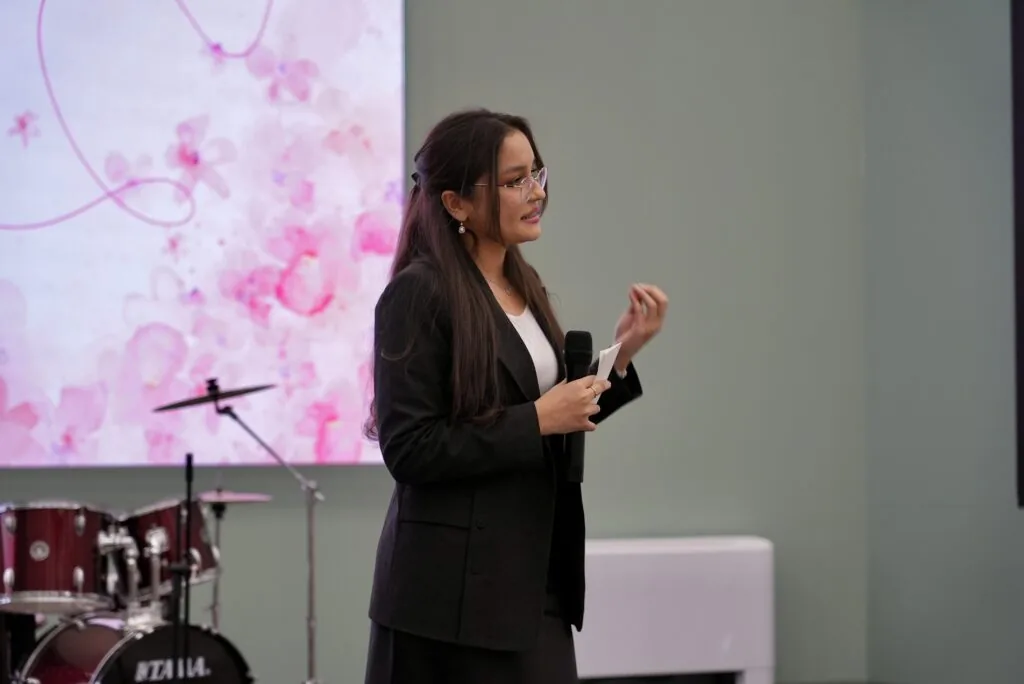
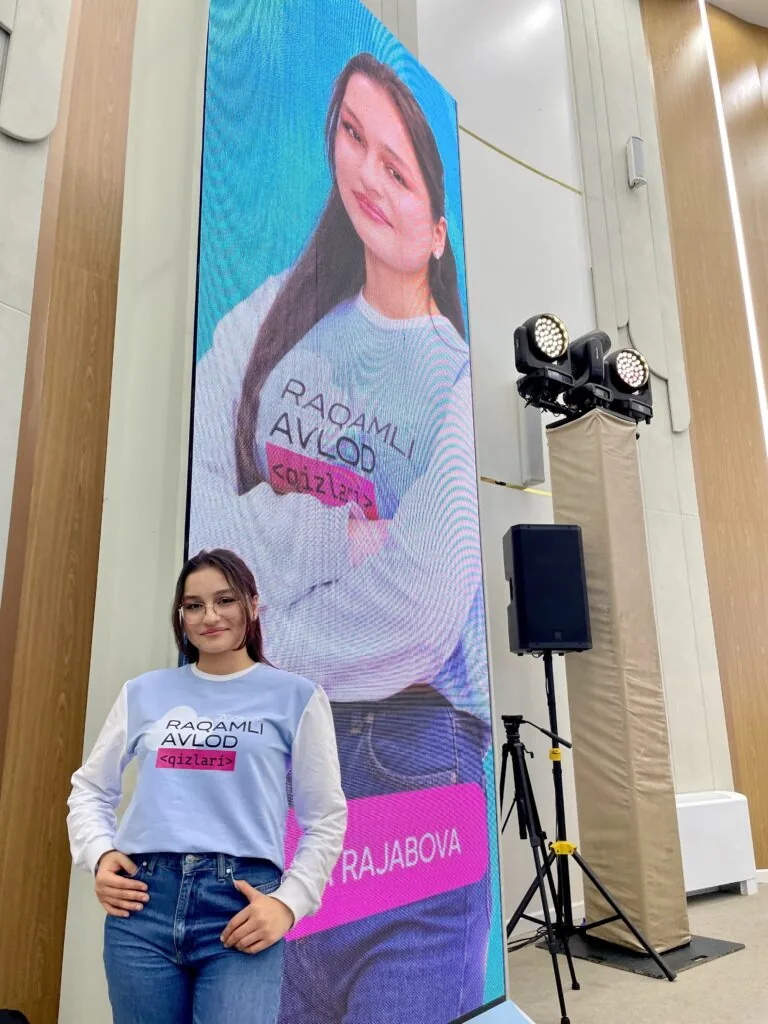
Zuxra Rajabova, city — Tashkent, Computer Science student at University of Szeged, co-founder & CMO at Lumi, extracurricular mentor at Ivyonaire, LinkedIn, Instagram, Telegram
About me
I am from Uzbekistan, and my life is about the intersection of technology, education, and social mission to create new opportunities and provide resources for young people, especially girls. I am the co-founder of the startup Lumi, a platform for early childhood development and family support.
Until today, I have worked on projects and initiatives as an event manager, organizer, and mentor, helping to connect talented beginners with IT experts, building communities where support and experience sharing are valued just as much as knowledge. For me, IT is not just code or algorithms, but a tool, through which social problems can be solved and people can be inspired to go beyond their limits.
How I entered the IT profession
My path began at age 13, when I first participated in Technovation Girls. At that time, I understood almost nothing about terms like MVP, but for the first time I felt that technology could solve global problems. I was inspired by the entire process: from finding an idea to pitching a startup.
Then came projects like Digital Girls Uzbekistan, presentations of various startups, internships at the Ministry of Digital Technologies, international programs in Abu Dhabi, as well as work on Lumi. Each stage was not just a career step, but a step toward understanding: I want to build ecosystems with a large-scale mission that reflect my values, where girls and women do not just participate, but lead. I want everyone to have access to resources, knowledge, and support so they can unlock their potential.
My interest in technology was sparked by my father: whenever something needed to be set up or fixed on the computer at home, he would call me. I liked watching this process and learning something new. Then came the Technovation Girls project, where I first realized that technology could solve real social problems. This inspiration led me to IT courses, coding, and projects where IT became a tool for achieving global goals, such as the SDGs.
About stereotypes
I often encountered phrases like: "IT is not a female field" or "Women are not built for leadership." The most hurtful thing was hearing this from people close to me. These words hurt me, but instead of breaking me, they strengthened my resolve.
This shows how deeply outdated stereotypes and norms are embedded in the minds of some people in society. I often wonder how many women were forced to give up, succumbing to social pressure.
Barriers for women in IT
The main difficulty is the lack of role models and understanding from family or surroundings. Girls often have to create their own "growth environment" for themselves. If for many the path looks direct and clear — there is a goal, and you move toward it — then for women it is often complicated by the need to overcome societal traditions, stereotypes, and imposed paradigms, as well as dealing with other people's opinions.
I was lucky to find support in my family, among communities, and like-minded people I met while participating in projects, volunteer initiatives, and my own endeavors. Networking and hard-earned experience helped me gain confidence in my abilities.
Another serious barrier is "imposter syndrome." Due to upbringing and traditional expectations of female modesty, many are afraid to openly talk about their achievements. This makes it difficult to ask for a raise, accept new positions, or declare their ambitions. I am convinced that we need to learn to value our own work, speak about results out loud, and support each other on this path.

Recommendations for those just starting their journey
Do not be afraid to start. Fear is an indicator of growth, a sign that you are encountering something new that requires stepping out of your comfort zone. Love discomfort, love discovering something new in yourself. Start, even if it seems like you are not ready.
There is no perfect time or position to start your journey. Find people who inspire you, surround yourself with like-minded individuals who are going through or have already gone through a path similar to yours. Share experiences, ask questions, do not be afraid to admit that you do not know something.
In difficult moments, it is the support of people and the realization that you are not alone that gives you the strength to move forward. Unite, exchange knowledge, build networks, and always believe in yourself!
The Tech on Telegram Follow The Tech on Telegram
Keep up with the latest technology and startup news.
Related reading






More from this author

Article Useful
How to protect your accounts from hacking: 8 settings you should check today
The Tech

Article Useful
500 Global: How the Accelerator Works and Who Can Receive Investments
The Tech

Article Interviews
Game Development in Central Asia: Arkady Moldavski on Developing Reverb and the Growth of the Industry
The Tech

Article Useful
Google, Tesla, BlackRock, and the IMF: Where to Apply for an Internship in Fall 2026
The Tech

News IT
Tesla unveiled the flying electric car Roadster
The Tech

News IT
Intero Biosystems startup won the Startup Battlefield at TechCrunch Disrupt 2026
The Tech