WomenInTech. How young women from Bishkek and Fergana build careers in IT and launch their own projects

We spoke with representatives from Kyrgyzstan and Uzbekistan about their paths into the industry, the barriers they faced, and why women in IT today need not special conditions, but equal opportunities and belief in their potential. Read more in our article.
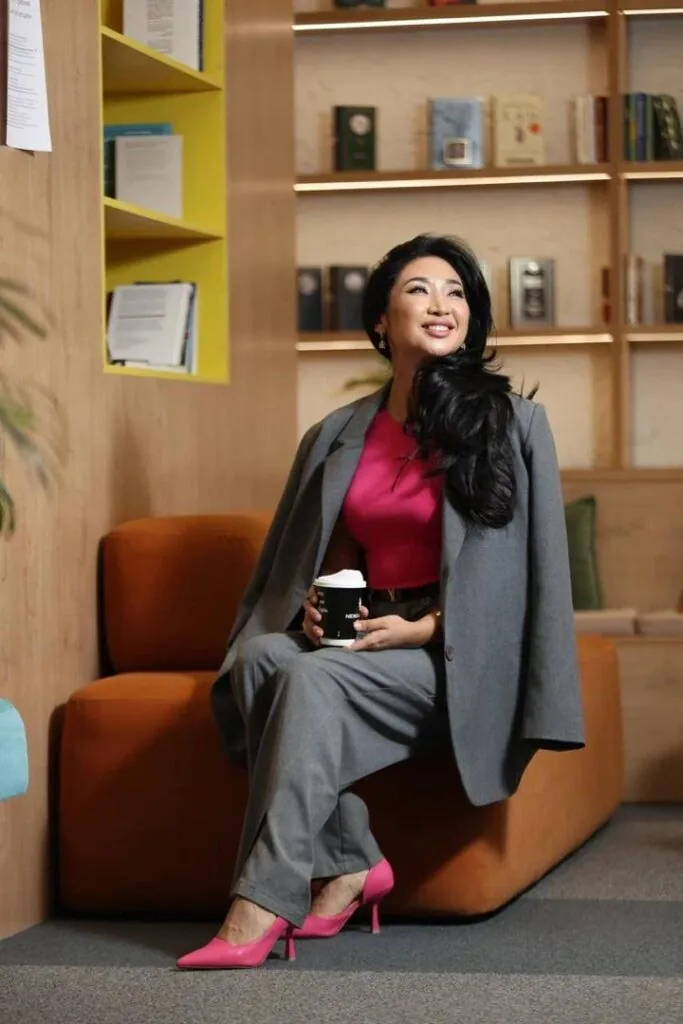
Aiperi Kasymbekova, city — Bishkek, Instagram
About myself
I represent the Public Charitable Foundation "Kyrgyz Technowomen". Our mission is to support girls, women, and young women in IT, STEM, women’s entrepreneurship, and other areas of the gender agenda.
My core expertise is finance. I worked for 13 years in the banking sector, seven of those years in leadership positions. I oversaw areas such as private banking services, corporate business, acquisition and sales, as well as the development of digital products, MSB, and ESG.
Today, I am an entrepreneur and project manager for several initiatives related to supporting women. Additionally, thanks to the experience of interacting with government bodies gained during my time in banking, I oversee cooperation with state and international organizations in my projects.
How I entered the IT profession
I have a higher education in finance with majors in "Finance and Credit" and "Banking". Broadly speaking, this involves banking management and project management in corporate business.
I started my career path in the banking sector at the age of 18. Over 13 years, I worked in three leading banks in Kyrgyzstan. I witnessed the period when, at the beginning of my career, there was a conflict between the back-office and front-office. I was on the side of the front office, and we constantly "fought" with the back office. Then came a period when business began to interact with IT and face new challenges.
Since I represented the business side, I needed to sell products to clients and create convenient digital solutions for them. Therefore, I had to dive deep into corporate business and digital products. It was from this that my acquaintance with IT began.
At the same time, I studied project management and took various courses. When I started immersing myself in this field, I realized how vast this direction is. I continued to develop in it because it intertwines technology with economic processes related to the country's development.

About stereotypes
I have frequently encountered stereotypes. It seems that every woman, regardless of the country she lives in, faces gender stereotypes. But this is especially noticeable in Central Asia, particularly in Kyrgyzstan and its regions.
I had an interesting case when I became the head of a large branch at the age of 24. In addition to the branch itself, I managed an entire region and a team of 80 people. One VIP client came to meet the management. I entered and offered him my hand, but he looked at me condescendingly and said, "Girl, I want coffee." In his mind, the branch manager should have been an adult man. This is one of the stereotypes about women formed in our region.
We face similar situations even now. When we conduct STEM and IT programs, girls often ask us to talk to their mothers-in-law, brothers, or husbands because they are not allowed to attend training. One girl told us that her brother allowed her to study IT but accompanied her to classes daily, which made her uncomfortable. There were cases where girls were not allowed to attend courses simply because the audience consisted mostly of young men.
At women’s leadership trainings, we often ask participants to imagine a successful IT professional. In most cases, people imagine a man. Therefore, the mission of our community is to show that there are many girls who have already overcome these barriers and can become role models for others.
At the same time, there is significant state support in Kyrgyzstan. Norms for gender balance in boards of directors have been introduced, and mechanisms were provided during parliamentary elections to ensure women's representation. We feel this symbiosis between the state and the private sector.
Another stereotype existed in the IT and venture industry: investors trusted startups led by men more. But now, as women increasingly demonstrate real results in business, attitudes are gradually changing.
Women from Central Asia no longer need help per se. They want partnerships, belief in them, and equal opportunities for everyone.
Barriers for women in IT
The main barriers for women are primarily in their heads. These internal barriers need to be worked on. It is important to be in an environment where there is IT, women, and role models who have already achieved something. Seeing such examples, a woman begins to believe that she too can become a successful IT specialist. Each day, facing difficulties and learning from them, she becomes stronger.
Women are strong project managers. Being a good project manager means being able to accomplish a maximum number of tasks with minimal resources. Resources can be different: time, finances, health. If you take a homemaker, she is one of the best project managers. She can cook several dishes from a minimal set of products and simultaneously manage to do many other things. I believe that project management skills are largely built on mindset and life competencies.
I also faced barriers. Many said: why do you need IT if you are from finance? Why learn a new skill and go into a completely new field? It is better to develop what you already have or engage in traditional business. And there were many such barriers.
But when you face your fear and allow yourself to try new roles, there is always something greater behind it. You need to find your internal values: honesty, freedom, sustainability. When you build this value system, like-minded people appear on your path. This becomes a kind of filter: you consciously no longer go into projects and partnerships where your values do not align. At the same time, it is important to understand that values, like barriers, can change at different stages of life, and this is completely normal.
Recommendations for those just starting their path
Try, look for mentors, seek mentorship, look for a cool, sustainable environment where they will believe in you and give you the opportunity to show yourself. Look for communities where you will be valued. Do not be afraid to show yourself and talk about your products, no matter what they are. Learn to talk about yourself.
Any investor and any environment look not only at your product. They look at your burning eyes, your belief in yourself, and your skills. An investor invests primarily in the person. Will they break on this path? Do they believe in their project to the end? Because any startup is always hypotheses: will it work or not.
Therefore, when you believe in yourself, everything will work out, no matter how loudly this sounds. This is the truth. Your skills of adaptability, flexibility, and stress resistance are important, as well as the vision of sustainable project development—not just a project for the sake of a project or a product for the sake of a product. It is important to understand what lies behind this, what will come next, and what value this gives to the people who will use this product.
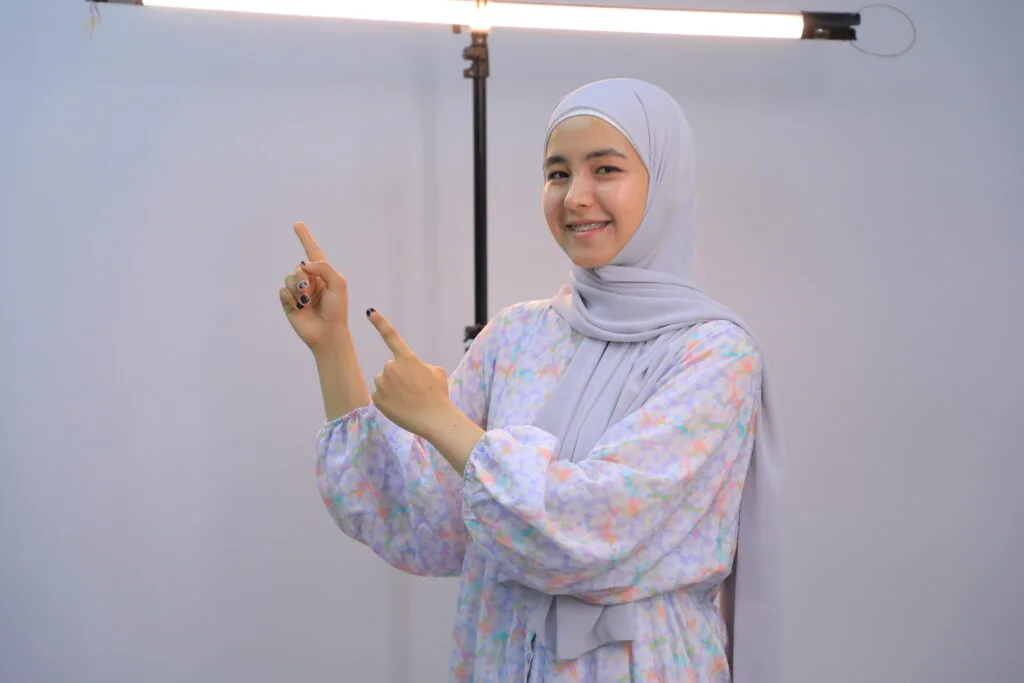
Dilafruza Juraboeva, city — Fergana, Software Engineer, Instagram, LinkedIn
About myself
I became the first student from Uzbekistan admitted to the Bachelor's program in "Computer Science" at Rice University in the USA. The university provided me with a full scholarship worth $418,000, and in August I am heading to Texas to begin my studies.
Currently, I am interning at the Ministry of Digital Technologies of the Republic of Uzbekistan. At the same time, I hold the position of CTO in a startup that we are developing together with the team at the Ministry of Digital Technologies of Uzbekistan. We are creating an international technology product and plan to bring it to the global market. I am responsible for the technical direction, product development, and making key technological decisions.
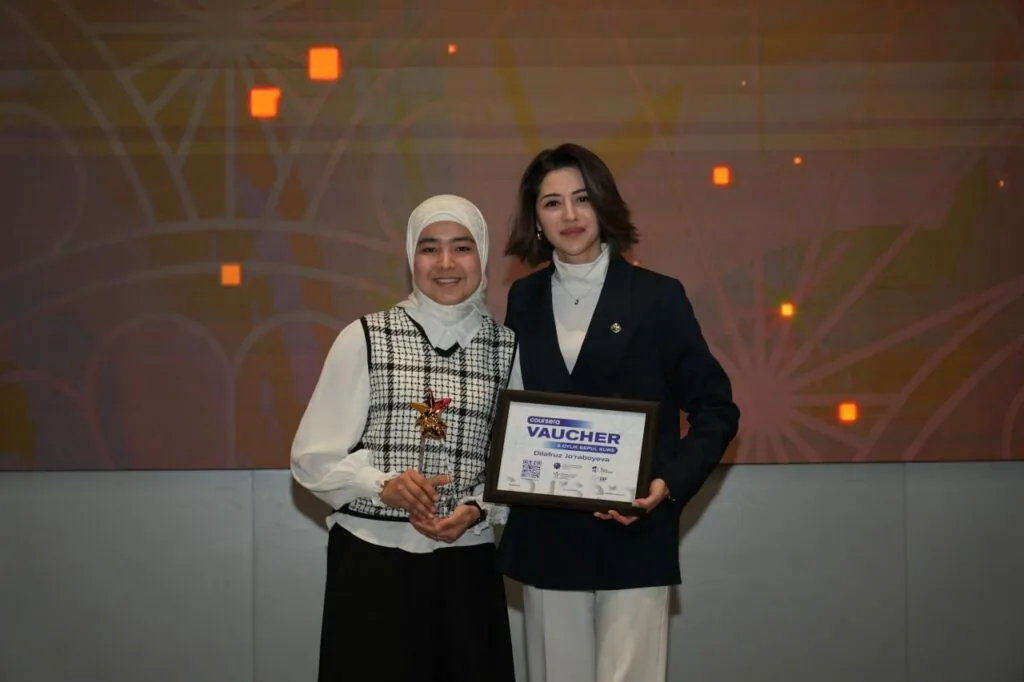
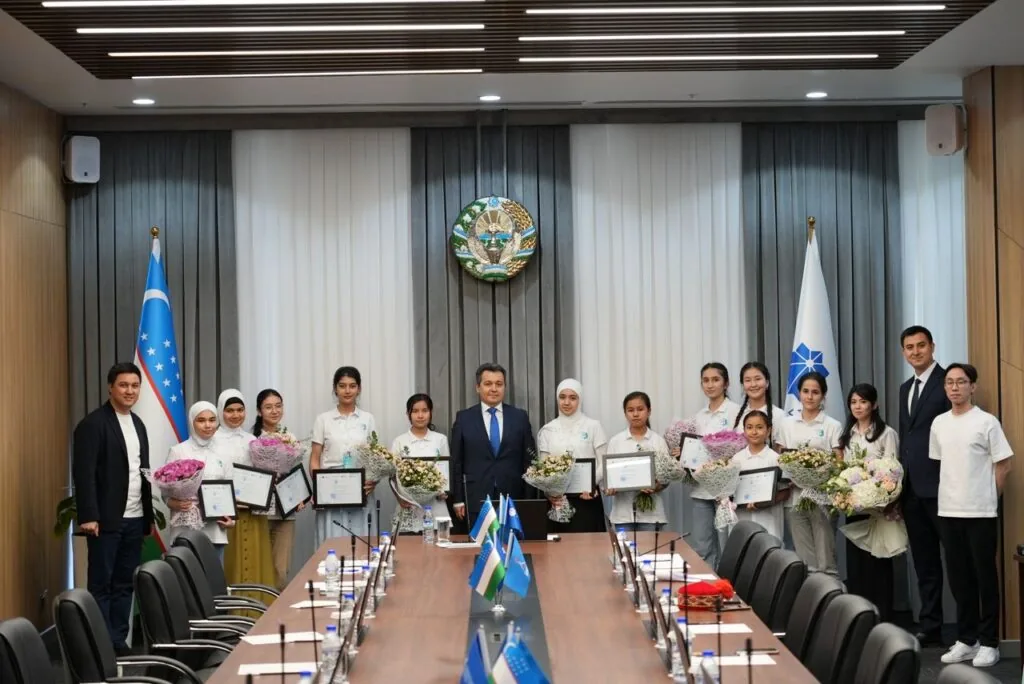
I also became the first girl from Uzbekistan to receive the status of Microsoft Learn Student Ambassador, and a laureate of the Zulfiya State Prize—one of the most prestigious awards for women in our country.
Furthermore, I actively participate in the development of the IT community in Uzbekistan: I organize technology events, speak at conferences, work with youth, and strive to inspire girls to choose a career in technology.
How I entered the IT profession
My path in IT began at the age of 14 when I decided to master a modern and promising profession. I took the entrance exam to the Najot Ta'lim educational center—one of the largest centers for training specialists in modern professions in Uzbekistan.
Initially, I planned to study SMM and social media marketing. However, after the exam, I received a message: "Congratulations, you have been admitted to the programming course." This came as a surprise to me, as at that moment I knew almost nothing about programming.
Almost everyone around me said that IT is a male field and that it is difficult for girls to succeed in it. Moreover, when I came to my first class, there were only boys in the room, and I was alone.
However, the teacher showed me programming from a completely different side. And the words that I would not be able to succeed, on the contrary, became additional motivation to prove the opposite.
For the sake of studying, at the age of 14, I had to move from my hometown to Tashkent. It was a difficult period: I was living away from my family for the first time. The studies were intensive, and sometimes I immersed myself so deeply in programming that I even looked for solutions to problems in my sleep. Later, I realized how important discipline and balance between work and rest are.
Over time, I became a .NET developer. I consciously chose this direction, although many advised girls to go into frontend development, considering it a more "feminine" field. I was always attracted to complex technical tasks, system architecture, and a deep understanding of technologies.
You could say that IT found me on its own. I did not plan to become a programmer, but the random enrollment in a programming course changed my life. Despite stereotypes and difficulties, every obstacle only strengthened my desire to prove that girls are capable of achieving great success in technology.
Over time, programming became for me not just a profession, but a way of thinking. I like creating solutions that help people, working on large-scale projects, and constantly learning new technologies.
About stereotypes
I encountered stereotypes due to my gender. Many believed that it was difficult for girls to work in programming. Additionally, age was an obstacle. When my male peers got jobs, I was often rejected specifically because I was too young.
One case stands out in particular. I successfully passed the technical interview and the HR interview, but at the final stage, the team leader told me: "The only problem is that we don't have girls on the team, so we can't hire you."
Another time, I wanted to become a teacher at an educational center, but I was told that they mainly teach men and that a girl would not be able to lead a group of 20-30 students.
Luckily, such situations did not stop me. On the contrary, they motivated me to work even harder and prove by my example that a person's abilities do not depend on gender.
Barriers for women in IT
The main difficulty is stereotypes and the need to constantly prove one's competence.
Many girls face the fact that their knowledge is evaluated more strictly than that of men. Sometimes it is necessary to put in twice as much effort to receive the same recognition. I overcame this through continuous development and real results.
During my journey, I completed training at EPAM, interned at Yandex Uzbekistan, and worked on nopCommerce and Jobster projects. When I joined the Jobster startup, the company had just received an investment of $150,000 from Aloqa Ventures.
On the day of my seventeenth birthday, together with my team, I won the country's largest startup hackathon—the President Tech Award, taking first place. On that same day, I managed to attend school classes, an internship at Yandex, and the GDG Tashkent festival.
Later, I became a co-founder of the startup MehrGO. Our project helps solve issues of safe mobility for women by offering rides with female drivers and female passengers. We entered the top 5 startups in Uzbekistan and represented the country on the international stage; the project also made it into the list of the 17 best startups to participate in Kazan Digital Week in Tatarstan. There, I met entrepreneurs from all over the world, participated in business meetings, and presented the project to the leadership of the Republic of Tatarstan.
Each of these achievements was a confirmation for me that a person's abilities do not depend on gender or age. The moment of receiving the Zulfiya State Prize from the President of Uzbekistan remains especially memorable—his words of support inspired me to continue working even harder.
Recommendations for those just starting their path
First of all, do not let other people's doubts define your capabilities. If I had believed the people who said that programming is not for girls at the age of 14, I would not be where I am today.
Secondly, do not be afraid to start earlier than others. Age should not become a limitation for development and professional growth.
Thirdly, participate in communities and projects. Over the past few years, I have been part of the Microsoft Developer Community Uzbekistan, organized the region's largest AI hackathons, participated in conducting conferences for more than 1,500 people, served as a volunteer coordinator at DevFest with more than 5,000 participants, and visited eight regions of Uzbekistan as part of the IT Roadshow project, where I told young people about opportunities in technology.
I also organized the Hack Unicorn startup camp, which brought together more than 200 founders and over 100 projects. Many of its participants subsequently attracted investments and were able to scale their ideas.
And do not forget to support others. Throughout my journey, I have tried to help girls who want to build a career in technology. It is important to me not only to achieve my own goals but also to show others that building a career in technology is real.
If my story helps even one girl believe in herself and take the first step into IT, then all of this was not in vain.
The Tech on Telegram Follow The Tech on Telegram
Keep up with the latest technology and startup news.
Related reading






More from this author

Article Useful
How to protect your accounts from hacking: 8 settings you should check today
The Tech

Article Useful
500 Global: How the Accelerator Works and Who Can Receive Investments
The Tech

Article Interviews
Game Development in Central Asia: Arkady Moldavski on Developing Reverb and the Growth of the Industry
The Tech

Article Useful
Google, Tesla, BlackRock, and the IMF: Where to Apply for an Internship in Fall 2026
The Tech

News IT
Tesla unveiled the flying electric car Roadster
The Tech

News IT
Intero Biosystems startup won the Startup Battlefield at TechCrunch Disrupt 2026
The Tech