WomenInTech. "IT is evolving so rapidly that it's impossible to stay on the sidelines," — successful women share their journey in IT
Professional women from San Francisco and Tashkent shared their journeys and explained why it's not worth worrying about stereotypes.
Author - Mansur Ismagulov

The Tech AI
Get the key points in seconds - a short summary from The Tech AI.
Asel Madiyarbekova (San Francisco, DevOps) and Natalia Ni (Tashkent, EPAM Systems) shared their experiences transitioning into IT. Asel switched from auditing to development after completing her master's degree in the US, going through a bootcamp and two months of job hunting. Natalia began her career in business analysis at a startup, then became a project manager, actively developing women's IT communities in Uzbekistan.
Aсель Madiyarbekova, city — San Francisco, DevOps Engineer, @aselincali
About Me

Three years ago, I moved to America and now live in San Francisco. I work as a DevOps Engineer at one of the large companies in Silicon Valley.
I graduated from the Faculty of Business and Management at AUCA in Bishkek, and then worked as an auditor at KPMG for almost two and a half years.
After that, I decided to move to America for a master's degree. I didn't have big plans to enter the IT field; everything happened organically, which I am incredibly happy about.
How I entered the IT profession
When I moved to San Francisco, everyone around me was in IT—conversations about IT, AI, startups, investments, and Silicon Valley were everywhere. Gradually, I gathered the courage to start studying IT.
First, I took several courses at the university, and then I completed training at one of the bootcamps, where I diligently studied DevOps for seven months. This period was not easy, especially for someone who had only basic knowledge of IT, so I had to double my efforts.
After completing the training, I started looking for a job—creating a resume, submitting applications, and going through multi-stage interviews. I fully immersed myself in this process and spent two months dedicating all my time to it.

Job hunting in America is a kind of hustle. Many mistakenly believe that once you start looking for a job, three offers will appear in the first week, but that's not true. The economy is different now, competition is high, so the selection process is thorough. For two months, my day started at 9:00 AM and ended at 10:00 PM: I drank liters of coffee and prepared for interviews. After two months, I got a job as a DevOps Engineer at one of the startups in the Valley. My happiness knew no bounds.
I used to watch Dud's interviews, where his guests were IT professionals from the CIS countries working in Silicon Valley. Since then, I had a dream to live there and work at a startup, which I realized a few years later.
I worked at the startup for six months, after which it closed. Then I joined another company, also in San Francisco. There were seven stages of interviews, after which I was offered a position with good bonuses and dividends. Today, I work in an AI team. I like what I do and the product we are creating together with the team.
About stereotypes
I can't say that I encountered stereotypes in America. The only thing I can note is that there are few women in the IT field. In all the interviews I went through, 95% of the interviewers were men. Even in my team of 15 people, there are only three women.
Obstacles for women in IT
For me, the difficulty lay in the work itself: I entered IT for the first time and immediately joined a startup where the team is small and there are many tasks. Under these conditions, colleagues have little time for explanations, so I had to learn a lot on my own, study, and strive. Since I didn't graduate from a university in the IT field, I took many courses and spent an additional two hours at the computer after work. Coding was especially difficult for me.

I also had imposter syndrome: it seemed like I had just arrived from another country, without work experience, and knew nothing. But it was just a feeling. When I started communicating more closely with my colleagues, I realized that everyone starts this way. It's not shameful not to know something—I like the corporate culture in America, where everyone is sincerely willing to help.
Natalia Ni, city — Tashkent, Project Manager at EPAM Systems, Linkedin
About Me

If we were to create our own titles in companies, I would write for myself "ocean of energy." I am a project manager at EPAM Systems and a Project-Based Learning Coordinator at IT Park University. I also develop IT communities in Uzbekistan: I am the Partnership Lead for Women in Tech Uzbekistan, Leader of the Agile Uzbekistan Community and Owner of Edtech Uzbekistan, which was launched at the end of last year.
I graduated from my master's program in 2019 at Voronezh State University with a degree in Applied Mathematics and Informatics. During my master's studies, I was first introduced to real IT projects. I started my career in business administration and writing technical documentation and regulations. In 2019, I returned from Russia to Uzbekistan with the desire to work in business analysis. At that time, this profile was underdeveloped in Uzbekistan, and there were no open positions for business analysts. I was offered a position as a "Technical Writer," but that is a completely different field.
In search of the right position, I interviewed at a small company, Digital Intellect Solutions, for a business analyst role, where I was the company's first employee. This startup gave me a huge boost in my professional development. At some point, I started doing project management, but intuitively, because the startup didn't have enough resources, and I had to combine responsibilities. At that time, I had just finished university.
It was at this company that I gained my first experience in project management, studying the Agile methodology, managing a commercial team of up to 20 people, building all processes in the company from scratch, working on commercial projects, and receiving a grant for startup development.
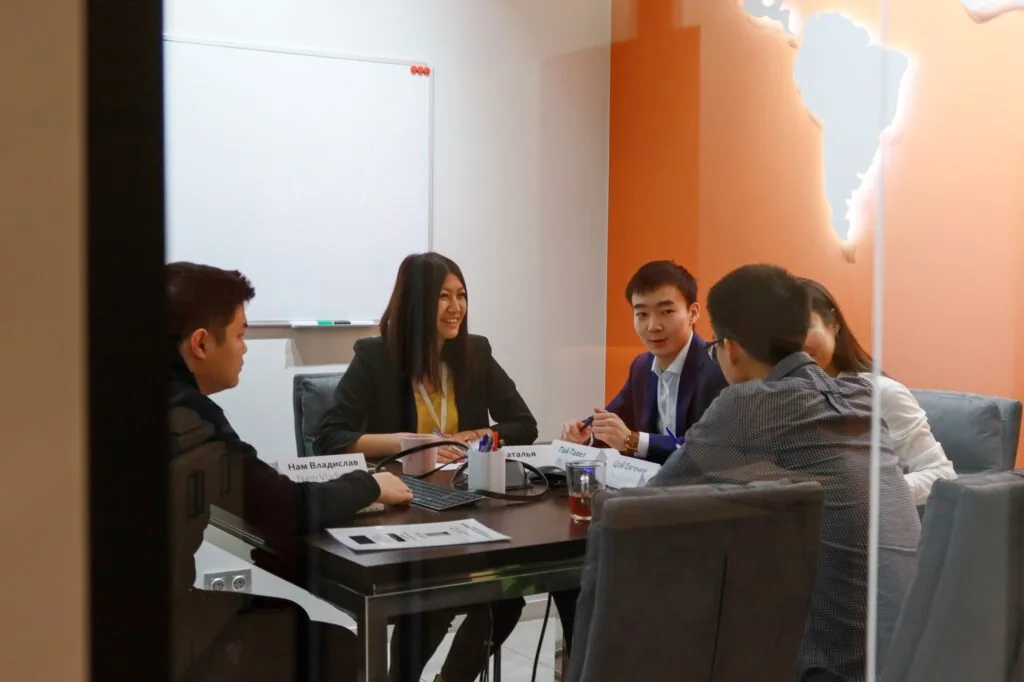
Now I work as a project manager at the global company EPAM Systems, where I learn every day. IT today and IT five years ago are completely different things. New technologies and specialties appear every day, and you need to constantly keep up with trends to match the current skill set.
How did you enter the IT field?
Even since university, my field was related to applied informatics and computer science, but then I didn't like programming. However, IT is developing so quickly that it's impossible to stay on the sidelines. And IT is not just about development.
I want to contribute to the popularization of different professions in IT, especially involving girls in areas that are currently becoming in demand and relevant. This is what I have been doing since this year thanks to the Women in Tech community.
About stereotypes
I haven't encountered stereotypes like "You're a girl" or "Programming is not for girls." At university, many cool girls studied, who today work in international IT companies, and I didn't notice gender inequality during that period. The only thing that was always noticeable: girls from the journalism faculty wore heels, while girls from the faculty of applied mathematics and informatics wore sneakers, because carrying a laptop every day is heavy.
In Uzbekistan, I felt uncomfortable at the beginning of my development in IT because in 2019, there weren't as many women working in IT as there are today. Sometimes there was too much attention paid to me. I remember wanting to host meetups for the Agile Uzbekistan community, and in 2021, we gathered 50 people, of whom only three were women.
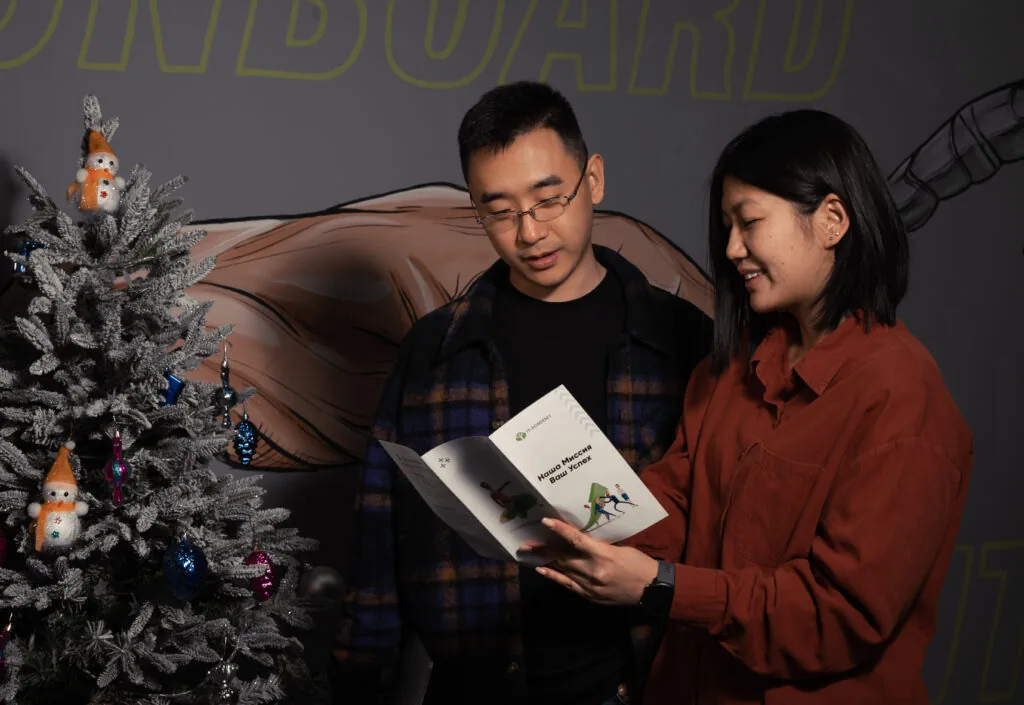
But the trend is changing: there are more women specialists in the IT field, specialized communities in the Tech industry are opening, and various programs in the STEAM industry for women are gaining momentum. Today, at least four to five women's communities in STEM fields are developing in Uzbekistan, including Women in Tech, IT Ladies, Women Techmakers, GAP, and others.
About obstacles for women in IT
— stereotypes. Sometimes girls write to me who face gender inequality.
— lack of support from colleagues. Girls can be great specialists, work in global companies, and yet not have recommendations on LinkedIn. But I'm glad that in recent months I see how women support each other professionally, especially in communities.
— balance between work and family life. Being a mother is a full-time job. I admire women who can balance in two directions and develop as experts.
My family and close people support me in overcoming difficulties. I try to focus on my strengths while continuing to work on my weaknesses.
Recommendations for those just starting their journey
I will share my personal experience. At the beginning of my career, I took on various opportunities, part-time jobs in IT, volunteering, and this yielded results, although not immediately. It took several years. I often heard phrases like "Do you have nothing better to do?" when I launched new initiatives in IT or organized meetups and networking in the community.
In the last few years, I have organized more than 200 different events, professional breakfasts, and meetups. First of all, this helped me develop my professional networking. Through communities, you can also learn professionally, find new opportunities, and jobs. The question is how you apply the information you gain. If you are just starting your journey, actively expand your network of professional contacts—it will definitely bear fruit.
For everyone just starting their journey in IT in Uzbekistan, there are many communities that can help you in your professional development. They are available at this link.
The Tech on Telegram Follow The Tech on Telegram
Keep up with the latest technology and startup news.
Related reading







More from this author

News
zypl.ai begins operations in Japan and focuses on next-generation risk models
Mansur Ismagulov

News
Elon Musk's net worth has exceeded $700 billion for the first time
Mansur Ismagulov

Article Interviews
"Central Asian countries should build a joint ecosystem," — Bekhzod Ismoilov on the development of AI in the region
Mansur Ismagulov

Article Interviews
Bloom's Taxonomy and Engineering Levels: A Practical Growth Model
Mansur Ismagulov

Article Useful
How the IT industry in Azerbaijan developed in 2025: key events
Mansur Ismagulov

News
Tajikistan has become a new member of the regional innovation alliance Central Asian Innovation Hubs
Mansur Ismagulov