WomenInTech. "IT is our present and future," — successful women from Central Asia share their journeys in IT
Girls from Astana and Dushanbe provided detailed insights into their work and offered important recommendations for aspiring IT specialists.
Author - Mansur Ismagulov

The Tech AI
Get the key points in seconds - a short summary from The Tech AI.
Aigerim Barak (Astana, Product Manager) and Yulia Mamedova (Dushanbe, Digital Implementation Project Manager at Abt Global) shared their experiences. Aigerim, a graduate of the Faculty of Economics at Moscow State University, rose to the position of Deputy Head of Department within four years; she recommends internships and studying Kazakh and English. Yulia, a specialist in applied mathematics from Moscow State University, manages projects in over eight countries; she recommends the Fail Fast methodology and proactively seeking feedback.
Aigerim Barak, city — Astana, product manager, @aigerim.barak
About Me
I work as a product manager in the IT sector. This field interests me because we automate business processes in companies. It is a kind of creative activity where you participate in the process of creating a product from scratch, interact with designers and developers, conduct testing, and launch the product into production.

After graduating from university, I interned in the IT department of a national company. Later, I worked as an analyst, then as a project manager, and after six months, I became the lead project manager. With each step, the number of projects I managed increased, as did my level of responsibility. By my fourth year of work, I had advanced to the position of Deputy Head of the Department.
How I entered the IT profession
I completed my bachelor's degree in "Economics" at Lomonosov Moscow State University. I understood that I did not want to work only with numbers. I had an idea that I was interested in communications and projects, but I didn't have a clear vision at that time. My internship after university turned out to be that exact case of being "in the right place at the right time." I was lucky to join an IT department where I learned all the nuances of analytics, system creation, and methodologies. I fell in love with this activity. Alongside my job, I took various courses in project management, and then I pursued a master's degree in the IT field.

About Stereotypes
I haven't had to deal with stereotypical attitudes toward myself, but sometimes I noticed people's surprise when they found out that I am not an IT graduate, even though I already had practical experience. Perhaps that is why I decided to pursue a master's degree, to have a certain credential on my resume that would ensure trust in me as a specialist.
Not a stereotype, but a minor nuance: I noticed that management's attitude toward you changes when they find out that besides work, you engage in sports—in my case, triathlon. This is a certain indicator of discipline, time management skills, and the ability to be multitasking, combining hobbies with work.
Obstacles for Women in IT

A person can grow significantly as a professional in just two years. Despite this, there was bewilderment when a 20-year-old specialist was placed in a leadership position instead of a 35-year-old person. There is also a stereotype that men are more suitable for leadership roles, although in practice, women can achieve better results by completing projects successfully through building proper communication within the team and with the business.
Recommendations for Those Just Starting Their Journey
I recommend completing free internships for one to three months at the company where you want to work. When managers see your drive for development, communication skills, and business etiquette, they always offer you a job because they have already trained you. Fluent knowledge of Kazakh and English has given me an advantage over colleagues who only speak Russian on several occasions.
We all understand that IT is the present and the future, but the first thought for many is: it's only about "coding." In the IT field, a person can choose their direction by trying several options. You can be a frontend or backend developer, code in different languages, learn low-code/no-code, develop mobile applications, be an engineer, system administrator, UX/UI designer, tester, and so on.

Take various courses on Coursera. Only then, if you understand that this direction interests you and that you need "a certain certificate that confirms your knowledge," can you pursue a master's degree.
It is important to grow in your career every two years. I am glad that over five years of professional experience, I gained work experience in national, quasi-state, and private companies.
The key factor in professional activity is love for the product you are creating with the development team. Your eyes should "sparkle" from the process, and you should be anticipating the results you will achieve in the end.
Yulia Mamedova, city — Dushanbe, digital Implementation Project Manager, @kraredora

About Me
I work as an IT project manager at Abt Global, a large American company. I help companies worldwide implement technical solutions for monitoring internal processes. Currently, I manage projects in more than eight countries simultaneously, which benefit society in such areas as healthcare, business, power supply, and much more. Monitoring is needed everywhere.
Also, besides my main job, I share knowledge and experience with young people starting their IT journey, conducting courses in project and product management. Some of them know exactly what they want, while others are afraid to start working in the field of information technology, but alongside the fear, there is a huge desire to implement something large-scale. Additionally, I conduct soft skills sessions for programmers.
It all started when I applied for a vacancy with an interesting title—digital health specialist. Did I know what it was? No. Did I read about it on the internet? Yes. Did it help me? No.
The job description was interesting, and it seemed that it brought great benefit and solved global problems. After all, we all want to be useful to this world.
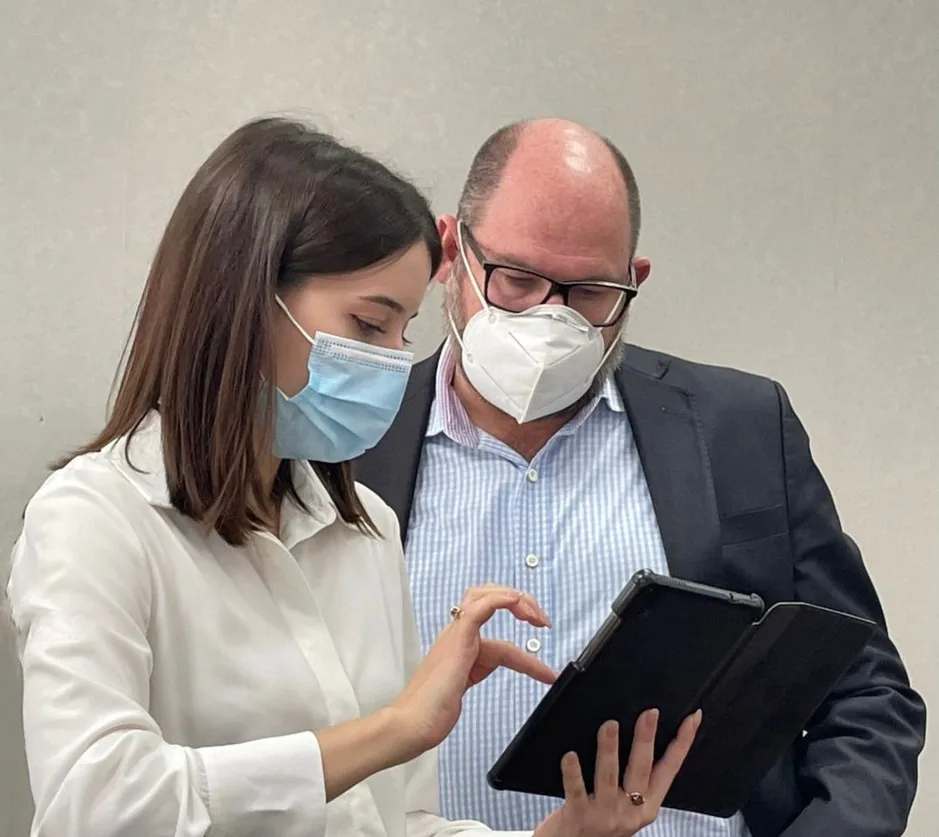
Only after working for a year as a digital health specialist did I figure out all the responsibilities and learn a lot. This vacancy introduced me to many excellent mentors from whom I learned literally every day, and after a year, I received a promotion offer, which meant many new responsibilities, working with teams worldwide, and much greater responsibility. Thus, I became a project manager for the implementation of digital solutions.
How I entered the IT profession
I graduated from Moscow State University with a degree in applied mathematics and computer science. After graduating, I decided not to work in this field because I didn't particularly want to solve kilometer-long equations and write huge chunks of code every day. That is exactly what they taught us at university. I wanted something practical. I wanted to do something and immediately see the result. So, I accidentally ended up taking courses in system administration. And it was this field that awakened in me that very eagerness to delve into the IT sphere. And I got this eagerness after finishing my major—isn't that ironic?
About Stereotypes
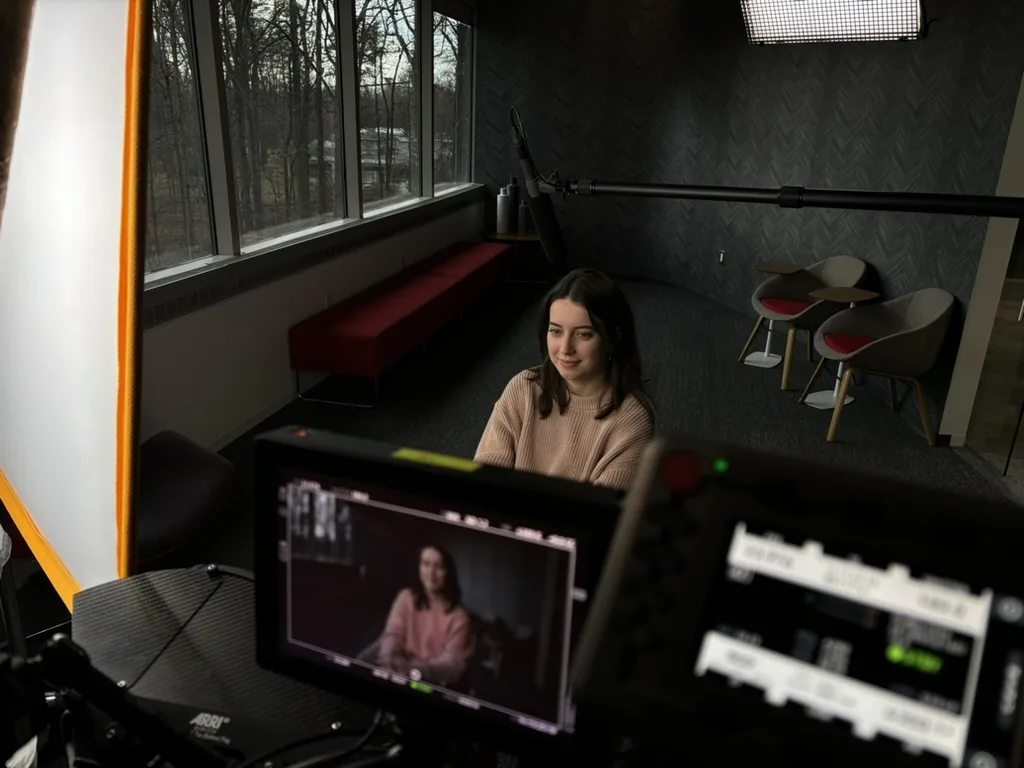
I think there is not a single person who has not encountered certain stereotypes. Sometimes you are too young, sometimes you are "too much of a girl." What if you are a young girl? Of course, it seemed that paving a career path would be twice as difficult. Because you think that everyone is watching you to make sarcastic comments if you make a mistake. Personally, I was often a witness to how the older generation still perceives young specialists as inexperienced and unprofessional, which is often far from the truth, and sometimes even the opposite, due to the relevance of Gen Z's skills and knowledge.
Obstacles for Women in IT
Learn to talk about your victories. Big or small. Learn to talk about them to the right people. This is important. The biggest difficulties in a corporate environment are not seeing your results and being unnoticed. In this way, work turns into a series of routine tasks.
If something happens, don't wait for someone to notice it; tell them yourself. Got a great review from a client? Share it. Launched a project? Say so.
Because if you don't say it, who will? The main thing is to do it correctly and not turn it into ordinary boasting. Celebrate your small victories.
Recommendations for Those Just Starting Their Journey
There are two recommendations I heard a couple of years ago from my mentor at Abt Global, which I would like to share. The first is Fail Fast, and the second is ask for feedback; this is important. Let's go in order.
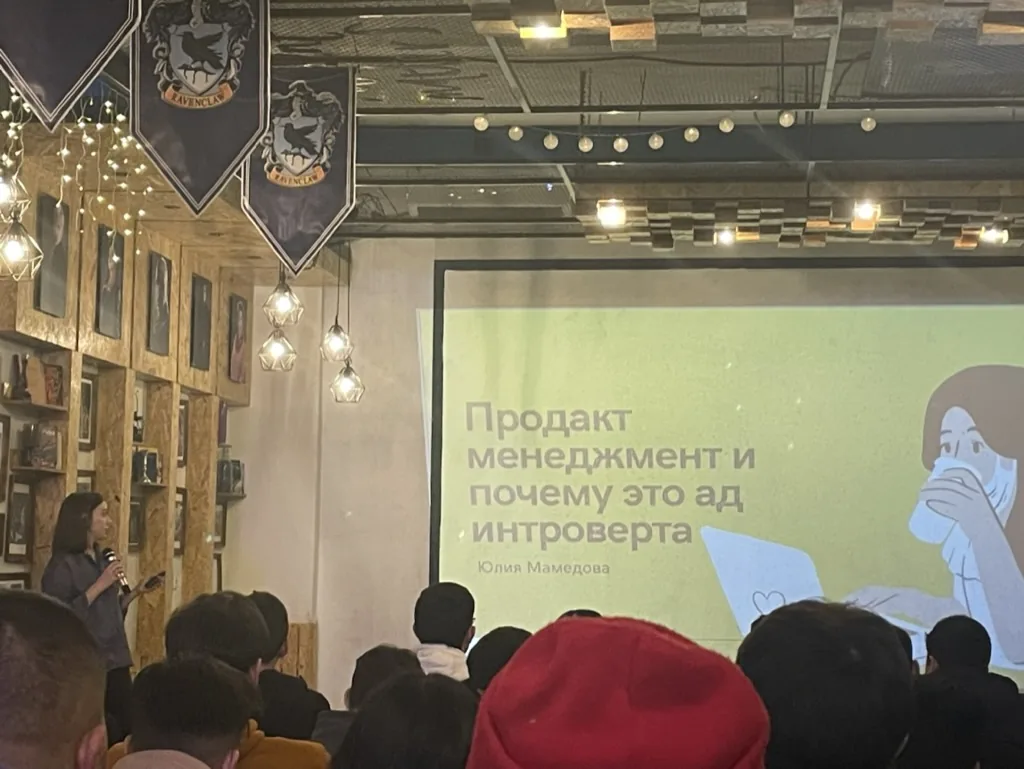
In Agile, there is a wonderful idea—Fail Fast. Make mistakes quickly. It is about not worrying unnecessarily about failures, especially those that have not even happened yet. The main idea is that falling is not scary; it is scary not to understand why you fell and not to get up to try again. In the end, we get adequate work on mistakes and action instead of long deliberations.
As for feedback, let's be honest, not everyone tells us about our work until we ask, and feedback is important. It allows not only to boost our ego but also to understand what we can improve in our work so that there are more pleasant and great results! The main thing is to take criticism adequately and ask for feedback from the "right" people.
The Tech on Telegram Follow The Tech on Telegram
Keep up with the latest technology and startup news.
Related reading







More from this author

News
zypl.ai begins operations in Japan and focuses on next-generation risk models
Mansur Ismagulov

News
Elon Musk's net worth has exceeded $700 billion for the first time
Mansur Ismagulov

Article Interviews
"Central Asian countries should build a joint ecosystem," — Bekhzod Ismoilov on the development of AI in the region
Mansur Ismagulov

Article Interviews
Bloom's Taxonomy and Engineering Levels: A Practical Growth Model
Mansur Ismagulov

Article Useful
How the IT industry in Azerbaijan developed in 2025: key events
Mansur Ismagulov

News
Tajikistan has become a new member of the regional innovation alliance Central Asian Innovation Hubs.
Mansur Ismagulov