WomenInTech. Stories of successful women from Kazakhstan about leadership, career growth, and opportunities in IT
Two women from Kazakhstan are building their careers and launching tech projects in IT. Salsanat Dzhanyuzakova from QazCode and Kamila Zhantemir, founder of loome AI, share their journeys, discuss leadership, stereotypes, and opportunities in the industry, and show that in IT, what matters most is not gender or a diploma, but mindset, courage, and a willingness to continuously learn.
Author - Mansur Ismagulov
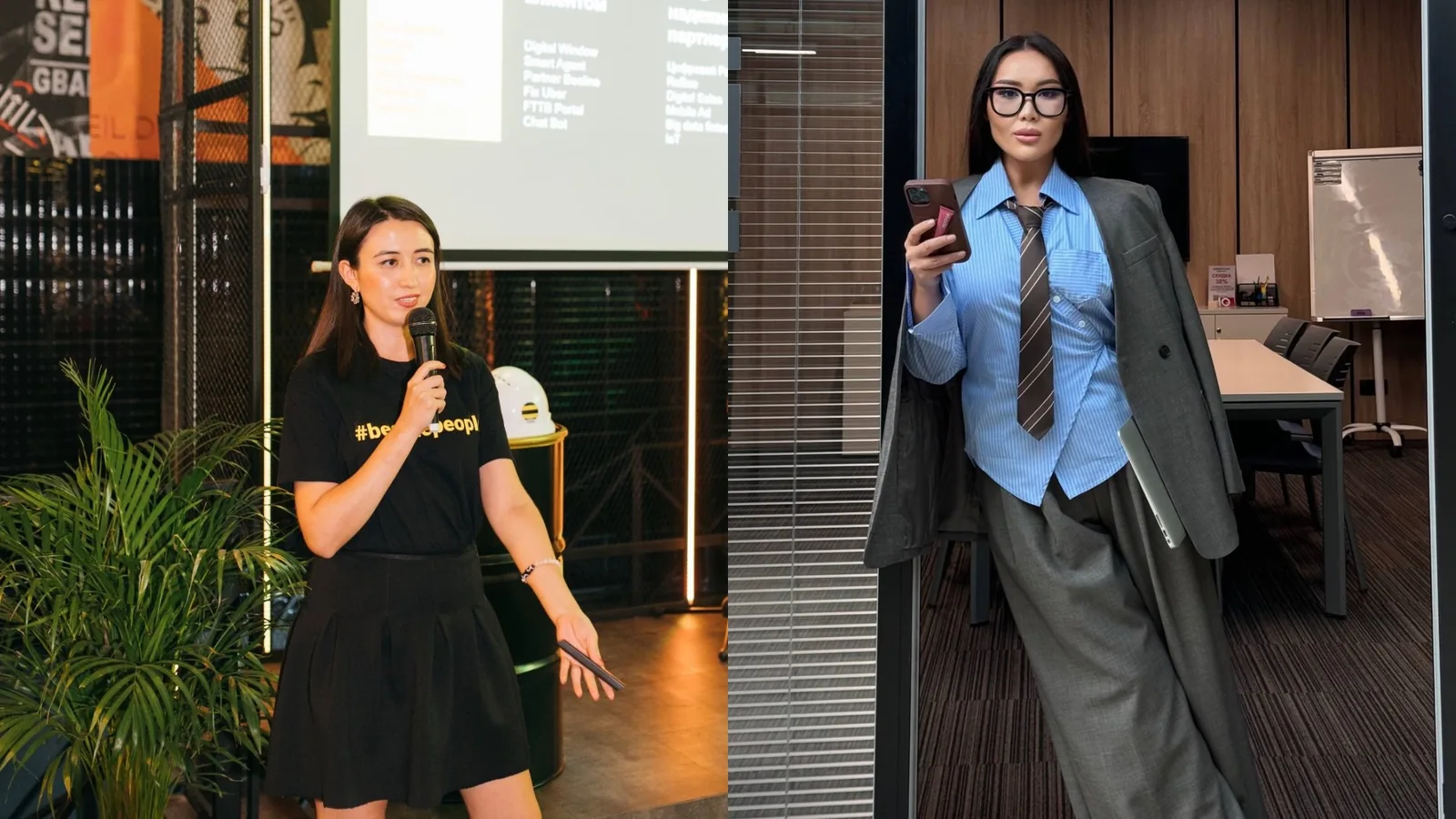
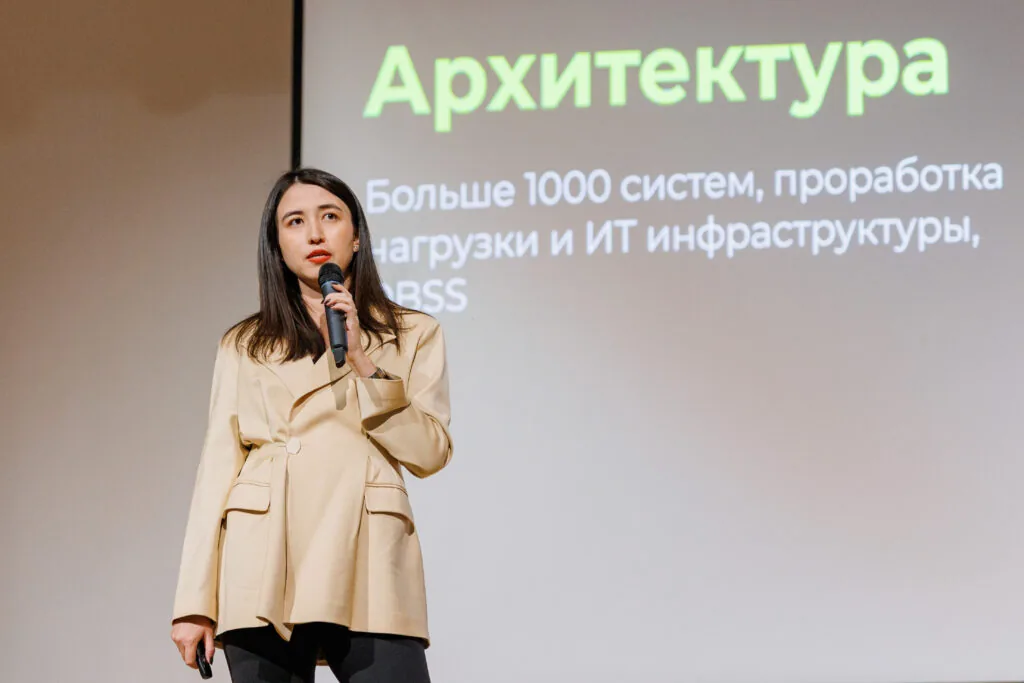
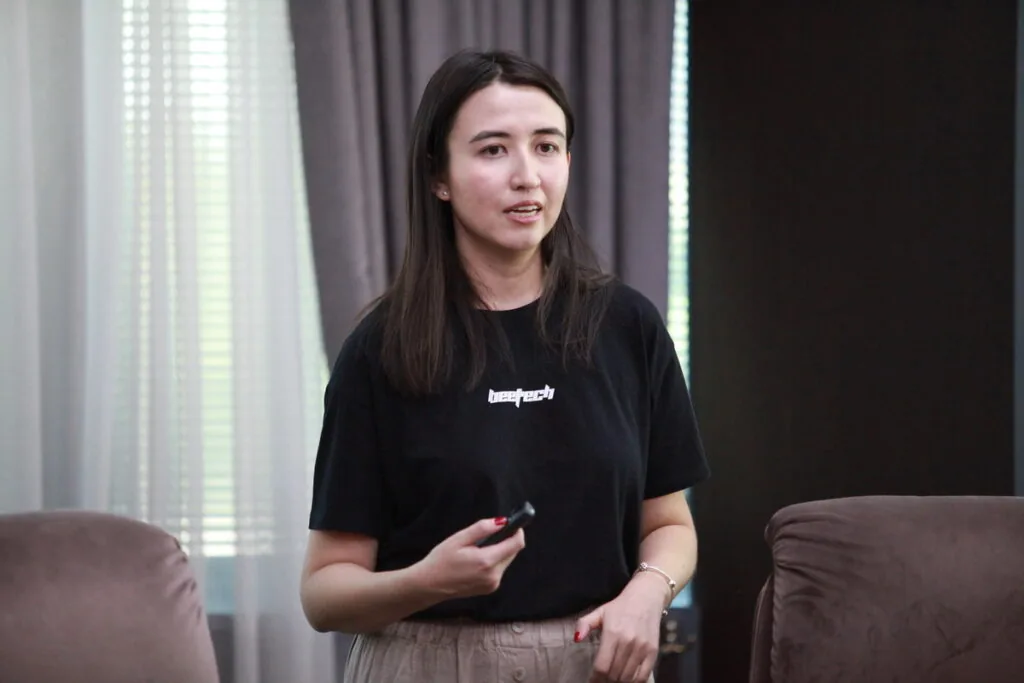
Saltanat Januzakova, city — Almaty, Operations Director at QazCode
How I entered the IT profession
My foundational education is in economics. However, quite early on, even during internships in the banking sector and government structures, I realized that traditional career paths did not reflect the scale of challenges I wanted to tackle. After university, I joined a company where I was responsible for developing the IT direction. I had previously interned there, and I was entrusted with creating and implementing digital solutions, including managing social media and developing websites on WordPress.
Later, I moved to another organization to develop an online store, and then to Beeline Kazakhstan. My task was to develop and launch Beeline Kids online store from scratch for three countries: Kazakhstan, Kyrgyzstan, and Uzbekistan, as part of the Digital Hub concept.
My further career developed within the company. After the creation of QazCode, I moved with the IT team to a new technology center. At Beeline Kazakhstan, I started as a Product Manager, then was appointed head of the product direction, and later became the Director of Products. My responsibilities included strategic management of development, design, analytics, and digital analytics teams.
Today, I am the Operations Director of QazCode, and under my management are about 300 specialists working on the creation and export of digital products to more than five countries.

About stereotypes
One of the key stereotypes that newcomers face is the belief that a specialized technical education is mandatory to enter IT. My career path demonstrates that the ability to adapt quickly, learn, and take responsibility for results is much more important. Today, many people enter the field through alternative learning formats, and this is a completely viable trajectory.
Another common fear is related to artificial intelligence. There is an opinion that as AI develops, it will completely replace IT specialists. At QazCode, we actively integrate AI solutions and consider proficiency in AI tools as a basic competency for employees. However, in complex products with high loads and millions of users, human expertise remains critical.
AI reduces the share of routine tasks and increases efficiency, but it is not a full replacement for engineering teams, especially when it comes to scaling and ensuring system stability.
Furthermore, it is worth noting an important behavioral aspect. Studies show that men are more likely to apply for jobs when they meet only 60% of the requirements, whereas women apply only when they meet all criteria. This speaks not of inequality of opportunity, but of differences in self-esteem and perception of one's own competencies, which is an internal barrier that is important to recognize and overcome.
Barriers for women in IT
In my opinion, most limitations are internal. At QazCode, there are no systemic barriers for women: the proportion of female and male managers is comparable, and at certain periods, there were even more women. Women hold key roles and make strategic decisions.
Nevertheless, there remains a factor related to maternity leave. In Kazakhstan, people often talk about the so-called "motherhood tax," when a woman temporarily slows down her professional growth. However, the situation is gradually changing. The company already has examples where men took maternity leave, which contributes to a fairer distribution of family responsibilities.
The pace of development is largely determined by how partners share responsibilities. If responsibilities are divided equally, both continue to develop evenly. If, however, the majority of the burden falls on the woman, it can slow down career dynamics—not stop it, but affect it.
Recommendations for those starting their journey
- Do not be afraid to find your own direction. IT includes many specializations, and transitioning between them is possible and often beneficial. Professionals often reveal their full potential after transitioning, for example, from development or testing to product expertise.
- Start practicing as early as possible. Many strive to collect all possible certificates first but delay real work. Practical experience is significantly more valuable. If the dream company does not make an offer—work in related companies, gain experience, build a portfolio, and establish professional connections.
- Constantly learn and implement new things. The field is developing rapidly. If you do not keep track of technological changes—including AI and modern tools—you can lose competitiveness in literally half a year. IT is a field where continuous learning is an obligatory part of the profession, but it must go hand in hand with practice.

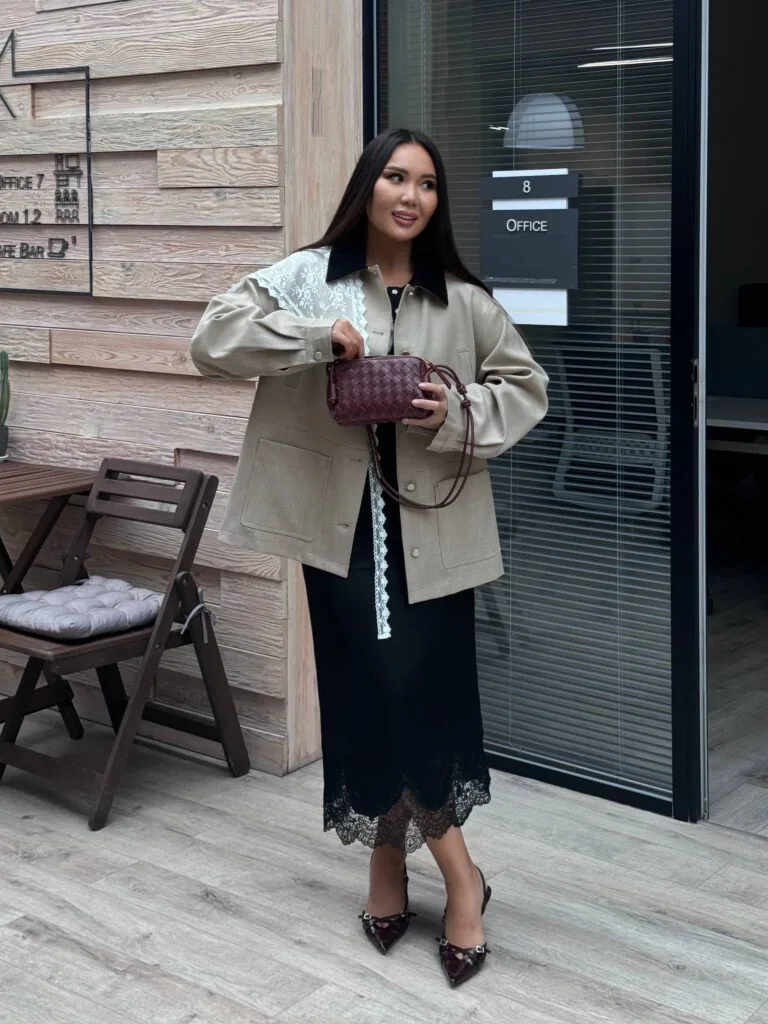
Kamila Zhantemir, city — Astana, founder & CEO loome AI, Instagram
About myself
I am an IT entrepreneur. Last year, I made my first exit in Turkey. Immediately after that, I founded loome AI—a mental navigation system that diagnoses, treats, and develops based on evidence-based psychotherapy methods.
The project pilot is operating in the US. Soon we will receive a patent for mental GPS AI technology—a technology that creates an individual dynamic map of each user's psyche. It tracks, predicts, and corrects deviations from the course based on the analysis of speech, behavior, sleep, emotions, and cognitive reactions.
Currently, I am based in Kazakhstan to launch B2B and B2G models in Central Asia and the MENA region. At the same time, I am pursuing a second higher education in psychoanalysis to build a product with academic depth. I am convinced that mental health care should be as basic as sports or nutrition.
My career path started early and unusually. At 16, I left home, became financially independent, and bought my first business on installment—a boutique of Chinese medicine products.
At 20, I became the youngest head of the commercial department of JSC "Republican Television and Radio Corporation 'Kazakhstan'," while simultaneously hosting news and author programs. There, I learned to work proactively—to stay ahead rather than play catch-up.
Over 17 years of entrepreneurship, I created projects in retail, education, manufacturing, real estate, and media. I spent seven years in strategic consulting—from consultant to managing partner, which taught me to build systemic approaches.
In 2023, I finally entered IT. I moved to Turkey and created AI Invest Memo for real estate. The experience was difficult, but after a pivot, I received an exit offer from a major Turkish strategist.
Today, I am creating loome AI. This is not just a startup, but the culmination of years of experience in business, psychology, strategy, and user behavior. My path is a chain of points that formed a clear picture: television taught me to sell, business taught me to act, consulting taught me to see systems, and technology brought together everything accumulated over 17 years.

How I entered the IT profession
My first attempts began in 2018. I was a co-founder of a development company and wanted to digitize the customer experience of choosing and buying apartments. I studied cases from Tatarstan, held negotiations with founders, and developed business models. But the financial model did not add up: high implementation costs, significant risks, and doubts about market readiness. I did not understand venture investments at that time, so I returned to offline business.
After the pandemic, it became clear that IT was the only direction in which I wanted to develop. I was tired of depending on buildings, repairs, and physical assets. I wanted scale without geographical restrictions. The best thing I can do is build teams and manage people in projects, and that is what attracted me to IT.
I knew nothing and no one. At first, it seemed that entry was only possible through an IT profession, but I did not intend to code or do design. For six months, I studied content from experts, observed founders, read literature, analyzed deals, and trained practical observation skills. When it became clear how everything works, I decided to apply my accumulated experience in real estate investments and launch my first IT startup.
About stereotypes
Personally, stereotypes have never stopped me, but it would be dishonest to say they do not exist. Any woman in Kazakhstan faces entrenched mental stereotypes rooted in the cultural and social norms of an Eastern country.
I start any strategic negotiations with men with one small but important introduction. I say: "You undoubtedly have certain stereotypes about women. And right now, you may be looking at me through the lens of these prejudices. Given average, clichéd views, you might doubt a woman's perseverance, focus, and leadership."
Then I state three specific counterexamples from my life—three facts that dismantle these assumptions. Only after that do we move to the essence of the negotiations.
This is my rule: do not let cultural or social stereotypes dictate the terms of dialogue.
Barriers for women in IT
Women in IT face systemic difficulties that often remain invisible to men. The gap in women's presence is particularly obvious at C-level positions, and in my opinion, this indicates that women are still trusted less with strategy and operational management. Gender toxicity exists in the IT industry, and it manifests through hidden investor biases and underestimation of competence.
Take "investor sexism," for example. Many VC firms evaluate female teams and female founders in their own way, demanding more proof and asking different questions than they do for men. Moreover, almost all networking in the industry is concentrated around male communities, and many female founders face a lack of opportunities for strategic contacts.
How did I overcome these obstacles? While male IT founders spend time on "traditional" networking in IT saunas and hookah lounges, I silently do my work. Distraction is a luxury for a female founder with two children.
Recommendations for those just starting their journey
Jazz. You must learn to improvise. There is no script in life, no clear instructions—there are only your skills, courage, and ability to read the situation. Like a jazz musician, you create the rhythm on the fly, react to surprises, and yet remain true to your melody—your vision.
To jazz means to be flexible and confident at the same time. Do not be afraid to change tactics when the game dictates a new chord, and use every obstacle as an opportunity to create something unique.
There are no mistakes. If you pity yourself for one day—then move forward with drive, anger, and improvisation.
Jazz. Set the tone. Create your hit while others play someone else's parts.
The Tech on Telegram Follow The Tech on Telegram
Keep up with the latest technology and startup news.
Related reading







More from this author

News
zypl.ai begins operations in Japan and focuses on next-generation risk models
Mansur Ismagulov

News
Elon Musk's net worth has exceeded $700 billion for the first time
Mansur Ismagulov

Article Interviews
"Central Asian countries should build a joint ecosystem," — Bekhzod Ismoilov on the development of AI in the region
Mansur Ismagulov

Article Interviews
Bloom's Taxonomy and Engineering Levels: A Practical Growth Model
Mansur Ismagulov

Article Useful
How the IT industry in Azerbaijan developed in 2025: key events
Mansur Ismagulov

News
Tajikistan has become a new member of the regional innovation alliance Central Asian Innovation Hubs.
Mansur Ismagulov