WomenInTech. "Girls can achieve great heights and even surpass men," — inspiring stories of Kyrgyz women in the IT field
Successful women from Kyrgyzstan shared their journey in IT, the stereotypes they face as women in this field, and the importance of self-development.
Author - Mansur Ismagulov

The Tech AI
Get the key points in seconds - a short summary from The Tech AI.
Aizhan Taalai kyzy (Bishkek) — a programmer, graduated from KTU "Manas" and completed her master's degree at Gazi University. She worked at GU "Tunduk" (2020–2024), OptDyn, and taught. Her primary programming language is Java. Nora Azygalieva (Bishkek) — a product development manager at Forvis Mazars Digital Centre of Excellence. She is an alumna of the American University of Central Asia. Previously, she led the FinTech company Namba One and participated in the TechWomen program at Twitter (San Francisco).
Aizhan Taalai Kyzy, city — Bishkek, programmer, Instagram

About myself
I am a software engineer by profession. I graduated from the Kyrgyz-Turkish University "Manas" and entered the master's program in computer engineering at Gazi University in Ankara.
I worked for almost five years at the State Institution "Tunduk," which operates under the Ministry of Digitalization of the Kyrgyz Republic. This agency aims to improve governance in state bodies, reduce corruption, and simplify bureaucracy for citizens and businesses.
How I entered the IT profession
I started working in my fourth year of university. My first serious job was as a backend developer at the American company OptDyn, where I worked for about a year. Then, for about a year and a half, I taught programming. From the beginning of 2020 until September 2024, I worked at the State Institution "Tunduk."
There, I was a fullstack developer and worked on both backend and frontend development. At one point, I also performed the duties of a project coordinator. My main programming language is Java. I also wrote in PHP, C#, and React, depending on the task.
I have been programming since the eighth or ninth grade. After the ninth grade, olympiads began, and I started preparing for them. In the ninth grade, I reached the regional stage, and in the tenth grade, I reached the republican round. After school, I entered the faculty of computer engineering and continued to develop in this field.
This was my personal passion. At that time, programming was not as popular as it is now. People did it, but there was no such boom. I simply enjoyed solving problems and finding ways to the final result, especially in the context of competitive programming.
About stereotypes
I was lucky to meet great people at my first job who supported and taught me. Everywhere I worked, I was the only female developer. This always attracted attention, and I felt like an "exotic creature."
I have a character that perhaps intimidates people a bit—I am straightforward and can openly say what I think. In the team, there were always good colleagues and mentors, both senior and junior. Respect was present. I was told about cases of sexism and snide remarks where women were looked down upon with comments like: "You're a girl, can you handle it?"
Barriers for women in IT
One of the main problems in our mentality is that girls limit themselves. From childhood, a block forms in their heads: a girl, a woman, and technology or engineering are not for them. This internal barrier prevents them from moving forward. If a person limits themselves, others will do the same.
For example, once a girl approached me at university and asked which faculty I was in. When I said I was studying computer engineering, she was surprised: "You're a girl, won't this be difficult for you? Why do you need this?" This shows how many start thinking from school that mathematics and logic are not for them. Such small doubts create huge barriers. Moreover, there is a narrow view of IT, as if it is only development, although there are many directions in this field where women can achieve great heights and even surpass men.
I did not have problems communicating with people; the main difficulties were internal, such as imposter syndrome and lack of confidence in my abilities.
Lately, I felt that due to work, I had no time for self-development. Although I was dealing with technical tasks and programming, it seemed to me that this was not enough. I wanted to learn more, especially in the field of artificial intelligence and cybersecurity. At the beginning of this year, I went to India for three weeks for studies and got acquainted with such fields as deep learning, data science, and artificial intelligence. Then I realized that I wanted to develop specifically in this area.
I also had burnouts, and the first one occurred after working at OptDyn. Then I left for teaching for a year and a half to rest from programming. After six months, I realized I wanted to return and started programming again. Currently, perhaps I have signs of burnout again, and maybe that is why I decided to return to studies. The cause of burnout is likely a lack of knowledge and experience. Usually, I fight this through learning because I enjoy learning.
Recommendations for those just starting their path
In IT, it is important to understand if you really like this field. Choose a career based on your interests, not because of its popularity. If work does not bring pleasure, burnout will occur more often and more severely.
Secondly, develop analytical thinking. Regardless of the profession, the ability to think logically and analyze always leads to good results.
Thirdly, read a lot. This can be any literature you like. Reading develops imagination, improves grammar and spelling, which is useful not only for work but also for general intellectual development.
People perceive information differently—some through hearing, some visually. However, reading requires more effort and develops the brain more strongly, so it remains in first place. It is also important to develop soft skills, such as the ability to conduct a conversation and build communication. Many in IT face the problem: they know how to solve problems but cannot explain or convey their thoughts.
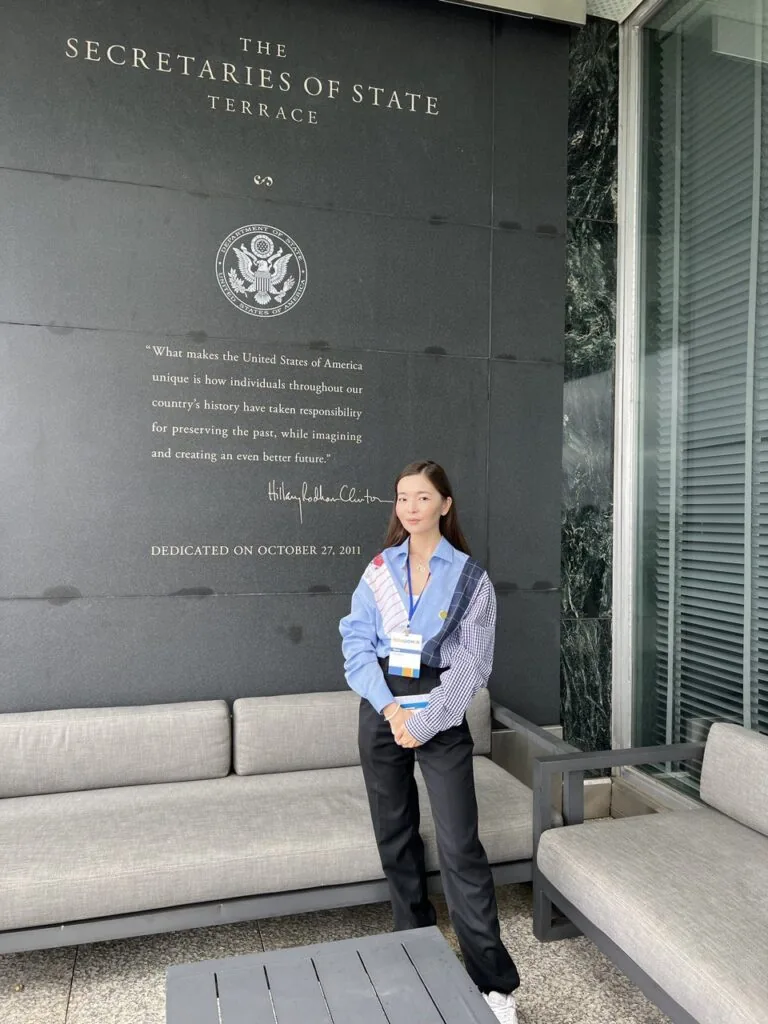
Nora Azygalieva, city — Bishkek, Product Development Manager at Forvis Mazars Digital Centre of Excellence, Linkedin
About myself
I graduated from the American University of Central Asia with a degree in Business Administration.
Currently, I work as a Product Development Manager at the international company Forvis Mazars Digital Centre of Excellence. We provide technology and digital consulting services to clients in more than 20 countries around the world, helping them adapt to rapidly changing conditions and implement innovative solutions to achieve business goals.
My work includes market research, developing new products and strategies, and interacting with clients to ensure their success in digital transformation.
How I entered the IT profession
I started my career path as a junior marketer at Namba Media in 2014. Since then, I have gradually developed within the Namba Group holding and in 2021 reached the position of General Director of the FinTech company Namba One. In the last two years, I also served as the Chief Operating Officer of Namba Group.
Over nine years at Namba Group, together with the team, we built an ecosystem of lifestyle products based on the FinTech product Namba One, which aimed to become a Super app.
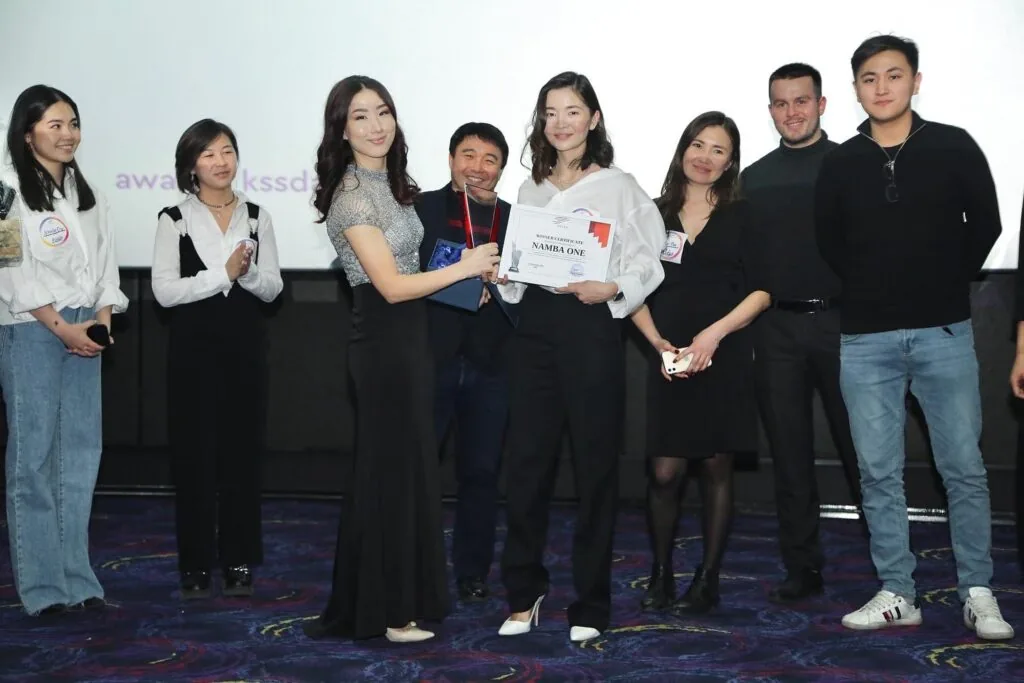
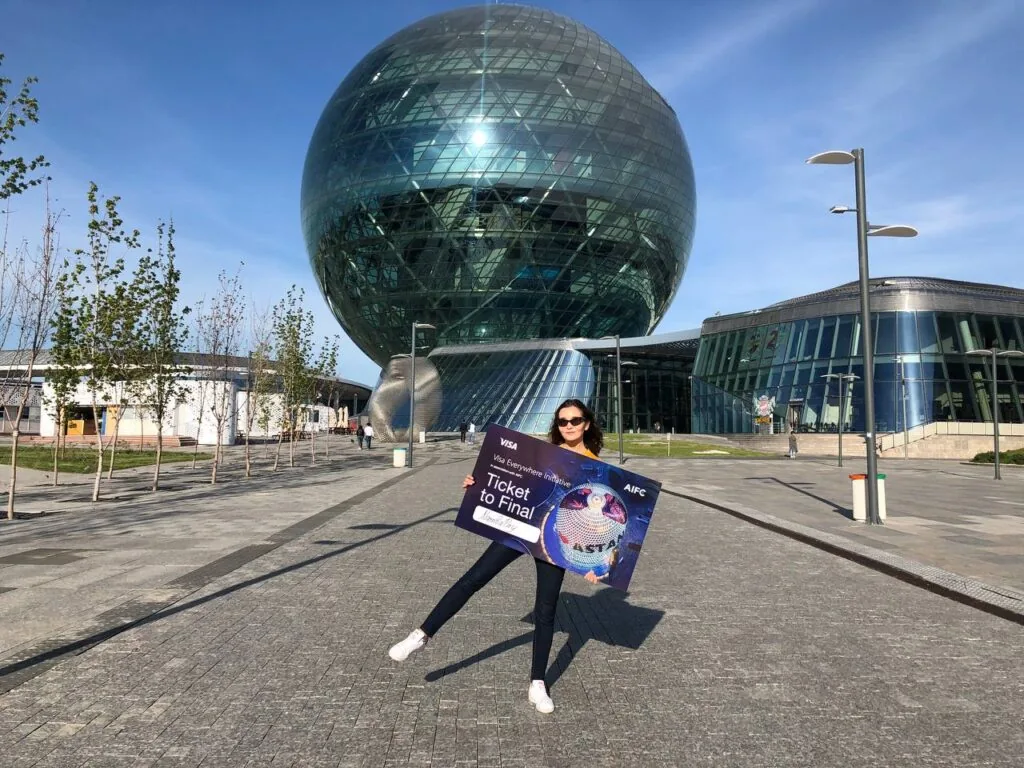
Throughout this period, we received numerous awards from the payment system VISA, Fintech StartupBootcamp, the Ministry of Digitalization, and the Ministry of Economy and Commerce. Our company attracted the first external investments in the amount of $1 million from the venture fund MOST Ventures.

One of the landmark events was the successful completion of participation in the regulatory sandbox of the National Bank of the Kyrgyz Republic, which allowed us to obtain the right to independent issuance of electronic money and provide internet acquiring services.
In 2022, my professional experience led me to the TechWomen program, through which I had the opportunity to work with product managers at Twitter in its headquarters in San Francisco. As part of this program, I was able to exchange experience and visit companies such as LinkedIn, Google, Autodesk, TikTok, and others. In San Francisco, one of my dreams came true—meeting Stanford professor Ilya Strebulayev. I think every startupper striving to become a unicorn is familiar with this name.
In the spring of 2023, I left Namba Group and went my own way. To date, I continue my career in IT and work with products in the European market.
In the summer of 2014, I started an internship at kuppi.kg and house.kg — the first classifieds in Kyrgyzstan, launched by Namba. These projects were real startups. I still remember how we launched them literally on the fly in a residential space.
In the autumn of that same year, I applied for an internship at Namba Media and was accepted for the position of junior marketer. The next six months, my workplace was a cozy sofa, where I immersed myself in new tasks and opportunities.
About stereotypes
There are many stereotypes that women face daily. From the impossibility of combining career and family to prejudiced opinions that women are less capable of leadership and making important decisions.
The main stereotype I personally faced was "managing a company is not for women." Given the fact that at the time of my leadership of the FinTech company I was 26 years old, my age caused even more bewilderment among people. I often had to hear that young women are not capable of being serious leaders and that success in business requires special toughness and decisiveness to handle challenges.
However, by the laws of life balance, I am surrounded by wonderful people, including women, who by their example showed the opposite. Strong, sensitive, insightful, wonderful Kyrgyz women. Their successes inspire and prove that leadership does not depend on gender or age. These examples give hope for changes in society and the possibility of overcoming stereotypes that are still present.
Barriers for women in IT
Women in IT often face a number of difficulties and obstacles on the path to career growth. One of the main problems is bias, which can manifest itself in stereotypes that women are less competent in technical fields. This can lead to the fact that their ideas and achievements are not taken seriously.
Also, women often find themselves in a situation where they need to prove their value. Under such conditions, pressure may arise that makes it difficult to confidently express opinions and initiatives.
I personally overcame these difficulties by improving my qualifications and continuous self-education. I tried to keep up with the latest technologies and trends in the industry, which allowed me to feel confident.
I was proactive, participated in various IT events and conferences as a speaker. I managed to participate in acceleration programs and competitions as a participant and as a member of the investment committee.
I try to share my experience and advocate for changes in work culture to create a more inclusive environment for future generations of women in IT.
Recommendations for those just starting their path
The beginning of a career path can be both exciting and frightening.
- Accept failures as part of the process. Failures and mistakes are a normal part of any career path. Learn from them and use them as an opportunity for growth.
- Be proactive. Look for opportunities, do not wait for them to come to you. Show initiative.
- Be confident: although the expression "fake it until you make it" is not entirely about me, sometimes it is difficult for us to see all the raging potential within ourselves, which is hidden under the cover of stereotypes and insecurity. Step out of your comfort zone, and a huge world of opportunities will open up before you.
- Dream and set goals. Dream big, do not let your mind create barriers. And even the sky is not the limit; beyond it lies a beautiful world.
The Tech on Telegram Follow The Tech on Telegram
Keep up with the latest technology and startup news.
Related reading







More from this author

News
zypl.ai begins operations in Japan and focuses on next-generation risk models
Mansur Ismagulov

News
Elon Musk's net worth has exceeded $700 billion for the first time
Mansur Ismagulov

Article Interviews
"Central Asian countries should build a joint ecosystem," — Bekhzod Ismoilov on the development of AI in the region
Mansur Ismagulov

Article Interviews
Bloom's Taxonomy and Engineering Levels: A Practical Growth Model
Mansur Ismagulov

Article Useful
How the IT industry in Azerbaijan developed in 2025: key events
Mansur Ismagulov

News
Tajikistan has become a new member of the regional innovation alliance Central Asian Innovation Hubs
Mansur Ismagulov