WomenInTech. "The larger the company, the fewer instances of discrimination," — successful women from Kazakhstan and Uzbekistan discuss challenges in IT
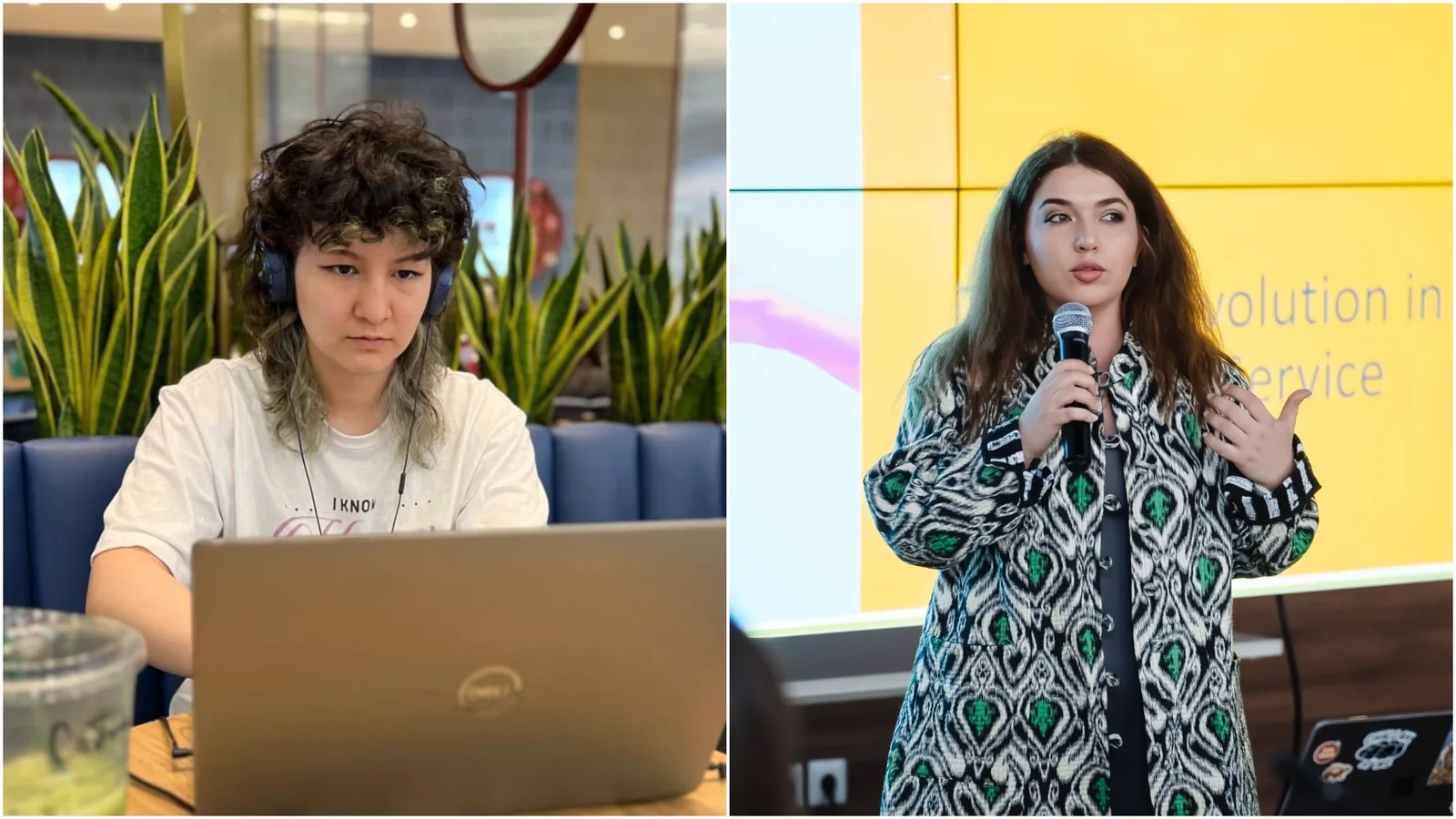
Girls from Almaty and Tashkent shared their insights on the challenges women face in IT and how they overcome them.
Author - Mansur Ismagulov
The Tech AI
Get the key points in seconds - a short summary from The Tech AI.
Sabina Rufullayeva (Almaty) — Software Engineer at DataArt. She began her career at the age of 18, working at Chocofood.kz for nearly three years, where she became a team lead. Monica Avakyan (Tashkent) — Head of Customer Service at Veon Adtech. She progressed from a credit specialist to the Head of Digital Marketing at Beeline Uzbekistan over seven years.
Sabina Rufullaeva, city — Almaty, Software Engineer
About Me
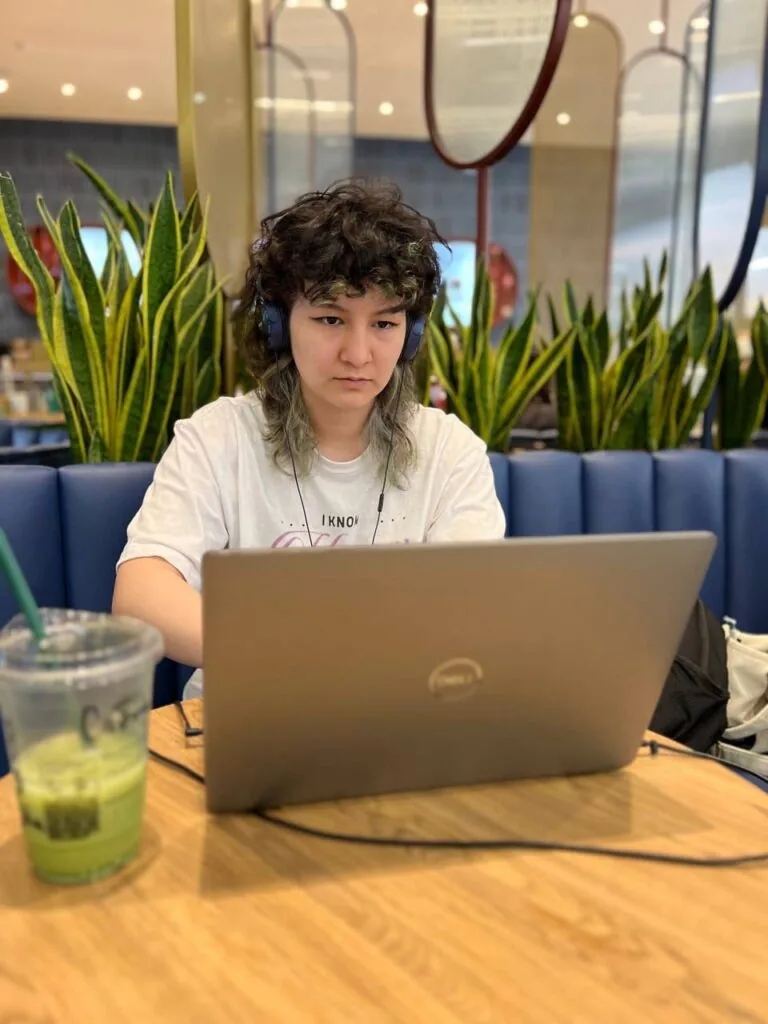
I am a programmer with about seven years of experience in Python. I specialize in backend development, but I have also tried my hand at being a data engineer.
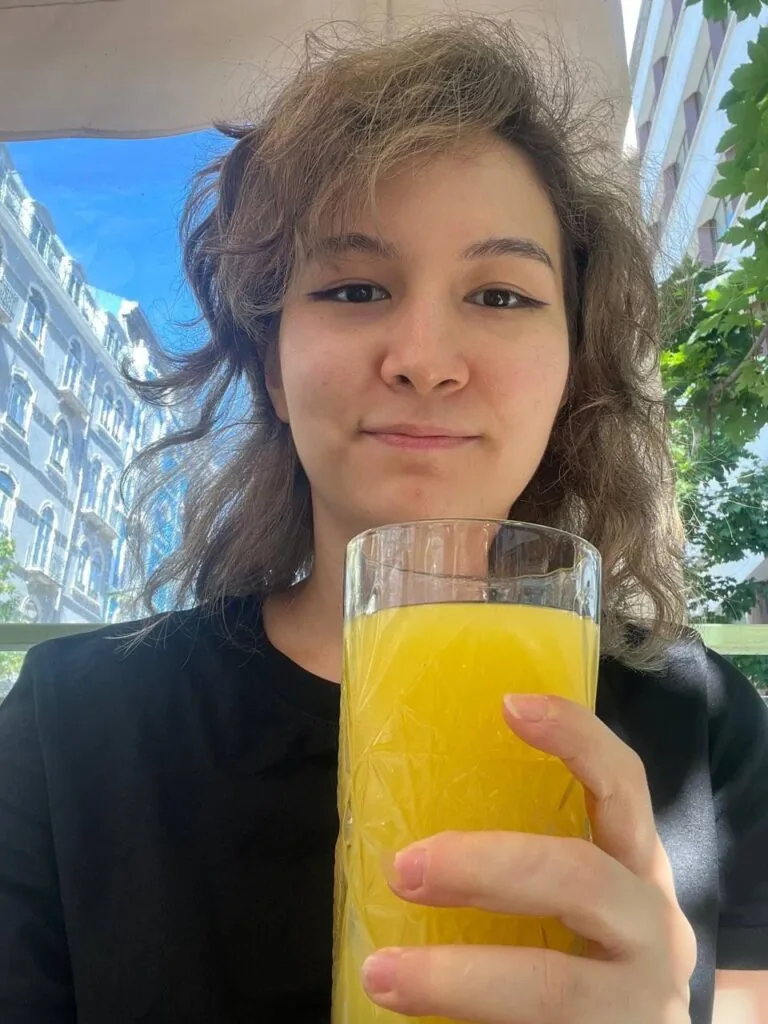
I started looking for a job when I turned 18, while I was in my third year of university. A friend shared a vacancy for an assistant to a freelance programmer. I applied, passed an interview consisting of logic tasks, and was hired. My salary was minimal, but it was official ("white"), and the schedule was flexible. I was proud to be working. My employer found interesting orders, and I helped out a bit, studied Python and Flask. This same employer recommended me for my next job. There, I compiled reports, scraped spreadsheets, and worked extensively with various databases, which proved useful for my future career.
I also worked in a startup incubator, where I was involved in backend development. Then I joined Chocofood.kz, where I worked for almost three years, growing from a junior to a middle developer and becoming the team lead of the development team. It was an interesting experience. When I felt it was time to move on, I applied for a backend developer role in an international outsourcing company, but my tasks were more related to data engineering. My knowledge of databases came in handy: I created a small data warehouse, set up ETL processes, and integrated a dashboard from Apache Superset. I was the only developer on the team, and when I realized this wasn't for me, I started looking for a new place.
I applied to DataArt, passed the technical interview, and have now been working for almost three years as a backend developer with the qualification of a junior data engineer.
How I entered the IT profession
In school, I thought about journalism, but in the 11th grade, I made a sharp turn and chose programming because I did well in computer science classes. My physics teacher was horrified at the time, but I managed to pull myself together and pass the subject with a decent grade. I enrolled in the International University of Information Technologies in "Computing Technology and Software." The university gave me a solid foundation and wonderful friends.
About Stereotypes
I have encountered stereotypes on my career path. For example, during one interview, I was asked if I planned to have children. It was a red flag, but I accepted the offer and later regretted it. There were other instances, but I noticed that the larger the company, the less discrimination was displayed. At ChocoFood in 2018, we had a cool team lead who supported women in IT, and half of our development team consisted of women, all incredibly powerful and cool!
Today, I work at DataArt, where there are many initiatives to support women, and discrimination can lead to dismissal. Overall, it is easier in the IT field, especially in international companies, where you feel more protected.
Obstacles for Women in IT
The biggest problem in my career was imposter syndrome. I worried a lot about my productivity and spent so much energy on it that I didn't always have enough left for my tasks. Programming is intellectual and creative work, and subjective feelings of failure hit self-esteem hard. I have relatively overcome this by taking good courses and working with a psychologist. I try to support women who face this. Overall, the more work experience you have, the more valuable you are as a specialist, and over time, you can choose conditions that suit you, and sometimes even dictate them, choosing better companies and not agreeing to just any job just to make a living.
Recommendations for Those Just Starting Their Path
Based on my own mistakes, I would recommend the following:
1. Try to make more mistakes and hit your head as early as possible. It doesn't matter if it's a crashed database in production or a difficult and scary conversation with a team lead. You can view each mistake as an addition to your salary in the long run because it is experience.
2. Learn to conflict and stand up for your opinions — this is an important skill, especially in IT, where you are almost always a team player. Conflicts should not be perceived as something bad; they are useful, and their healthy resolution makes the team stronger.
3. If you are asked during an interview if you plan to have children, or if they offer one salary but the contract states another, you should not work for such companies.
4. If you feel that you are not good enough for an interesting position, apply anyway. Even if you have less than half of the required skills. Perhaps the job description was written by someone from outside the technical department, and some skills are not mandatory. In IT, the more you know, the easier it is to absorb new skills, as they layer on top of existing mental models. If you have a base, learning a new technology won't take much time.
Monika Avakyan, city — Tashkent, Head of Customer Service at Veon Adtech, @monika_avakian, LinkedIn

About Me
I am the Head of Customer Service at VEON Adtech in Tashkent. We are a Business Unit of the VEON Group, developing digital and performance marketing, modern advertising technologies, including our own programmatic platforms. I have two main tasks: internal and external.
The internal task involves ensuring collaboration between departments and creating a symbiosis between teams for timely task completion and total mutual understanding. In external work, I strive for client satisfaction with our services, which contributes to upselling and improving the company's reputation.
In addition, my team and I manage the CRM system and actively support the full automation of processes so that everything works like clockwork.
I also recently took on the role of Deputy Head of the NGO IT Ladies and am currently actively studying this new role.
My career path began with the position of a credit specialist in a bank. After graduating from university, I decided to immediately pursue the profession and see what it was like to work in an office. Later, I moved into sales. I improved my communication skills and explored the city during business trips. Once, my boss told me about a new direction in digital marketing and put me in charge of it. At that time, I knew nothing, but thanks to my boss, through trial and error, we managed to launch digital advertising campaigns on platforms such as Meta, Google, various DSPs, and Apple Search Ads. Then I was invited to work at Beeline Uzbekistan, where I became a digital marketer for the app. Thanks to the built ecosystem, we worked according to Agile, created various chapters, found our "North Star," and developed our direction's skills by leaps and bounds. Over seven years of such diverse experience, I went through a transformation, which I absolutely love.
How I entered the IT profession

I am deeply grateful to my former manager, Farrukh Alimukhamedov, who inspired, guided, and constantly advised me, sharing his experience and knowledge about digital marketing. He became my role model.
Digital marketing is fundamentally about numbers and their forecasts, and I have always liked numbers — they are simple, clear, and beautiful, and there is always a logical connection. The potential of the IT sphere is huge, and the opportunities to apply one's skills grow unimaginably fast. AI, machine learning — it is all so interesting, and I want to participate in everything. That is how I stepped onto the IT path.
About Stereotypes
What woman hasn't encountered stereotypes? Especially in a leadership position. You always have to be better, higher, and stronger than a male manager. At my current workplace, of course, there is no such thing. However, there were funny situations when I proposed an idea in a meeting, it was ignored, but after the same idea was voiced by a man, it immediately became wonderful.
I love questions about marriage and planning children during interviews. When they are asked, I say with a serious face that I am abstaining from men, making up all sorts of nonsense to observe the HR's reaction. But no one put any sticks in the wheels; my competence was always high, so there were no obvious clashes or inequality and oppression.
Obstacles for Women in IT

"If she's a girl, she'll get married, get pregnant, and become a minus employee" — all these stereotypes about emotions and other related unknown biases. All women face this. If you come to such an interview and they ask stupid questions, there will be nothing interesting about that company.
Stereotypes in the division of professions into "female" and "male" persist even in a post-industrial society. Thus, according to a survey by the "Public Opinion" Foundation, only 1% of the population believes that a person's abilities do not depend on their gender. 33% believe that the division of professions into "female" and "male" is predetermined by nature. 80% believe that men and women should not have the same retirement age. 41% believe that men have higher abilities for scientific work. 39% of respondents believe that women find it easier to build a career due to their attractive appearance. 22% of the population negatively views emancipation, and 24% do not know what it is at all. Such are the statistical data.
I overcame this by simply being better than potential competitors. It sounds like a quote from "VKontakte," but every day I honed my skills and proved that I was great, knew how to do things, and that my opinion needed to be taken into account. It worked.
Recommendations for Those Just Starting Their Path
Quoting a modern classic — "Live here and now, life is one." Try, learn, don't be afraid to make mistakes. Get an internship at the workplace you liked. Feel out the ground.
At my first job, there was no concept of a standard working day. We had a six-day workweek, and we were called to work on Sundays. I thought this was normal, but these were the features of that job. Before choosing a workplace, determine your priorities: learning, salary, team, lunch time, work schedule, what you want to get from this job. Then go to work. Learn, absorb everything like a sponge; there is no such thing as too much knowledge. Take responsibility for your actions and don't be afraid to boast about your results — this is correct.
The Tech on Telegram Follow The Tech on Telegram
Keep up with the latest technology and startup news.
Related reading







More from this author

News
zypl.ai begins operations in Japan and focuses on next-generation risk models
Mansur Ismagulov

News
Elon Musk's net worth has exceeded $700 billion for the first time
Mansur Ismagulov

Article Interviews
"Central Asian countries should build a joint ecosystem," — Bekhzod Ismoilov on the development of AI in the region
Mansur Ismagulov

Article Interviews
Bloom's Taxonomy and Engineering Levels: A Practical Growth Model
Mansur Ismagulov

Article Useful
How the IT industry in Azerbaijan developed in 2025: key events
Mansur Ismagulov

News
Tajikistan has become a new member of the regional innovation alliance Central Asian Innovation Hubs.
Mansur Ismagulov