WomenInTech. "Barriers exist, but they are surmountable," — stories of girls from Kazakhstan and Uzbekistan about their careers in IT
In this part of Women in Tech, women shared their experiences in IT: how they overcome stereotypes, build their careers, and find a balance between professional life and personal priorities. Their stories show that perseverance, skills, and support help achieve goals even in a traditionally male-dominated field.
Author - Mansur Ismagulov
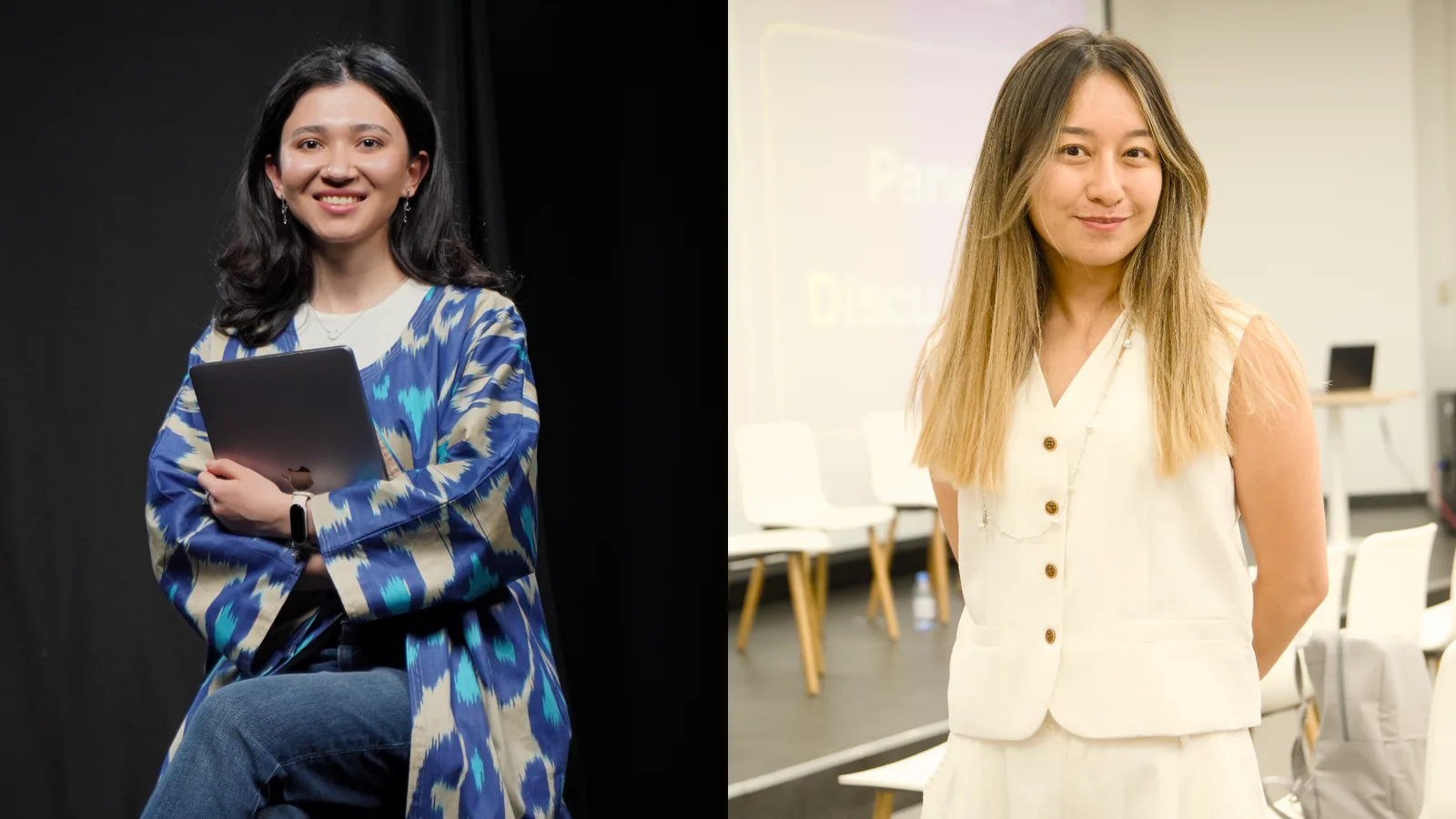
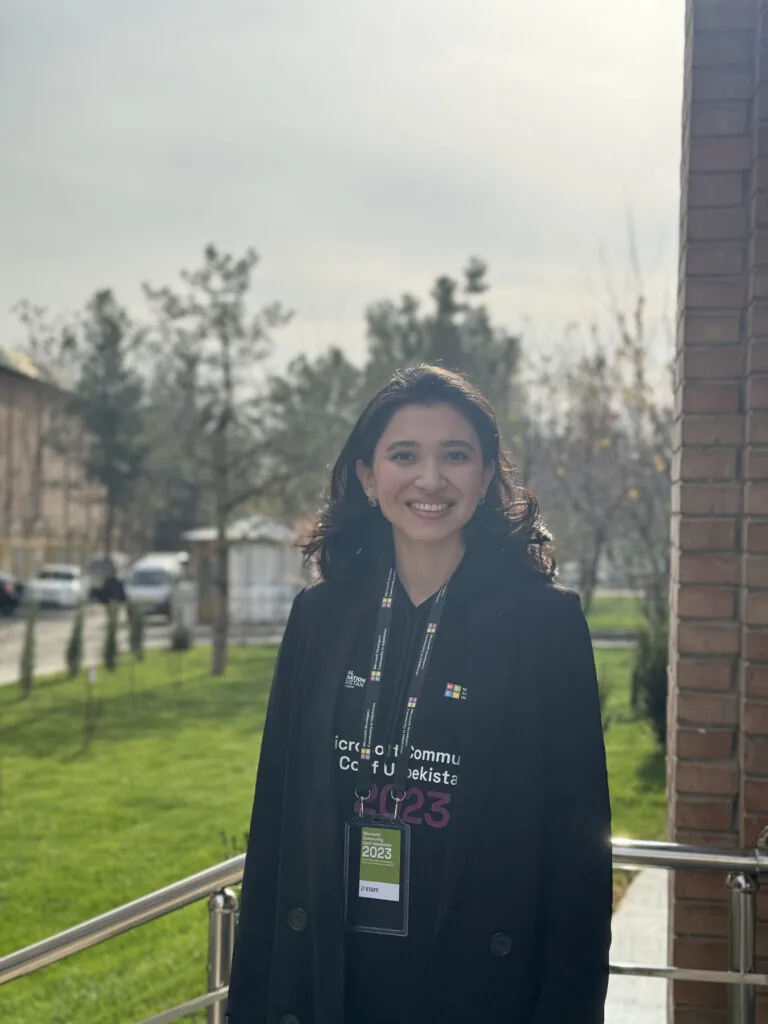
Dildora Ganieva, City — Tashkent, Software Engineer at Ascension Systems, LinkedIn, Instagram
About Me
Currently, I work as a Software Engineer at Ascensio Systems. Previously, I spent four years working at Murano Software.
How I Entered the IT Profession
Since childhood, I have been fascinated by logical puzzles. My sister and I constantly solved riddles and other brain teasers. She had an entertaining math book and solved problems quickly. I found it interesting, but I didn’t succeed as easily at first.
Nevertheless, life unfolded in such a way that I now work in the IT field. In school, I excelled in exact sciences, especially physics. Later, I chose my specialization and enrolled in the Tashkent Professional College of Communications, majoring in “Communications.”
During college, many workshops were held. One of them was organized by the Tashkent State University of Information Technologies with the support of professors from South Korea, who taught us mobile development. At the end of the workshop, we had to complete a mini-project and present it. Our team took third place, which gave me confidence in my chosen path.
On Stereotypes
Starting from my second year of college, I began working part-time in various fields — in a bank, a telecommunications company, and so on. At that time, I noticed that the attitude toward women at work was sometimes different, and professions were often viewed as “female” or “male.”
In Uzbekistan and throughout Central Asia, women often prioritize family over career. Perhaps this is correct, as balancing everything simultaneously would be difficult. However, there were other limitations as well, and the attitude toward women at work was somewhat different.
After I started working in my specialty in the IT field, such limitations disappeared. The main thing is your skills and knowledge; everything else doesn’t matter much. The IT profession does not distinguish by gender: if you have talent, diligence, and perseverance, you can achieve a lot.
Obstacles for Women in IT
The main challenge for women is not being afraid to express their opinions. In work, it is important to discard stereotypes: show initiative and be able to defend your boundaries, otherwise, advancement will be difficult.
For women with families, the issue of priorities is important: sometimes you have to balance between work and family matters, setting the right accents.
Today, there are many opportunities for remote work in our field, which is especially convenient for women with children. You can even become a team lead while working online from home.

Recommendations for Those Just Starting Their Journey
I would recommend taking verified courses if you have chosen a direction and want to develop in it. But first, ask yourself: are you really interested in this? You shouldn’t enter the field just because of the high average salary.
Next, you can attend bootcamps or courses — there are many free opportunities now. In Uzbekistan, there are schools, various webinars, and workshops where you can immediately gain practical skills. After that, you can polish your profile and portfolio.
Be active: participate in events, develop networking. At the start of your career, it is helpful if a professional from the company you want to join can recommend you — this speeds up the job search.
LinkedIn is a powerful platform for profile creation, job searching, events, and educational content. English is a basic necessity, as most documentation and professional content is in it.
Don’t be afraid to set goals for yourself and defend your boundaries. To be successful, it is important not only to have professional knowledge but also to show initiative: maintain LinkedIn, write posts, share expert content — this helps you stand out.
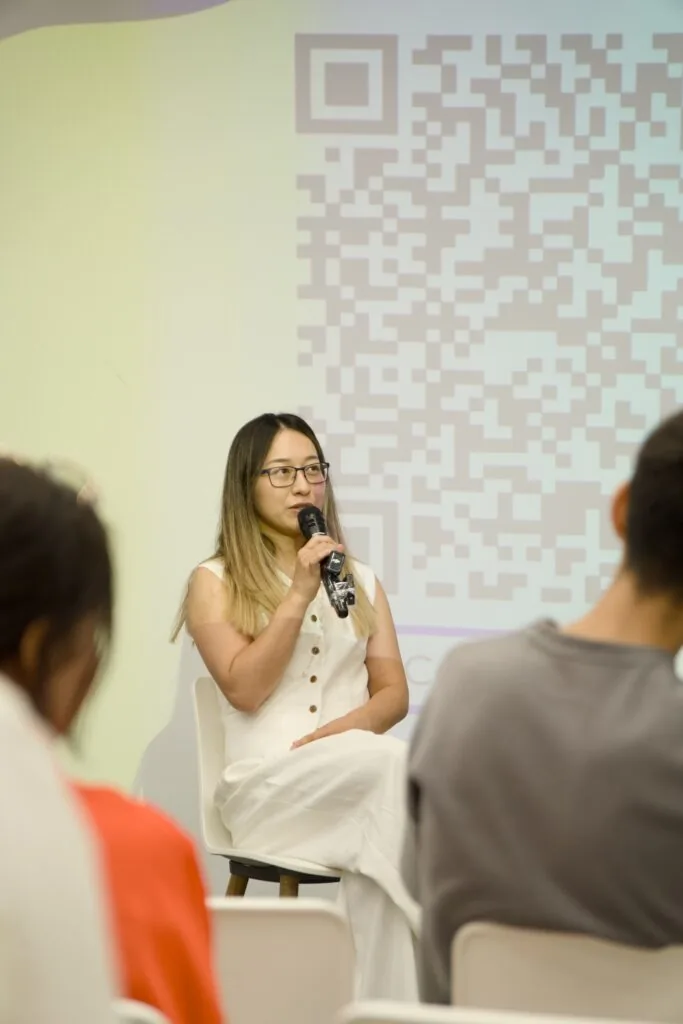
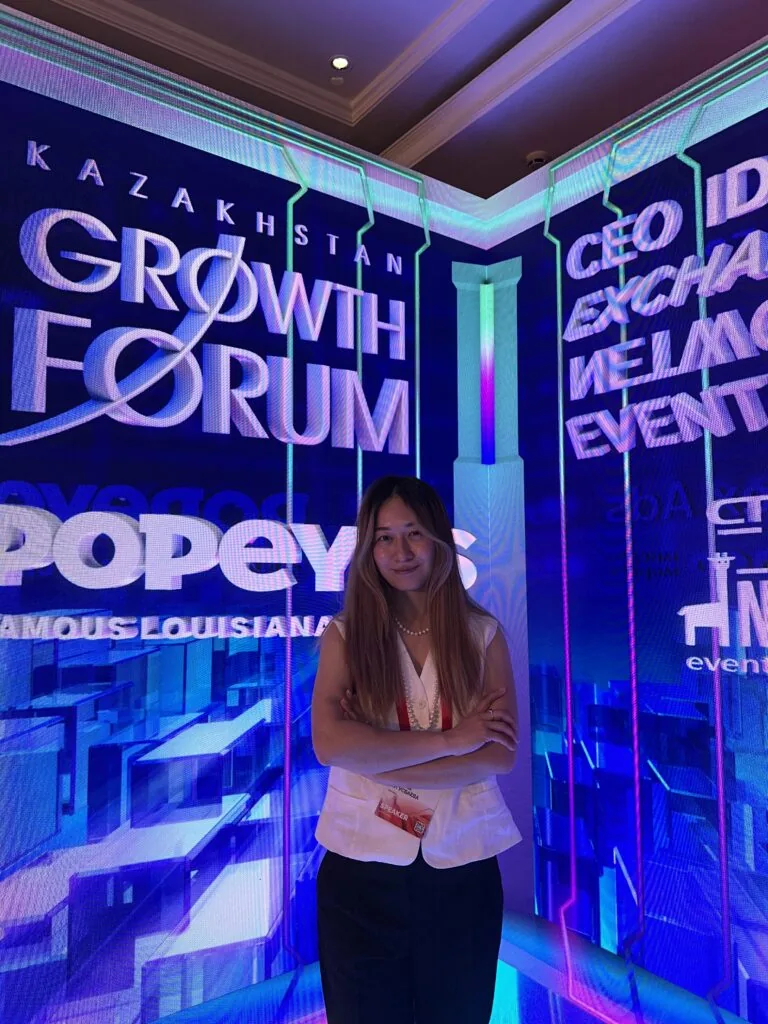
Zhansaya Nugusbayeva, City — Almaty, Engineering Manager II, EPAM Kazakhstan
About Me
I work at EPAM, developing areas related to AI projects, and also help colleagues as a resource manager. On projects, we implement AI solutions for clients — from automating business processes to creating intelligent assistants. My tasks include strategic project management and developing engineering teams.
At the same time, I consult startups and IT specialists — helping them build career strategies, find growth points, and move forward confidently. I like that I can work not only with technologies but also with the people behind them.
In my free time, I study Chinese, am interested in psychology, and follow the development of artificial intelligence. I love learning, sharing knowledge, and constantly looking for new growth points — in myself, in people, and in technologies.
How I Entered the IT Profession
My path in IT began with an interest in exact sciences in school. I studied in a physics and mathematics class, then at SDU (South Kazakhstan State University) majoring in “Computing Technology,” and later enrolled in the University of California under the “Bolashak” program, where I studied Computer Science.
From my first year, I tried to be active and gain experience: I worked part-time in various fields — from helping international students and system administration to analytics with neural networks and hardware. This diverse experience taught me to adapt quickly and work confidently in any environment.
Every summer, I completed internships, including at the Ministry of Industry and New Technologies of the Republic of Kazakhstan, where I compiled startup databases. In my third year, I set a goal to find an internship in my specialty in the USA, which became possible thanks to the active university environment.
I applied to more than 100 positions and faced rejections even from small startups in California. Almost losing hope, I passed an interview at Amazon and received an offer — my first work experience after university! It was one of the most emotional moments in my life: surprise, relief, and tears of joy.
I worked in the Amazon Video team, where we developed recommendation algorithms. This experience became the starting point for further development: I gradually expanded my roles — from developer to team lead, architect, and project manager, working in companies in the USA, Europe, and Central Asia.
At each stage, I moved more from coding to management: I dealt with architectural solutions, team building, implementing CI/CD and DevOps, and supervised the entire product lifecycle.
On Stereotypes
Stereotypes manifest differently and not always as blatant discrimination — sometimes it is how people perceive you or what they expect from you.
When I returned to Kazakhstan after working abroad, during one of the interviews, I was asked questions about my marital status and plans — to get married, have children. Men are usually not asked such questions. When I didn’t receive an offer, I wasn’t upset: I understood that the reason was not in my professional qualities.
This case clarified a lot for me. It is important not only to find a job with a good salary and interesting projects but also to be in a team that shares your values. You need to choose an environment where you are respected as a professional.
Everyone has circumstances that affect work. For women, this is often more noticeable — maternity leave, childcare — but this does not make them less productive. Professional qualities should always be the main criterion.
I was lucky that I had the opportunity to compare. I worked in different Western companies and felt comfortable there. In the USA, for example, the issue of discrimination is acute; a high level of sensitivity to these issues gives a sense of protection, especially at the start of a career.
When I considered EPAM, it was important for me that the attitude toward employees was equal and that discrimination on any grounds was excluded. This is regulated globally and applied in all 55 countries where the company operates.
In Kazakhstan, the situation is gradually changing. Previously, gender could play a role, but now, especially in international companies and the modern IT community, professionalism is valued more. We have many strong, independent, competent women in the industry — this is inspiring.
Of course, this is my personal experience, and the situation may be different in other industries or regions. But it is important to share this: barriers exist, but they are surmountable, and you always have the right to choose an environment where you can grow.
Obstacles for Women in IT
Many girls in IT feel a lack of role models and mentors. Especially at the start of a career, when there is little experience and confidence, it is important to see a woman like you who is successful in the profession.
I solved this problem for myself: I learned from leaders who inspired me, and sometimes directly asked them to be my mentors, regardless of gender. This way, I felt more confident, knowing that there was someone I could turn to who would say in moments of doubt: “You can do it!”
Mentorship is not only about transferring knowledge but also about believing in a person. Therefore, today I try to support colleagues from startups and beginning IT specialists.
Another challenge for women is work-life balance. Balance does not exist: it is impossible to succeed everywhere simultaneously. You need to honestly admit this and distribute energy, shifting focus: sometimes to career, sometimes to personal life. The most important thing is understanding and support from loved ones.
Another factor is the tendency to undervalue oneself. Many doubt themselves, do not ask for a raise although they deserve it, or do not respond to job vacancies if they do not meet all requirements. I went through this myself. I learned to tell myself “I can handle it,” take responsibility, ask questions, and surround myself with people who will support me.
I am glad to work in an environment that values mentorship, knowledge sharing, and development regardless of gender, age, or experience — this is part of our company’s DNA.

Recommendations for Those Just Starting Their Journey
- Don’t be afraid to dream and set ambitious goals. The IT field is open to those who are ready to learn and act.
- Don’t wait for the “perfect moment” — just start.
- Don’t be afraid to make mistakes. They are inevitable, and that’s normal. The main thing is to learn from them and remember that difficulties are temporary.
- Try to find mentors. Observe people who inspire you and don’t hesitate to reach out directly. One conversation at the right moment can change everything.
- Be a mentor yourself. This helps those who are just starting their journey and yourself: it builds confidence, develops empathy, and helps you understand yourself better.
- Form an environment around you where you are respected and believed in. Support is not a bonus but the foundation of development.
- And finally, believe in yourself, even if it seems like you lack knowledge or experience. It is impossible to know and do everything at once. Just start acting — and with each step, your confidence will grow.
The Tech on Telegram Follow The Tech on Telegram
Keep up with the latest technology and startup news.
Related reading







More from this author

News
zypl.ai begins operations in Japan and focuses on next-generation risk models
Mansur Ismagulov

News
Elon Musk's net worth has exceeded $700 billion for the first time
Mansur Ismagulov

Article Interviews
"Central Asian countries should build a joint ecosystem," — Bekhzod Ismoilov on the development of AI in the region
Mansur Ismagulov

Article Interviews
Bloom's Taxonomy and Engineering Levels: A Practical Growth Model
Mansur Ismagulov

Article Useful
How the IT industry in Azerbaijan developed in 2025: key events
Mansur Ismagulov

News
Tajikistan has become a new member of the regional innovation alliance Central Asian Innovation Hubs.
Mansur Ismagulov