Universal Identity of AI Agents and New Opportunities in Web3
Author - Mansur Ismagulov
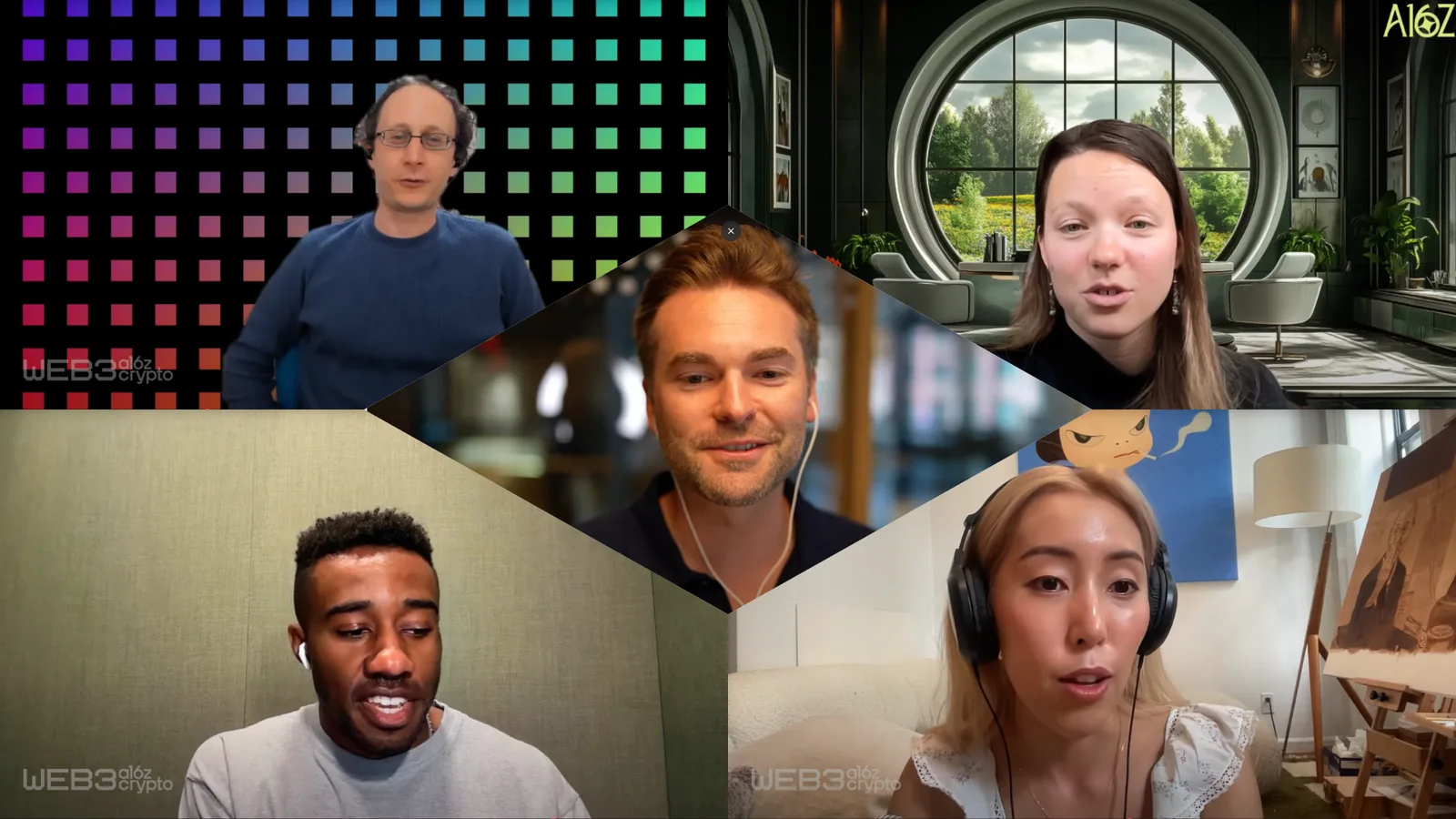
Experts from the a16z crypto team conducted a roundtable dedicated to key ideas at the intersection of AI and cryptocurrency. The discussion participants included investment partners Sam Broner, Liz Harkavy, Kara Woo, and Jay Drayn, research partner Scott Komaiers, and security engineer Matt Gleason.
In the Web3 and cryptocurrency world, AI integration opens up unique opportunities for users and developers. One of the key topics is the creation of a universal identity for AI agents, which will allow them to interact with users across various applications and services simultaneously.
Why AI Agents Need Their Own Identity
In traditional applications, a user logs into an account on a website or mobile app and sees their data. AI agents operate differently: they can appear in their own applications, messengers, calls, emails, or SMS. In such an environment, it becomes difficult to understand that you are communicating with the same agent that has the necessary context and capabilities.
A universal identity for agents solves this problem by allowing:
— identification of the agent independently of the platform
— transfer of interaction state and context
— management of agent rights and capabilities
— integration of payments and other services.
Context as a Key Element of AI Interaction
Modern AI agents face the problem of context loss. Each time a new interaction occurs, the user has to re-explain their preferences or data. For example, you might ask an AI to write Python code or talk about your favorite football team, but upon the next launch, this information is lost.
Blockchain serves as an important tool here: it allows preserving context, guarantees data integrity, and manages who and how can use this information. This makes personalized and portable context frames possible, compatible with future AI systems.
Levels of Context
Context can be divided into several levels:
- Personal context — information about a specific user for the current interaction.
- Global context — data that can be used across different applications and services.
- Shared context — when creating programs or workflows via AI, such as through vibe coding, blockchain ensures standardization and compatibility of results from different users.
This context structure allows AI agents to be more universal, retain knowledge, and interact with users across different platforms without losing key data.
Blockchain can become the foundation for AI agents, providing storage not only for personal user context but also for creating shared and global context. For example, at large conferences, situations may arise where complex and subtle changes need to be made to software packages. Using blockchain allows recording such changes and ensuring their preservation when transferring code and data between participants.
Blockchain and the Web Crawler Market
One solution is the monetization of AI agents' access to content through blockchain. Each crawler can hold crypto assets, using which to conduct on-chain negotiations with a website's "blocking agent." During these negotiations, the cost of data collection in real-time can be determined, access can be provided, and payment can be recorded through open protocols such as X42.
This allows moving from individual agreements between companies and content providers to a standardized and automated market, where rights to data collection and its monetization are regulated via blockchain. The analogy with the development of banner advertising in the 1990s shows that standardization and automation of processes can significantly simplify work on a global scale.
Proof of Personhood and Internet Traffic Segregation
The concept of proof of personhood aims to create a mechanism that allows proving to another application, service, or user that the subject is a unique human. This allows dividing the internet into two layers: one for people, and another for agents and bots. On the "human" side, all services, applications, and protocols are available only to real users.
Decentralized proof of personhood mechanisms, such as World ID or projects like Self and protocols for verifiable credentials on Solana, ensure:
1. Censorship resistance — the inability to censor or block by centralized authorities.
2. Credible neutrality — transparency and lack of discrimination in issuing identifiers.
3. Permissionless access — developers can integrate systems without restrictions.
4. Self-custodial management — users fully control their data and can use it confidentially.
These systems also possess forward compatibility, ensuring compatibility with future applications and services without the need for centralized updates.
Examples of Proof of Personhood Applications
- Within the crypto ecosystem:
Platforms like Morpho provide exclusive lending terms for users with a verified World ID.
Experiments with block priority for verified users.
- Outside the crypto space:
Match Group uses the system to verify user age without disclosing personal data.
Shopify uses World ID to prevent fraud with promotions and discounts.
Such a system creates a "fast lane" for people, increasing convenience and speed of interaction with services.
Personalized Advertising and Monetization Using AI and Crypto
The combination of AI and crypto allows delegating control of personalized advertising to the user.
This approach ensures user data protection and privacy of preferences, transparent and fair payment for content and advertising for creators, and a fight against fraudulent practices such as click farms.
The result is a more fair and personalized advertising ecosystem, where users control what they see, and content creators and advertisers receive transparent compensation.
Implementing these ideas opens the path to a more ethical, efficient, and transparent internet ecosystem.
The article was translated from a16z crypto.
The Tech on Telegram Follow The Tech on Telegram
Keep up with the latest technology and startup news.
Related reading







More from this author

News
zypl.ai begins operations in Japan and focuses on next-generation risk models
Mansur Ismagulov

News
Elon Musk's net worth has exceeded $700 billion for the first time
Mansur Ismagulov

Article Interviews
"Central Asian countries should build a joint ecosystem," — Bekhzod Ismoilov on the development of AI in the region
Mansur Ismagulov

Article Interviews
Bloom's Taxonomy and Engineering Levels: A Practical Growth Model
Mansur Ismagulov

Article Useful
How the IT industry in Azerbaijan developed in 2025: key events
Mansur Ismagulov

News
Tajikistan has become a new member of the regional innovation alliance Central Asian Innovation Hubs.
Mansur Ismagulov