Unicorn from KG. How the program works and who can become its participant
Recently, in our Telegram channel The Tech, we held a live stream to learn more about the Unicorn from KG program and how it helps startups from Kyrgyzstan. We are sharing some interesting thoughts in text format.
Author - Mansur Ismagulov
The Tech AI
Get the key points in seconds - a short summary from The Tech AI.
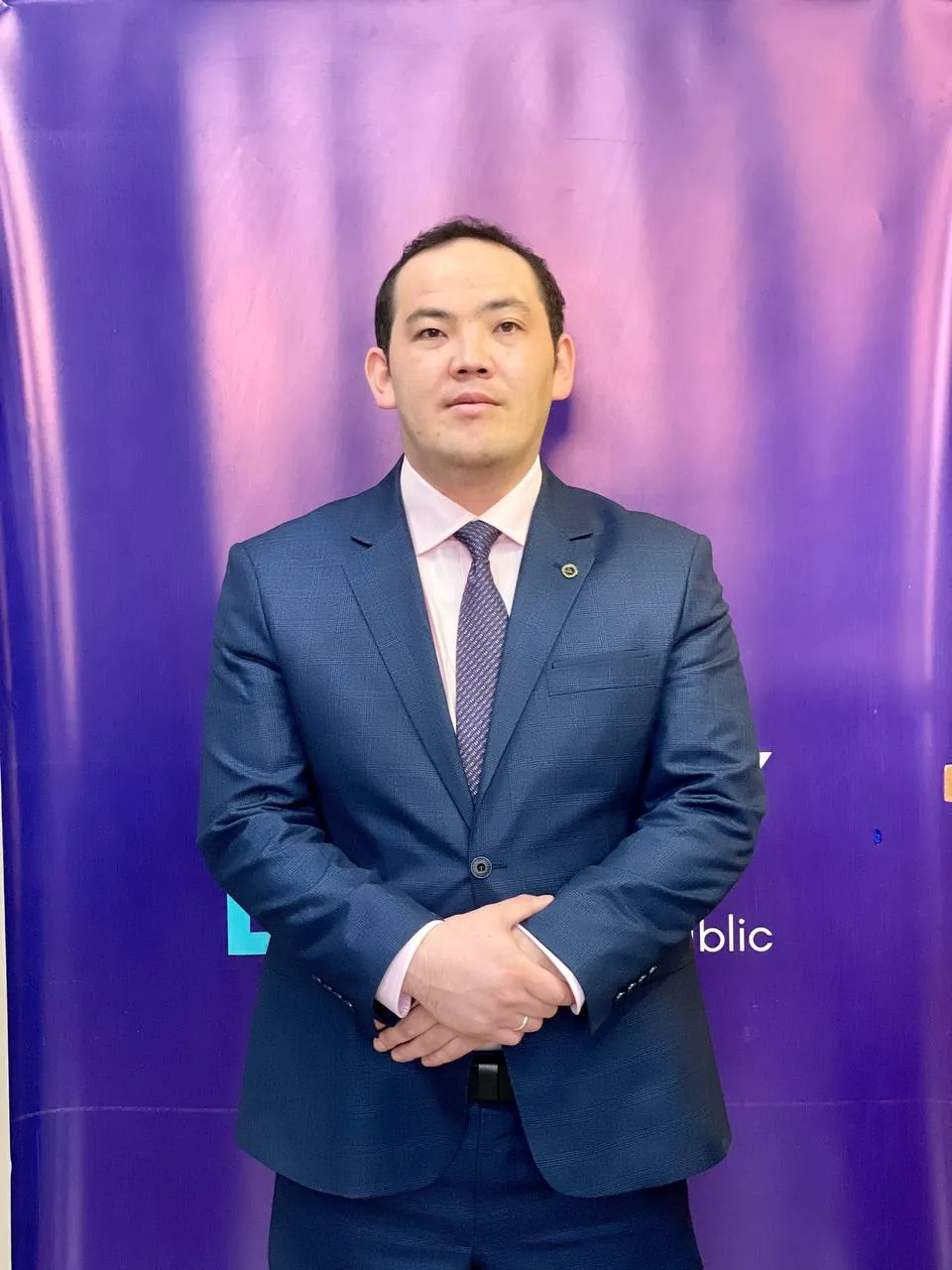
Chubak Temirov, Deputy Director of the High Technologies Park (HTP) in Bishkek, oversees the Unicorn from KG program. HTP, founded in 2011, is a partner of Draper University and selects three startups for each spring and autumn session of the Hero Training program for a five-week acceleration in Silicon Valley. The program is fully funded: $15,000 is allocated per participant, covering training and visa costs. The goal is to create unicorn companies, with a focus on artificial intelligence and project scalability.
Chubak Temirov, city — Bishkek, Deputy General Director of HTP
About Me
I am the Deputy Director of the High Technologies Park. I have over 10 years of experience in IT. I started my IT education in 2012-2013, then worked in project management. I worked at Amazon, and upon returning, I became a sales manager and deputy director. In my current role, I am involved in attracting residents and the operational work of the park.
I graduated from an American university with a bachelor's degree and completed a master's degree at the University of East Anglia in the UK in "Supply Chain and Logistics Management."
About the Unicorn from KG Program
The High Technologies Park was founded in 2011 and became the first in Central Asia. At that time, the IT industry in the region was not developing actively, and companies focused on outsourcing. Over more than 10 years of operation, we accumulated experience in outsourcing and outstaffing, and based on this, we began developing startups that enter the global market.
To support the startup ecosystem, we partnered with Draper University and participate in the Hero Training program. It gathers startups from all over the world and provides a five-week acceleration in Silicon Valley. We send the best startups from Kyrgyzstan, especially in the field of artificial intelligence, so they can build connections, attract investment, and gain experience.
The Hero Training program covers about 120 countries and is held twice a year. The goal of the Unicorn from KG program is to create unicorn companies in Kyrgyzstan. Although we do not yet have such companies, we are confident that thanks to our programs and cooperation with partners, they will appear.
Participation in the Program
Twice a year, we hold a competition to select startups participating in the Hero Training program from Draper University. So far, we have already sent two batches, and this year we selected three startups for the autumn session. Six startups participate each year: three for the spring batch and three for the autumn batch.
The pitching takes place in English in the Silicon Valley format: three minutes for the presentation and two minutes for questions. Participation conditions are that startups must be innovative, have a product or service, and their founders must be citizens of Kyrgyzstan over 18 years old. We also plan to scale the program to neighboring countries. We focus mainly on artificial intelligence and the scalability of projects.
Within the Hero Training program, a competition is held before the start of the acceleration. We select startups according to the established requirements, and the three best winners are sent to Silicon Valley. The first stage is the survival week, a week of trials requiring high endurance: participants may be sent to remote places with difficult conditions, where they undergo training and competitions together. This week includes survival tests—cold water, bad weather, sleeping in tents. Those who endure this stage move on to the acceleration.
The program is interesting but requires physical fitness. Not everyone completes it, but in the end, they realize the purpose of this trial—team building and the ability to compete. Groups are formed from participants from different countries. Another important stage is the final pitch, where startup founders follow a tall person walking quickly down the street and must manage to present their ideas to him. This is a kind of challenge and part of the program.
Successful Examples and Results
The High Technologies Park fully covers the expenses of program participants, allocating $15,000 for each. Part of this amount goes to pay for the Hero Training program, and the rest is issued to participants to buy tickets and accommodation at the Draper University campus. We also provide visa support.
We have graduated two batches, and each participant has achieved significant results. Among them is Azamat Akeleev with the Olive Rooms project. In Kyrgyzstan, he ran a successful business and decided to undergo acceleration. The program changed his approach, and he created a concept for capsule coworking spaces in Silicon Valley. To date, he has three startup houses: two in San Bruno and one in San Mateo. We at HTP collaborate with Azamat, and we now have HTP startup houses. This is an example of the success of our Unicorn from KG program, which has attracted many visitors and events.
Another program of ours is Dive into Silicon Valley, through which we send young startup founders and current residents.
One example of a successful startup is enji.ai, founded by Oleg Puzanov. The company long engaged in outsourcing and created its own product—a tool for managing a development team in real time. This is especially useful for teams of more than 50 employees working in different countries, allowing them to track efficiency, work transparency, and costs in real time.
This startup has undergone several accelerations, including a Dutch one, and programs supported by EBRD Star Venture.
A project known in Kyrgyzstan is AkylAI, the first smart speaker in the Kyrgyz language, an analog of Siri or Alice, but adapted for the Kyrgyz-speaking audience. The team achieved great success by creating a physical device capable of answering questions in Kyrgyz. Recently, AkylAI underwent acceleration with Jason Calacanis, the first investor in Uber, and participated in his famous podcast, where it was selected as one of two participants out of 150 startups.
In the Kalacanis podcast, the audience was able to learn about AkylAI, and the team had the opportunity to ask questions directly. At the moment, they have transformed the product and are entering the US market with a new brand, a device for mental health support. Given the popularity in the US of monitoring health indicators, the new product helps track parameters such as pulse and sleep quality and is aimed at improving mental state.
In the second batch was the company MyStory from Kazakhstan, creating interactive stories using AI. They successfully passed many accelerations, including the StartX Stanford program. The ArtSkin startup by Ilya Dzhentayev took second place among participants from 120 countries in the Hero Training program, receiving support from Draper University.
Also worth noting is MamaSpace, aimed at helping mothers. In the third batch, three startups are participating: My Data Coin, known in Kazakhstan and Kyrgyzstan; The Consolidator, developing tools for the trucking business; and Nurtilek Beyshe uulu, who previously underwent acceleration at Antler.
Recommendations
For those going to Silicon Valley, it is important to believe in your product, as competition there is huge. You need to step out of your comfort zone, as the approach to pitching and business differs from ours. Participation in programs such as Unicorn from KG truly changes mindset and helps understand how to take a product from Central Asia to the global market.
Our goal is to help startups and founders understand how the Valley works and build connections. Do not think that upon arriving in Silicon Valley, all meetings will be pre-arranged. You need to actively participate in events that take place not only in San Francisco but also in nearby cities.
One of our participants was a developer before the program and did not think about marketing. After undergoing training, he learned to pitch, became open to new opportunities. He found investors and mentors, moved to business strategy, and understood how to sell his product. This case illustrates how the Hero Training program can change the approach and mindset even of the most closed specialists.
Plans
We launched the Unicorn from KG program as a pilot project to test the idea. Now we plan to scale, including more participants, including from other Central Asian countries. In the future, we want to conduct pre-accelerations so that startups are better prepared. Five weeks in Silicon Valley is an intensive course; it is useful for participants to have basic preparation. Such pre-accelerations could include one-week or two-week trainings with the participation of program graduates and pitch sessions for future participants.
Post-programs will help startups after their return to share experience and receive support. We have already held events, for example, a "plov party" in Silicon Valley, where Azamat Akeleev and Ulan Abdurazakov with the AkylAI project helped with organization. In the future, we plan more such events and support for participants in co-living and co-working spaces, such as HTP House.
The Tech on Telegram Follow The Tech on Telegram
Keep up with the latest technology and startup news.
Related reading







More from this author

News
zypl.ai begins operations in Japan and focuses on next-generation risk models
Mansur Ismagulov

News
Elon Musk's net worth has exceeded $700 billion for the first time
Mansur Ismagulov

Article Interviews
"Central Asian countries should build a joint ecosystem," — Bekhzod Ismoilov on the development of AI in the region
Mansur Ismagulov

Article Interviews
Bloom's Taxonomy and Engineering Levels: A Practical Growth Model
Mansur Ismagulov

Article Useful
How the IT industry in Azerbaijan developed in 2025: key events
Mansur Ismagulov

News
Tajikistan has become a new member of the regional innovation alliance Central Asian Innovation Hubs.
Mansur Ismagulov