BeginIT trackers on the importance of the project and how it helps children from rural schools
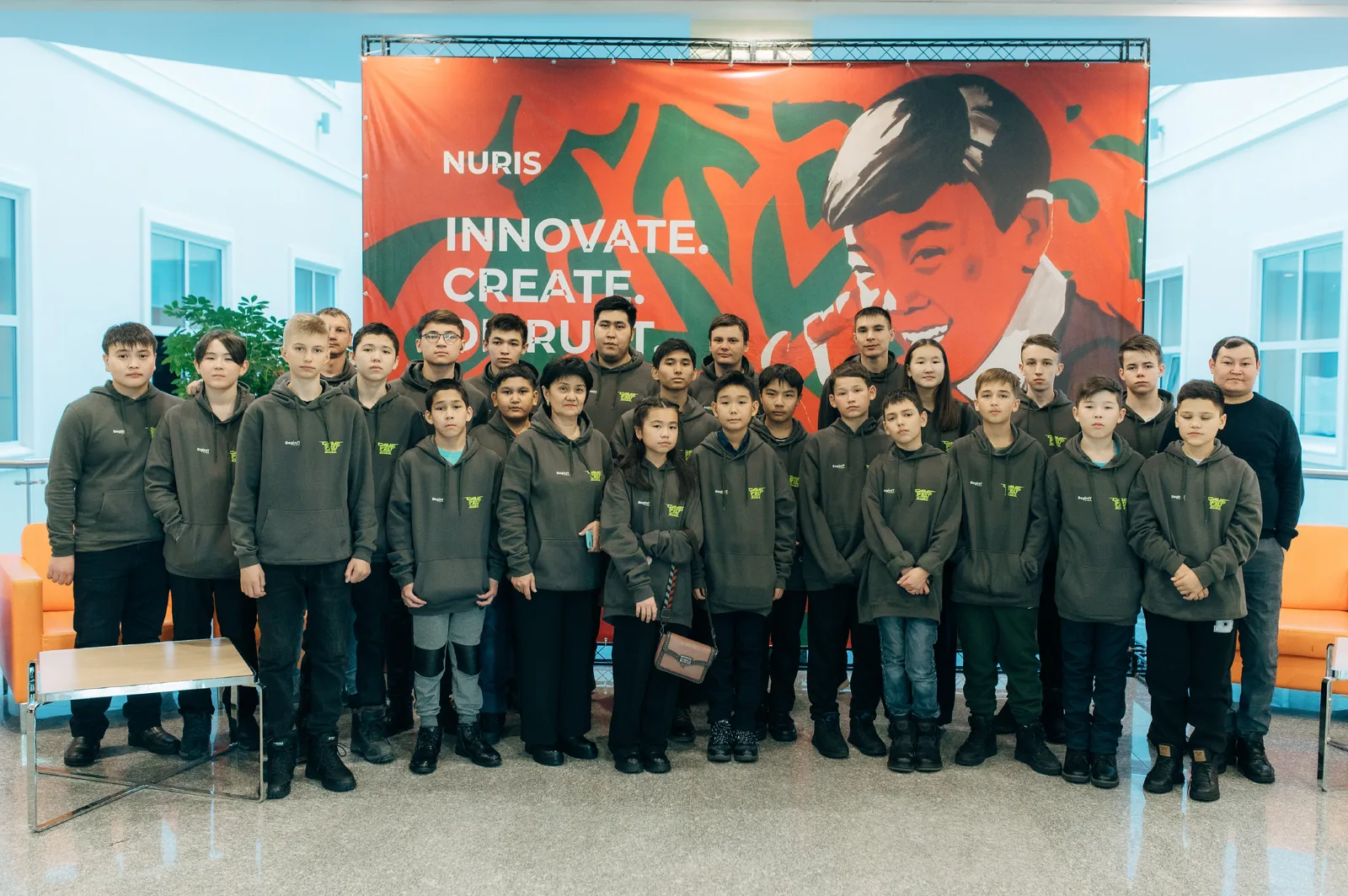
The first season of BeginIT in Kazakhstan — an educational program by the international company inDrive for students from rural areas — has recently concluded. BeginIT has been operating in Kazakhstan since 2022, and this inDrive project is implemented in partnership with the IQanat Foundation and the Karaganda Region Department of Education.
Author - Mansur Ismagulov
The Tech AI
Get the key points in seconds - a short summary from The Tech AI.
The BeginIT project brought together children aged 13–15 from schools in Kazakhstan to learn IT skills and digital design. Under the mentorship of Elaman Kusainov and Alikhhan Talipov, participants mastered No Code tools and Figma, overcoming infrastructure challenges. Four teams created working prototypes of services, which they presented at the Demo Day, demonstrating readiness for internships and freelance work.
One of the main goals of the project is to build a cohesive community of graduates and help them integrate into the IT sector at both the local and global levels: to enroll in IT universities, find internships in technology companies and startups. To achieve this, the children are mentored by program trackers who are professionals in their fields. We spoke with Alikhan Talipov, DevRel Manager, and Elaman Kusayynov, Design Instructor, who supervised the children throughout the course, to learn more about this program and its results.
About the importance of the project

Elaman Kusayynov, Design Instructor
I believe in the importance of education for all children. That is why I gladly agreed to participate in the project. Children from rural schools and orphanages often lack access to modern technologies and may miss out on opportunities that the modern world offers. Participation in the BeginIT project allows me to share my knowledge and experience in the IT field and digital design, helping these children expand their horizons and acquire valuable skills that can form the foundation for their future careers.

Alikhan Talipov, DevRel Manager
The goal of the project is to help children from rural schools. I had the opportunity to work with them for several months: teaching them various technical skills that are of great importance. It is important to instill in children a mindset focused on practical things that will be useful not only in their studies but throughout their lives. Such skills will help them overcome economic and social barriers that may vary from region to region.
BeginIT provides the opportunity to do this comprehensively, simultaneously across the entire country, with a focus on regions and areas remote from major cities. It is precisely this scale that interested me. Considering that some students sometimes had to overcome basic inconveniences, such as periodic power outages or having access to a computer only in the school’s computer lab, we successfully completed the course and went through the entire program, including the practical part at the very end.
Project Participants
Elaman Kusayynov, Design Instructor
Participants of BeginIT were children from various schools across Kazakhstan. Their level of knowledge in IT and digital design at the beginning of the program could vary. However, thanks to our training program and their own diligence, they demonstrated significant progress. Some of them showed amazing talent and passion for IT and digital design, which left a strong impression on me and my colleagues.
Alikhan Talipov, DevRel Manager
The project involved school students aged 13-15. Although the level of general education knowledge among children of different ages may differ, in terms of computer literacy, the children's skills were similar — many things become intuitive for them from a very early age. In the process of working, I noticed that every child, regardless of where they grew up and what they studied, possesses unique abilities and talents. I wanted to equip them with all the tools that would help unlock this potential. And the students were maximally interested in this, which exceeded all my expectations.
Main Tasks
Elaman Kusayynov, Design Instructor
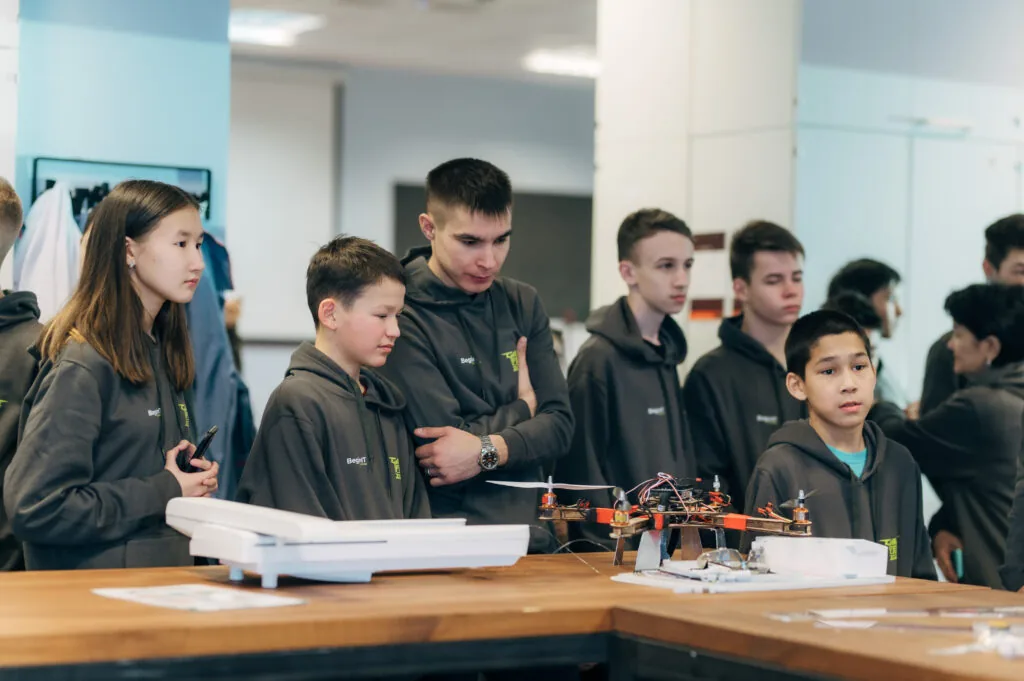
I was responsible for teaching the Digital Design course and developing skills in digital design. I taught children the basics and principles of design, color theory, composition, and typography. Special attention was paid to working with the Figma program, which allows creating mockups, illustrations, and interfaces. We also trained children in creating user interfaces and prototyping so they could test and improve their design ideas.
Alikhan Talipov, DevRel Manager
Over several months, the kids went through a pre-recorded course dedicated to No Code tools. No Code services allow creating and building IT products without the need to write code. This approach significantly speeds up all processes, making the development of basic things accessible to almost everyone. Today, creating websites, mobile applications, automating repetitive processes, and managing big data are part of the so-called "basic arsenal" of an average IT professional, along with computer and office application proficiency.
First, the kids took a No Code course, which Astana Hub provided to us for free. During the training, most of the time was spent on practice, as after each lesson, students had to implement what was shown by the lesson author. In this format, children absorbed the material well and learned a lot. But one thing is to repeat what was on the screen, and another is to create something of your own. For this reason, we divided the kids into four teams and gave them the opportunity to create their projects from scratch and bring them to a working prototype, based on the skills they acquired.

Student Results
Elaman Kusayynov, Design Instructor
The kids were able to create interesting products, showing all their creativity. During the assignments, they worked on various projects. Some of the works done by the kids were truly impressive. They demonstrated originality and the ability to apply learned design concepts and principles. For example, one student created an elegant and intuitive user interface for a branded clothing store, and another student created an informative and convenient interface for a cloud service. The kids showed creative potential and succeeded in creating unique products.
Alikhan Talipov, DevRel Manager
The practical part of the course was no less interesting for the kids: four teams had to independently create analogs of well-known market services for selling apartments, electronics, various types of ads, as well as online courses.
This not only allowed them to consolidate the knowledge gained, but the kids also found themselves in the setting of a real production team, dividing among themselves various aspects of the product. Someone was responsible for Backend, someone for Frontend, someone for databases and integrations between services, and there was even a manager who coordinated the smooth work within the team. I was very pleased that everyone worked productively together. We had calls with each team twice a week, and in some cases, more often.
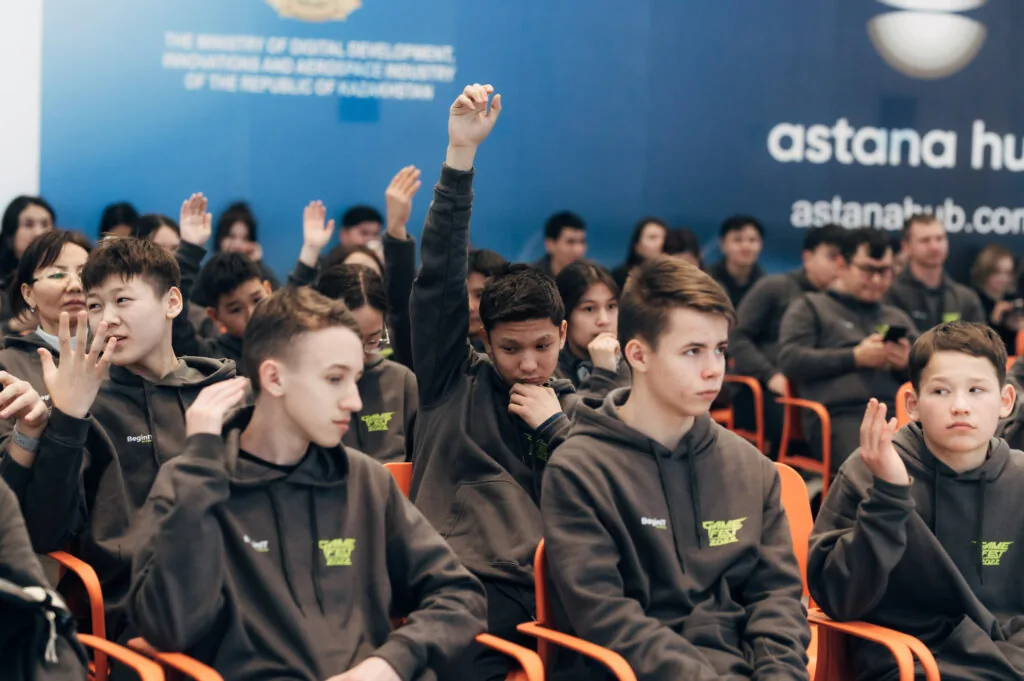
As a result, the teams had to present at the Demo Day before the jury members, where they showed the results of their products. All four teams made worthy solutions and went the entire path from zero to fully functioning services with their websites, mobile applications, and Telegram bots, and all of this was automated and integrated with each other.
Future of the Students
Elaman Kusayynov, Design Instructor
I see great potential in them. They have not only skills in digital design but also the ability to solve problems and apply a creative approach to task solving. This opens doors to many opportunities for them, including internships in IT companies. I am confident that the future successes of the kids will be impressive and that they will be able to realize their potential in the field of digital design and IT. And I am happy to help them on this path.
Alikhan Talipov, DevRel Manager
I noticed that the kids themselves did not expect that they could independently create such things. To the average person, this seems like something technically complex, requiring a lot of time and knowledge, but in reality, such tasks are within the capabilities of schoolchildren, almost on an intuitive level.
For the students, this program turned out to be not only educational but also practical: the kids already have something to add to their portfolio of successful projects. In addition to mastering ways to solve complex problems, they also advanced their soft skills by interacting with teammates, building communication, and demonstrating progress on tasks day by day.
Even from a young age, one can notice work ethic and professional suitability for their future career path. Most of the children already had their "itching hands" after the course — to enter the freelance market and work on real orders or to go for internships. The jury members who watched the final works during the Demo Day were also pleasantly shocked.
The experience was incredible! It is extremely important to continue "highlighting" such career opportunities to children, and there is no doubt that the students will show maximum dedication.
The Tech on Telegram Follow The Tech on Telegram
Keep up with the latest technology and startup news.
Related reading







More from this author

News
zypl.ai begins operations in Japan and focuses on next-generation risk models
Mansur Ismagulov

News
Elon Musk's net worth has exceeded $700 billion for the first time
Mansur Ismagulov

Article Interviews
"Central Asian countries should build a joint ecosystem," — Bekhzod Ismoilov on the development of AI in the region
Mansur Ismagulov

Article Interviews
Bloom's Taxonomy and Engineering Levels: A Practical Growth Model
Mansur Ismagulov

Article Useful
How the IT industry in Azerbaijan developed in 2025: key events
Mansur Ismagulov

News
Tajikistan has become a new member of the regional innovation alliance Central Asian Innovation Hubs.
Mansur Ismagulov