Get the key points in seconds - a short summary from The Tech AI.
Alibek Narimbayev, founder of OkAuto and Biometric, sold his stake in the former startup due to its local focus and concentrated on building a global "unicorn." The Biometric project automates business processes using biometrics and computer vision, reducing client costs by up to 17 times. The company operates as an R&D laboratory, adapting ready-made solutions for B2B and B2G sectors worldwide.
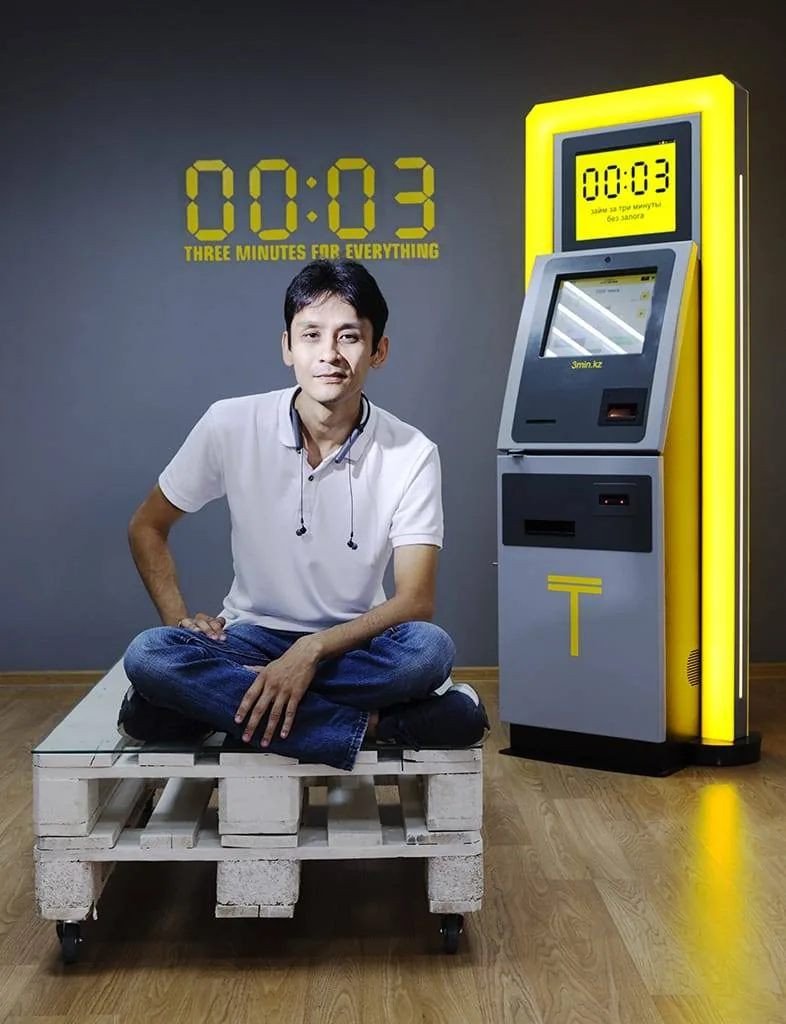
Alibek Narimbayev is the founder of OkAuto and Biometric. In an interview with TheTech, Alibek shared how he launched a million-user app without marketing and revealed his recipe for building the next “unicorn.”Alibek, you studied IT and worked as a programmer, so how did you come to entrepreneurship?My first higher education degree was in “Information Technology.” I studied, participated in various olympiads, and won prize places. I realized that I felt very comfortable in programming. By my third year, I had already started working in a bank in my field. As a programmer, I probably considered myself quite successful, but at the same time, I understood that I wanted something different.I had a passion for entrepreneurship since childhood. I was engaged in buying and selling, and then I decided to try myself in a more “serious” business.At the bank, I developed hard skills, but I understood that to engage in entrepreneurship, I needed soft skills and financial education. In 2008–2009, I enrolled in an MBA program for financial analysts. Right while studying, I opened my first small business—a computer club. My education helped me; I applied everything I learned to the business. I ran computer clubs until 2015, during which time we developed a large network with 13 clubs across Kazakhstan.We decided to focus specifically on computer clubs (CCs) because we already had experience in this field and had orders for writing software for CCs. We provided computer infrastructure for CCs that handled security, managed access by time, and tracked usage. In short, we automated processes for other CCs and consequently opened our own.Why tech entrepreneurship?I saw a startup competition where a team developed a small application that turned a light bulb on and off. For this, they received either 10 or 15 million tenge. I was very surprised. We had already developed such technology—essentially a “Smart Home” technology—ourselves and were using it in our clubs.However, having a large network of clubs and using the technology only internally, we didn’t earn that much. Then I decided that perhaps I was doing the wrong thing and needed to develop the business in the IT direction. At that time, when everything was just starting, few people were writing such serious systems. Unknowingly, for our own business, we had written systems that could be monetized in other, more profitable areas. Therefore, in 2015, I decided to fully transition into tech entrepreneurship. I sold all the clubs and started working on new projects.You had several projects. What came before OkAuto? What do you see as the reasons for the failures?We began our path in tech entrepreneurship bit by bit as early as 2014. The first project was a payment system for terminals called Orange. With great optimism, being a super-small firm, we believed we could compete with QIWI. We would place 2–3 terminals and compete.Next, we developed a system for realtors—Realtor-24. The system collected the entire database without intermediaries and instantly notified all realtors. Everything could be configured individually; it had filters and maps, which no one else had at that time.We tried many different things and learned from our mistakes. The errors were banal, typical of all beginning entrepreneurs: there was no proper market analysis, competitors were poorly studied, and we chose projects that were not scalable enough at the time.How did the OkAuto app come about?We started developing OkAuto in 2016; it was our fourth or fifth tech project. We managed to gain momentum because we were already experienced and understood what we were doing. Moreover, the app appeared at the right time; there were no such services in Kazakhstan before. OkAuto became the fastest-growing startup in Kazakhstan, with organic growth. Without advertising investment, it received over 1 million downloads. This is a very good result, especially for the scale of Kazakhstan. Investors from Singapore called this a “unicorn” growth.We took much from our past experience into account. Unlike previous projects, before launching OkAuto, we conducted analytical work. We created a very quick MVP (minimum viable product) to check how interested people were in it. We prepared more professionally and, with the awareness that we would build a good product, went to investors for funding.Why did you sell your stake in OkAuto despite its success and start a new project?We won all competitions in Kazakhstan with OkAuto and flew to Singapore. The meeting with Singaporean investors helped us understand that OkAuto is not a venture project; it is strictly a local story and would not go beyond Kazakhstan.There are several reasons. First, in many countries, such as Russia, similar solutions already exist. Moreover, it is not a project that can develop globally without barriers. It is tied to the API of the Ministry of Internal Affairs of Kazakhstan and works only within Kazakhstan. Cloning it for another country is very difficult—for this, the country needs an API for fines, it must have cameras, and it must be technologically ready. There are many factors you must hit at the right time.So, we built a good Kazakhstani product, but not a global one. My ambitions are quite different. My goal is to build the first “unicorn” to emerge from Kazakhstan. I do not want to build a local business; I want to build a product of global format.That is how I came to the conclusion that I would not go further with OkAuto. I negotiated with partners and investors. I said that I wanted to dedicate myself to more scalable products. We reached an understanding. I sold my stake and exited the project.Biometric—what was the idea behind the project, and how did you come to it?Initially, we received a task from a microfinance company to fully automate the business processes of their offline branches. We created a biometric device for them that independently made decisions on loan issuance, performed scoring, conducted analytics, checked credit history, etc. The device completely replaced an entire department of five people and reduced costs by 17 times.It turned out that many companies cannot operate purely online—they need some transitional option because they deal with cash, with people who do not have bank cards and cannot conduct online transactions. There are also many solutions for the online format. The market reacted very well to this, and after the first order, we began receiving requests from other companies: digital cash registers and reception desks, as well as from the education sector.Currently, in addition to devices, we specialize in computer vision and recognition. Our developments are already applied in many places. Biometric is a highly scalable model. We have many clients in B2B and B2G formats, and the state also uses our system in many areas. During the pandemic, when offline branches closed and could not switch to pure online, the number of orders increased several times over.At first, many told us: “Why automate offline?” But as we can see, everyone is moving in this direction: Sberbank made a similar biometric ATM, Kaspi is also making biometric card dispensers, etc. These technologies appeared after us; we launched in 2018, while they appeared in 2019–2020. This indicates that we were heading in the right direction and saw this trend earlier.So, the principle of operation is like Face ID on phones?Yes, but for more complex business processes. It is not just Face ID; you also need to compare it with a document, perform person scoring—then you need to make a decision on money transfer, loan issuance, etc.We do not only deal with biometrics. Biometrics is just one of the technologies we apply. Our main feature is that we offer fully ready, systematic solutions for businesses turnkey. We act as a sort of R&D laboratory, study the business process, and based on all our technologies, provide a ready-made solution.When a business uses this solution and we see that it saves significant funds, we simply replicate this solution for similar orders and start selling it worldwide. For example, we developed a solution for one microfinance company that reduced its costs by 17 times, and now we can apply the same solution to microfinance companies worldwide.Who was the main investor, and how do you make money?The first investor was a “business angel” who came in at the idea stage. We did not attract anything else; we earned on our own thereafter.The earning models are different. Sometimes we receive one-time payments, i.e., the client pays for the ready R&D solution plus for further technical support. There are moments when we prepare the solution for free but receive transactional payments.At the beginning, we could not offer a free solution and earn only on transactions because we were startups and needed money immediately. But now, we want to move completely into transactional revenue.Who is your competitor in the global market?There are similar Ukrainian R&D laboratories, and in the USA and Russia, there are a couple of companies. But we compete differently in different spheres:— For example, when we create a solution for fintech, involving biometrics and full person scoring—we compete with many online and offline companies. Here, the competition is not direct.— When we act as an R&D laboratory, we compete with companies that deal with automating business processes.— When we create a pure software solution for biometrics, for example, for mobile applications—we compete with companies that provide identification algorithms.You participated in many competitions. What did they give you, and why is it important for startups to participate in such events?Competitions provide a lot of experience, especially international ones—many things open up, and you begin to understand much more. You absorb the experience of world investors; they talk to you and explain many things. Therefore, when I first went to Singapore with OkAuto, I realized that I could not build a global company with this project.Secondly, it is good networking. You meet international investors and founders of top startups; you see the level of global-format projects. I would probably advise all startups to participate in competitions: go out, look, and participate. It is also incorrect to focus only on Kazakhstan; you need to go to the global level.What should beginner startups pay attention to, and where to find help?In general, the state provides a lot of support: competitions, grants, programs for traveling to other countries, tax benefits, etc. The state, I would say, does quite enough. What else? I don’t even know. Startups should not be helped too much. One must understand that the entrepreneur’s path is thorny and that it will not be easy.First of all, you need to conduct good market research: study the market, its needs, and competitors. Often, projects start based on feelings: “I think this will work.” Nothing of the sort! You need to spend a lot of time specifically on studying the market, understanding what there is demand for, etc.The second stage is a very quick, cheap, small MVP. It is important to quickly and practically without money check and test your model.Only after these two stages can you move forward and go to investors.
The Tech on TelegramFollow The Tech on Telegram
Keep up with the latest technology and startup news.