Technological Leap in Tajikistan: How Artificial Intelligence Can Become a Short Path to Growth
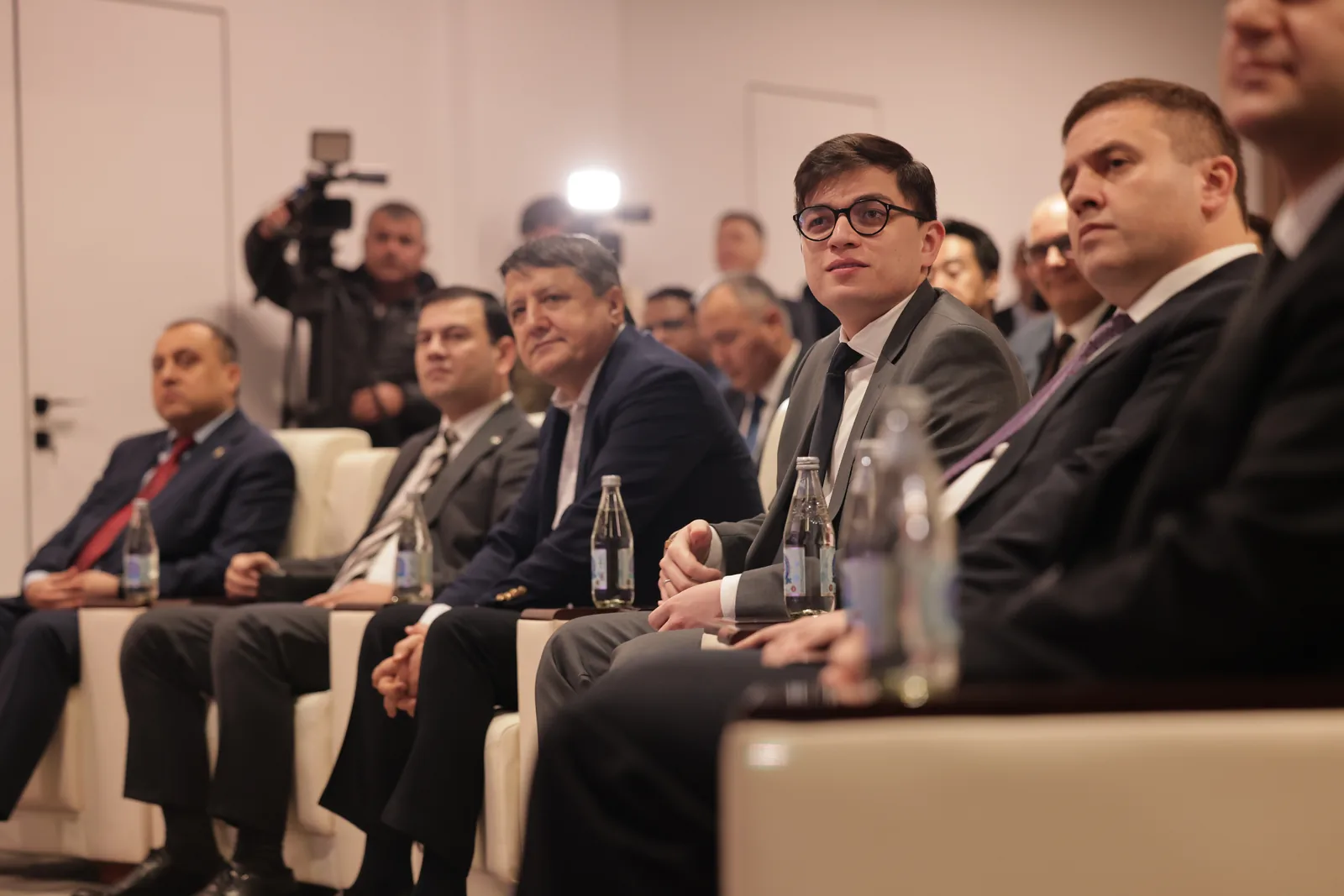
On January 25, 2026, the first project hub Area AI 1.0 was officially launched in Dushanbe, marking the starting point of a major artificial intelligence initiative in Central Asia. For Tajikistan, this signifies a transition from isolated IT projects to a systematic, export-oriented artificial intelligence ecosystem.
The opening ceremony brought together high-ranking government representatives, international organizations, the diplomatic corps, as well as leaders from the international and national technology and finance sectors. Among the key guests was Ragid U. Charara, a senior executive overseeing AI and data initiatives at the Qatar Development Bank, who had previously published an insightful analytical article on the role of artificial intelligence in the development of small and medium-sized enterprises.
Area AI 1.0 operates as a project office for 16 international companies and investors united under the Area AI Consortium, managed by zypl.ai. The Consortium includes global technology leaders such as Perplexity, Cerebras, Supermicro, Yotta, companies from the A7Sigma ecosystem, and others.
The Dushanbe hub is focused on developing and exporting AI products and services from Tajikistan, rather than solely serving the domestic market. Even at this initial stage, its portfolio includes several flagship initiatives:
— AI GOV — AI for public services
— AI Oxus — a green cluster for AI computing
— Project Soro — a national AI program in the field of education.
Area AI 1.0 serves as the foundation for the next phase—Area AI 2.0, a full-scale AI campus scheduled to launch in 2027. This phase will cover the entire value chain: from workforce training and scientific research to high-density "green" computing infrastructure and applied solutions for various economic sectors.
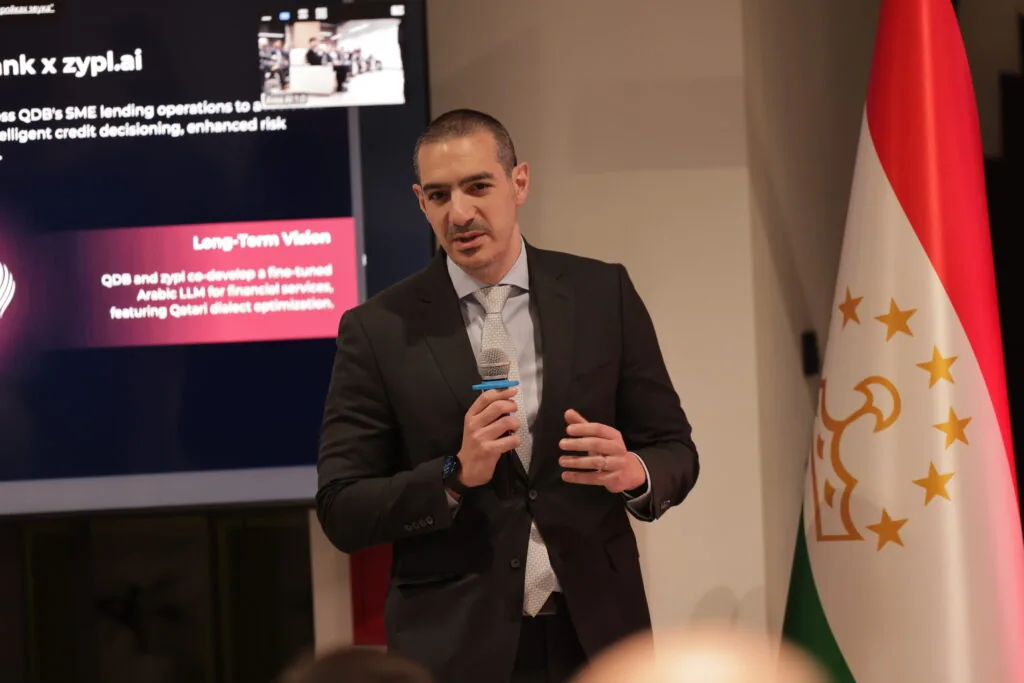
Ragid Charara: AI as a practical tool, not a "toy for rich countries"
In his published article, Ragid Charara emphasized that many countries still view AI as a "nice addition" to the innovation agenda, whereas for developing economies, it can become a practical tool for accelerated growth. Instead of competing for the "largest models," he proposed focusing on how AI:
— reduces friction in processes
— improves decision-making quality
— scales expert knowledge.
This logic is reflected in partnerships among various market participants. Joint initiatives to support small and medium-sized businesses using AI services—from risk analytics to digital tools for entrepreneurs—demonstrate how AI can become a real multiplier of business productivity, rather than an abstract technology.
For Tajikistan, this model is particularly relevant: the country is not aiming to create another global AI giant but is instead betting on scalable applied solutions that remove specific barriers to economic growth.
Five areas with rapid economic impact
If we view Tajikistan through the lens of the approach proposed by Charara, several sectors can be identified where AI can deliver the highest returns in the short term.
1. Scalable education.
AI systems can act as a "second teacher," supporting schoolchildren and students through personalized feedback, additional explanations, and adaptive assignments. In the context of a teacher shortage, especially in remote regions, this becomes a tool for equalizing education quality without an exponential increase in budget expenditures.
2. Productivity of small and medium-sized businesses.
For SMEs, AI can function as a digital back office: assisting in preparing commercial proposals, maintaining basic accounting, processing customer inquiries, identifying financial risks and opportunities. Practice shows that even relatively simple AI services can significantly enhance the financial stability and export potential of small businesses.
3. Public services and regulation.
AI solutions simplify forms, automate the initial processing of requests, and establish "smart" routing for citizen and business inquiries. For the state, this means reduced costs and queues; for citizens, it means increased trust and more predictable service. Combined with the national digital agenda, this can become a key driver for improving the business climate.
4. Agriculture and water resource management.
Given the significance of the agricultural sector and water resources to Tajikistan's economy, AI can become a critically important tool—from recommendations on crop selection and irrigation regimes to early warning systems for droughts and weather anomalies. Even small efficiency gains in this sector translate into tangible macroeconomic effects.
5. Access to healthcare.
AI assistants can support initial patient triage, remind patients about appointments and medication, and help doctors with documentation and data analysis. This is not about replacing doctors, but about expanding their capabilities and reach, especially in remote areas.
AI as infrastructure of trust
The key idea is that AI is not just about computing power, but also about trust and skills. On one hand, widespread AI literacy is required—from schoolchildren and entrepreneurs to government officials. On the other hand, clear "rules of the game" are necessary: data protection, transparent usage mechanisms, and clear boundaries of responsibility. Tajikistan has already made its mark in the global discourse by initiating a UN General Assembly resolution on the role of AI in the sustainable development of Central Asia.
A question for investors and the state
The launch of Area AI 1.0 and the active participation of international partners show that interest in forming a new AI hub in the region has already materialized. The next step is setting priorities.
A logical question raised by Ragid Charara, which is now relevant for Tajikistan, is: if the country were to choose one priority area for AI investment, which one would yield the greatest national effect—education, small business, or public services?
The answer will likely be a combination. However, it is precisely clearly defined priorities that will determine the country's trajectory toward sustainable growth.
The Tech on Telegram Follow The Tech on Telegram
Keep up with the latest technology and startup news.
Related reading





More from this author

Article Useful
How to protect your accounts from hacking: 8 settings you should check today
The Tech

Article Useful
500 Global: How the Accelerator Works and Who Can Receive Investments
The Tech

Article Interviews
Game Development in Central Asia: Arkady Moldavski on Developing Reverb and the Growth of the Industry
The Tech

Article Useful
Google, Tesla, BlackRock, and the IMF: Where to Apply for an Internship in Fall 2026
The Tech

News IT
Tesla unveiled the flying electric car Roadster
The Tech

News IT
Intero Biosystems startup won the Startup Battlefield at TechCrunch Disrupt 2026
The Tech