Tech Heads. CTO of QazCode on why preparing AI specialists is more important than the technologies themselves
CTO of QazCode, Kuatbek Muratbek, shares insights into his professional journey, the company's culture, key technological trends, and how QazCode trains experts capable of working with innovations at the level of real-world products.
Author - Mansur Ismagulov
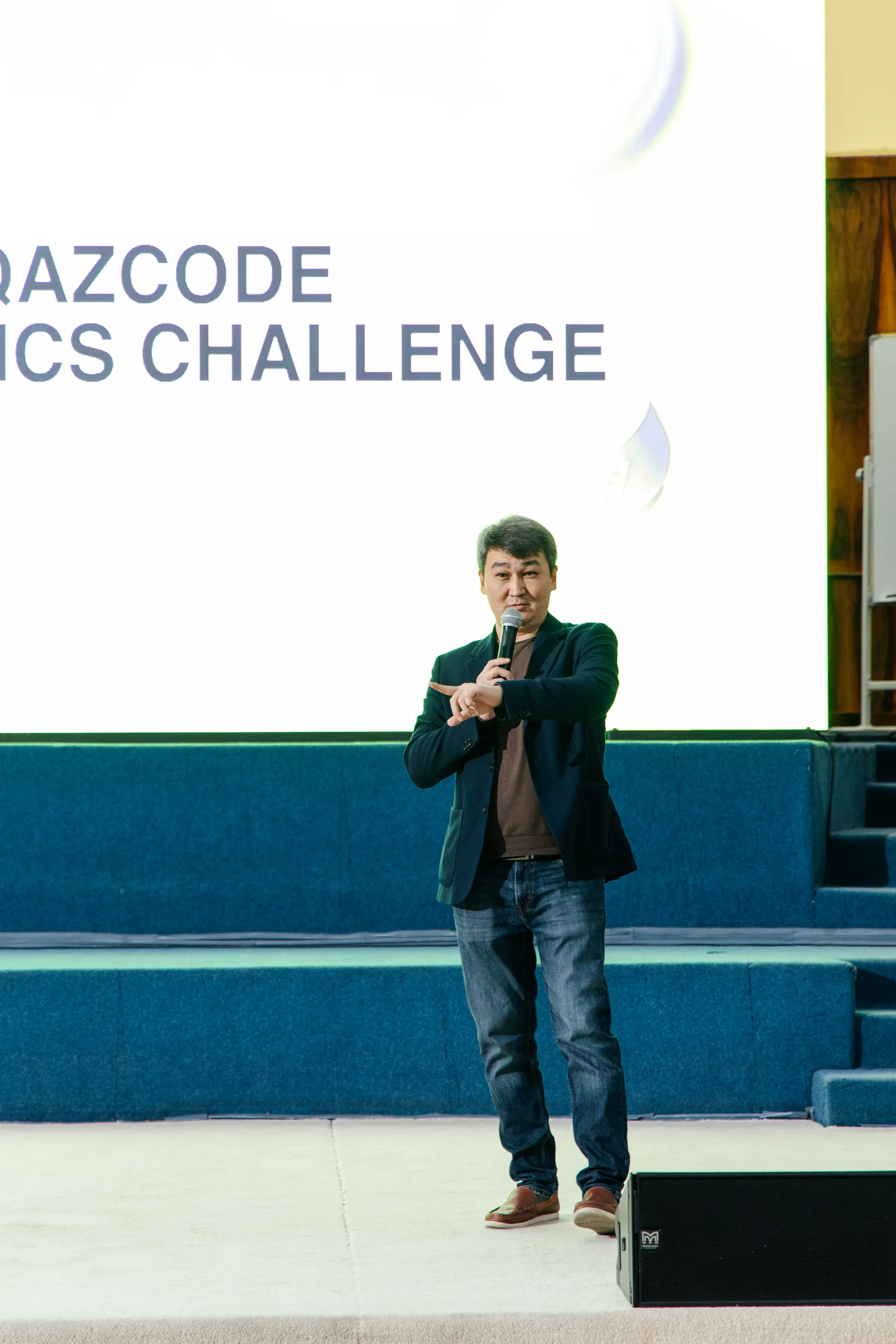
Kuatbek Muratbek, City — Almaty, Chief Technology Officer at QazCode
About Me
I graduated from the Kazakh National Technical University with a degree in “Radio Engineering, Electronics, and Telecommunications.” Even in my third year, I wanted to work in my field and began developing professionally by joining the Beeline call center.
After receiving my diploma, I moved to the IT department as a software tester. My total work experience now stands at 15 years.
Regarding key stages of my career: in 2020, I became a solution architect; in 2021, I became the head of the architects’ department, and then I led the Architecture and Analysis Service. Since July of this year, I have been serving as Chief Technology Officer at the IT company Beeline — QazCode.
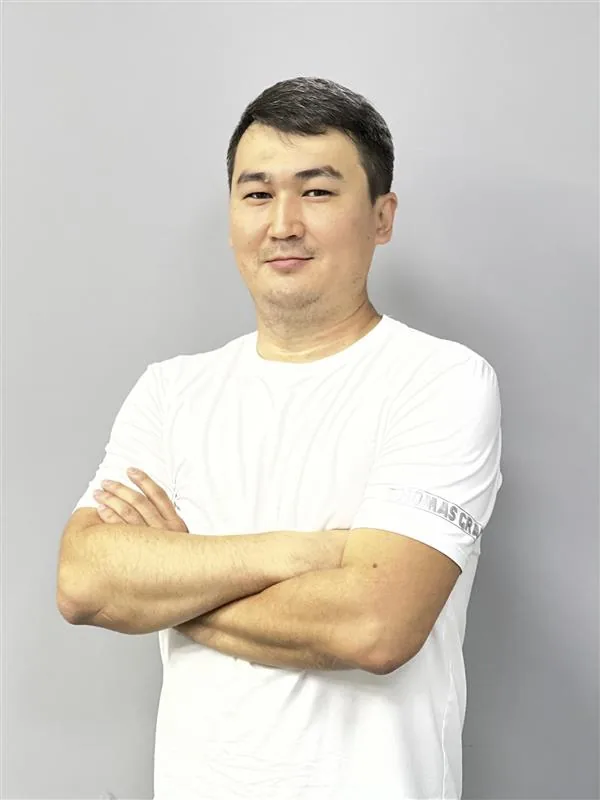
About the Company and Role
The maturity of an IT company can be assessed by its organizational structure and the presence of key roles. Currently, we are introducing positions that did not exist three to five years ago — this reflects new challenges for the team and the need for highly specialized experts. Top management support is crucial here, as they listen to the team and invest in the company’s growth. Special thanks to Evgeny Ivanovich Nastradin, Tahmina Kodiri, and Alexey Sharavar.
My team includes all the architects of the holding: solution architects, software architects, and data architects — they set the technological direction for the company.
Additionally, we have IT analysts, QA engineers, and DevOps engineers — a full set of roles necessary for high-quality and rapid delivery of changes. Thanks to well-established SDLC processes, each role clearly understands its area of responsibility, which accelerates the implementation of changes for users. The team consists of approximately 160 people.
Our company’s culture is built on leadership and collaboration. For me, this means not just completing tasks, but moving toward a common goal together with the team. Leadership qualities and the ability to collaborate are an integral part of this role.
Today, QazCode focuses on two key areas:
1. Massive development of AI and our Aventa platform
Aventa is a corporate platform for creating and deploying AI agents, working with various LLMs, including KazLLM, ChatGPT, and open-source models. The platform is used to automate internal processes, integrate with client ecosystems, and create new products based on secure on-premise and cloud solutions. It allows for rapid implementation of AI into business processes and reduces operational costs. We have successfully implemented initial projects for companies within the VEON group.
2. Technological transformation of large businesses
We are updating and modernizing billing systems for major telecom operators. This is a complex and responsible area requiring strong architectural expertise, reliable integrations, and a deep understanding of the domain. Our experts implement products and technological solutions in large telecom companies in the CIS and far-abroad countries, creating long-term technological value.
At the same time, we are developing other areas — both in response to specific client requests and through our own initiatives.
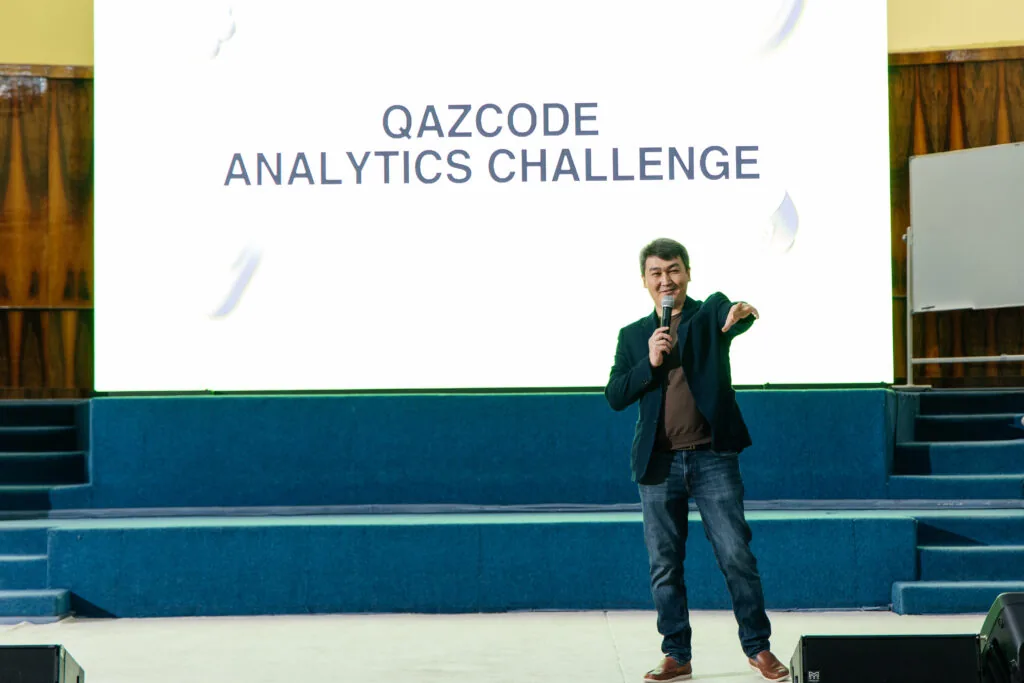
About Challenges and Innovations
New technologies open up great opportunities, and the main challenge is the speed of their adoption and implementation. Our specialists do not just use tools; they turn them into products. Therefore, the key task is to build a scalable “pipeline” for training, onboarding, and technology implementation.
In AI, the main challenge is preparing experts. This cannot be solved solely by hiring; processes are needed that allow teams to quickly immerse themselves in new technologies, work with models, build integrations, and release full-fledged AI modules.
Technologies themselves do not create risk. The real challenge is managing their implementation. My team answers the question: “How to create an environment where both current specialists and new employees can effectively master innovations and turn them into ready-made solutions?”
When selecting technologies, the key principle is the ability to give a well-reasoned “no” at an early stage. The market is oversaturated with tools, so it is important not only to look for the “best solution” but also to systematically analyze why a specific technology does not fit the architecture, scale, or business context. This approach allows us to quickly narrow the funnel and eliminate what will not bring value.
Technologically, almost any system can be assembled from many available solutions. But the main criterion is alignment with real business metrics: does the technology accelerate processes, reduce the load on teams, increase stability, or improve product quality? We evaluate practical benefits, ecosystem maturity, integration reliability, performance, infrastructure requirements, and security.
Furthermore, it is important to consider the team’s readiness to work with the technology: how quickly it can be mastered, how it fits into the architecture, and whether it can be scaled without hidden costs.
If a technology meets these criteria, we implement it through a standard pipeline: pilot, integration tests, load modeling, and only then — production use.
Key market trends for the next three to five years:
1. Mass emergence of specialized personal agents.
Development in this direction is already actively underway, and we are seeing initial results. In the coming years, many specialized agents for different roles and industries will appear. Large models will become more personalized, as such agents solve specific professional tasks and accelerate the work of specialists.
2. Transition to event-driven architecture.
Agents must react to events, so asynchrony and event-driven architecture will become the foundation for integrations and system interactions. This will allow for the creation of more flexible, scalable, and fast solutions.
3. Sharp increase in the role of information security, including in the SOHO segment.
If security was previously a priority mainly for large companies, now SMEs are also actively investing in data protection. Even a small store today collects customers’ personal data — names, addresses, phone numbers, order history — and all of this must be stored securely.
Companies that can ensure data security and prove it to their customers will gain a serious competitive advantage. This will distinguish mature digital businesses from those that simply create a chatbot or an app “like everyone else.”
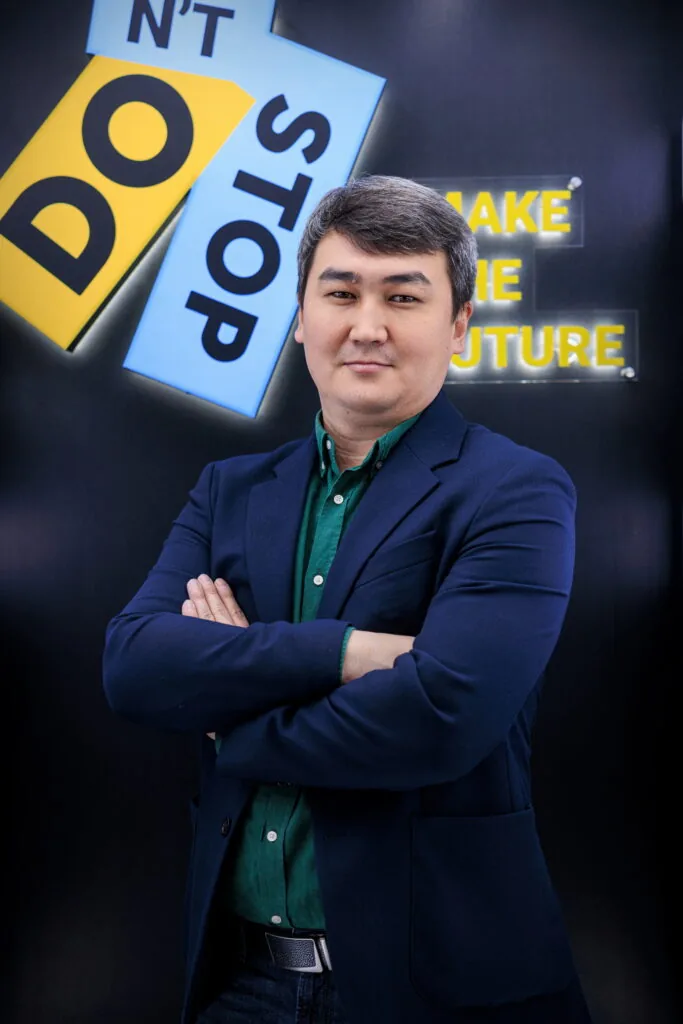
About the Team and Culture
A strong team is not just a collection of experts. These are people who propose ideas, critically discuss them, justify decisions, and conduct research before a technology becomes a product. Therefore, the most difficult task is to find suitable specialists, build effective collaboration with them, and ensure proper communication within the team and between IT and the business.
Today, at QazCode, we have achieved this balance. We have a team that creates technologies and products interesting not only for the Kazakhstani market but also competitive internationally. We also have an internal pipeline for each key role, where we nurture tomorrow’s students into future strong experts.
When building an engineering team, open and direct dialogue is my primary focus. We regularly hold general syncs within the directorate, where we share achievements and changes at different levels — from experts to managers. This format allows any employee to interact directly not only with their manager but also with key figures in the company, creating an atmosphere of transparency and trust.
Developing specialists within the team is equally important. We create career plans, allowing employees to change directions — into architecture, product, Big Data, or development — and grow in areas that interest them.
We support healthy competition by evaluating skills and competencies, not tenure. Young specialists who recently joined the team can already hold key positions if they demonstrate a high level of competence and a desire to develop. This approach forms a strong, motivated, and professional engineering team.
When hiring engineers and team leaders, honesty and openness are important to me. This is the foundation of trust within the team and effective technical competition. It is equally important that an engineer or leader can admit gaps in knowledge and quickly fill them. In our technology directorate, we work with different tech stacks, architectural patterns, and large-scale systems, so the ability to master new areas and adapt to technological changes is one of the key qualities.
The second important aspect is communication. The ability to clearly formulate thoughts, convey ideas to different levels, whether to the team, managers, or external clients, is critical for successful work. Understanding this in an interview is not easy, so we pay great attention to the technical part and observe how the candidate formulates thoughts in two or three sentences and how they acknowledge their gaps in knowledge and expertise.
About the Path and Leadership
I entered the profession out of curiosity and a desire to understand the essence of things. At university, we had a professor who said: the most complex questions start with the word “why.” I have carried this principle into my work — it is important to ask questions like “Why does it work this way?”, “Why was this stack chosen?”, “Why was this solution selected?” Correct “whys” help to better understand the logic of processes and form expertise.
But the environment is also important here. The mission of our company is “Bringing the future closer by connecting talents, technologies, and data.” It is in such an environment, where specialists are given opportunities to show themselves and reveal their abilities, that I have been working for the last 15 years.
For my growth to the CTO position, architectural experience was key. I worked with system integration, understood corporate architecture, participated in designing new systems, and building integrations. This experience allowed me to gradually expand my sphere of responsibility and transition from technical tasks to strategic management of technology and the team.
If you dream of becoming a CTO, develop skills in three areas.
First, the ability to work with people — inspire the team, create a culture of trust and open dialogue, and build processes in which you want to participate and achieve results together.
Second, technical vision — do not just keep up with new technologies, but turn technologies into real solutions that work and bring tangible benefits in implementing business ideas.
And finally, architecture of change — explore technologies and implement them so that solutions scale and create real value.
A CTO is a person who connects technology and people, turning ideas into real products that change the company and inspire the team.
The Tech on Telegram Follow The Tech on Telegram
Keep up with the latest technology and startup news.
Related reading







More from this author

News
zypl.ai begins operations in Japan and focuses on next-generation risk models
Mansur Ismagulov

News
Elon Musk's net worth has exceeded $700 billion for the first time
Mansur Ismagulov

Article Interviews
"Central Asian countries should build a joint ecosystem," — Bekhzod Ismoilov on the development of AI in the region
Mansur Ismagulov

Article Interviews
Bloom's Taxonomy and Engineering Levels: A Practical Growth Model
Mansur Ismagulov

Article Useful
How the IT industry in Azerbaijan developed in 2025: key events
Mansur Ismagulov

News
Tajikistan has become a new member of the regional innovation alliance Central Asian Innovation Hubs.
Mansur Ismagulov