Team Lead: Features, Specifics, and Challenges
Author - Mansur Ismagulov
The Tech AI
Get the key points in seconds - a short summary from The Tech AI.
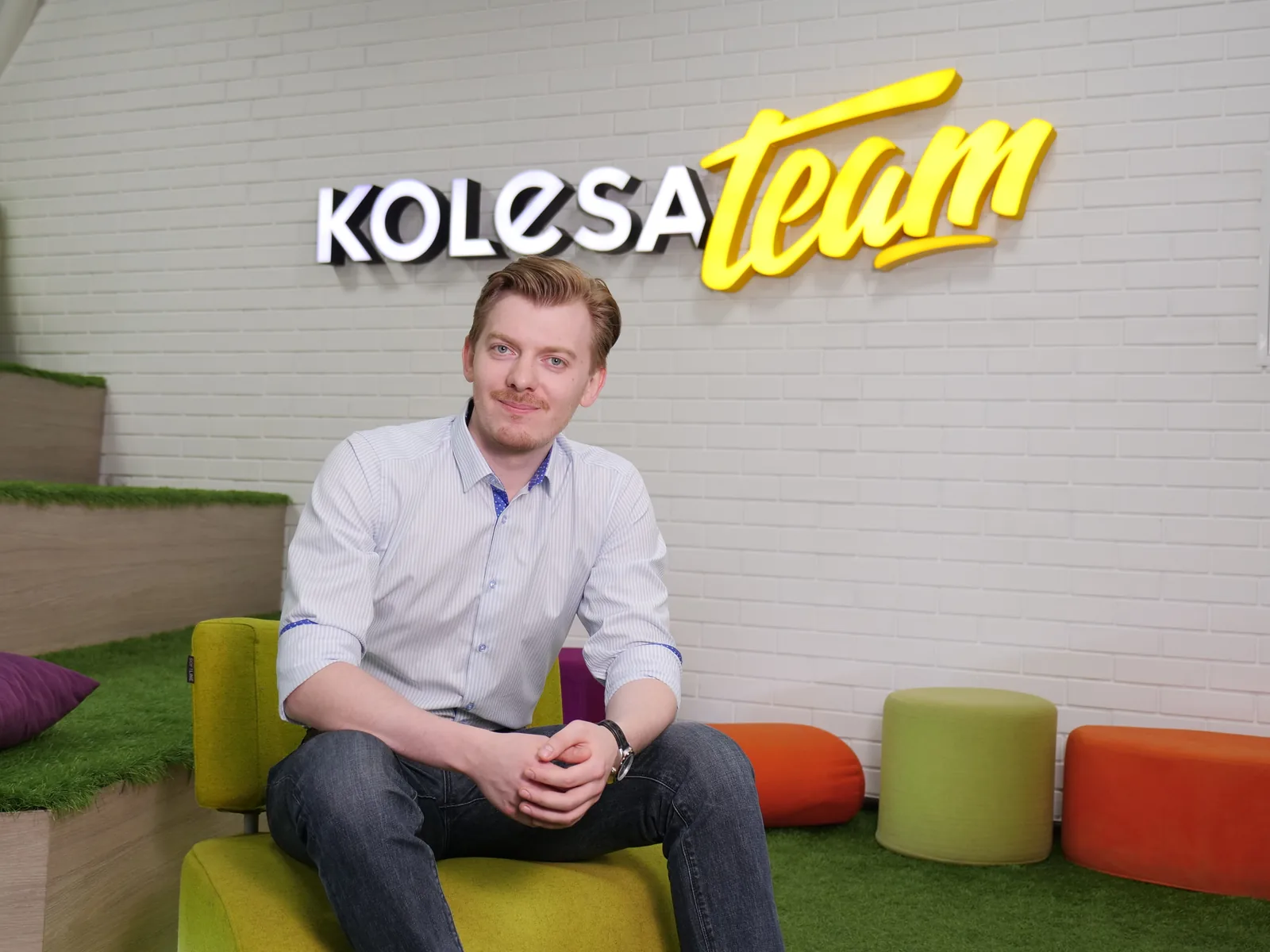
Konstantin Stroyev, 27 years old, Team Lead of mobile development at Krisha.kz in Almaty. His team consists of about 40 people, including a product group of 12–13 specialists. He graduated from KBTU with a degree in "Information Systems."
How to Be a Team Lead in Kazakhstan
We met with Konstantin Stroev, a mobile development team lead at Krisha.kz. Konstantin shared his journey in the IT industry, discussed the challenges of the profession, and offered advice for aspiring specialists.
Konstantin Stroev, 27 years old, city: Almaty, mobile development team lead at Krisha.kz
About Himself
It all started seven years ago when I became an iOS developer. I was there at the beginning of mobile development when there were only a few of us, and now our team consists of about 40 people. The product mobile development team includes 12–13 people, comprising mobile developers for two platforms: iOS and Android, and four QA specialists.
About My Path in the IT Industry
My journey began even in school. My computer science teacher managed to ignite a passion for HTML and basic web page layout. This was my first attempt at working with interfaces. The curriculum was structured in such a way that studying only basic information didn’t make the essence of development clear. But when you start laying out something, doing something, and then see the result, you get initial satisfaction, which is where the interest developed. After that, everything began to become more complex; the learning became deeper, and I got my first commercial projects. My friend and I tried writing landing pages for various specialists. We earned very little, but it was interesting for us. We were growing within this industry while also earning money for “ice cream.”
Later, we realized that this was an industry where we could showcase ourselves. We started getting more large-scale commercial projects, and at the same time, I tried engaging in academic activities.
About the Profession
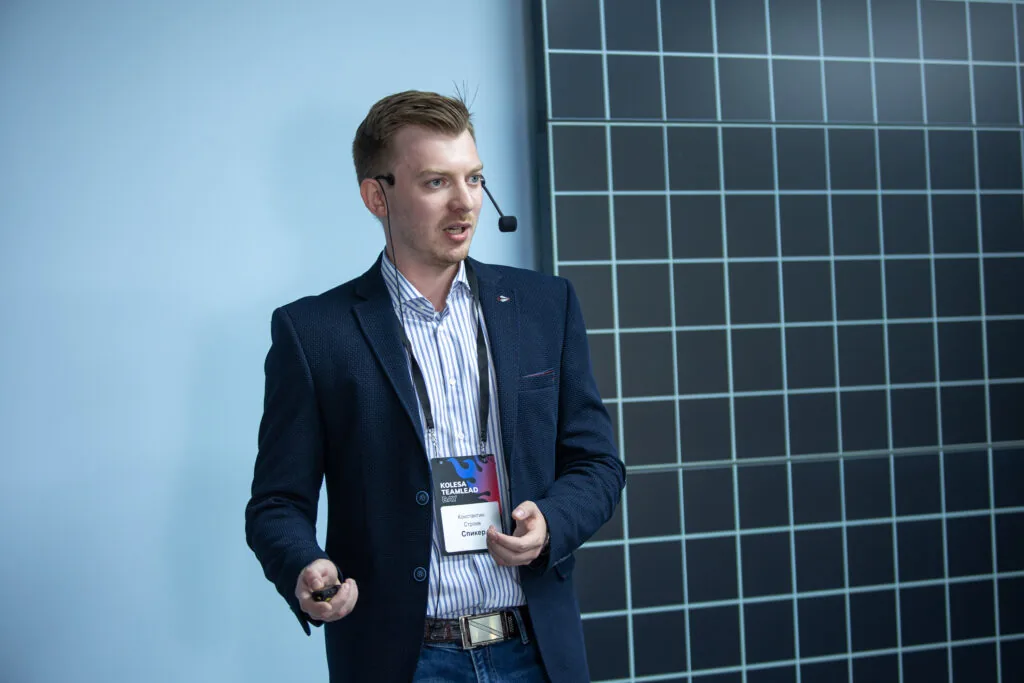
I studied at KBTU majoring in “Information Systems.” Development is a direct application of my major.
Frontend is not just about mobile websites but also about “clients”: interpretations in the form of Android and iOS applications, where you can do something, and it immediately responds with some kind of benefit. If you dive deeper into mobile development, you can practice architectures, algorithmic tasks, refactoring techniques, and design patterns. This is a full stack of direct and applied IT skills that embody all my preferences.
Main Responsibilities
A Team Lead is a team leader who must guide the team in the right direction so that the expected quality is achieved within the expected timeframe. If we talk specifically about product development, the tasks include guiding the team to develop, suggesting ways to make things more efficient, and occasionally “not getting in the way.” Often, team members themselves know how development should be done; it’s important simply to facilitate effective communication among them.
A Team Lead is someone who lubricates and adjusts certain nuts and bolts within the large development pipeline, contributing to higher quality each time, fewer problems arising, and ensuring everyone maintains the appropriate emotional state.
About Education
There are several universities in Kazakhstan that prepare good IT specialists:
— IITU
— SDU
— NU
— as well as my alma mater — KBTU. From the perspective of education quality, this is a highly regarded university. At the time of my studies, there were fewer than 100 people in our stream. Considering the quality of education we received and the amount of practical experience transferred, I would recommend it.
Another issue is that I graduated from university quite a long time ago, and experience shows that everything is always changing. I don’t know what the university is like now because I don’t have strong communication with it.
Recommendations for Aspiring Specialists
When we create a job posting for beginners, we ask for basic experience working with platforms and development environments. If we consider the iOS direction specifically, this usually means Xcode, which is the IDE that an iOS developer works with primarily. We also require some personal projects: these can be commercial projects or personal ones. This is important so that the candidate understands what difficulties might arise in work and what solutions exist.
We look for curiosity; it’s important for us that the person is interested in this field. People who are interested dig deeper, and we value those who just need to be guided in the right direction and then, through mentoring, achieve results.
But one thing everyone needs to remember is that it’s important to keep learning.
There are many good internships, courses, and incubators on the market. In our company, educational programs for in-demand IT professions are launched several times a year:
a) Kolesa Academy — a paid internship with subsequent employment
b) Kolesa Upgrade — free online courses for anyone interested.
I recommend incubators because I myself went through one during my student years. Over three months, this incubator helped me and my team create a full-fledged application. Subsequently, this experience helped me get a job at Kolesa Group.
While working at Kolesa Group, I took the Upgrade course for Product Managers, which helped me understand how the neighboring Product industry works. This allowed me to understand how hypotheses are built and that they also have their own problems, expectations, and vision. Since then, it has become easier to negotiate, find common ground, and reach compromises.
About Hiring
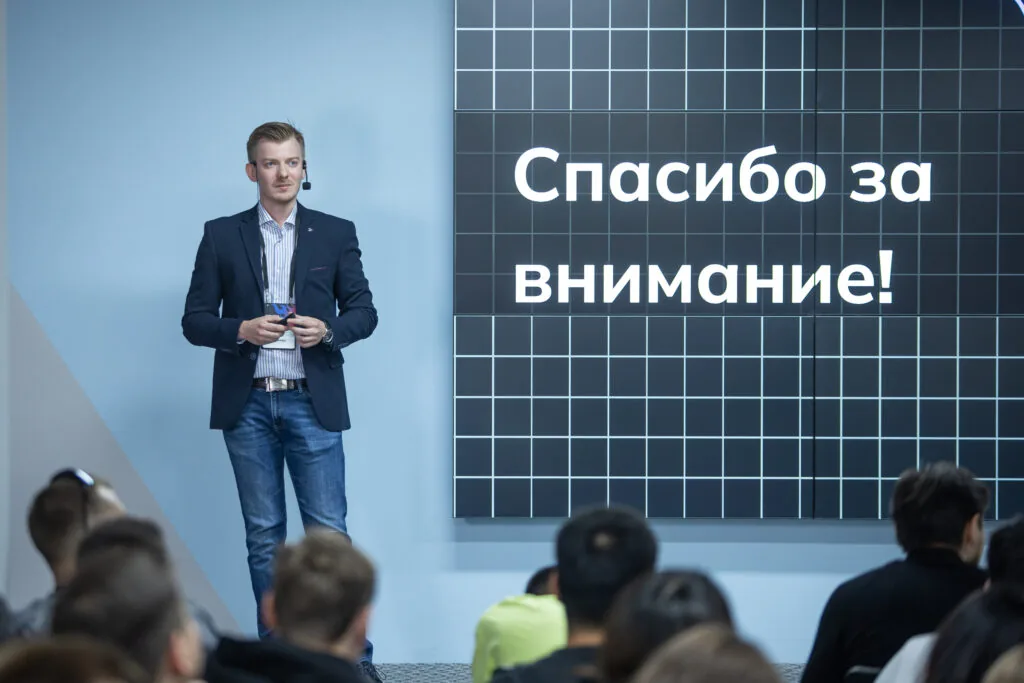
To get hired by an IT company, hard and soft skills are equally important. However, the soft skills part is even slightly more important. Technical skills can be acquired: you can learn any technology, immerse yourself in the industry. But acquiring soft skills is significantly more difficult: responsibility, the ability to meet deadlines, awareness — all of these take longer to develop.
Every company has its own corporate specifics: some have a startup culture, which implies implementing features in a short amount of time with minimal costs. There is a product development culture, where I currently work, in which it is important to solve user problems and meet business criteria. Some focus more on efficiency, others on honesty and responsibility, and it is important that the candidate’s skills match expectations and values.
If the candidates meet the technical expectations for a specific position or project and also align with the company’s values and the microculture of a specific project or product, then everything will be great for them.
About Challenges
Development is both complex and interesting because it is dynamic. The main thing in development is not to stop, because as a rule, those who keep up with international trends and fashionable effective practices will never lose.
The market behaves differently, and if you get stuck in a certain technology, it doesn’t mean you’ll be left behind, but it is very important to understand what is happening in the industry.
It is also important to be curious. Curiosity is not just about knowing interesting things but also about understanding how these things work.
There is a concept called “continuous human factor.” People are generally not perfect: they have feelings, their own understanding, and vision. But if you build communication correctly, organize interaction within the team, and build that very organism, then everything will work out.
The Tech on Telegram Follow The Tech on Telegram
Keep up with the latest technology and startup news.
Related reading







More from this author

News
zypl.ai begins operations in Japan and focuses on next-generation risk models
Mansur Ismagulov

News
Elon Musk's net worth has exceeded $700 billion for the first time
Mansur Ismagulov

Article Interviews
"Central Asian countries should build a joint ecosystem," — Bekhzod Ismoilov on the development of AI in the region
Mansur Ismagulov

Article Interviews
Bloom's Taxonomy and Engineering Levels: A Practical Growth Model
Mansur Ismagulov

Article Useful
How the IT industry in Azerbaijan developed in 2025: key events
Mansur Ismagulov

News
Tajikistan has become a new member of the regional innovation alliance Central Asian Innovation Hubs.
Mansur Ismagulov