Superintelligence is near: what Microsoft AI CEO says about the future of technology
Author - Mansur Ismagulov
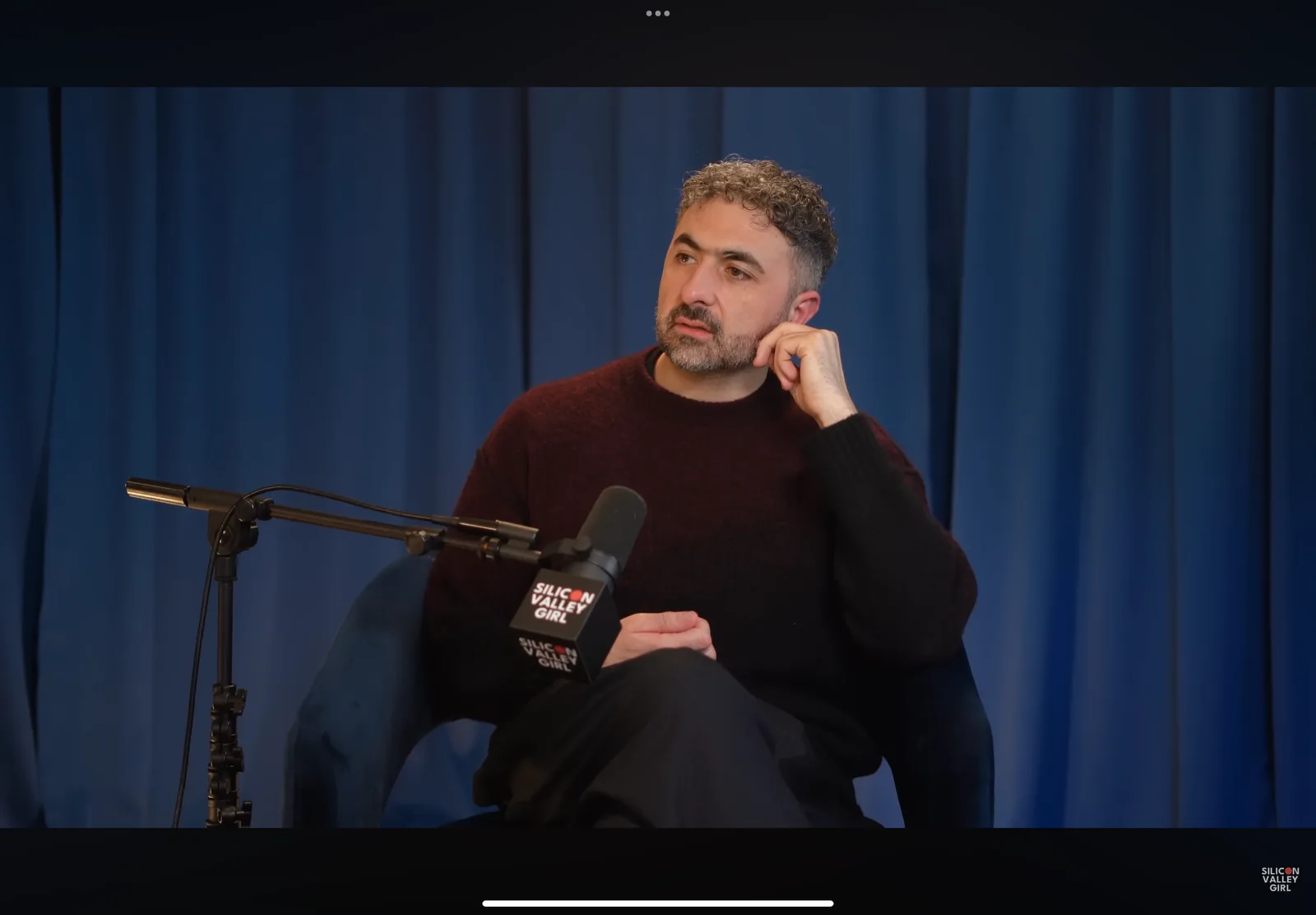
In the episode with Silicon Valley Girl, Mustafa Suleyman discusses the future of AI: the opportunities and risks posed by superintelligence, how it will transform work, medicine, and education, and why it is crucial that AI serves humanity rather than replacing it.
Mustafa Suleyman, CEO of Microsoft AI, LinkedIn
Are we in an AI bubble? The answer is both simple and complex—no, we are not in a bubble. When I look at what is happening, I see that we are creating something truly magical. Intelligence is what made us successful as a species. Now, we are distilling this intelligence into more compact and accessible units that can spread globally, be cheap, and accessible to most people.
Looking at this from a value perspective, I am confident that in the next 5-10 years, it will be unprecedented. This technology is the smartest and most capable thing humans have ever created. It is evolving faster than anything I have ever seen, while simultaneously becoming more manageable. Three years ago, we thought AI would become chaotic and uncontrollable, but now we are creating amazing and powerful products that surprise us every month.
Humanity and AI Consciousness
AI is becoming increasingly "human-like"—it is accurate, smooth, and capable of conducting conversations that feel natural. However, it is important to understand that these are not conscious beings. They do not have self-awareness, do not feel pain, and do not suffer. They simply simulate high-quality conversation.
AI should serve people. It should not be an autonomous entity with its own goals, acting independently of humans. We aim to create a humanistic superintelligence that works for humans, supports them, helps solve problems, and enhances their capabilities.
AGI and Superintelligence
AGI, or Artificial General Intelligence, can be viewed as a step toward superintelligence. Achieving human-level performance in most tasks seems highly likely within the next five years. Modern AI models already surpass humans in many tasks: summarizing information, translation, transcription, research, document writing, project management, and sometimes even creativity, such as poetry or literary texts.
AI will radically transform work. You will no longer be limited by your team or resources—around you will be a "team of intelligences" that can be the best lawyer, doctor, teacher, or manager. This will shrink the distance between an idea and its implementation, creating unprecedented competition and opportunities.
Technology in Everyday Life
Superintelligence will be integrated into everyday life. In the next 5-10 years, ambient devices will emerge: tablets, wearable gadgets, and personal AIs with contextual awareness that will know your tasks, remind you of them, and assist in real time.
Technology simplifies life by removing unnecessary interfaces, windows, and menus. Robotic arms, wearable devices, and the integration of AI into the home environment will help automate everyday tasks—from ordering groceries and managing kitchen appliances to handling transportation issues.
Medicine and Access to Knowledge
I consider medicine to be the most promising market. Currently, the quality of medical services varies greatly, even in the US, let alone in other countries. AI will provide access to medical superintelligence for everyone at a low cost—literally $20 a month.
My approach is that AI does not replace doctors but prepares both the patient and the doctor by collecting, structuring, and analyzing information. The human doctor receives a summary and recommendations, while the patient is already ready for dialogue and decision-making.
The same applies to education. The traditional model of studying knowledge for five to six years at a university is becoming outdated. Now, knowledge becomes a dialogue between you and your AI teacher. You can learn anytime, receive personalized lessons, take interactive courses, test yourself, and immediately apply knowledge in practice. Education becomes fully personalized.
Impact on the Human Brain
AI reduces barriers to information and makes us smarter. Today, you can ask questions and receive instant answers without spending hours searching for information. This develops collective intelligence, the ability to synthesize knowledge, empathy, and understanding of the world.
With new features like Copilot memory, AI remembers your habits and preferences. It can remind you of past actions, support a "second memory," help make decisions, and plan tasks. At the same time, you choose what AI will remember and what can be deleted or changed.
With the development of Copilot Groups, AI can work with multiple people simultaneously, adapting its communication style to each participant. In the future, this will allow combining people and AI into a single team for discussing projects, consulting with experts, and collaboratively solving tasks, blending human and artificial intelligence.
I believe that AI does not replace humans but enhances their capabilities. Our goal is to create a humanistic superintelligence that works for humans, supports them, and helps develop their potential. AI will transform work, education, medicine, and everyday life, but the responsibility for these changes lies with humanity. We need to define rules, limitations, and ethical frameworks so that technology serves the benefit of humans and society.
Watch the full episode at this link.
The Tech on Telegram Follow The Tech on Telegram
Keep up with the latest technology and startup news.
Related reading







More from this author

News
zypl.ai begins operations in Japan and focuses on next-generation risk models
Mansur Ismagulov

News
Elon Musk's net worth has exceeded $700 billion for the first time
Mansur Ismagulov

Article Interviews
"Central Asian countries should build a joint ecosystem," — Bekhzod Ismoilov on the development of AI in the region
Mansur Ismagulov

Article Interviews
Bloom's Taxonomy and Engineering Levels: A Practical Growth Model
Mansur Ismagulov

Article Useful
How the IT industry in Azerbaijan developed in 2025: key events
Mansur Ismagulov

News
Tajikistan has become a new member of the regional innovation alliance Central Asian Innovation Hubs.
Mansur Ismagulov