The startup ecosystem of Turkmenistan. Examples of local startups
Turkmenistan is increasingly appearing on the map of Central Asia not only as a country with a rich history and culture, but also as a territory of new entrepreneurial meanings. A startup ecosystem is forming here—still young, but already noticeable.
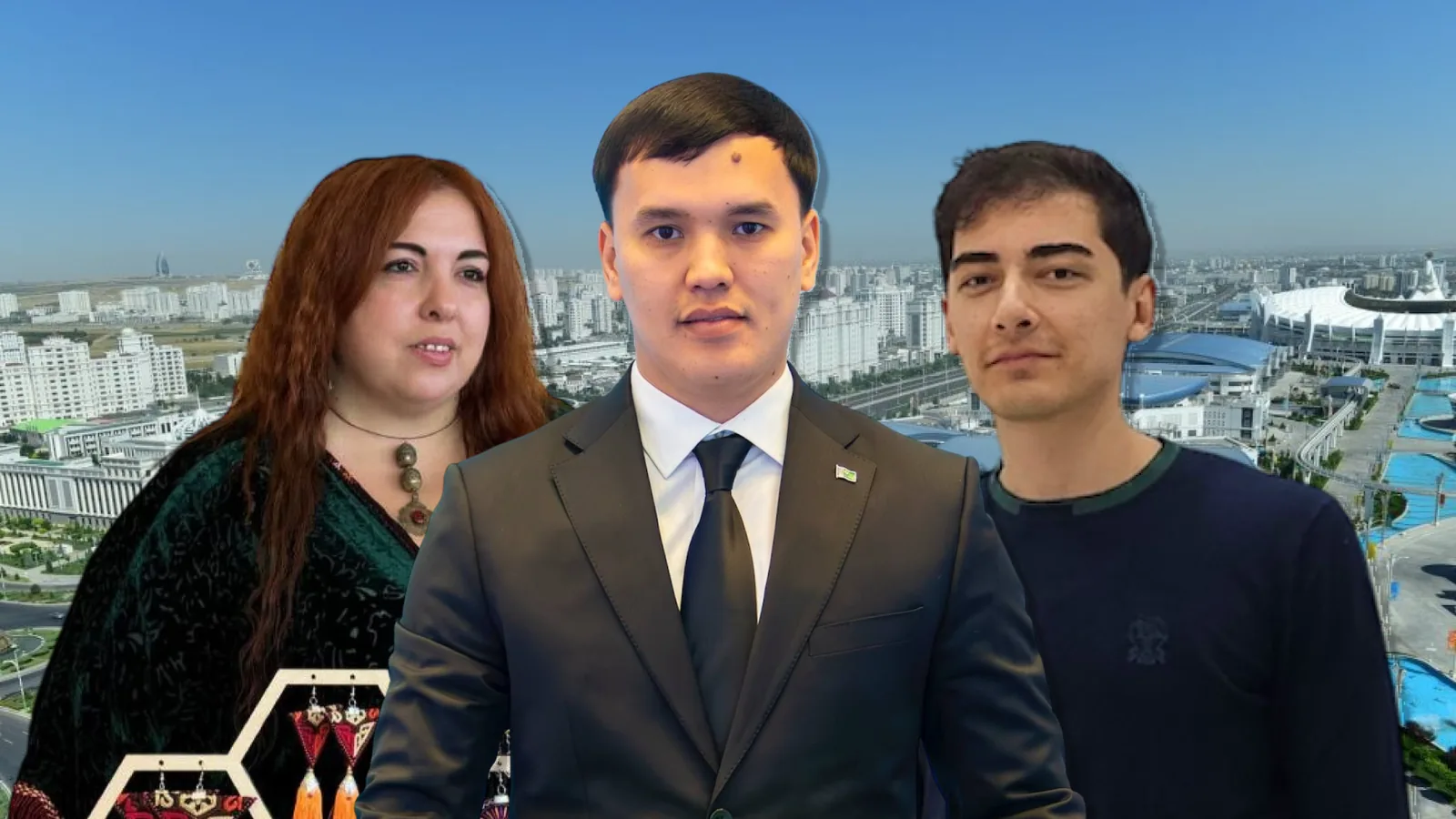
Today, local founders are creating projects in the fields of IT, eCommerce, FinTech, AI, creative industries, education, and culture. What unites them is a desire to solve real people’s problems using modern tools.
This article features the stories of founders who, in different ways but with equal courage, are building businesses in Turkmenistan and shaping the local startup market. Representatives of StartUp Academy spoke to The Tech about how the country’s startup ecosystem is developing today.
Daniil Maykovskiy, city — Ashgabat, CEO StartUp Academy, Linkedin
Umida Saidova, city — Ashgabat, Specialist for International Partnerships at StartUp Academy
Begench Redzhepov, Founder of Biar Delivery
I am an entrepreneur and the founder of Biar Delivery. For over 10 years, I have worked in the food service industry, including managing and developing establishments. This experience helped me deeply understand the real pain points of cafes, restaurants, and customers, as well as identify where technology can simplify processes and improve service.
The idea for Biar Delivery emerged during the quarantine period. At that time, I owned my own establishment, and like many others, our main flow of orders shifted sharply toward delivery. However, our delivery system was not established. It was then that I practically realized how much the market needed a simple and clear service for online food orders. Following this experience, I began working on the Biar Delivery project to create a solution that helps establishments quickly adapt to delivery and manage orders more efficiently.
Biar Delivery is an online platform for ordering food from cafes and restaurants. The project helps customers quickly choose dishes and place orders, while allowing establishments to receive them in a convenient format without the chaos of phone calls. We focus on the local market, user convenience, and a fair business model for both cafes and partners.
Biar Delivery addresses several key market problems: it simplifies the ordering process for customers, reduces the workload on cafe staff, minimizes errors and misunderstandings in orders, helps establishments handle online orders without high commissions, and gradually fosters a culture of digital services in the food delivery sector.
The Biar Delivery project has been operating in the market for over two years, during which time we have achieved significant results. We participated in one incubation program and two acceleration programs, which helped us build a sustainable business model and scale the project. With this project, we also attracted the first venture capital investments in Turkmenistan — this deal became one of the first in the country in the startup sector.
Additionally, the project has received recognition at regional and international platforms:
— Third place at the Startup Competition within the International Forum and Exhibition Hi-Tech Forum Turkmenistan
— Second place at the annual startup competition Sanly çözgüt 2024
— Ranked in the top 10 best startups in Central Asia at the Startup Battle competition within the Central Asia Startup Forum 2024.
In the near future, the project plans to launch its own food delivery service, which will improve service quality and reduce order fulfillment times. We also plan to expand operations to regions, making the service available outside the capital and supporting local establishments. A separate development direction is the creation of a proprietary CRM system for cafes and restaurants. This will allow partners not only to receive orders and place advertisements but also to analyze customer behavior, build long-term relationships, and work on audience retention.
Dina Evdokimova, Founder of Silk Road
I am the founder of the creative startup Silk Road “In the Footsteps of the Silk Road,” as well as a community of craft masters. For many years, I have been engaged in creativity: for eight years, I have organized craft fairs, exhibitions, and masterclasses, working among people for whom creating things with soul and meaning is important. Together with my team, we strive to unite masters, culture, and modern formats into a single whole. This is a bridge between the past and the present, between culture and the modern person, between craftsmanship and the market. For me and my team, crafting is not just a hobby, but a language of culture, a way to preserve identity and pass it on.
I have been deeply involved in creativity for a long time — it is part of me and my life. Living creatively, it is impossible not to notice how many beautiful ethnic ornaments, stories, manufacturing techniques, and materials we have — and how little they are represented in a modern, understandable, and accessible format, especially outside Central Asia.
Thanks to participation in the business incubation program by StartUp Academy, I analyzed a lot, studied the market and data, and came to some conclusions. On one hand, we have a base — masters with vast experience but no access to the global market. On the other hand, there is demand: people all over the world are looking for conscious creativity, cultural experience, and unique handmade items.
Thus, the idea arose to connect the ancient traditions of the Silk Road with the DIY kit format — making culture accessible, understandable, and alive.
Silk Road is a project for creating premium DIY craft kits in an ethnic style, inspired by the culture of Central Asia and the Silk Road. We started with our own culture and developed several pilot versions. In the kits, we strive to use natural materials and authentic motifs, adapt complex techniques to the “do-it-yourself” format, and add cultural context — the history, symbolism, and meaning of patterns. Each kit is not just a product, but a creative journey that a person experiences with their own hands.
An important stage in the development of the project was participation in the Demo Day of the StartUp Academy program. It was there that Silk Road attracted the attention of an investor from a Russian-Israeli fund — Roman Soyunov, who was a member of the event’s jury. This became an important confirmation of the project’s investment and international potential.
The project solves several important tasks. The most important is the opportunity to touch the culture and traditions of our country through creativity.
It combines key trends: handmade, conscious consumption, cultural experience, and gift products. The project also helps people disconnect from digital overload, slow down, and create something real and interesting with their own hands. We have managed to translate traditional craftsmanship into a modern, in-demand, and understandable format.
The project scales well, making it unique and universal. In the future, it could become a noticeable part of the premium ethnic DIY niche in the global market. With the participation of our neighbors, the countries of Central Asia, we will be able to popularize the crafts and culture of our countries in an accessible and modern format.
Asman Khudaykuliev, Founder of PECMA
I am the co-founder of the PECMA project. Currently, my technical co-founder and I are at the early stage of the startup: in the phase of problem research and validation. Before this, I had experience working in the startup environment and in roles where the result directly depended on communication, agreements, and timely responses — this personal experience largely led to the idea of PECMA.
The idea for the project emerged from a practical observation: important emails and messages are often not ignored or completely lost — they are read, understood, mentally marked as important, but postponed for “later.” But “later” never comes. As a result, opportunities are lost: follow-ups do not happen, agreements are broken, warm contacts cool down, and sometimes it simply becomes awkward to reply too late. We noticed that the problem here is not in the volume of emails or productivity per se, but in the gap between intention and action.
PECMA is a project at the intersection of communication, responsibility, and trust. We are not creating another “smart inbox,” nor are we striving for inbox zero or optimizing email processing speed. Our task is to understand whether it is possible to reduce the risk of missed opportunities related to important communications: emails, messages, agreements, where the cost of delay is money, reputation, or relationships. Currently, we are focusing on studying user behavior, testing hypotheses, and manual scenarios before moving to automation or scaling.
PECMA implements a project that uses artificial intelligence to address a problem that can be described as “fear of loss, rather than overload.” People are rarely bothered by the sheer volume of emails — but they are significantly troubled by the thought: “What if I missed something important?”
The project is aimed at situations where a message has been read, but no action has taken place. The intention was there, but it “dissolved” over time; a delayed response leads to a missed opportunity or reputational damage. We are looking for ways to reduce this gap between understanding the importance and taking timely action — carefully, precisely, and without creating additional noise or distrust.
The Tech on Telegram Follow The Tech on Telegram
Keep up with the latest technology and startup news.
Related reading






More from this author

Article Useful
How to protect your accounts from hacking: 8 settings you should check today
The Tech

Article Useful
500 Global: How the Accelerator Works and Who Can Receive Investments
The Tech

Article Interviews
Game Development in Central Asia: Arkady Moldavski on Developing Reverb and the Growth of the Industry
The Tech

Article Useful
Google, Tesla, BlackRock, and the IMF: Where to Apply for an Internship in Fall 2026
The Tech

News IT
Tesla unveiled the flying electric car Roadster
The Tech

News IT
Intero Biosystems startup won the Startup Battlefield at TechCrunch Disrupt 2026
The Tech