Space Lab — a startup specializing in space technologies
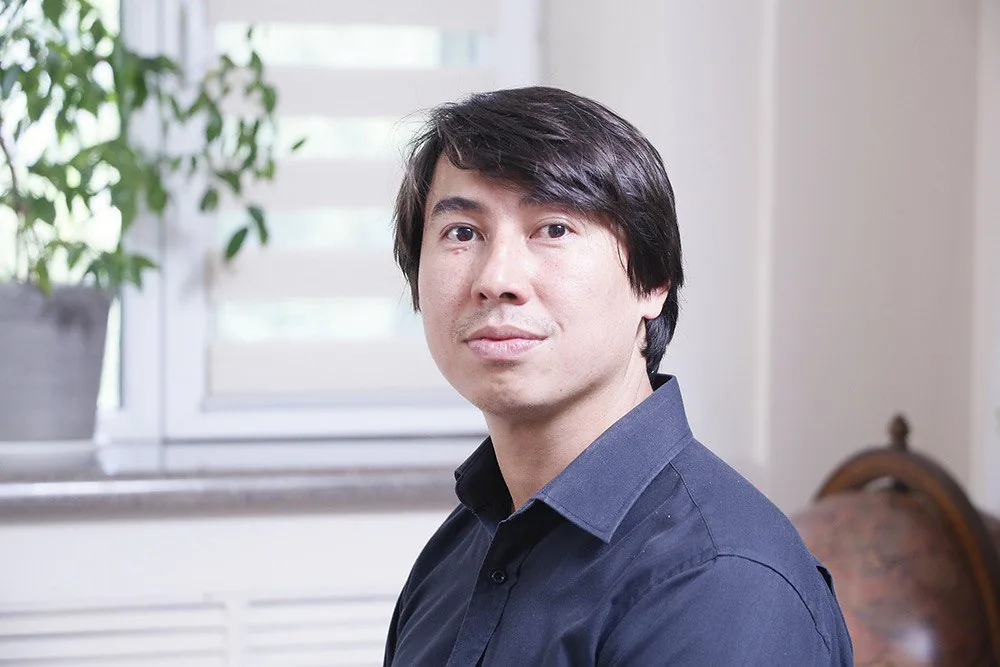
Met the founder of Space Lab. Learned the details about how the startup was created, as well as future plans.
The Tech AI
Get the key points in seconds - a short summary from The Tech AI.
Arman Bekembayev, CEO of the Astana-based startup SpaceLab, specializes in developing 3D printers and IoVIT satellite terminals. The company collaborates with Astana Hub, universities, and international partners, participating in projects related to fire monitoring and seismology. Despite tax challenges, the startup has entered the top 15 of the F6S ranking and plans to expand cooperation with Europe and the United States.
Arman Bekembayev, city — Astana, Almaty, CEO, systems engineer, @getdonearma
How It All Started
I have been an engineer since 2010, graduated from the Moscow Institute of Physics and Technology, and began working in the IT industry. I gained my first experience at a Russian startup where we created home networks. After the startup closed due to the 2008 crisis, I returned to Astana and started working as a business development manager. In 2009, I participated in a competition by “Kazakhstan Space Agency” for the position of aerospace equipment design engineer. After passing the selection, I received training at Airbus Defence and Space in France in 2010 and in the Technology Transfer program in England in 2014.
In 2014, the KazSTSat project began — this is a medium-resolution satellite that we are developing jointly with our English colleagues. In 2017, I headed the aerospace equipment design bureau.
Our company’s mission is to create services that ensure the normal functioning of various systems. SpaceLab is working on the IoVIT concept, where VIT stands for “life.” Our main business strategy is to launch ground services, attract clients, and in parallel, we will move into the space segment.
We are also involved in the development of 3D printers. We are discussing cooperation with Australian and Indian companies that are also interested in 3D printing.
Additionally, our portfolio includes the “Avatar” project, which involves systems for detecting forest fires using cameras and monitoring carbon dioxide levels. In the field of seismology, we cooperate with the Seismology Center in Almaty and the Ministry of Emergency Situations, integrating our technologies to improve situational analysis and data provision.
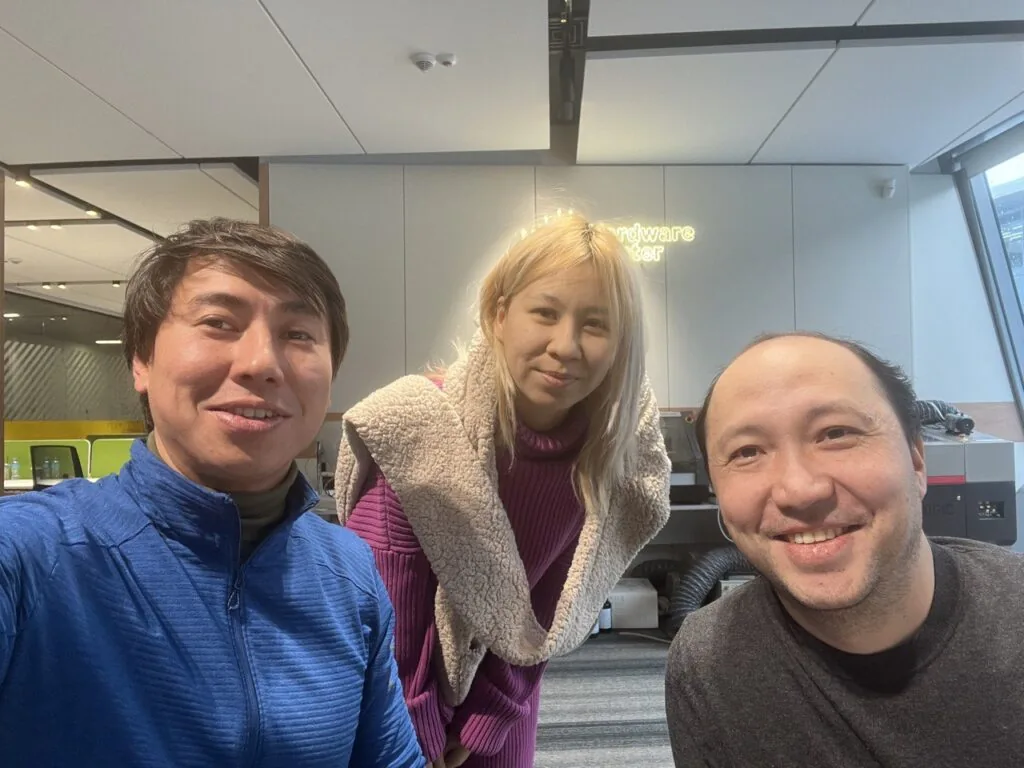
Team
The startup began to develop in 2021, immediately after the quarantine.
In 2022, we received investments and completed the assembly of the first 3D printer prototype. In 2022, we received investments to develop the IoVIT project, including 3D printers. We cooperate with AUES University, now known as Energo, where they have an incubator for youth projects and a 3D printer farm. Since 2022, we have been located in the space center in Astana, rented an office, and started assembling and selling 3D printers. One of them operates at Nazarbayev University, another at Astana Hub, where it is used as a maker space. We also sent one printer to Abay IT Valley. In parallel, we began developing satellite terminals.
The team includes students, as well as us, senior engineers with international education. Although we have limited resources, we strive to develop their potential so they become strong professionals, and this is already yielding good results.
Target Audience
At the moment, we are in the pilot stage with our 3D printers. These printers can be used in colleges, universities, and in industry. Larger printers print engineering plastic parts with higher temperature control requirements. We are also working on a high-temperature version of the 3D printer, which can be used both in medicine for manufacturing implants and in other fields.
Together with Ghalam, we planned experiments on printing satellite components, which began in 2024. We have successfully completed the development of the hardware product and are actively working on the software. We also cooperate with the fire service and the Department of Emergency Situations of Astana in a project to track fire outbreaks in the steppes, and we are developing outdoor sensors for forests. In June, a pilot on seismology is planned with the installation of an antenna at a seismic station.
Astana Hub helped establish connections with international partners. We have a partner from Spain who launched the Smart Brain startup in Ethiopia. Their application helps doctors in rural areas remotely diagnose conditions based on [data]. We plan to provide connectivity in August–September through our terminal, which is compatible with various satellites, including SES and Eutelsat.
We also have a request from Brazil from a company that collects insect data using traps in fields. Southeast Asia is also a significant market, and we intend to develop relationships with partners from these countries.
Incubation Programs
We have gone through several acceleration programs, starting with the ABC Incubator at Nazarbayev University. This helped us start developing our idea. For our design bureau, cooperation with universities is important. Universities develop ideas and create prototypes, and we refine them to production readiness. This cooperation is effective.
At the moment, we are actively using this knowledge and placed in the top 3 in the ABC Incubator, successfully completing acceleration with projects on 3D printers and the development of IoVIT satellite terminals. Participation in Plug and Play through Astana Hub and acceleration at Draper University were key to our development, allowing us to communicate with leading specialists and receive a significant boost in growth.
Challenges
Despite being residents of Astana Hub, we faced a difficult tax situation. For those just starting out, the tax rate is 23%, but in reality, it amounts to more than 40%. This is a significant financial burden that is hard to bear at the initial stage of company development. This money could have been used to purchase equipment and other needs.
We need to develop our own technologies here in Kazakhstan to avoid dependence on technology imports.
Currently, the lack of good hardware engineers in the market is slowing down our steps in developing powerful artificial intelligence platforms. We need specialists and equipment to deploy chip production here in Central Asia. This is a key aspect for Kazakhstan.
Achievements
We aimed to be the best, and this sense of distinction has always inspired us. Our participation in accelerators always ended in the top 3; for example, at Draper, we were in the top 10. Our startup also made it into the F6S rating, entering the top 15 in California and the top 5 in Palo Alto. We continue to actively interact with foreign partners, including participation in Mohammed bin Rashid’s accelerator in Dubai. This state fund supports startups, which fits into our strategy.
Our next step is attracting investments to Kazakhstan through successful startups already located here. We are looking towards neighboring countries such as Dubai and other Arab countries, where open tax legislation and support for new technologies create favorable conditions for development.
Plans
Our priority is to establish cooperation with Europe and America due to their high business orientation. If we demonstrate our reliability and interest as a technology partner, they will be ready to cooperate. Therefore, the next step after Dubai will be directed towards them.
We need integration partners for our connectivity solution in remote regions — steppes, forests, mountains. The wider our network spreads, the more effective it will work. We are looking for interested partners willing to help in spreading connectivity and collecting data from remote corners. We are open to cooperation with those willing to develop Kazakhstan and are ready to put in all efforts to achieve this goal.
The Tech on Telegram Follow The Tech on Telegram
Keep up with the latest technology and startup news.
Related reading






More from this author

Article Useful
How to protect your accounts from hacking: 8 settings you should check today
The Tech

Article Useful
500 Global: How the Accelerator Works and Who Can Receive Investments
The Tech

Article Interviews
Game Development in Central Asia: Arkady Moldavski on Developing Reverb and the Growth of the Industry
The Tech

Article Useful
Google, Tesla, BlackRock, and the IMF: Where to Apply for an Internship in Fall 2026
The Tech

News IT
Tesla unveiled the flying electric car Roadster
The Tech

News IT
Intero Biosystems startup won the Startup Battlefield at TechCrunch Disrupt 2026
The Tech