Get the key points in seconds - a short summary from The Tech AI.
Zukhra Akhtoykenova, the 20-year-old founder of the Skin ID startup, has developed an AI-powered skincare ecosystem. The app utilizes deep machine learning and computer vision: its algorithm identifies skin issues in less than a second (0.12 ms) from a photo and recommends suitable ingredients. The platform includes e-commerce with filters and plans to introduce smart mirrors; the app launch is scheduled for March–April.
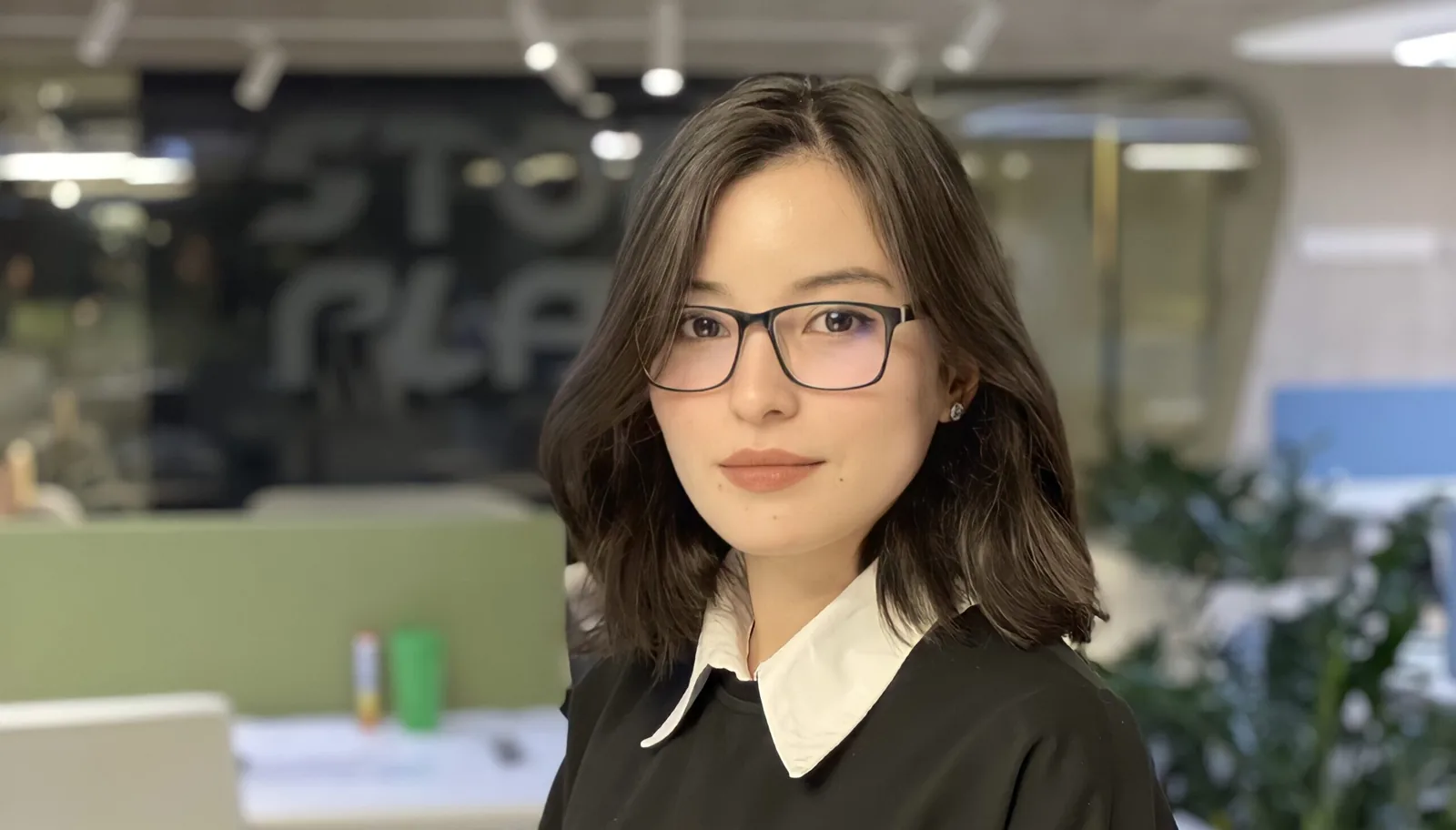
The creator of a beauty-tech startup explains how artificial intelligence technologies can help solve skin care problems Zukhra Akhtoykenova is the creator and developer of the Skin ID startup. We spoke with her about how she built a technological eco-system in the beauty sector at the age of 20.Zukhra, how did Skin ID begin?I studied International Relations at Narhoz University. At 19, I switched to the IT field and started programming. Last year, I focused on mobile app development. I realized that this was the area where I wanted to specialize. At the same time, I was actively taking care of my skin – trying to solve post-acne issues with skincare products, but constantly encountering consultants in stores who lacked sufficient qualifications to recommend appropriate products. They rarely ask about your skin type, bad habits, diet, or pregnancy. Yet all these factors significantly influence whether a particular cosmeceutical is suitable for you. I spent three to four months and a lot of money trying to find products that matched my skin type. It became clear to me that many consultants’ main goal was simply to increase the average check and earn a good commission from sales. I became so interested in this issue that I even intentionally went to job interviews at companies selling skincare cosmetics to understand what requirements they had for candidates. I wouldn’t have refused to work in this field, as I previously had my own small business selling cosmeceuticals. As expected, the main requirements for potential candidates were sales experience, an attractive appearance, and articulate speech. Not deep knowledge of product ingredients.
When did the idea to create something of your own arise?After researching how retail outlets operate and studying the ingredients of products available on our market. We have many suppliers who sell counterfeit cosmetics, and retailers fall for this and make purchases from them. The market is “cluttered.” I realized that something had to be done about this. And since I am a developer, the idea came to me to create a service for monitoring skin condition based on deep machine learning and computer vision. I had been interested in machine learning technologies before. I was curious about how artificial intelligence works and how it could be implemented in business. I understood that by applying machine learning technologies, I could create a system that would independently identify skin problems. And do it no worse than a cosmetologist. Initially, I was skeptical about my own idea. I thought that if such a solution didn’t exist on the market yet, it might not be very relevant. But later, after discussing the idea with entrepreneur acquaintances and friends, I came to the conclusion that it was a good one, it just needed careful consideration. So I started thinking about how to commercialize this idea, who would use this application. I began finding startup trackers who help shape products in the early stages. I consulted with specialists. First prototypes of the product appeared. And finally, an ecosystem was formed. Both for B2C and B2B.
What does the ecosystem consist of?There is a mobile application. It can be used to scan and detect skin conditions and problems, and at the same time serve as an e-commerce platform. In Kazakhstan, there is no e-commerce platform specifically for skincare cosmetics. If you need to understand your skin’s condition, after scanning, the trained system provides an automatic result. And immediately offers solutions for your problem. For example, if we are dealing with post-acne and sensitive dry skin, 10% niacinamide is indicated. The application suggests products with specific components that can improve your skin’s condition. Thanks to the e-commerce platform, you can purchase these products directly within the application. Using the geolocation feature, the application will suggest retail outlets near you. You can set filters by price range, city, store, and even by care type. For example, you need a cleansing foam, but not a toner. The filter helps configure the most accurate search.
How does the skin scanning process work?The system incorporates deep learning technology, deep neural networks. It treats each skin problem as a separate classification. The first classification is acne and post-acne. The second is by skin type: oily, dry, combination. To determine skin type, I developed a separate trained model that recognizes skin tone. Each class has sub-classes – types of acne and post-acne. We built connected neural networks between skin problems and cosmetic ingredients. And neural networks between cosmetic ingredients to determine their compatibility. For example, Vitamin C cannot be combined with Niacinamide, otherwise, you can dry out your skin. The system knows this. We trained it on 20-30 thousand photos of people with the same type of acne. Our team includes a specialist with a medical background who established connections with clinics and helps us with expertise.
Recently, we achieved that our algorithm began recognizing skin problems in less than a second thanks to intensified training of the neural network model. Literally – in 0.12 milliseconds. We still face data processing speed issues, but we are doing everything to ensure it takes less than one second. We also took care of data privacy and set up our own servers.
The benefit of the product for the mass consumer is clear, but how can it be useful for B2B?We reduce the coefficient of importing low-quality and non-original cosmetics in the country for our sales representatives. We help stores form a clear understanding of user needs for skincare cosmetics; our system can remember a large number of users to create intelligent recommendations for tracking the turnover of certain products. We also form a loyal customer base, saving money and time. I apply this approach to all representatives: beauty spaces, stores, pharmacies, as well as cosmetic products.
How else do you plan to generate profit from your project?Through commissions on each transaction made in the application, as well as because good specialists and clinics will pay to be included in our system. Additionally, we are developing one hardware solution – an interactive smart mirror. We plan to purchase hardware abroad, implement our algorithm, and install such mirrors in pharmacies and skincare stores. Users can scan their faces right on-site and learn about all their skin’s needs. And about products that can help and are currently available in that specific store/pharmacy. Currently, we are actively testing our application, planning to launch it in March-April. As soon as we see that it has actual high demand, we will begin installing mirrors in pharmacies and stores.
In what, do you consider, lies the relevance of your project?In November 2020, when everything was still in the launch stage, I spoke with many acquaintances. People who have problematic skin and who also faced issues with consultations in stores. I learned that if girls are still willing to spend time choosing necessary products, guys are shy about doing so. They are shy to come into a store and ask a consultant to select a line of products; they are even shy to visit a cosmetologist. Our application is a super-app for everyone, regardless of gender and age. It saves time, effort, and money. Everything in one place. Convenient and technological. Moreover, the beauty sector in Kazakhstan is the least digitized. From my observations, the maximum is CRM systems or Taplink on a store’s Instagram page. Therefore, our application is essentially a revolution for the entire industry.
You came up with the project in November 2020, and by March 2021 you were already planning to enter the market. How did you manage to implement such a large-scale project in such a short time?I have a very good team. But I do not diminish my own contribution either. I was close several times to abandoning the project and working simply as a programmer. Partly because I encountered a lot of ageism and gender stereotypes. No one believed that at 20 years old, one could launch such a large-scale product. But essentially, I am a visionary and an idealist. I have a tendency to see and hear through matter. Yes, not all startups succeed. But I adhere to my own principles and philosophy – it is better for me to move forward and achieve something than to later regret that time has passed and a good idea was never realized. In my life, any “want” ends with action. Once I saw my potential in the IT field, I did not hesitate to challenge myself and move there. As for the team, it is very important to gather around yourself people who know the topic better than you. I was very lucky to gather talented people around me, specialists in computer vision and machine learning. But, as a project manager, I always give them intellectual challenges, motivate them, and inspire them with the idea. My goal is to develop a team that will implement deep machine learning technologies into other products. But we clearly decided that we want to develop as a product company.
Did you think about the fact that launching a project during the pandemic was risky?On the contrary, it was precisely during the pandemic that the beauty industry grew significantly. When cosmetology centers closed, sales of cosmeceuticals increased sharply. People had a lot of free time to think about their skin health and choose suitable care for it. Moreover, we have a project based on machine learning – a technology that, in my observation, is still insufficiently developed in Kazakhstan. Many would like to work in this direction, and we will be among the first to change the beauty market.
The Tech on TelegramFollow The Tech on Telegram
Keep up with the latest technology and startup news.