Hundreds of rejections, moving to the US, and the dream job: Navruzbek Noraliev on starting his IT career
How to build a career in IT from scratch and reach an international level? Our hero from Uzbekistan shares his experience, challenges, and lessons that helped him go from a student to a Lead Software Engineer in the US.
Author - Mansur Ismagulov
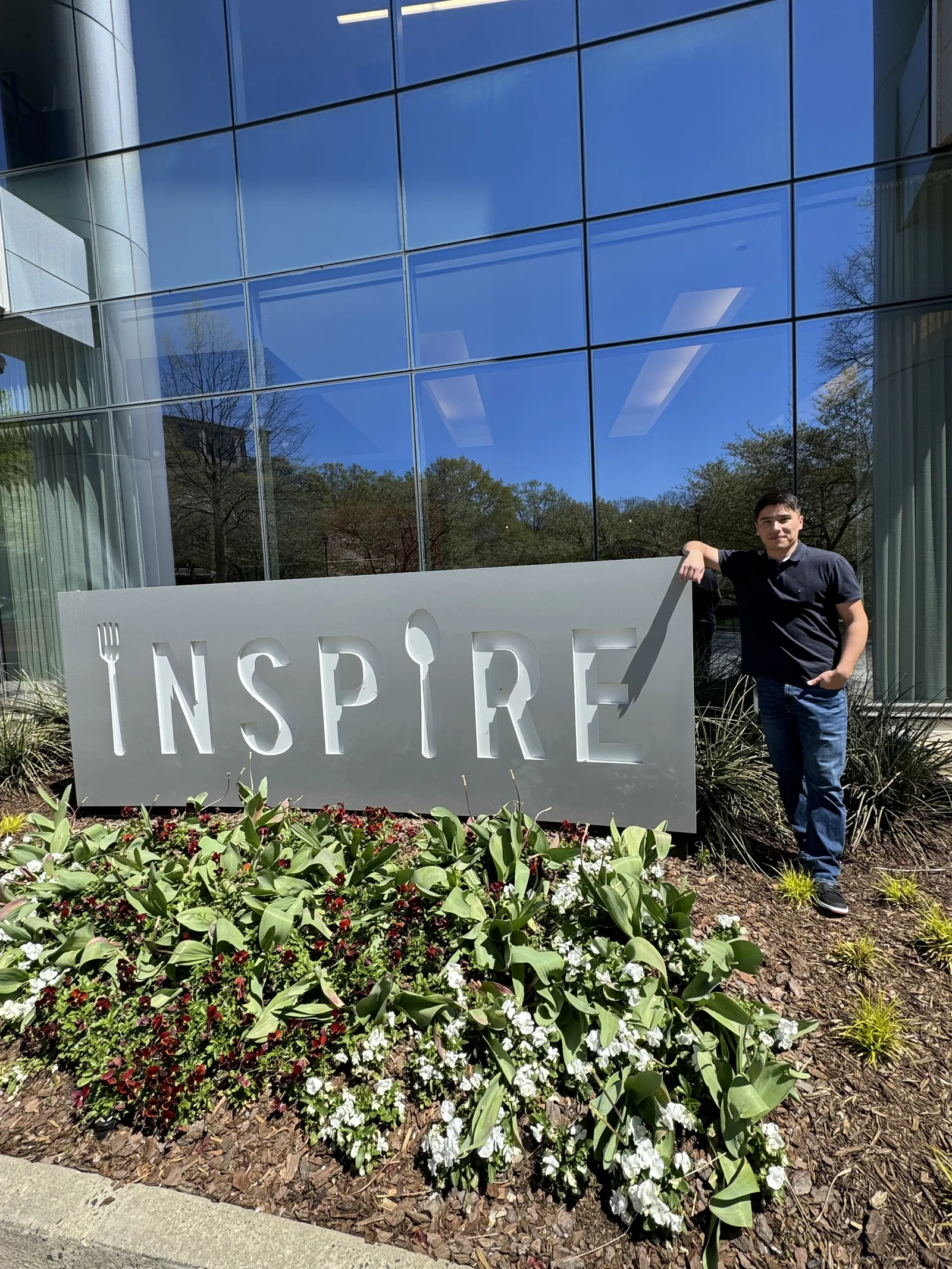
Navruzbek Noraliyev, City — Atlanta, Lead Software Engineer, Linkedin
About Me
I am a Full Stack Developer and AI & Cloud Solutions Architect with over seven years of experience developing scalable applications. I hold a Master’s degree in Computer Science from Maharishi International University and a Bachelor’s degree in Computer Science and Engineering from Inha University.
My interest in technology began in school: I disassembled and repaired computers, installed software, and tried to understand how everything worked. Gradually, this hobby evolved into an interest in programming — from simple scripts and websites to complex projects.
In university, I consciously chose the path of an IT specialist. My first serious experience was working with banking systems, which provided a practical foundation and confidence in my profession.
Today, I am a Lead Software Engineer at iVoyant in Atlanta, USA. I participate in large-scale projects for the Inspire Brands network, implement AI-based loyalty systems, and develop cloud solutions used daily by millions of people.

About My First IT Job
I started my career at Fido Biznes in Uzbekistan in 2021 as a Software Engineer. I was responsible for developing internal banking systems: writing code in Java and React.js, developing online banking solutions, and participating in all stages of the SDLC.
At that time, I was a second-year university student. A job fair was held at the university, where companies primarily targeted senior students. For students like me, demand was low, but I decided to give it a try.
I approached the representatives of Fido Biznes and managed to convince HR that, despite being a student, I already had sufficient knowledge and a strong desire to work. As a result, I was given the chance to take an interview, which I successfully passed. This is how I got my first full-time IT job while still studying.
At that time, Fido Biznes was one of the leaders in developing solutions for the banking sector, and for me, it became an excellent opportunity to gain practical experience in the field of financial technology.

The interview consisted of two stages: an HR interview and a technical interview. I was asked about programming languages, projects completed at university, and my pet projects. This helped determine which development team I would be best suited for.
There was no coding test — more attention was paid to my practical skills and ability to adapt quickly. I prepared by reviewing the basics of Java, SQL, and system design, which helped me feel confident.
As a result, I was assigned to the team working on banking solutions. This became a solid start to my career. Education provided fundamental knowledge, while qualities such as persistence, teamwork, and the ability to learn quickly helped me pass the probation period and continue growing.
About Challenges
I faced difficulties finding my first job. First, I had no real work experience — I was a second-year student, not even a graduate. At the job fair, employers were mainly looking for senior students, so interest in candidates like me was minimal.
Nevertheless, it was persistence and the desire to work that played the key role. I managed to convince HR that, despite the lack of experience, I had knowledge, a strong drive to learn quickly, and readiness to work hard. Thanks to this, I secured my first full-time IT job.
In Uzbekistan, I worked at leading companies such as Fido Biznes and EPAM Systems, and I hardly encountered any employment issues — my experience and skills were always in demand. But when I moved to the USA, it turned out that this experience was not valued as highly here: for local employers, it was hardly considered full-fledged.

The job search took about five months. During this time, I received hundreds of rejections, and honestly, my motivation sometimes dropped. I thought: “If all doors were open for me in Uzbekistan, they should be open here too.” But reality was different.
Each rejection and each interview made me stronger: I learned to better present my experience, adapt to the market, and work on my weaknesses. In the end, persistence paid off — I got a job at iVoyant LLC, a consulting firm that provides contracts for major companies, including Inspire Brands and AT&T.
This experience taught me the most important lesson: never give up, even if the path is longer than expected. Persistence and a willingness to learn always lead to success.
When I started working in Uzbekistan, the main challenge was the lack of experience working in large teams and the need to adapt to corporate processes. I learned on the job: I asked questions to senior colleagues, sought mentors, and independently mastered new technologies. This helped me grow quickly and take on more responsibility.
In the USA, the challenges were of a different nature. The requirements for projects and code quality were significantly higher. I had to immediately engage in large-scale projects with high workloads and change my development approaches. I coped with this thanks to persistence and a willingness to learn “on the fly,” viewing every problem as an opportunity for professional growth.
The main difficulty for beginners when looking for their first IT job is the need to prove their practical value to employers. Theory and diplomas are not enough: it is important to showcase projects, even if they are academic or personal pet projects, to demonstrate the ability to solve real-world problems.

3 Tips to Help Young Professionals Find an IT Job
- Don’t wait until you have “perfect” experience — start with what you have. Even if you only have academic or pet projects, include them in your portfolio. This shows that you can see things through and think like a developer.
- Prepare for interviews. Algorithms and data structures are a basic minimum tested almost everywhere. In my case, knowledge of Java and Data Structures was a decisive factor in early interviews.
- Develop persistence and communication skills. Technical knowledge is important, but it is equally important to show that you can work in a team, learn quickly, and not give up after rejections. It was persistence that got me my first job as a student and helped me find work in the USA after hundreds of rejections.
The Tech on Telegram Follow The Tech on Telegram
Keep up with the latest technology and startup news.
Related reading







More from this author

News
zypl.ai begins operations in Japan and focuses on next-generation risk models
Mansur Ismagulov

News
Elon Musk's net worth has exceeded $700 billion for the first time
Mansur Ismagulov

Article Interviews
"Central Asian countries should build a joint ecosystem," — Bekhzod Ismoilov on the development of AI in the region
Mansur Ismagulov

Article Interviews
Bloom's Taxonomy and Engineering Levels: A Practical Growth Model
Mansur Ismagulov

Article Useful
How the IT industry in Azerbaijan developed in 2025: key events
Mansur Ismagulov

News
Tajikistan has become a new member of the regional innovation alliance Central Asian Innovation Hubs.
Mansur Ismagulov