Where to start the journey in competitive programming in Kazakhstan
In the Telegram channel The Tech, there was a live stream with the Secretary General of the Kazakhstan Federation of Sport Programming about how to start a journey in sport programming in Kazakhstan. We share the key thoughts and expert predictions in a text version.
Author - Mansur Ismagulov
The Tech AI
Get the key points in seconds - a short summary from The Tech AI.
Adina Magavina, the Secretary General of the Kazakhstan Federation of Sport Programming, has been developing the industry for 18 years. The Federation provides free training to participants, including through the Kazakh-language platform Nesepsipifet.kz. Kazakhstani students participate in ICPC among 73,000 participants from 110 countries. Batyr Sardarbekov won gold at the 2023 World Championship Final. Registration for school olympiads opens in late February, and student contests are supported by Documentolog.
The recording of the broadcast is available via this link.
Adina Magavina, General Secretary of the Kazakhstan Federation of Sport Programming
About Me
I have been developing sport programming in Kazakhstan for 18 years in various roles. I started during my school years, learning about it from my computer science teacher when I was 11. For me, it became an engaging activity alongside my studies, offering the opportunity to participate in competitions and study programming. In school, I reached the Republican Olympiad, won gold, participated in international competitions, and was a member of the national team.
Thus began my career in sport programming. Later, after entering university, I studied at the International University of Information Technologies in Almaty, continued participating in informatics and programming Olympiads, and already took part in the qualifying rounds of the ICPC World Championship. Later, I decided to stay in the field of education — I started training schoolchildren, preparing them for competitions. I worked as a manager, developing sport programming at Astana IT University. Two years ago, we founded the Kazakhstan Federation of Sport Programming, and currently, I am actively developing this field across the country.

Basics of Sport Programming
Sport programming is attractive because it combines intellectual sports, IT, science, education, and new opportunities. Here we solve non-standard problems, learning to find optimal solutions using programming. Unlike industrial programming, which is focused on creating websites and applications, sport programming focuses on solving complex algorithmic problems. Here, it is important not just to write code, but to find an optimal solution using efficient approaches.
Competitions usually last five hours. School competitions are held over two days, with each round lasting five hours. Participants are given three to four problems, earning between 0 and 100 points for each. Student and adult competitions usually take place in a single round lasting five hours. Here, the "all or nothing" format applies — you either get 0 or 100 points for a problem.
Problems are most often logical, algorithmic, or mathematical. Sometimes basic programming knowledge is sufficient, but it is important to figure out the solution idea. Participants first analyze the problem statement, then develop an algorithm and implement it in a programming language. C++, Python, and Java are most commonly used, but other languages are also allowed, depending on the competition regulations.
We strive to make Kazakhstani and international competitions similar so that schoolchildren and students can prepare according to international standards.
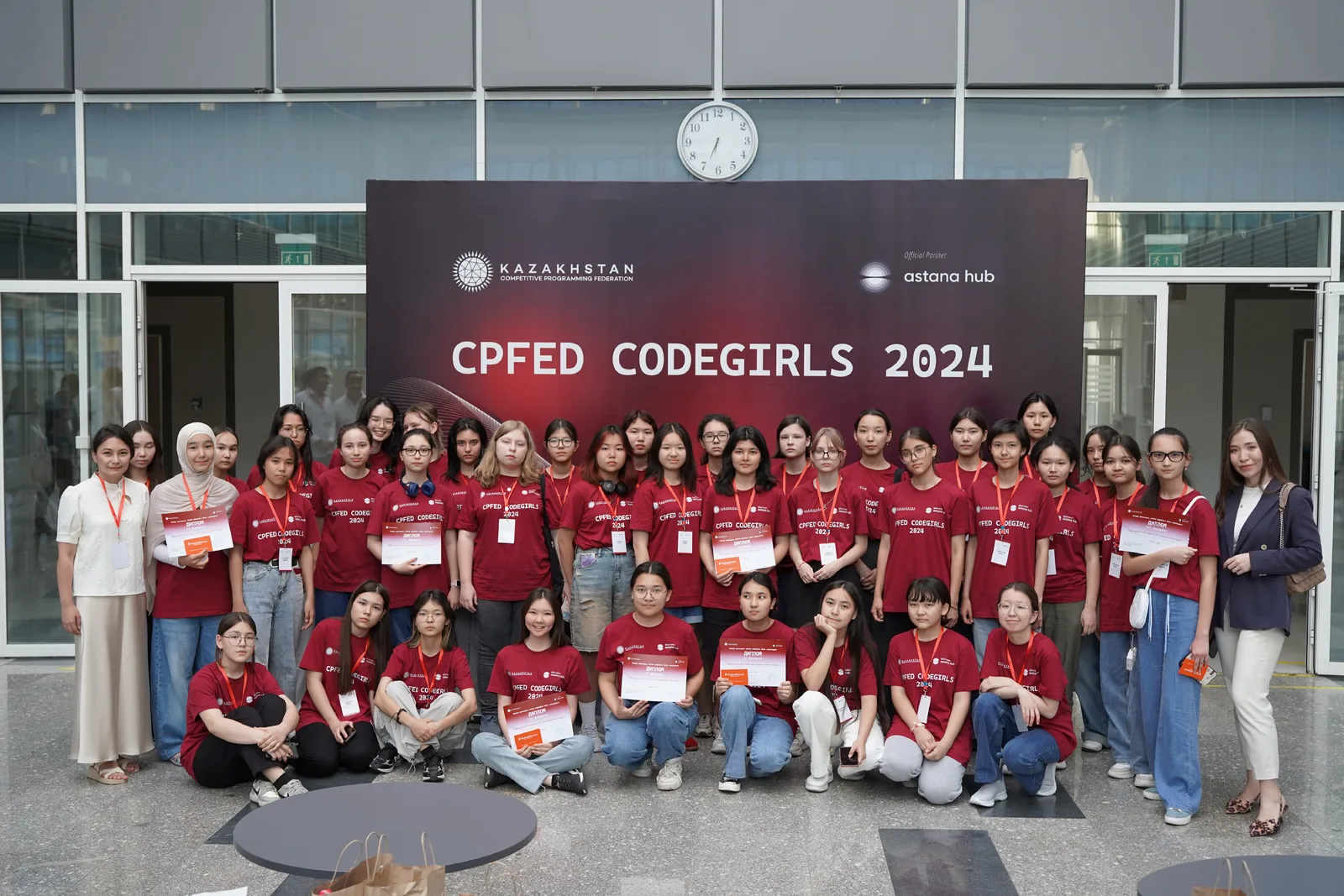
How to prepare? In the Federation, we launch training programs, especially in regions of Kazakhstan where there are fewer opportunities to study programming. In Astana and Almaty, such opportunities are greater, but in the regions, few people know about sport programming and its benefits. Therefore, we organize free training from scratch.
To participate, it is important to develop logic, mathematics, and programming skills, as well as understand how to properly enter this field.
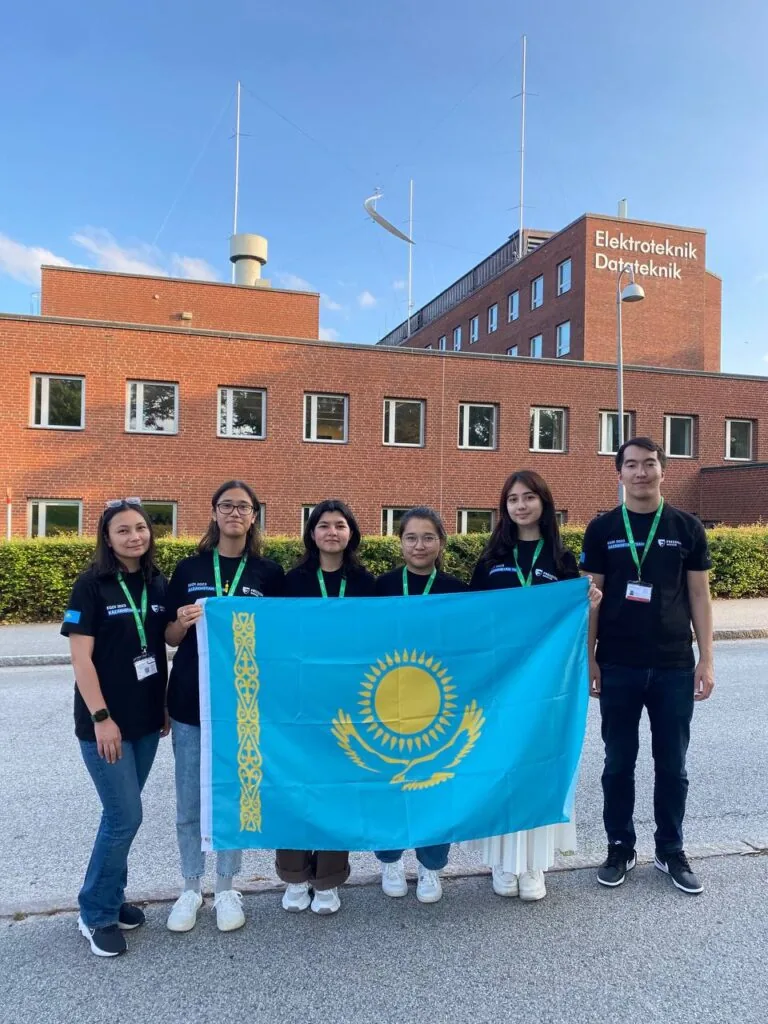
We are proud of our young people — they compete confidently and bravely on the international stage.
The origins of sport programming in Kazakhstan date back to the 2000s, when republican informatics Olympiads for schoolchildren began. Interestingly, these Olympiads feature problems specifically in sport programming, not standard programs like Word and Excel, as many might think.
Student competitions started around the same time. In the 2000s, the first quarterfinal of the ICPC World Championship was held in Kazakhstan, and initially, only students from Almaty participated. Today, competitions cover all regions of the country.
For over 20 years, Kazakhstani teams have consistently brought medals from the International Olympiad in Informatics — the largest Olympiad for participants under 18. Kazakhstani students also regularly reach the final of the ICPC World Championship, where they compete with 73,000 participants from 110 countries, and only the top 500 qualify for the final.
One of the greatest achievements was the gold medal, which Batyr Sardarbekov won for the first time in Kazakhstan's history at the 2023 ICPC World Championship final. This is a huge success and inspiration for new generations of schoolchildren and students engaged in sport programming.
Preparation and Training
To successfully master sport programming, it is important to follow a step-by-step learning process:
- Logic — a basic skill, as sport programming involves non-standard problems. A good start is puzzles, mathematical and abstract problems, and crossword puzzles.
- School mathematics — the foundation for future algorithms. It is important to pay attention to topics such as combinatorics, number theory, and geometry.
- Programming — first, learn syntax, for example, in Python, then you can move to C++ for deeper work with algorithms.
- Algorithms and data structures — at an advanced level, they are necessary for solving complex problems.
For practice, you can use:
— Codeforces: a platform for competitions and rating growth
— Nesepsipifet.kz: a Kazakh-language analog of Codeforces from the Federation
— eMax and other sites with algorithms
— books on algorithms and data structures.

Opportunities
Schoolchildren and students can participate in contests by registering for upcoming Olympiads. At the end of February, registration will open for the sport programming Olympiad for schoolchildren, and in early March — for the Republican Olympiad in AI. Students can participate in a rating contest, where the best will receive an annual scholarship. The company Documentolog supports Olympiads for schoolchildren and contests for students.
The Federation regularly holds various events and publishes announcements on social media and official platforms. For the convenience of participants, a monthly digest with information about upcoming contests and competitions is now being released.
Recommendations
Starting in sport programming with simple problems is important to avoid demotivation. Many expect quick results, but here the cumulative effect works — over time, skills develop through studying algorithms, data structures, and systematic training. The main thing is not to get upset if it doesn't work out immediately.
For children, it is important to master logic, mathematics, and the basics of programming. At a professional level — algorithms, data structures, and regular training. These principles apply to everyone, regardless of age.
The Tech on Telegram Follow The Tech on Telegram
Keep up with the latest technology and startup news.
Related reading







More from this author

News
zypl.ai begins operations in Japan and focuses on next-generation risk models
Mansur Ismagulov

News
Elon Musk's net worth has exceeded $700 billion for the first time
Mansur Ismagulov

Article Interviews
"Central Asian countries should build a joint ecosystem," — Bekhzod Ismoilov on the development of AI in the region
Mansur Ismagulov

Article Interviews
Bloom's Taxonomy and Engineering Levels: A Practical Growth Model
Mansur Ismagulov

Article Useful
How the IT industry in Azerbaijan developed in 2025: key events
Mansur Ismagulov

News
Tajikistan has become a new member of the regional innovation alliance Central Asian Innovation Hubs
Mansur Ismagulov