The venture capital market in Uzbekistan: what experts say
On May 28-29, the International PLAS-Forum Digital Uzbekistan took place in Tashkent, where experts discussed venture capital, investments in startups, and the prospects for the development of financial technologies. We are sharing the text version of one of the sessions titled "Investments in Business. The Venture Capital Market in Uzbekistan. Startups."
Author - Mansur Ismagulov
The Tech AI
Get the key points in seconds - a short summary from The Tech AI.
Anvar Irchaev highlights the lack of business angels, unstable legislation, and high cost of capital as barriers to investment. Rustam Rakhmatov points out the prevalence of a conservative mindset and dependence on state funds, calling on investors to exercise patience and take risks. Nodira Sadikova notes the small volume of investments ($17 million in 2023), weak market liquidity, and the need for successful cases, such as the Payme exit, to build trust.
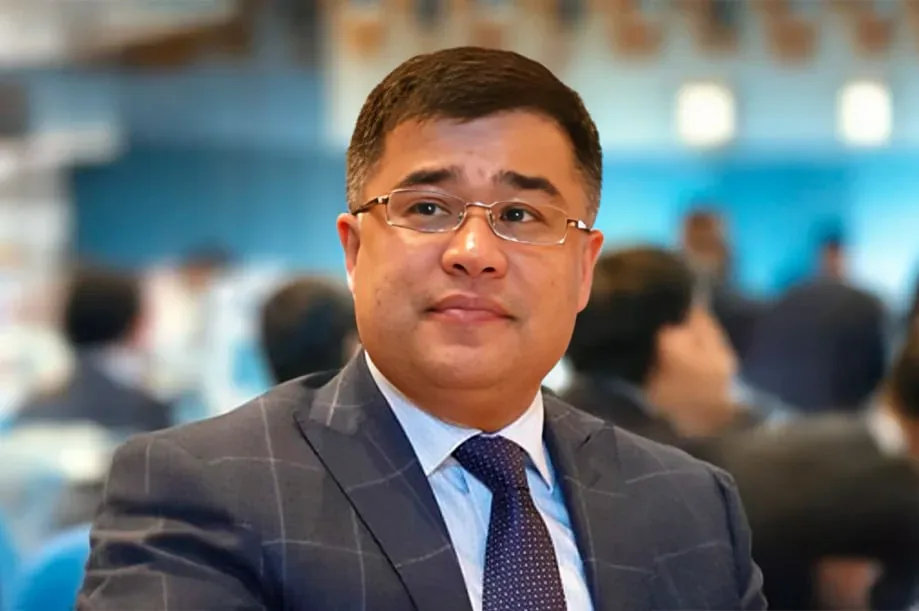
Anvar Irchaev, Chairman of the Board of Directors of Universal Bank
Limitations of the state venture fund
I would divide the problem into two areas: the lack of internal and external investments.
Internal investments. Business angels and funds should be investing. We have only a few of them, but we need at least 50-100. A true angel is not someone who invests money once, but someone who invests in dozens of projects, understanding that only one or two of them will "hit it big." We currently have very few such people. But the situation is changing: the economy is growing, and entrepreneurs are emerging who sell their businesses and begin to form investment portfolios.
External investments. The main barriers are institutional. Legislation is unstable; the capital markets law was recently updated, but adaptation takes time. There are infrastructure problems: it is difficult for foreigners to open an account, buy or sell shares, there are very few shares, and there is no connection to Eurostream. This deters international investors.
Add to this the high cost of capital. It is easier to put money in a deposit at 25% than to risk it with startups.
And finally, human capital. In other countries—London, Tbilisi, Moscow—there are already strong communities. Ours is only just forming. As a society, we have not yet reached the level of such dense support, but we are moving in that direction.
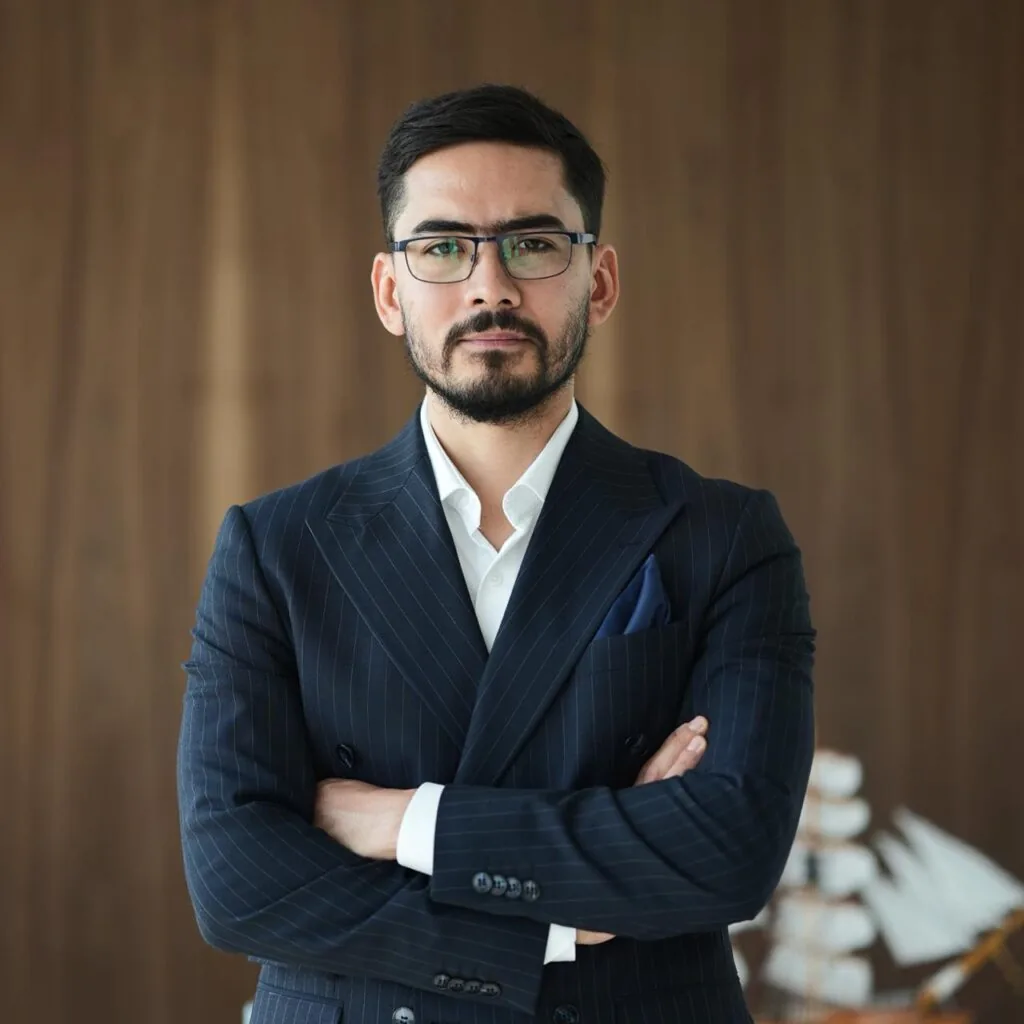
Rustam Rakhmatov, CEO and founder of Iman Holding
Investments in Central Asia, debt and equity financing
Currently, there are more startups on the market than investments. Why is this? Our investors still prefer clear, classic businesses—construction, salons, restaurants, real estate. There is a mentality: "Give money to an Uzbek—he will build a house." People are cautious and do not like to take risks. But it is risky investments, especially at the early stage, that drive innovation—and they must come from the domestic market.
We opened a company with five funds, and I realized that at the early stages, one must rely on the local market. I surveyed almost the entire market, and in the end, managed to attract three angels and one fund from within the country. The other investors were foreign.
If we look at the situation more broadly, everything takes time. Even Singapore did not become innovative overnight. We must be patient.
I believe that the "father" of Silicon Valley was none other than Edison. He made hundreds of attempts before inventing the light bulb. This is the path of a startupper—to endure 700 failures so that on the 701st try, everything works out. Investors are those who believe in that 701st time.
After factories and plants, it will be the engineers' turn to create "light bulbs"—new products that will change the market. It was so with computers, phones—it will continue to be so. Each startupper creates something: someone creates something new, someone adapts what already exists.
The problem is that both startuppers and investors here are afraid of risks. We need successful cases to prove that the market works.
I often traveled abroad because the domestic market of Uzbekistan is still small—in terms of money, the number of funds, and the level of expertise. Almost all our funds are state money or money from large companies. Pure venture capital, on the other hand, is private money, when someone with a capital of a billion dollars is ready to invest a million and take a risk.
Nodira Sadikova, Managing Director of ADW Group

Investment attractiveness of Uzbekistan: challenges and prospects
The main task of an investment banker in the region is to show that Uzbekistan as a developing market is interesting for investments in the fields of finance, agrotechnology, and other promising areas. At the same time, it is important to change people's mindset: real estate is a reliable foundation, but investing in successful projects is the next step.
So far, there are few such successful cases. One bright example is the exit from Payme, which became a significant event for the market. But for systemic changes, dozens of such stories are needed.
To date, there is almost no developed capital market in Uzbekistan: there is little liquidity and exits. For comparison, in Turkey every second person invests in the stock exchange and funds, while we do not have such opportunities yet.
In 2023, about $17 million was invested in startups. This is a modest sum. Most deals are small investments of $200,000–300,000, while large ones are rare.
Legislative restrictions also hinder progress: opaque legal norms deter foreign investors. In this case, angel investors can play an important role—investing small amounts and helping teams, but it is important that such investors are competent and understand the risks.
State support for venture capital is an important aspect. In Uzbekistan, however, state funds are afraid of risks, while the classic venture model implies that most projects will fail. Whether the authorities are ready to accept such risks is an open question, especially given limited resources.
Another challenge is the scalability of startups. Western investors look at the market globally, and Uzbek projects compete with counterparts from Mexico, Colombia, and Malaysia. Therefore, startups are expected to have growth potential at least at the Central Asian level.
The main conclusion: investing in Uzbekistan is a long-term endeavor. We need more successful cases, transparency, and trust. Only then will the investment climate of the region be able to compete at the global level.
The Tech on Telegram Follow The Tech on Telegram
Keep up with the latest technology and startup news.
Related reading







More from this author

News
zypl.ai begins operations in Japan and focuses on next-generation risk models
Mansur Ismagulov

News
Elon Musk's net worth has exceeded $700 billion for the first time
Mansur Ismagulov

Article Interviews
"Central Asian countries should build a joint ecosystem," — Bekhzod Ismoilov on the development of AI in the region
Mansur Ismagulov

Article Interviews
Bloom's Taxonomy and Engineering Levels: A Practical Growth Model
Mansur Ismagulov

Article Useful
How the IT industry in Azerbaijan developed in 2025: key events
Mansur Ismagulov

News
Tajikistan has become a new member of the regional innovation alliance Central Asian Innovation Hubs.
Mansur Ismagulov