Robots, Nutella, and "Very Nice": How Tourism Is Advancing Through Technology
With gradual easing, countries began launching programs to support tourism.
Author - Mansur Ismagulov
The Tech AI
Get the key points in seconds - a short summary from The Tech AI.
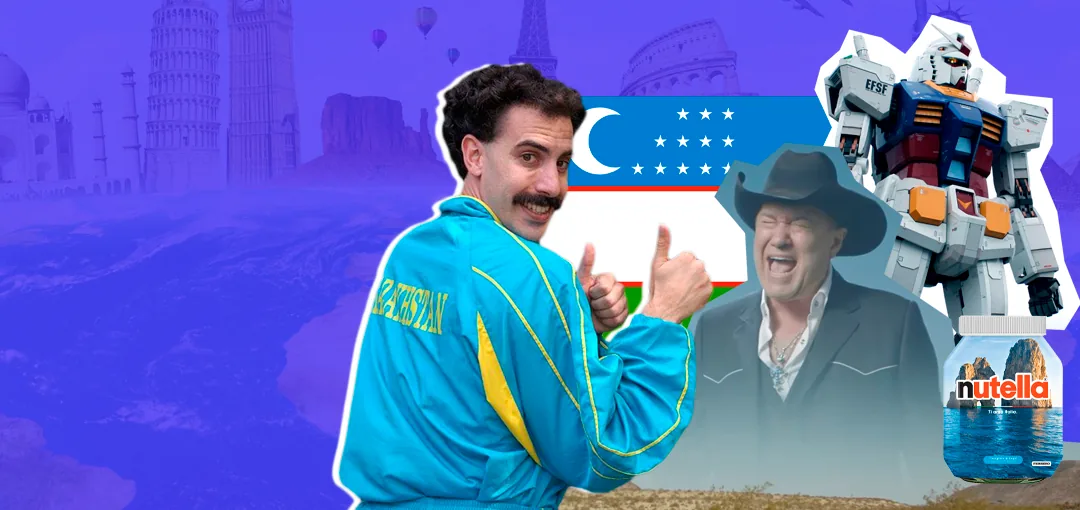
The COVID-19 pandemic caused the tourism sector to plummet to 10% of normal levels. Countries are leveraging technology to restore interest: the Gundam robot in Japan, QR codes on Nutella jars in Italy involving Ferrero and ENIT, sound recordings of screams in Iceland, the "Uzbekistan. Safe travel guaranteed" project in Uzbekistan, and the "Very Nice" advertisement in Kazakhstan. There is also a noted shortage of VR/AR technologies, although National Geographic already launched an AR planetarium in Canada in 2018.
Due to COVID-19, the tourism sector has been severely affected — international travel has “almost disappeared,” and airlines are carrying about 10% of their normal capacity. Attractions stood empty, hotels and guesthouses closed down, and people traveled from one room to another.
With gradual easing of restrictions, countries have begun launching programs to support tourism. Let’s look at some examples of how technology has been used to attract tourists.
Japan and robots
[caption id="attachment_287" align="alignnone" width="1024"] Gundam, image source: i.pinimg.com[/caption]
Japanese companies are actively integrating robots into everyday life: they have cared for COVID-19 patients, replaced fans at baseball games, and worked as merchandisers. Now, an 18-meter-tall “Gundam” robot in the port city of Yokohama is intended to revive tourist interest in the country. The mobile robot was created based on the character from the anime Mobile Suit Gundam. Anime attracts people, so the statue of the main character Luffy from the popular anime and manga “One Piece” brought the local economy $24 million thanks to foreign fans.
Italy and QR codes
[caption id="attachment_288" align="alignnone" width="1024"] Nutella: “I love you Italy,” image source: iconlife.ru[/caption]
Italians have focused on beautiful nature. The Italian National Tourist Board (ENIT), together with Ferrero, created a collection of 30 landscapes printed on Nutella jars. In addition to images of natural treasures, the jars feature a QR code that helps users explore the regions virtually.
Iceland and the opportunity to scream
[caption id="attachment_289" align="alignnone" width="1024"] Screaming woman, image source: lookslikeyouneediceland.com[/caption]
The Icelandic Ministry of Tourism decided that emotional release would help after isolation. Screaming recordings are broadcast across the country through speakers. Locals can listen to live screams and enjoy nature, while everyone else can record their own sound on the Looks like you need Iceland portal.
Uzbekistan and safety
[caption id="attachment_290" align="alignnone" width="1024"] “Invisible fighters,” image source: uzbekistan.travel[/caption]
Uzbekistan clearly demonstrated in a video and online magazine that it is ready to welcome new tourists. Through the “Uzbekistan. Safe travel guaranteed” project, safe tourism is promoted in the country, where “invisible fighters” carry out sanitary and hygienic work.
Kazakhstan and “Very Nice”
[caption id="attachment_291" align="alignnone" width="1024"] Kazakh Tourism video, image source: thesun.co.uk[/caption]
The national tourism development company Kazakh Tourism, together with the production studio Photosafari.kz, released a series of short videos. In the videos, English-speaking tourists discover Kazakhstan’s nature, cuisine, and attractions, commenting with Borat’s famous phrase — “Very Nice.”
The pandemic has accelerated the development of technology and creativity in tourism. According to The Tech, the sector lacks VR/AR technologies. Virtual reality will provide useful information for tourists, show how a memorable place looked in the past, and allow travelers to decide whether it is worth visiting. In 2018, National Geographic opened an open-air AR planetarium in Canada. Visitors, using augmented reality, see the outlines of constellations, star names, and planets directly on the night sky.
The Tech on Telegram Follow The Tech on Telegram
Keep up with the latest technology and startup news.
Related reading







More from this author

News
zypl.ai begins operations in Japan and focuses on next-generation risk models
Mansur Ismagulov

News
Elon Musk's net worth has exceeded $700 billion for the first time
Mansur Ismagulov

Article Interviews
"Central Asian countries should build a joint ecosystem," — Bekhzod Ismoilov on the development of AI in the region
Mansur Ismagulov

Article Interviews
Bloom's Taxonomy and Engineering Levels: A Practical Growth Model
Mansur Ismagulov

Article Useful
How the IT industry in Azerbaijan developed in 2025: key events
Mansur Ismagulov

News
Tajikistan has become a new member of the regional innovation alliance Central Asian Innovation Hubs.
Mansur Ismagulov