"Projects aren't built on motivation alone—they require consistency," — how sports help build leadership in IT
How participating in Oceanman Lago d’Orta 2025 helped rethink the approach to work, sustainability, and discipline in the profession.
Author - Mansur Ismagulov
The Tech AI
Get the key points in seconds - a short summary from The Tech AI.
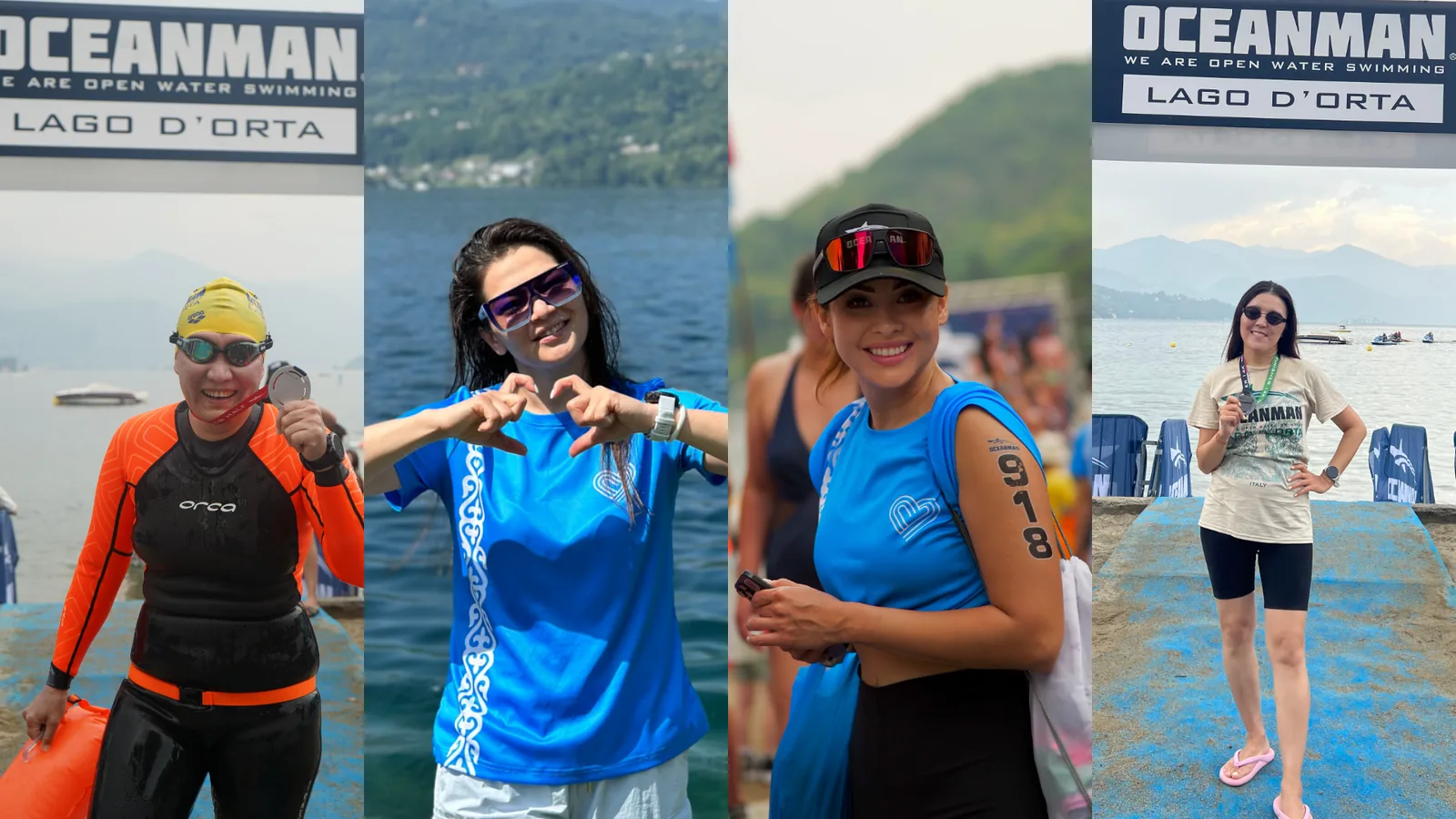
Four IT professionals (Asel Marchenko, Alima Umutbek, Laura Salam, and Symbat Seysenbaeva) participated in the Oceanman Lago d’Orta 2025 swimming races over distances ranging from 1.5 to 14 kilometers. They drew a parallel between physical endurance and project management, emphasizing the importance of discipline, systems thinking, and stress resilience. The experience of overcoming open water is viewed as a metaphor for mature leadership and consistent work on complex tasks.
Laura Salamat, city — Almaty, certified IT architect
Oceanman is not just a swimming competition; it is a personal challenge where every participant confronts themselves, uncertainty, and the question: “Do I have enough to finish?” Just a month ago, four specialists from completely different areas of IT — FinTech, Data Engineering, digital transformation, and product development — participated in the international Oceanman Lago d’Orta 2025 swim. Some completed the full distance for the first time, while others learned to maintain rhythm in difficult conditions. Preparation for the competition, discipline, training, working with emotions and pain — all of this unexpectedly became a metaphor and model for how we manage IT projects, teams, and our thinking in a professional environment.
This article is not about sports. It is about how physical endurance becomes a tool for systemic leadership. It is about how the experience of overcoming open water helps you look at task management, team resilience, and the development of professional products from a different perspective.
Asel Marchenko, Deputy Chairman of JSC “National Payment Corporation” of the National Bank of the Republic of Kazakhstan, ambassador of Women Techmakers by Google, GDG organizer, cross-continental swimmer

HalfOceanman Lago d’Orta 2025 — 5.5 kilometer distance
Stability begins with resilience. In digital infrastructures, it is important not just to react quickly, but to withstand a high pace without losing quality. Similarly, in open water, the first minutes are the hardest, but only endurance allows you to enter the right tempo and maintain it. Fatigue does not relieve responsibility. In critical IT systems, as on a long distance, any error under pressure can lead to a failure. Oceanman became that very litmus test: if something is missed during the preparation stage, it will definitely show up. Just like in the launch of new products, where shortcomings at the design stage lead to bugs, overload, and rollbacks.
Swimming as an engineering metaphor. During the swim, I started getting cramps and had to redistribute the load, relying on the other leg. I did not panic; the solution came from trained calmness. Similarly in IT: if one service goes down, traffic must be rerouted to a working one. This is a matter of maturity and configuring systemic thinking — predictive and non-emotional.
Discipline as a navigation tool. Training, nutrition, schedule, recovery — all of this became an accurate model of a complex project with vendors, regulators, and risks. My training diary became an internal report, the meal plan an analog of a project roadmap, and feedback from the coach — a retrospective. This structure saves the day when motivation has already run out, but the result is still far away.
Stress resistance is a skill. Open water teaches you to cope with fear. There is no bottom, no landmarks, the wind changes every minute. But it is precisely under such conditions that true flexibility is born. In IT as well, you cannot predict everything, but you can learn to hold your course. For me, swimming became not just a sport, but a practice of presence and emotional overload that helps return to work with a clear head and a new perspective.
Systematicity and discipline are universal competencies. They are equally important for reaching the finish line and for completing a complex IT project in conditions of high uncertainty.
Alima Umutbek, Head of Information Security, JetPay.kz, senior member Women in Tech Kazakhstan
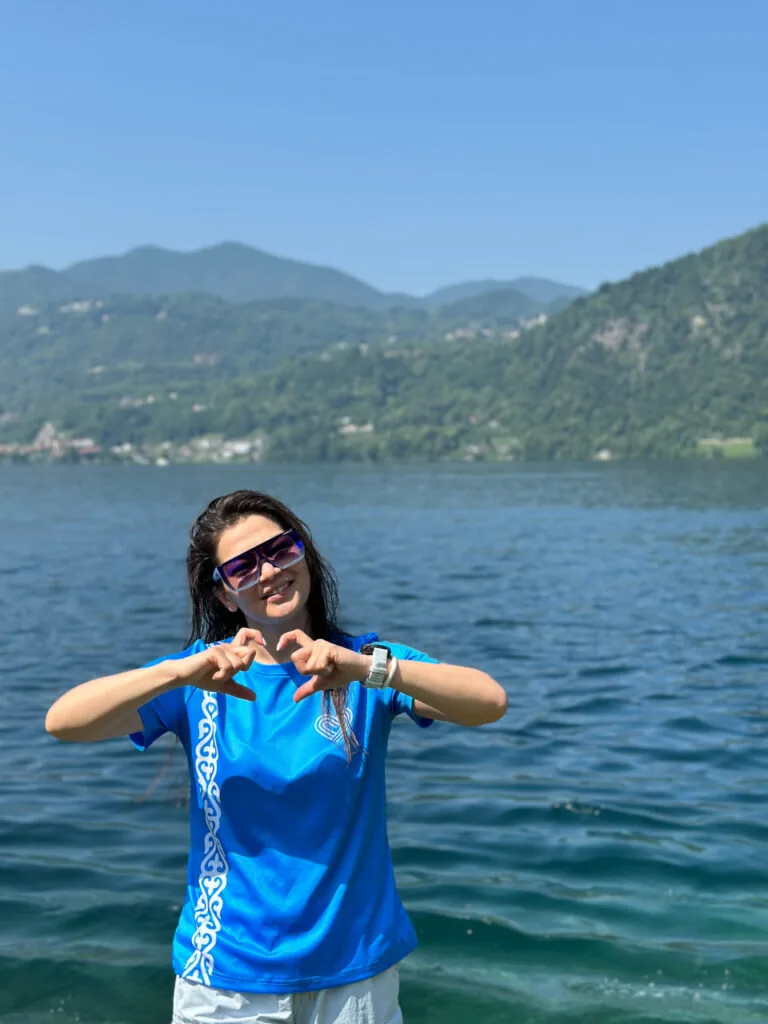
Oceanman Sprinter Lago d’Orta 2025 — 1.5 kilometer distance
Motivation is a flash, systematicity is the route. When I first started training, everything was inspiring, but I quickly realized that desire alone is not enough. Weather, work, daily life — all of it burned out motivation. Then the system kicked in, the one instilled by sports since childhood: schedule, training through fatigue, a flexible plan, listening to yourself, but not stopping. Just like in product management: MVP, test, iteration, feedback — launch again.
Open water is an environment where chaos does not work. In open water, it is impossible to “feel” the pace; you need to calculate it in advance and divide the distance. Understand where to speed up and where to conserve energy. This builds structured thinking — not from emotions, but from a model. It is then transferred to work. You do not act randomly — first you observe, then analyze, and only then choose a solution.
Results do not come quickly. In sports, as in FinTech, there is always a temptation to speed up, throw all resources into battle, launch more features, increase the pace. But in both cases, this leads to burnout and rollbacks. We learn methodicalness, adaptation, and building resilient processes.
The winner is not the one who starts quickly, but the one who does not leave the course. And in sports, and in products — planning and resilience are more important than the emotion of the start.
Laura Salamat, certified IT architect, CDTO at the public foundation NNEF, senior member Women in Tech Kazakhstan
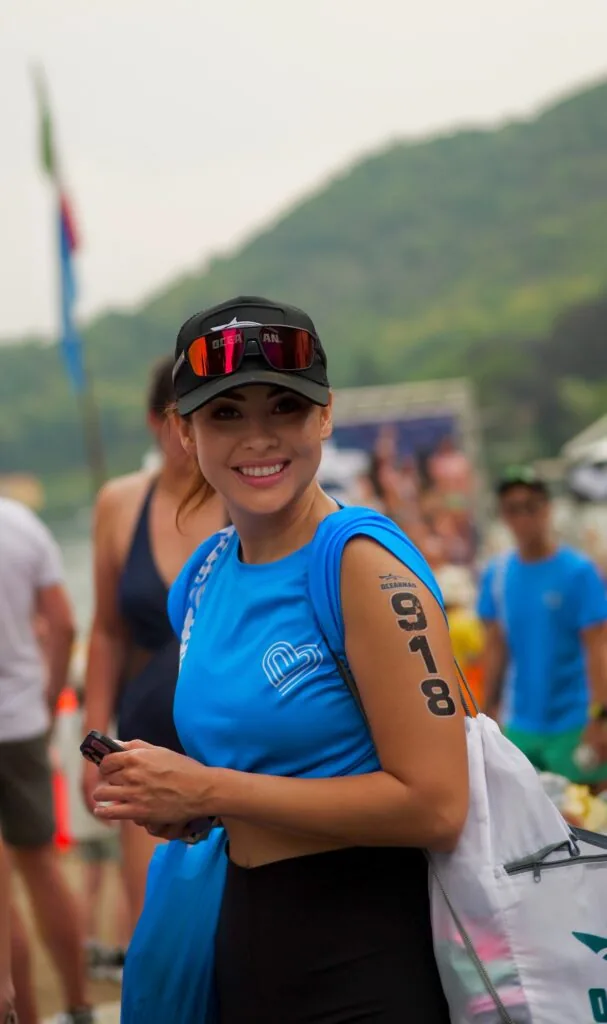
Oceanman Sprinter Lago d’Orta 2025 — 1.5 kilometer distance
The goal is not a record, but maturity. Oceanman became a logical continuation of my professional role. In digital transformation projects, resilience is especially important — not reaction to inspiration, but constant work according to plan. I started swimming for health. But at some point, I realized that this is about maturity, about not giving up even if the result is not visible. In projects, it is the same — first you invest weeks, and the effect comes only later.
Visibility ≠ result. At first, I started swimming for familiar goals, and of course, health, tone, and appearance. I thought that was enough. I even said that I did not strive for competitions and medals. But with each training, everything seemed to change, and a moment came when I understood that this is not about shape, it is about inner strength, about the ability not to abandon what you have started, even if you do not see an immediate result.
It is the same in projects. You work for weeks, progress is not obvious, and it is easy to give up, but if you have an internal system and discipline, you continue because you know that the effect will come, it just does not come immediately.
Sports as a mirror of leadership. I train almost every day, three times a week at 07:00 in the gym and twice at 21:00 in the water, and it is like work; no one sees, applauds, or gives grades. But you still come and do your job. Because you understand that the finish line is not about luck or inspiration; it comes to those who know how to hold the rhythm. For me, this is mature leadership — not reactivity, but consistency. Calm, regular work, even when no one is watching.
To move complex IT systems, you first need to build a system within yourself. Resilience is not armor, it is stability of actions over a long distance.
Symbat Seisenbaeva, Data Engineer, “Bank CenterCredit”
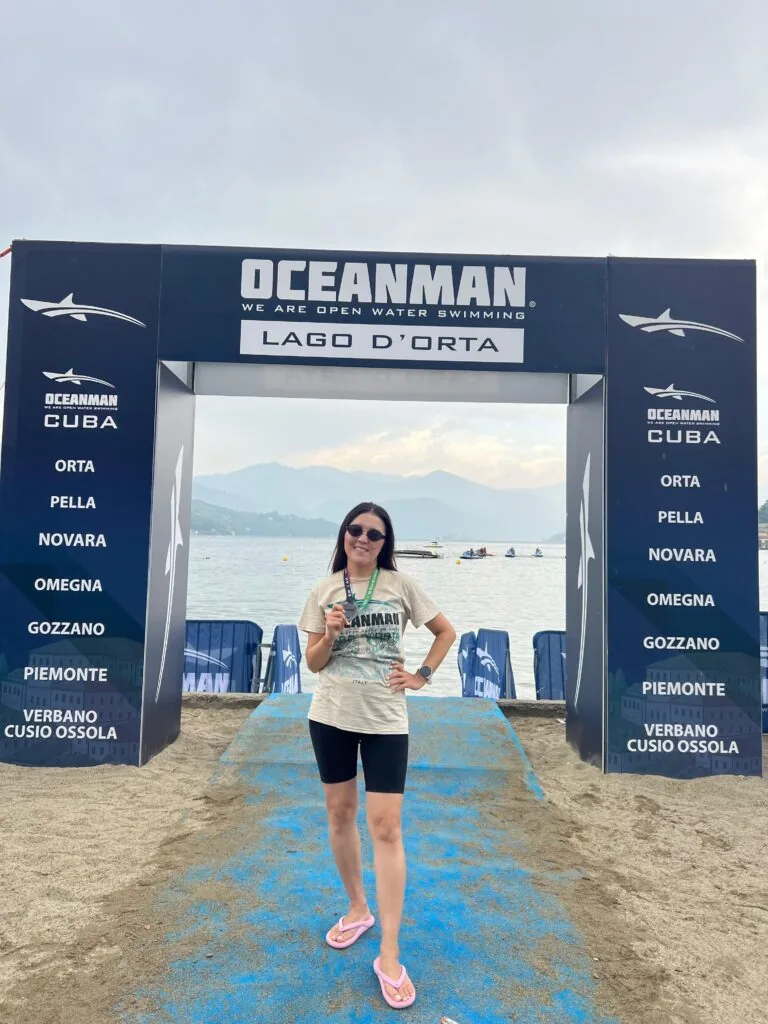
Oceanman Lago d’Orta 2025 — 14 kilometer distance
A long distance, like the architecture of resilience. Swimming became for me more than physical activity — it is a way of mental switching and a source of new ideas. Sometimes, at work, you get stuck on one point and do not see detours, but after training, when the brain reboots, a simple and precise solution suddenly comes. Sports are like a retrospective, allowing you to rethink and see everything anew.
Project = distance. I perceive working with a long distance as working on a project: first, it is important to believe that you can complete the entire path, then break the goal into small segments and build a plan, step by step strengthening progress. The main thing is to perform your part stably, even if the result is not yet visible. This is patience and trust in the process. Swimming taught me not to rush, not to give up at the first difficulties, and not to devalue efforts when the effect is delayed.
Consistency instead of emotions. Success is made up not of inspiration, but of repetitions. Just like in building data marts: daily steps, accuracy, completeness, discipline. In swimming — it is regular training that builds technique and endurance. In work — it is precise logic, documentation, planning, and hypothesis testing. In both cases, it is important not to wait for a “big breakthrough” — it is born from stable actions.
Allow yourself to try. Curiosity is my main driver. If I become interested in something new, I allow myself to try without predicting the outcome in advance. First testing, then a clear plan. This approach works in the professional sphere as well: it is curiosity that helps find solutions, improve processes, and not be afraid of changes. Gradually, consistently, without idealizing the start, only in this way does confidence in your abilities appear. And it is important to remember that any experience matters; the main thing is to allow yourself to try, without pre-rolling negative scenarios in your head.
Resilience is not an innate quality, but a skill that can be developed, just like mastering swimming technique or forming a professional approach. It is the ability to continue the path even if immediate results are not visible.
Four people. Four IT professionals. Different roles, directions, and career tasks. Each has their own story, their own rhythm, their own challenges. But everything that happened before, during, and after Oceanman Lago d’Orta 2025 came together into one simple thought: resilience is not a personal quality, but a skill that can be trained, just like swimming technique is trained, and a professional system of actions is formed. The ability not to give up when progress is not visible. The ability to maintain course, even if there are no ideal conditions. Working with a plan, not with emotions. Moving not by inspiration, but by structure. All of this is not about sports; it is about maturity, about those properties that distinguish those who simply start from those who finish.
In IT projects, as on a distance, the winners are not the fastest, but the most consistent. Those who know how to hold the pace, manage energy, and not abandon what they have started, even if no one sees, supports, or applauds. It is this approach that becomes the foundation for sustainable leadership in IT — not glossy, not loud, but real, and, most importantly, repeatable.
The Tech on Telegram Follow The Tech on Telegram
Keep up with the latest technology and startup news.
Related reading







More from this author

News
zypl.ai begins operations in Japan and focuses on next-generation risk models
Mansur Ismagulov

News
Elon Musk's net worth has exceeded $700 billion for the first time
Mansur Ismagulov

Article Interviews
"Central Asian countries should build a joint ecosystem," — Bekhzod Ismoilov on the development of AI in the region
Mansur Ismagulov

Article Interviews
Bloom's Taxonomy and Engineering Levels: A Practical Growth Model
Mansur Ismagulov

Article Useful
How the IT industry in Azerbaijan developed in 2025: key events
Mansur Ismagulov

News
Tajikistan has become a new member of the regional innovation alliance Central Asian Innovation Hubs.
Mansur Ismagulov