Threads users shared which AI models they use for coding, searching, and working
Artificial intelligence has long become part of everyday work, but how do people actually choose AI tools? What matters more to them—the quality of responses, subscription costs, or model specialization?
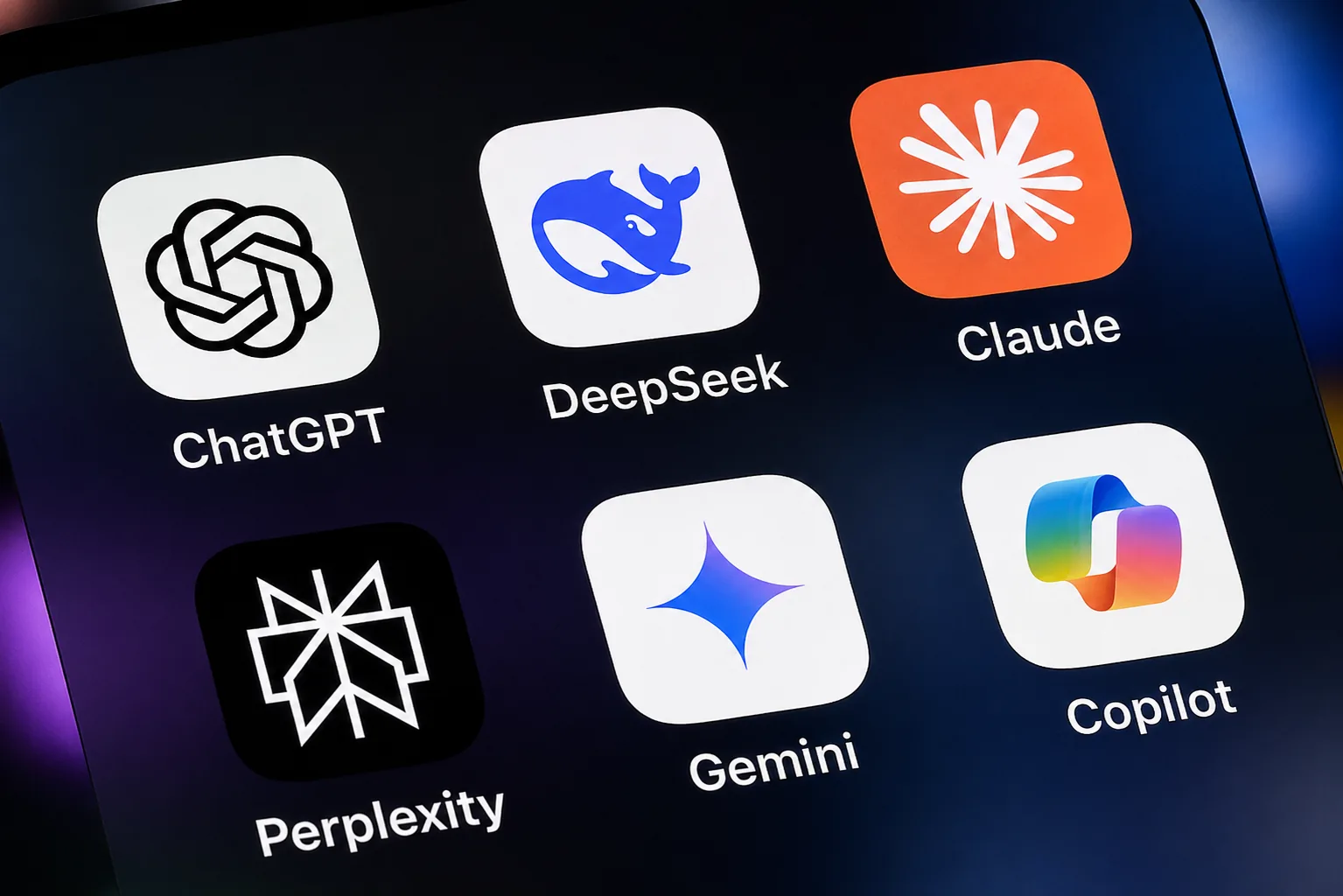
The gro.now platform, which conducts marketing research based on surveys and open data, analyzed 7,785 public posts and comments on Threads published between July 2023 and July 2026. After cleaning the dataset, researchers examined 4,899 relevant posts to understand which AI models users discuss, what tasks they use them for, and which problems arise most frequently.
The Tech reviewed the study results and compiled the key findings.
Important: The study is based on an analysis of open posts on Threads and does not reflect the opinion of the entire market. Its results should be considered a qualitative analysis of user discussions and a source of hypotheses about audience behavior.
The main barrier is not distrust of AI, but subscriptions and limitations
When discussing the adoption of artificial intelligence, conversations most often focus on answer quality, model errors, and so-called hallucinations. However, an analysis of posts on Threads revealed a different picture.
The gro.now study showed that topics related to subscriptions, pricing, and access to AI services occur nearly eight times more frequently than discussions about errors or distrust of neural networks. Users complain significantly more often about limits, payment difficulties, the need to use VPNs, and access restrictions than about inaccurate model responses.
One of the most literal examples: a user from Kazakhstan is not looking for advice on which model to choose, but for a human intermediary who can help organize payments for ChatGPT, Claude, and other neural networks. The main question now is not about trust, but "how do I pay for it?"
What is discussed most often: from subscriptions to real work
After questions about access, users move on to practical usage scenarios. Programming, content creation, automation, information search, and comparison of AI services are most frequently discussed on Threads.
At the same time, choosing a subscription turned out to be one of the most popular topics—almost on par with coding. This indicates that users evaluate not only the capabilities of models but also their cost, limitations, and the feasibility of using each service.
In one post, a person describes how they dropped ChatGPT, kept Gemini for everyday tasks, Claude for complex tasks, Perplexity for search, and began integrating Claude into Excel and PowerPoint. Their formulation is more accurate than any advertising slogan: "They don't do my work; they are my assistants."
ChatGPT is still first. But no longer the only one
Among brand mentions, ChatGPT retains the first place—about 28%. However, it is no longer followed by a single weak competitor, but by an entire group: Claude holds about 18%, Gemini—about 16%, DeepSeek—about 11%. Together, these four models account for nearly three-quarters of all brand mentions.
Even more importantly: in approximately one in five posts in the working dataset, two or more models are mentioned simultaneously. People are increasingly less likely to search for "the best neural network overall" and more likely to assemble their own set of tools for specific tasks.
Roles are already being distributed:
Claude — coding
Copilot — spreadsheets
Perplexity — search.
When a task becomes specific, general rankings cease to be the primary factor. In the topic of programming, Claude's share of mentions is noticeably higher than that of DeepSeek and Copilot. In data analysis scenarios, Copilot appears more often; in translations, Gemini; in search, Perplexity.
Claude is particularly noticeable in coding. One user assembled a service for choosing a city when moving to Spain in one evening.
Another user gave their son access to Claude Code for an hour. During that time, a game was created, which the child continued to refine while the model wrote the code.
But perhaps the shift was described most accurately by an analyst who can no longer imagine work without Claude, Copilot, and Gemini. At the same time, she emphasizes that AI removes the need to remember part of the syntax, but does not eliminate the need to understand the task, check logic, and the ability to spot errors.
In other words, the profession is not disappearing—its benchmark is changing. Human value is shifting from manual execution to task formulation, tool selection, and result verification.
| Task | Leader | Leader's share among the three main models for the task |
| Code writing | Claude | 45.3% |
| Image creation | Midjourney | 43.1% |
| Information search | ChatGPT | 45.3% |
| Data analysis | Copilot | 35.1% |
| Translations | Gemini | 42.1% |
| Work automation | Claude | 36.6% |
| Marketing materials | ChatGPT | 45.5% |
| Presentations | ChatGPT | 42.9% |
Why users trust Perplexity more
Among models with a sufficient number of mentions, Perplexity shows the highest ratio of positive to negative sentiment. While these data cannot prove a causal relationship, the posts regularly highlight one clear value: sources can be opened and verified.
For AI products, this is a practical takeaway: trust is built not only on answer quality but also on the ability to understand where the answer came from.
The market is maturing: less excitement, more routine
Nearly 88% of posts in the working dataset have a neutral tone. Positive sentiment accounts for about 9%, and negative for about 2%. This does not necessarily mean indifference. Rather, AI is gradually becoming a standard work tool.
When a technology is new, people write: "The future has arrived." When it becomes embedded in life, the questions change: "Which subscription should I keep?", "Why did my tokens run out?", "What is better for coding?", "Which tool shows sources?"
What this means for business
You need to sell not the word AI itself, but the removal of barriers. Clear payment, transparent limits, working without workarounds, local language support, and verifiable sources are closer to real user conversations.
Users are assembling a portfolio, not choosing a single winner. It is important for a product to occupy a specific role in the workflow: coding, search, spreadsheets, visuals, automation, or universal tasks.
Trust is becoming a product feature. Links to sources, clear explanations of results, and the ability to double-check may be no less important than the model's raw power itself.
Open data provides signals, not ready-made truths about the market. They help reveal the audience's language, unexpected pain points, and hypotheses that then need to be verified quantitatively or qualitatively.
In conclusion
The main conclusion of the study is simple: users are no longer debating whether they need a neural network.
They are discussing which model is best suited for a specific task, how much a subscription costs, where it is more convenient to work, and which tools actually save time.
And this shows exactly how quickly AI is ceasing to be a new technology and becoming a familiar part of everyday work.
The Tech on Telegram Follow The Tech on Telegram
Keep up with the latest technology and startup news.
Related reading



More from this author

Article Useful
How to protect your accounts from hacking: 8 settings you should check today
The Tech

Article Useful
500 Global: How the Accelerator Works and Who Can Receive Investments
The Tech

Article Interviews
Game Development in Central Asia: Arkady Moldavski on Developing Reverb and the Growth of the Industry
The Tech

Article Useful
Google, Tesla, BlackRock, and the IMF: Where to Apply for an Internship in Fall 2026
The Tech

News IT
Tesla unveiled the flying electric car Roadster
The Tech

News IT
Intero Biosystems startup won the Startup Battlefield at TechCrunch Disrupt 2026
The Tech