Pai — a startup that reduces costs and automates processes in restaurants
The founder of the startup Pai and product manager Erlan Zholdosh told in an interview about the creation of a solution for optimizing the work of cafes and restaurants through integration with ERP systems.
The Tech AI
Get the key points in seconds - a short summary from The Tech AI.
Erlan Zholdosh is the founder of the startup Pai, which integrates ERP systems (R-Keeper, iiko) to optimize processes in the food service industry. The team of 8 people has connected around 15 establishments since March 2024, focusing on the B2B2C model and cashless payments. The project aims to achieve cash positivity without external investments, collaborating with strategic partners such as Poster and "Bublik," and creating a marketplace and media platform.
Erlan Zholdosh, city — Bishkek, product manager, Instagram
About me
I am a product manager and the founder of the startup Pai. I also work on a product in a hired position, serve as co-founder of a crypto project, and work for a Kuwaiti company that provides education for schoolchildren.
How it all started
The idea arose due to the numerous products on the market related to establishments that create additional complexities instead of optimizing processes. We saw that there are some sources of truth that are interconnected.
Inside an establishment, an ERP system functions — this is an accounting system that includes many internal processes. For example, products like R-Keeper and iiko. However, all current market solutions related to management, delivery, and other aspects do not optimize processes because they require additional configuration.
We integrate with ERP systems, which allows us to optimize processes. For example, in the case of a loyalty program, it is important for us to minimize management costs as much as possible.
We released the MVP in March, and the first early user was the FLASK coffee shop. We launched in this chain in March 2024. To date, we have connected about 15 establishments, including coffee shops and bars.

Team
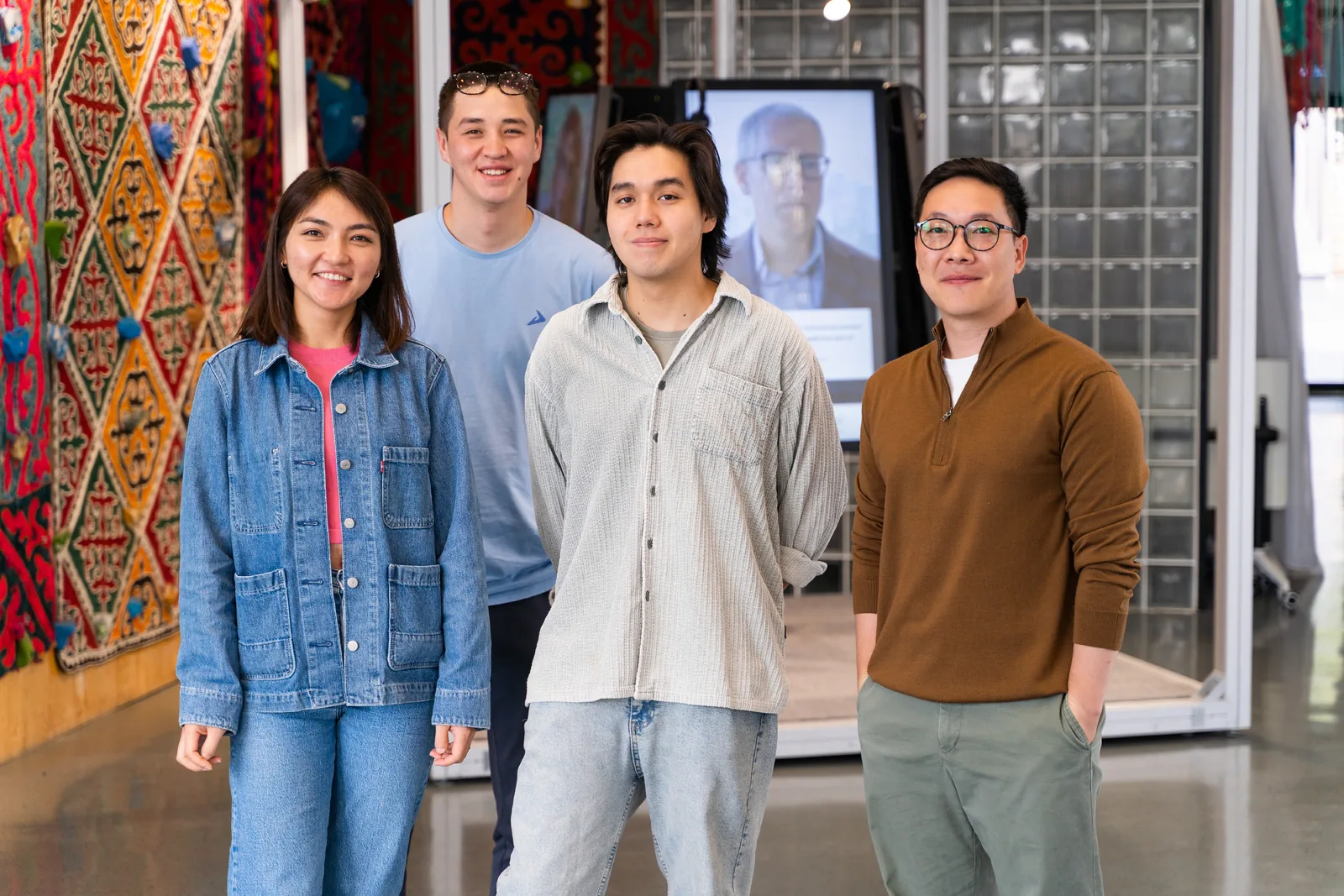
Our team consists of eight people. As the founder, I perform many tasks, responsible for packaging and initiating development. The team also includes an operations manager, our co-founder Kairguly Kalbaeva, who has worked in establishments for many years. She has an ideal combination of skills: she understands both the kitchen and development processes, plays an important role in staff training, and implementing our system in establishments.
In addition, we have a technical director who leads development. The team includes frontend and backend developers, as well as specialists for Android and iOS.
We also have media content, as we strive to create an ecosystem in the field of public catering and beverages. We understand that it is not necessary to immediately introduce complex process optimizations and loyalty programs, so we also want to develop a community.
When selecting the team, we did not have clear benchmarks for salaries. It was important to find like-minded people. We found the team among the residents of the Ololo coworking space, where we rented an office.
Target audience
From the perspective of business positioning, our product represents a B2B2C model. The business is our client, and the end consumers are users. Currently, bars and coffee shops are our priority, as our product is oriented towards cashless payments.
Cashless transactions have unique characteristics that do not apply to cash payments, so we cannot optimize processes related to them. It is important for establishments to have a high percentage of cashless payments, and in some places, more than 70% of turnover occurs through such operations.
Our target audience is people aged 25 to 40. These are financially capable users who are open to innovations that help save time — this is our main metric. The loyalty program we offer serves as a gamification element that promotes engagement and customer retention. However, the main advantage of our product is saving users' time.
Incubation programs
We took first place at the "Startup Nation" hackathon. But for us, this was just an experience. I usually participate to step out of my comfort zone and try something new. We already have a product, so we participated in the event more for networking, and winning played a minor role.
Currently, we are participating in the Prosperity Cup from Accelerate Prosperity.
Difficulties
Our project has its own key differences and complexities. It is difficult to copy us because we integrate into existing systems rather than creating separate solutions for accounting management.
Although there is documentation for integration, each menu item has different modifiers, and we need to manage the user base to account for all of this. Most establishments we work with are chains, so it is also necessary to manage integration between them.
The main difficulty is integration with ERP systems. Most solutions in FoodTech only configure systems. For example, delivery aggregators such as Glovo, Yandex, and Wolt offer devices for receiving orders, but do not integrate with establishment systems. Our goal is to optimize payment processes and loyalty programs.
Achievements
We have made significant progress, managed to deeply embed into the system, and solve a large number of cases. We are already ready to support any scenarios within the ERP system. For example, we can implement promotional and discount solutions, such as "seventh coffee free" or discounts on desserts after eight in the evening.
We want to become partners with Poster, a Ukrainian company developing ERP solutions. We have established close contact with them, and this can also be considered an important achievement — we have entered the ERP solution and developed a product that can lead to new cases.
We have stopped simply selling the product; now we have our own coffee shop where we actively use our solutions.
Our main achievement is the team. With its help, we will be able to achieve a lot.
Plans
We are focused on achieving cash positivity and do not plan to attract external investments. I am ready to invest about $100,000 into the product.
For now, we are not focused on expansion or increasing the number of merchants, so we do not conduct active sales. Our main task is to find strategic partners who will help us achieve operational break-even. For example, we have already established contact with Poster and coffee shops, and also signed an agreement with "Bublik," which will become our strategic partner.
Our cooperation with "Bublik" will serve as a benchmark for us, demonstrating the successful implementation of our solution. Thanks to working with existing establishments, new clients come to us.
For example, the "Po-Tayski" coffee shop reached out to us on its own and asked to implement our product after switching to the Poster ERP system. In the future, we plan to fully cover the "Bublik" network and use this experience to work with other establishments.
We want to create a marketplace that will allow users to integrate their cards, authorize through our application, and pay for purchases in different establishments using a single account. We also want to create a media platform dedicated to the gastronomic culture of cities, starting with Bishkek.
We also plan to develop functionality so that end consumers can not only pay and receive bonuses but also place orders, arrange delivery, and leave reviews. We will move towards this goal step by step.
The Tech on Telegram Follow The Tech on Telegram
Keep up with the latest technology and startup news.
Related reading







More from this author

News IT
Google has solved one of the main problems in quantum computing
The Tech
News IT
20 startups from Central Asia presented their projects at TechCrunch Disrupt 2026
The Tech
News IT
Kyrgyzstan and Armenia will consider the possibility of creating a joint AI enterprise
The Tech

News IT
Now on Kaspi.kz, you can trade in your old iPhone for a new one
The Tech

News IT
IT Park Uzbekistan became the best knowledge zone in the Asia-Pacific region
The Tech

Article Useful
How to protect your accounts from hacking: 8 settings you should check today
The Tech