From Marketing to AI: The Lifestyle of Batyr Redzhepov
A marketer who once became fascinated with AI and now leads IT projects. Read on to find out how he balances technology, marketing, and life outside of work.
Author - Mansur Ismagulov
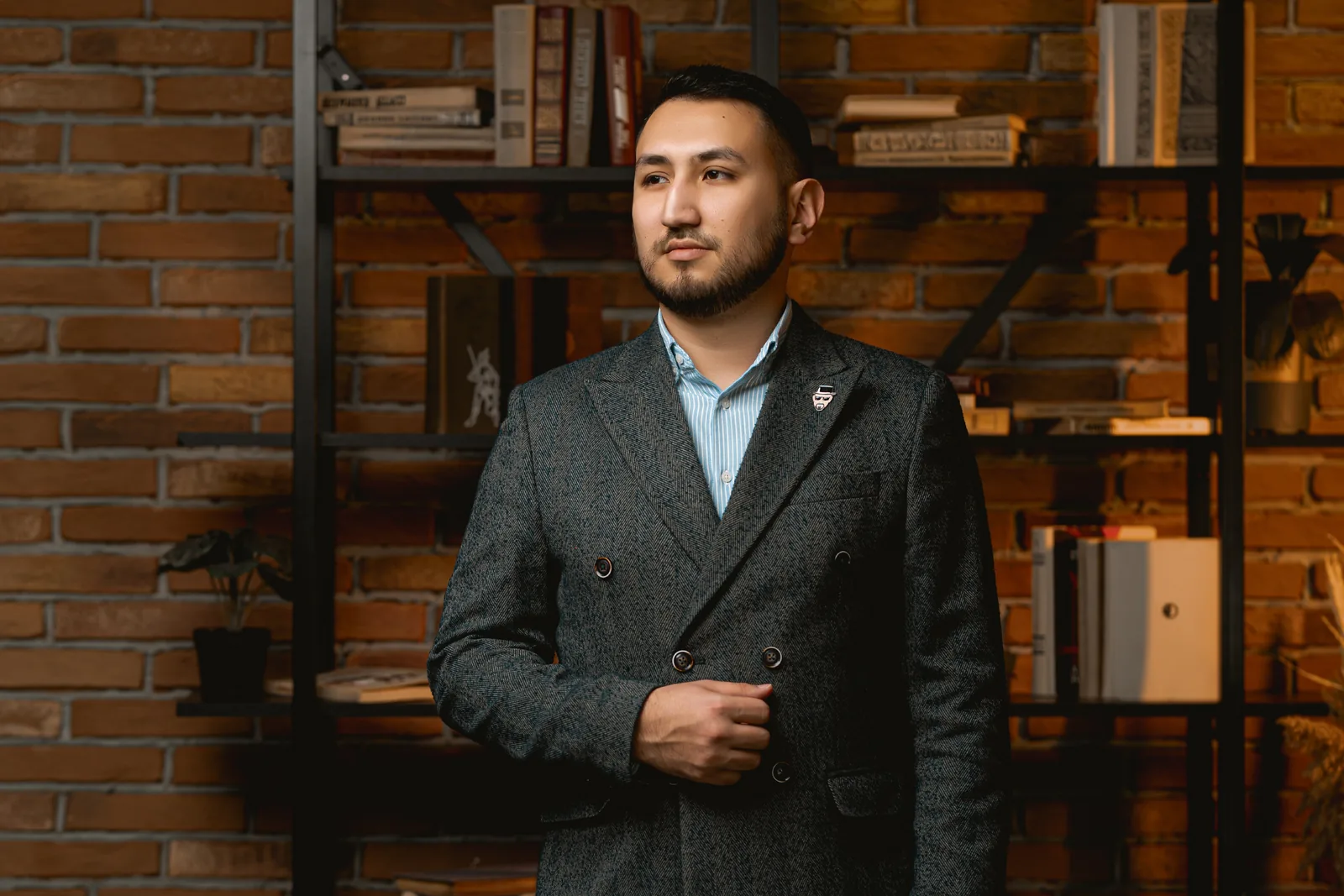
Batyr Redzhepov, city — Ashgabat, Project Manager, Instagram
About Me
I am a marketer who once dived into the world of artificial intelligence and couldn’t get out.
By education, I am a manager, so in the team, my role is that of a project manager—I lead projects, coordinate the team’s work, assign tasks, and ensure everything stays on track.
Currently, we have several directions: we develop custom software, implement business automation solutions, and simultaneously develop our own startups.
I have a designer, backend and mobile developers, and a sales manager on my team, while I combine management and marketing. You could say I am the person who connects technology, marketing, and management.
I have a standard five-day workweek, but with some flexibility. We also work on Saturdays: two Saturdays a month we work until noon. Sometimes, if a project requires it, I can work all Saturdays—not until one o’clock, but until four or even six.
I swim three times a week—it’s my way of maintaining balance. I usually train in the morning, from 9 to 11, so if I’m delayed, I simply shift my schedule: I start later, but also finish later. Sunday is a sacred day for me. No work, at most—light notes or reading. It’s time for family, recovery, and silence.
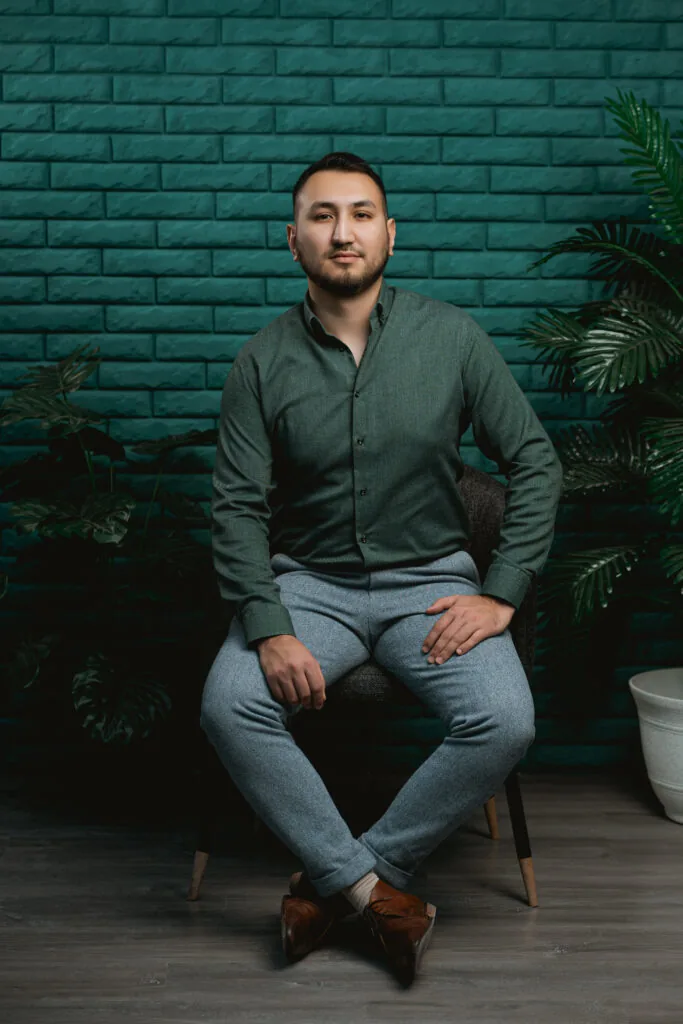
Where and How I Learn
Everything is changing so fast now that it’s simply impossible to stay relevant without constant learning. So I learn constantly—you could say it’s already part of my lifestyle.
I subscribe to many news resources and aggregators, especially English-language ones—new technologies and tools appear there faster. Every day, I set aside at least 15–30 minutes to study and test something new—my own form of microlearning in action.
Additionally, roughly every three months, I take more fundamental courses. For example, last year I received a Google certification on Coursera in Digital Marketing Fundamentals. Learning for me is not just a checkbox on a list, but a habit without which I can’t imagine my day.
If we’re talking about fundamental learning, my choice is Coursera. It’s a great option when you need to go through a structured course, gain a systematic understanding of the topic, and, if desired, receive a certificate. The convenience is that you can learn at your own pace, and the programs are logically structured, step by step.
And now—a tip for those who love new tools. I often use Google’s NotebookLM—it’s a free neural network where you can upload up to 50 sources: PDF files, articles, YouTube videos in any language, and even entire books. It analyzes everything and turns it into a full-fledged digital teacher.
With it, you can have a dialogue, ask to explain complex moments, generate summaries, tests, podcasts, video lectures, and even mind maps. It’s a personal interactive tutor that adapts to you. Of course, books and YouTube remain as well—there is still a huge amount of quality content there. And if you use neural networks wisely, they can create a learning program for you and help you maintain pace.
I try to attend masterclasses and trainings, although in Ashgabat there aren’t many such events yet, especially on topics related to AI and digital technologies. So I try not to miss what is available—whether it’s local meetups or online meetings with experts from abroad.
Currently, I am participating in the GoViral program, which includes lectures, trainings, and practical sessions. In November, I plan a trip to Almaty for Business Lab—it’s a great opportunity not only to gain new knowledge but also to meet participants from all over Central Asia. The main advantage of such events is networking. You break out of your usual circle, exchange experience and ideas, and find like-minded people with whom you can later launch joint projects.
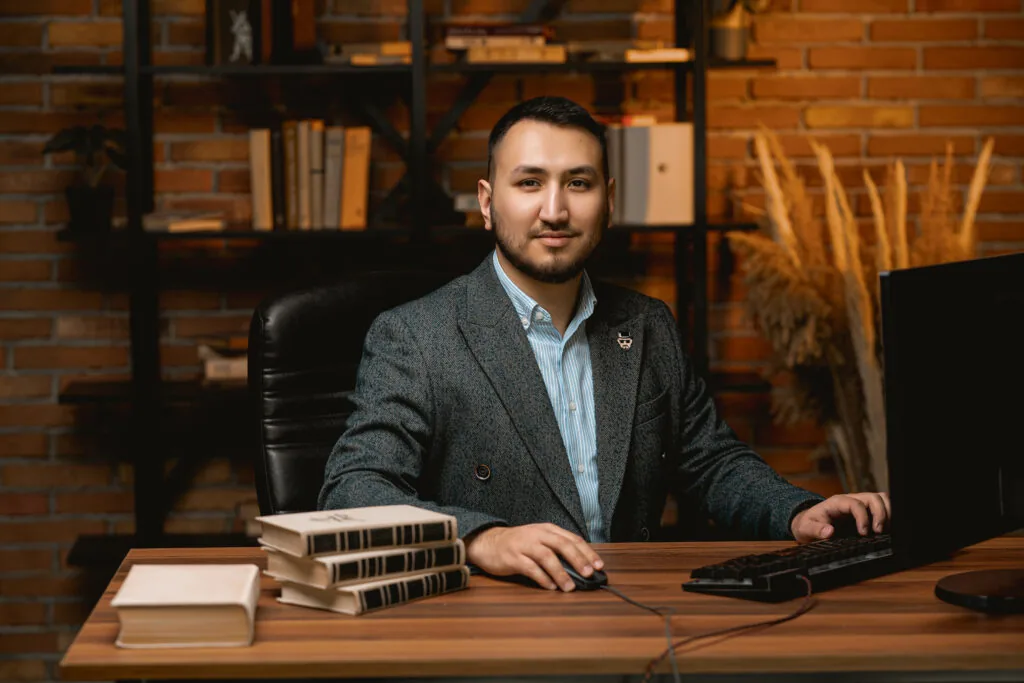
Environment
We spend most of our time at work, so it’s natural that our close circle consists of colleagues and project partners. We are united by common interests, goals, and approach to work. If a new person appears who shares our values and views, they quickly become part of the team.
I believe that your environment is not formed by chance—it reflects your priorities and what inspires you. It’s important to maintain balance: be open to new people, but also respect your time and focus on tasks.
I communicate a lot with clients—and this, in my opinion, is the main beauty of working in IT: digitalization and automation are needed by everyone, regardless of the industry.
For example, recently we completed a project to automate a restaurant, we are now working with a home appliance store chain, collaborating with educational centers and HR companies. So clients come from completely different fields—from retail to services and recruiting.
Besides that, I love communicating with managers and startup founders. They are not always strictly IT professionals, but people who are close in spirit: with them, you can exchange experience, discuss trends, and “sync watches.” Such conversations often give more than any courses.
I rarely attend events solely for networking. But there are projects like GoViral, where learning and networking are combined, and this, in my opinion, is the ideal format.
Additionally, I often conduct trainings on artificial intelligence and automation myself. Usually, 50 or more participants gather, so I definitely have plenty of communication and new acquaintances.
My advice is not to wait for someone to create the perfect community. If there are few events in your city, become the initiator. Organize your own meetup, share your experience, invite people—and over time, a strong professional environment will form around you.
Now, in the age of technology, this is no longer a problem. The main thing is to be active.
I, for example, often find like-minded people through social networks. In the same Instagram or on the new Threads platform, people share their thoughts, cases, and projects. If something resonates, I simply write a comment, start a dialogue, and from this, useful acquaintances often grow.
Plus, there are many professional communities on Telegram—where you can also find people who are close in spirit.
My advice is simple: don’t be afraid to comment and show yourself. Even a small blog or a closed channel can become the beginning of your community.
That’s how I met many specialists in the field of AI—we have never met in person, but we regularly exchange ideas, advice, and links. This is the modern format of networking.
Where I Spend Free Time
Frankly, I don’t have much free time. I have a young son—he is two and a half years old now—and for me, priority number one is to spend as much time with him as possible. I want us to have a real connection from childhood, not a story where dad is always at work.
So I dedicate most of my free time to my family. And for me, rest is a change of activity. Since my work is mostly mental, I like to relax physically.
We live in a house with a yard and garden where trees grow, and I enjoy simple things—fixing something, planting, tidying up. This is my way of recharging.
My work is largely my hobby too. I genuinely enjoy automating processes, finding ways to eliminate human error and make systems smarter. Even in my free time, I often catch myself thinking: “How can this be improved?” or “How would I automate this?”
Among more classic hobbies—books. I am interested in a wide variety of topics, from technology to philosophy, and I try to read whenever I have time.
Series and social networks are more like short breaks, but I try to limit myself so as not to get “zoned out.” Overall, my hobby is learning new things and finding solutions that make life and work easier.
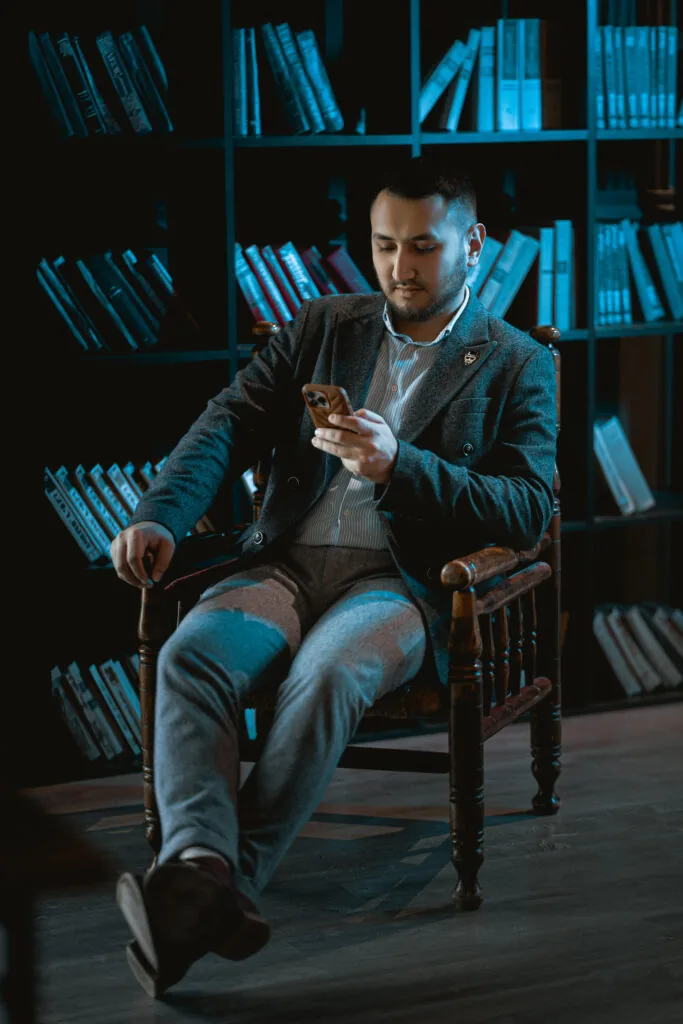
Where to Buy What
It’s simple here—Apple One Love. They have an ideal ecosystem where everything is thought out and works “out of the box.” When you have a MacBook, iPhone, iPad, headphones, and watch all linked together, they interact so smoothly that you can’t go back to anything else afterward.
My first experience was with a Mac Mini that was issued to me at work a couple of years ago. And that was it—after that, I completely switched: I changed my phone, bought a MacBook, and fully moved into the Apple ecosystem. Yes, the equipment is not cheap, but its reliability and convenience more than compensate for it.
From other brands, I respect Baseus and Ugreen—they make quality accessories and chargers. Xiaomi also has excellent gadgets in terms of price-to-quality ratio.
As for stores, it depends on the country: I usually first watch reviews on YouTube, decide if I really need it, and then look for where to buy it—in Ashgabat or abroad. The main thing is to understand what you really need, rather than just chasing new releases.
The Tech on Telegram Follow The Tech on Telegram
Keep up with the latest technology and startup news.
Related reading







More from this author

News
zypl.ai begins operations in Japan and focuses on next-generation risk models
Mansur Ismagulov

News
Elon Musk's net worth has exceeded $700 billion for the first time
Mansur Ismagulov

Article Interviews
"Central Asian countries should build a joint ecosystem," — Bekhzod Ismoilov on the development of AI in the region
Mansur Ismagulov

Article Interviews
Bloom's Taxonomy and Engineering Levels: A Practical Growth Model
Mansur Ismagulov

Article Useful
How the IT industry in Azerbaijan developed in 2025: key events
Mansur Ismagulov

News
Tajikistan has become a new member of the regional innovation alliance Central Asian Innovation Hubs.
Mansur Ismagulov