"I thought about salary the least; the prospect of development was much more important," — Anuar Makashev on the beginning of his career in IT
Head of Big Data Projects at QazCode on his career path in IT.
Author - Mansur Ismagulov
The Tech AI
Get the key points in seconds - a short summary from The Tech AI.
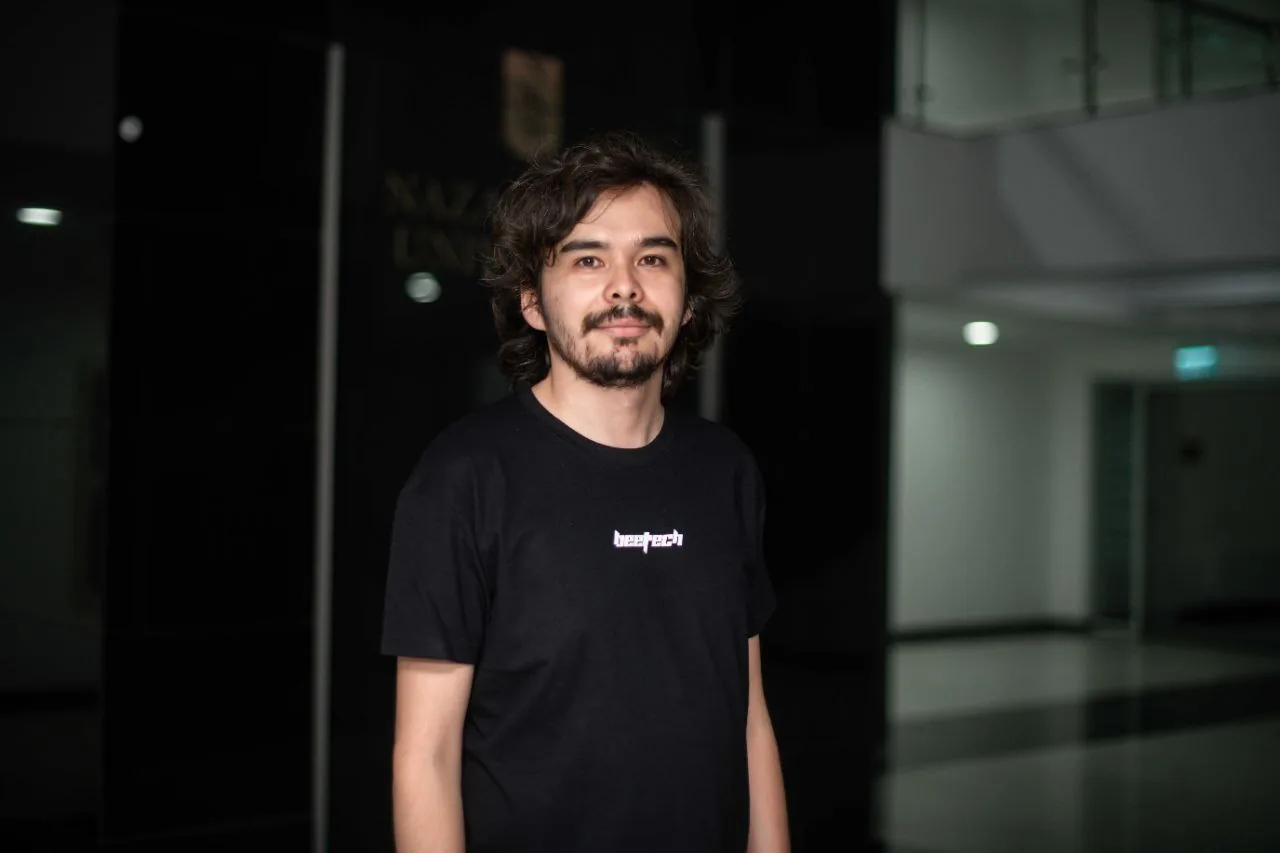
Anuar Makashev, Head of Big Data Projects at QazCode (Beeline Kazakhstan), has been working at the company for about four years. At the age of 21, he began his career as an intern at Alfa-Bank, where he worked on product analytics and modeling. To secure employment, he used a strategy of searching for entry-level positions related to mathematics and IT, successfully passing three stages of selection.
Anuar Makashev, city — Almaty, big data and data science, linkedin
About me
I am the Head of Big Data Projects at QazCode. My main task is to create products and services based on big data technology, data science, and artificial intelligence.
I graduated from Moscow State University in Moscow, where I previously studied mathematics.
I have been working at QazCode, the IT company of Beeline Kazakhstan, for about four years. My responsibilities cover three areas, one of which is particularly popular today — artificial intelligence. We have several products directly related to AI, as well as a number of applied tasks based on classical machine learning, as well as big data tasks. Naturally, this includes many sub-tasks related to analytics. It was from this that my career path began, which led me into IT. But let's go in order.
About my first job in IT
When I was about 21 years old, while I was a fourth-year student, I came to work at "Alfa-Bank." I started as an intern and later moved to a permanent position. My work was related to product analytics and modeling. Although I did not work in the IT department at that time, I now realize that my activities included IT tasks. It was an interesting period because there were no established analytics processes in my department. Colleagues were trying to do something manually, and I, being a student, was lucky enough to build analytics from scratch for an important department within retail banking. It was a challenge for me because at that time there were no ready-made templates or examples of successful cases, and I had to search for information on the internet and try to apply it in practice.
In fact, I had my own strategy to find a job. First, I formed a certain list of internal queries for myself: what was important to me, where I wanted to see myself, and so on. And then — a list of vacancies that matched my query. It was important to me that the job was related to mathematics and IT.
Second — the query was for an entry-level job, that is, for applicants without experience or with little experience. At that time, there were a large number of offers for interns on the market. I believed that this was the most optimal path to start a career. I remember that at that time the bank conducted special programs similar to our Beeline Bootcamp. I participated and tried to get a job. I went through three stages of selection: first, I wrote a motivational letter about why I should be hired, then I took a test on current knowledge and logical questions, and finally, I passed an interview with my future supervisor.
There were several subject-specific questions related to working in Excel and SQL, as well as programming and understanding the basics of statistics. Of interest: before the bank, I went through several different interviews, and at one of them I was even asked to solve a differential equation — a surprising experience. Every time before an interview, I consulted with acquaintances to understand which aspects to pay attention to and what to prepare better. The employer could ask questions related to the university program. Later I realized that every question has its own logic related to future work.
Education helped in employment and job search, but I think this is because approaches were different at that time. People were hired mainly by the name of the university and diploma.
As a hiring manager, at the moment I pay more attention to the personal and professional qualities of candidates, as they have a greater impact on success at work.

Speaking of personal qualities, undoubtedly, they also play an important role. It was important to me that my values matched the company's values. For example, I am open to new challenges. Later I convinced myself that similar values help to be fully engaged in work and effectively meet customer needs.
About difficulties
I did not know how the hiring market worked. There were concerns about how quickly I would find a job, what responsibilities awaited me. I thought about salary the least; the prospect of development was much more important. It was this strategy that turned out to be successful then and continues to help me achieve professional success to this day.
When I started looking for a job, I received 30-40% rejections. Acquaintances explained to me that this was normal. I added these companies to my list and tried to understand the reasons for the rejections. I asked for feedback so that each subsequent interview would go better than the previous one.
Mostly, the reasons for rejection were standard — lack of experience in certain areas. For example, more advanced knowledge in SQL or Python was required. I saw those gaps where I needed to improve even more and tried to adapt.
I always believed that difficulties at work are more like challenges that need to be overcome. Here is one of them: on my first day at work, I could not correctly set up the email client. More complex: I did not have colleagues with the same profile who could advise me where to start. At first, I tried to solve problems immediately without considering different options, but then I realized that this does not work. With experience, it becomes easier to search for and implement more optimal ways to provide analytics and build scripts.

I also remember how I needed to build a forecast for future sales flows of the product for a year ahead. This was a difficult task, and I realized that I would not be able to solve it perfectly, as sales behavior depends on many factors and requires appropriate applied knowledge. Now, the task already looks solvable. You need to accept any challenge — this is the point of growth.
Each generation may believe that it was more difficult in their time. Modern beginners may say the same, and to some extent I will agree, because there is more information now, and the requirements for positions have grown. But this should motivate the new generation even more.
One of the difficulties can be the uncertainty of responsibilities. Requirements for interns grow every year. A beginner must independently absorb information and be ready to spend a lot of time on training and work to become a professional. For example, if he wants to become a good analyst, he needs to deeply study SQL or Python, build causal relationships well, understand statistics. And even this knowledge may not be enough for a future employer. Previously, it was enough to know programming at the level of the university program, but now specialized knowledge, experience, and skills are required.
3 tips that will help you find a job in IT
First: structuring knowledge and understanding professional skills and qualities: what advantages you have for a particular job, which professions are currently relevant. Learn more information about who the market is looking for. Communicate with those who have already gone this path, attend events organized by the company. For example, I have a colleague who spoke at Beeline Bootcamp and told how she went the path from intern to official employee in our company.
Second: reduce the level of anxiety and uncertainty. Be confident in yourself and your abilities.
Third: be passionate about your work. IT is a fairly diverse field. Find a direction that will bring you joy and benefit the company.
The Tech on Telegram Follow The Tech on Telegram
Keep up with the latest technology and startup news.
Related reading







More from this author

News
zypl.ai begins operations in Japan and focuses on next-generation risk models
Mansur Ismagulov

News
Elon Musk's net worth has exceeded $700 billion for the first time
Mansur Ismagulov

Article Interviews
"Central Asian countries should build a joint ecosystem," — Bekhzod Ismoilov on the development of AI in the region
Mansur Ismagulov

Article Interviews
Bloom's Taxonomy and Engineering Levels: A Practical Growth Model
Mansur Ismagulov

Article Useful
How the IT industry in Azerbaijan developed in 2025: key events
Mansur Ismagulov

News
Tajikistan has become a new member of the regional innovation alliance Central Asian Innovation Hubs.
Mansur Ismagulov