Author - Mansur Ismagulov
The Tech AI
Get the key points in seconds - a short summary from The Tech AI.
NFTs are unique digital assets based on blockchain technology that confirm ownership. The market experienced rapid growth: from $42 million three years ago to $338 million by the end of 2020, and token sales reaching $310 million in February. Christie's key transaction involved selling Beeple's NFT for $69 million. The technology allows artists to receive royalties on resales, but the market remains speculative and risky.
 Source: habr.com[/caption]
What are NFTs?NFTs are intangible digital assets that can be bought and sold like any other property. These tokens can be viewed as certificates of ownership for virtual or physical assets.By acquiring an NFT, you receive both a record of ownership of the asset and access to the actual asset. These assets can be anything. Currently (for the most part), they are digital artworks or collectible cards. Some of them are virtual goods that exist only on the market where they are sold, while some are provided in JPEG or PDF formats. A small portion of NFTs are digital records of ownership of a real physical object.How does it work?Non-fungible tokens use blockchain technology. The same technology supports cryptocurrencies like Bitcoin. But there is a key difference: NFTs are non-fungible, meaning each one is unique. Fungibility (in economics) means that a product is not unique and can be exchanged for another item. For example, banknotes of the same denomination are fungible because they are identical.Think of the Mona Lisa. You can take a photo of it and hang it on the wall, but it won't be the same—and won't have the same value—as the Mona Lisa in the Louvre. Like other original paintings, it is not fungible due to its uniqueness.NFTs—are a digital interpretation of this phenomenon. Someone may have a copy of the same digital image, but not the original file.Purchased through a crypto asset marketplace, an NFT can be stored in a digital wallet or put up for sale. When an NFT is sold, all computers in the decentralized network record the transaction in a shared ledger, which essentially creates a certificate of authenticity. This certificate cannot be altered or erased. NFTs can also contain smart contracts that give the creator a share of future sales of the token.[caption id="" align="alignnone" width="441"]
Source: habr.com[/caption]
What are NFTs?NFTs are intangible digital assets that can be bought and sold like any other property. These tokens can be viewed as certificates of ownership for virtual or physical assets.By acquiring an NFT, you receive both a record of ownership of the asset and access to the actual asset. These assets can be anything. Currently (for the most part), they are digital artworks or collectible cards. Some of them are virtual goods that exist only on the market where they are sold, while some are provided in JPEG or PDF formats. A small portion of NFTs are digital records of ownership of a real physical object.How does it work?Non-fungible tokens use blockchain technology. The same technology supports cryptocurrencies like Bitcoin. But there is a key difference: NFTs are non-fungible, meaning each one is unique. Fungibility (in economics) means that a product is not unique and can be exchanged for another item. For example, banknotes of the same denomination are fungible because they are identical.Think of the Mona Lisa. You can take a photo of it and hang it on the wall, but it won't be the same—and won't have the same value—as the Mona Lisa in the Louvre. Like other original paintings, it is not fungible due to its uniqueness.NFTs—are a digital interpretation of this phenomenon. Someone may have a copy of the same digital image, but not the original file.Purchased through a crypto asset marketplace, an NFT can be stored in a digital wallet or put up for sale. When an NFT is sold, all computers in the decentralized network record the transaction in a shared ledger, which essentially creates a certificate of authenticity. This certificate cannot be altered or erased. NFTs can also contain smart contracts that give the creator a share of future sales of the token.[caption id="" align="alignnone" width="441"] Source: Fortune[/caption]
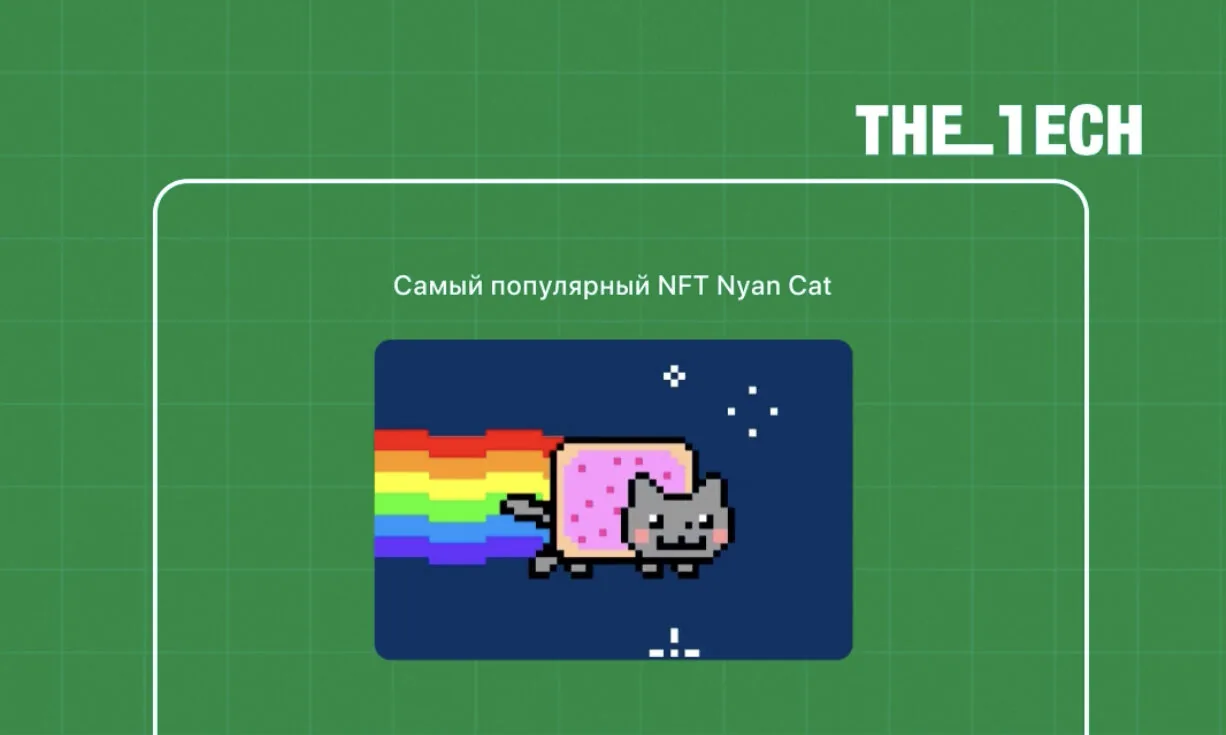
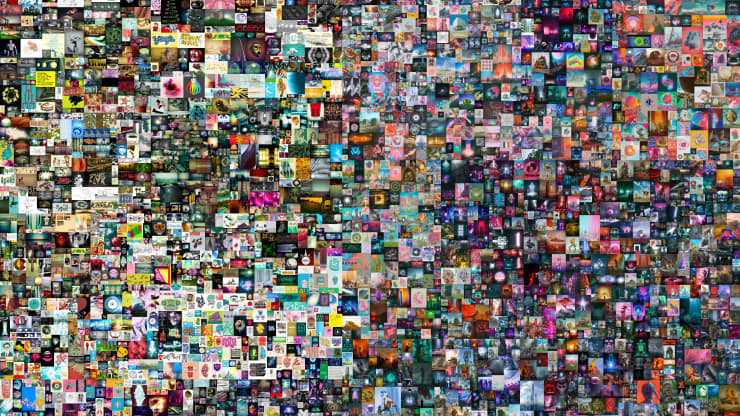
Why did tokens catch the hype?Recently, there has been a lot of buzz around the token market and stories of million-dollar prices. Examples include the Nyan Cat meme GIF, sold for nearly $600,000, and the first tweet by Twitter CEO Jack Dorsey, sold for $2.5 million. If we thought the GameStop rally was wild, this is a whole different level of madness. Christie's started the auction with Beeple's painting at just $100, and a few weeks later, the bid reached $69 million!In addition, celebrities added fuel to the fire: singer Grimes earned $6 million from the sale of her creations, and Kings of Leon are selling their new album as an NFT.What is the future of NFTs?Some consider NFTs to be just a hype trend that, like the GameStonks bubble, will eventually burst and leave behind many winners and losers. One obstacle for NFTs is that it is a market with artificial scarcity. There are no limits on how many NFTs are created—literally any bit of data can be authenticated and sold. However, there are several prerequisites for the further development of tokens.Blockchain technology will make transactions in the art world more transparent. Artists will find it easier to track the movement of their works around the world, and NFTs will become a revolutionary technology in the field of royalty payments: the Rarible platform, for example, allows embedding a percentage royalty for the artist in the deal for future resales—10%, which the artist will receive each time someone resells their work.NFTs will also give music enthusiasts the opportunity to own the original recording of a song. Content creators will be able to release limited series of works and sell them to collectors. Already now, they reward fans based on NFT ownership. Potentially, they could launch streams only for owners of certain NFTs—or a specific number of NFTs.None of this guarantees that NFTs won't disappear from the radar, but it presents a range of interesting opportunities that mean this trend is worth watching.[caption id="" align="alignnone" width="397"]
Source: Fortune[/caption]
Why did tokens catch the hype?Recently, there has been a lot of buzz around the token market and stories of million-dollar prices. Examples include the Nyan Cat meme GIF, sold for nearly $600,000, and the first tweet by Twitter CEO Jack Dorsey, sold for $2.5 million. If we thought the GameStop rally was wild, this is a whole different level of madness. Christie's started the auction with Beeple's painting at just $100, and a few weeks later, the bid reached $69 million!In addition, celebrities added fuel to the fire: singer Grimes earned $6 million from the sale of her creations, and Kings of Leon are selling their new album as an NFT.What is the future of NFTs?Some consider NFTs to be just a hype trend that, like the GameStonks bubble, will eventually burst and leave behind many winners and losers. One obstacle for NFTs is that it is a market with artificial scarcity. There are no limits on how many NFTs are created—literally any bit of data can be authenticated and sold. However, there are several prerequisites for the further development of tokens.Blockchain technology will make transactions in the art world more transparent. Artists will find it easier to track the movement of their works around the world, and NFTs will become a revolutionary technology in the field of royalty payments: the Rarible platform, for example, allows embedding a percentage royalty for the artist in the deal for future resales—10%, which the artist will receive each time someone resells their work.NFTs will also give music enthusiasts the opportunity to own the original recording of a song. Content creators will be able to release limited series of works and sell them to collectors. Already now, they reward fans based on NFT ownership. Potentially, they could launch streams only for owners of certain NFTs—or a specific number of NFTs.None of this guarantees that NFTs won't disappear from the radar, but it presents a range of interesting opportunities that mean this trend is worth watching.[caption id="" align="alignnone" width="397"]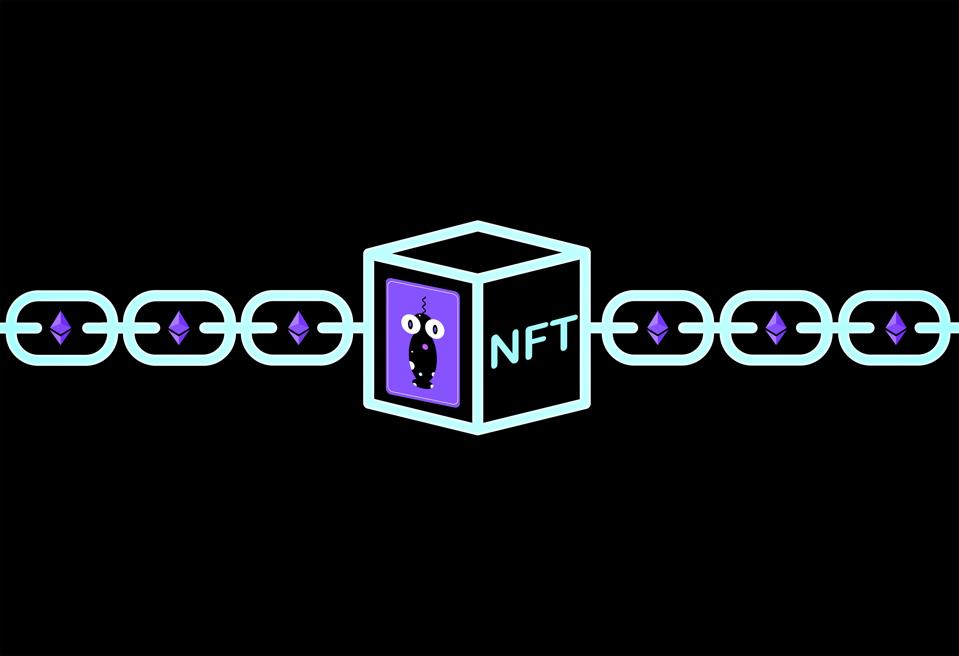 Source: forbes.com[/caption]
The Tech on Telegram Follow The Tech on Telegram
Keep up with the latest technology and startup news.
Related reading







More from this author

News
zypl.ai begins operations in Japan and focuses on next-generation risk models
Mansur Ismagulov

News
Elon Musk's net worth has exceeded $700 billion for the first time
Mansur Ismagulov

Article Interviews
"Central Asian countries should build a joint ecosystem," — Bekhzod Ismoilov on the development of AI in the region
Mansur Ismagulov

Article Interviews
Bloom's Taxonomy and Engineering Levels: A Practical Growth Model
Mansur Ismagulov

Article Useful
How the IT industry in Azerbaijan developed in 2025: key events
Mansur Ismagulov

News
Tajikistan has become a new member of the regional innovation alliance Central Asian Innovation Hubs.
Mansur Ismagulov