"Don't focus solely on money," — Temur Ibrokhimov, product manager at Click, on starting a career in IT
In an interview, Temur Ibrokhimov talked about his journey in IT, the initial challenges he faced, and gave advice to beginners.
Author - Mansur Ismagulov

The Tech AI
Get the key points in seconds - a short summary from The Tech AI.
Temur Ibrohimov, a product manager at Click from Tashkent, began his IT career at the age of 26 at Express24. He believes that higher education is secondary compared to practice and perseverance. Ibrohimov advises choosing a specialization, seeking internships, not giving up after rejections, and selecting companies with growth potential rather than focusing solely on salary.
Temur Ibrokhimov, city — Tashkent, product manager at Click, Instagram, Facebook, LinkedIn
About me
I studied at the Tashkent Legal College, then graduated from Tomsk State University of Control Systems and Radioelectronics with a degree in "Management" and obtained a bachelor's degree. In Uzbekistan, I have secondary vocational education, while in Russia, I have higher education. I did not certify my Russian diploma, but I believe higher education is important.
For the past three months, I have been working as a product manager at Click, one of the largest FinTech companies in Uzbekistan, where I work on the mobile application in the B2C segment. Previously, I worked in the digital office of Hamkor Bank as a product owner for the mobile application, and before that, I was at Kolesa Group, where I participated in launching a product in Uzbekistan.

About my first job in IT
My journey in IT began when I was offered to move to Express24. In the company, I delved into the details of the industry and built a support service from scratch, which became an important stage in my professional growth and sparked a genuine love for IT.
Express24 is part of the NewMax Technology holding, which includes projects such as MyTaxi and MaxTrack. Initially, Express24 was part of MyTaxi; however, over time, we automated many processes, including the food delivery service, where we began accepting orders through a mobile application.
I was 26 years old at the time, and I was involved in process optimization and improving service quality. The interview with Akmal Payziev, one of the company's founders, was interesting—it was a dialogue where he talked about the company's goals and vision, while I shared my experience. I prepared carefully for the interview, although at that moment I was also considering other offers, such as from Hi-Tech Bank.
Soon after the interview, I realized that the opportunity to work at Express24 was an excellent chance for development in IT, and I did not let it slip by.
In the modern world, education does not play a decisive role, as much can be learned independently through practical courses. The main thing is perseverance and the desire to learn. I have met people with diplomas from prestigious universities, but not all of them possessed good practical skills. Education provides a theoretical foundation that is not always applicable in work. Personally, my diploma did not help much—I finished university more for myself.
In 2010, it was difficult to find a job without higher education. Many believed that having a degree was necessary for success. Back then, only 10% of applicants entered universities, and it was hard for the rest to find one. Today, the situation has changed—university is no longer mandatory.

Difficulties
Before joining Click, I considered an offer from a company that was looking for a product manager to develop processes from scratch. I have experience in this area and an interest in such challenges, but the employer's expectations involved performing tasks of several specialists at once. They explained that my approach was too corporate, and they needed a universal specialist. The rejection did not upset me—the work format did not match my expectations.
There were almost no direct rejections, such as "we are not hiring you." But there was an interesting case with Kolesa Group. In 2018, I was offered to become a manager to launch a project in Uzbekistan, even though I did not know English—it was not a mandatory requirement. After the first stage of the interview, we agreed to hold a second one, which was supposed to take place with the company's delegation in Uzbekistan.
Before the second stage, I studied the company's products and was impressed: its own academy, rapid career growth for employees, and a transparent structure. After the second interview, the company took a pause because it planned to launch in Uzbekistan without counterparties. I met with the local CEO and offered help even without official employment. After some time, they reached out for advice, and then made me an offer.
I perceived rejections as an opportunity to study the market, not as failures. Sometimes after a rejection, I received messages saying that there had been a mistake and suggesting we discuss cooperation.
The decision to move to a new company was driven by the desire to work in a strong product-oriented team. After each rejection, I analyzed the interviews to improve my skills.
Starting work in a new company is always difficult, especially in the first six months. This was also my case. Launching new products required attention and the ability to learn quickly. At first, I did not bring tangible benefits, but over time I adapted. I looked for new approaches, tried and made mistakes, but did not give up.
In Uzbekistan, "imposter syndrome" is common. We often doubt whether we deserve our jobs. This inner voice accompanied me in the early stages of working at Express24 and Avtoelon, but over time, confidence came.
My strategy was simple: I tried to delve deeper into the work, immerse myself in processes as much as possible to adapt faster and bring value. Of course, the work schedule was irregular, and I allowed myself to work late into the night.
There is a trend in the labor market: not all companies want to hire junior specialists because training takes a lot of time and resources. Employers often view them as an investment—if they see potential, they are willing to invest in training.
Many beginners believe that they can earn money quickly in IT, but not everyone is ready for hard work and learning. I have met people who did not strive to develop. However, I myself went the path from intern to a higher position, working and studying simultaneously. It is important to remember that growth requires effort and time.
Starting a career in IT at 26 is late. But I achieved success thanks to hard work and the desire to grow.

Advice that will help you find a job in IT
The first step to starting a career in IT is to decide what you want to become. "IT specialist" is a broad concept that includes roles such as developer, designer, analyst, DevOps, product manager, and many others. Explore different directions through videos on YouTube, articles, and resources to find what interests you the most. Today, access to information has become easier than ever, and it is important to study the IT market and understand what professions exist in this field.
Once you have determined your direction, start studying. Theory is an important aspect, but do not forget to look for internships to gain practical experience. I started working in different places not for money, but for experience. There will be many rejections—that is normal. Each rejection is a step toward success, and it is important not to give up.
To get into a serious company, research it before the interview. Find out what it does and evaluate whether it suits you. Show interest during the interview, even if you have little experience yet. Employers value potential, the desire to develop, and the willingness to learn. I myself was in situations where I was hired with the prospect of growth, even though I did not always meet all the requirements.
If you feel that you are not growing, start looking for new opportunities for professional development. It is important that you see the results of your work. If there are none, it is worth thinking about change. And finally, when choosing a job, do not focus only on salary. Think about the potential for growth and development opportunities in the company.
The Tech on Telegram Follow The Tech on Telegram
Keep up with the latest technology and startup news.
Related reading





More from this author

News
zypl.ai begins operations in Japan and focuses on next-generation risk models
Mansur Ismagulov

News
Elon Musk's net worth has exceeded $700 billion for the first time
Mansur Ismagulov
Article Interviews
"Central Asian countries should build a joint ecosystem," — Bekhzod Ismoilov on the development of AI in the region
Mansur Ismagulov

Article Interviews
Bloom's Taxonomy and Engineering Levels: A Practical Growth Model
Mansur Ismagulov

Article Useful
How the IT industry in Azerbaijan developed in 2025: key events
Mansur Ismagulov
News
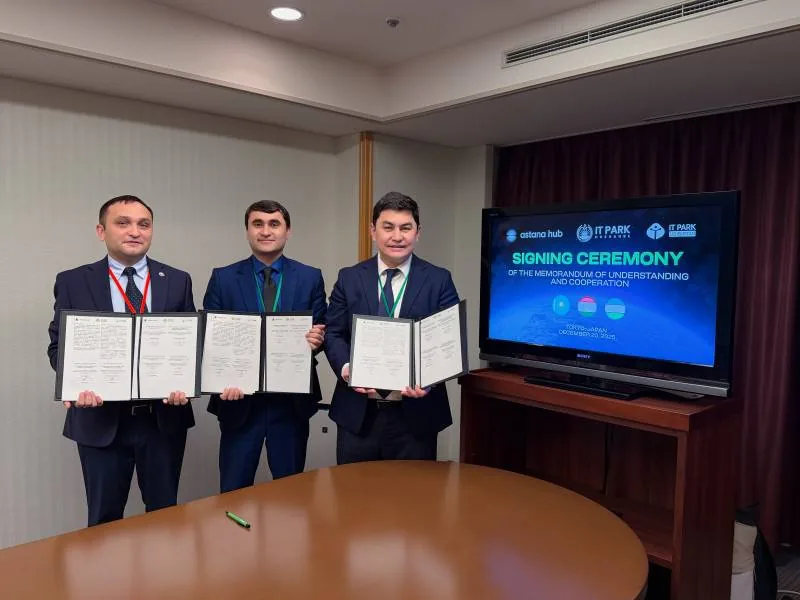
Tajikistan has become a new member of the regional innovation alliance Central Asian Innovation Hubs
Mansur Ismagulov