"We see ourselves as the largest gaming studio in Central Asia," says Akmal Salikhov about the future of East Games
The Development Director of East Games — the largest gaming studio in Uzbekistan — discussed the impact of global trends on the company's strategy and shared its plans.
Author - Mansur Ismagulov
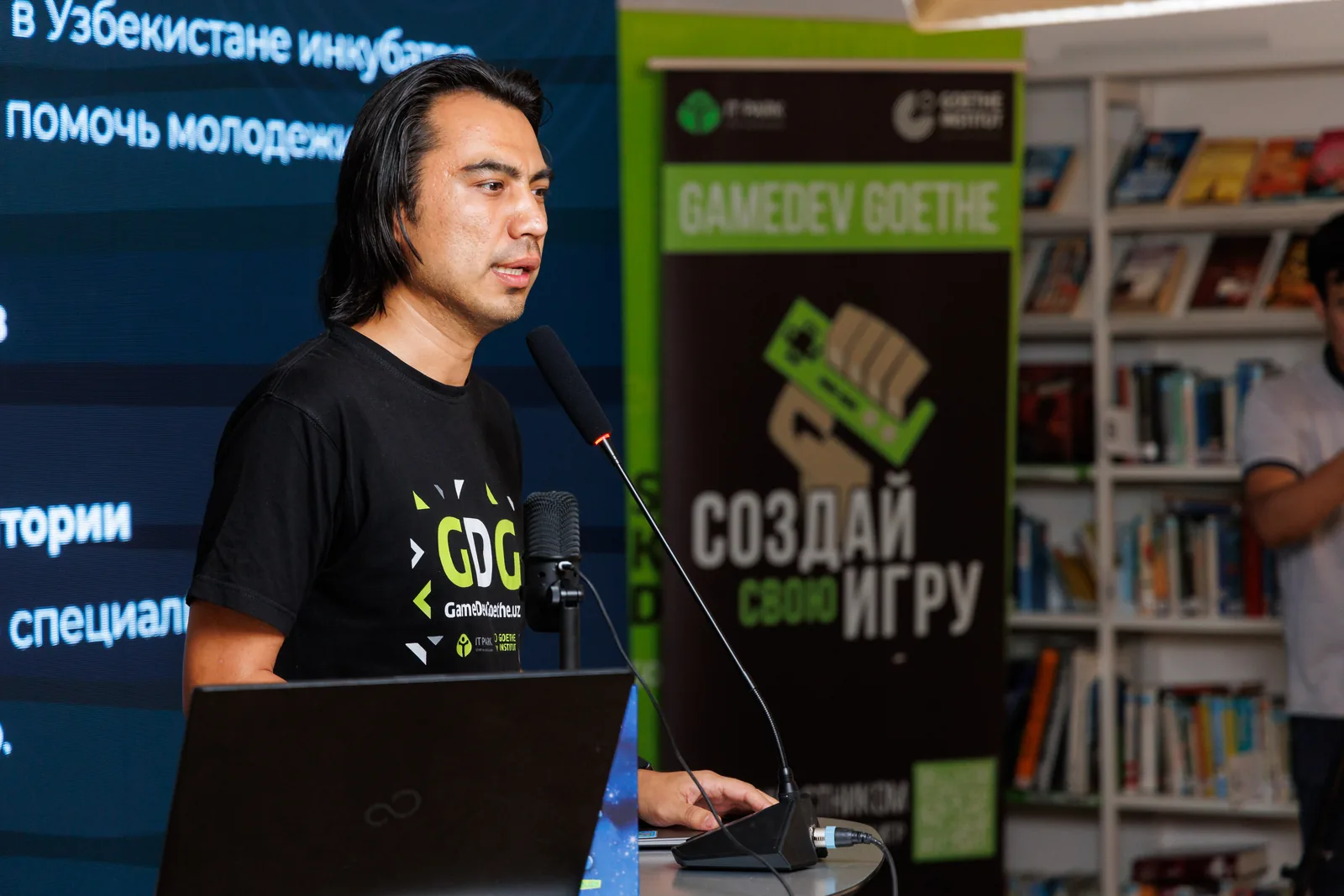
The Tech AI
Get the key points in seconds - a short summary from The Tech AI.
Akmal Salikhov, director of East Games (Tashkent), notes steady industry growth of 7–10% annually. Unlike Western companies such as Embracer Group, which laid off approximately 8,000 employees, the CIS and Central Asia have not experienced a downturn. The company plans to expand its workforce in 2025, with more than eight job openings currently available. Salikhov predicts a shift toward smaller teams, avoiding risky investments in large-scale projects like Concord ($400 million). The role of AI is viewed ambiguously: it changes the requirements for developers but demands caution in long-term projects. Gaming is becoming more accessible thanks to affordable consoles and mobile devices. The MENA region has been recognized as a rapidly growing market, opening up opportunities for Central Asian studios. East Games aims to become the largest studio in the region within 10 years, fostering education, events, and the labor market in Uzbekistan.
Akmal Salikhov, city — Tashkent, Development Director at East Games, Instagram
About global changes and trends
During the pandemic, there was an active growth in gaming. We are one of those rare industries that developed vigorously at that time. Although, of course, this played a cruel joke on some Western companies: good performance attracted a large volume of investments into game studios, which then hired hundreds of thousands of new employees, but then the euphoria ended. A “polar winter” arrived, and game studios laid off tens of thousands of employees. A bright example is the Swedish company Embracer Group, which laid off about 8,000 employees from April 2023 to April 2024, reduced the number of internal studios from 139 to 103, and also sold or canceled 88 games.
This does not mean that the industry has problems. Game development continues to grow steadily by 7-10% per year. In the CIS region and especially in Central Asia, fortunately, no one attracted spontaneous investments in game development, so there was no regression.
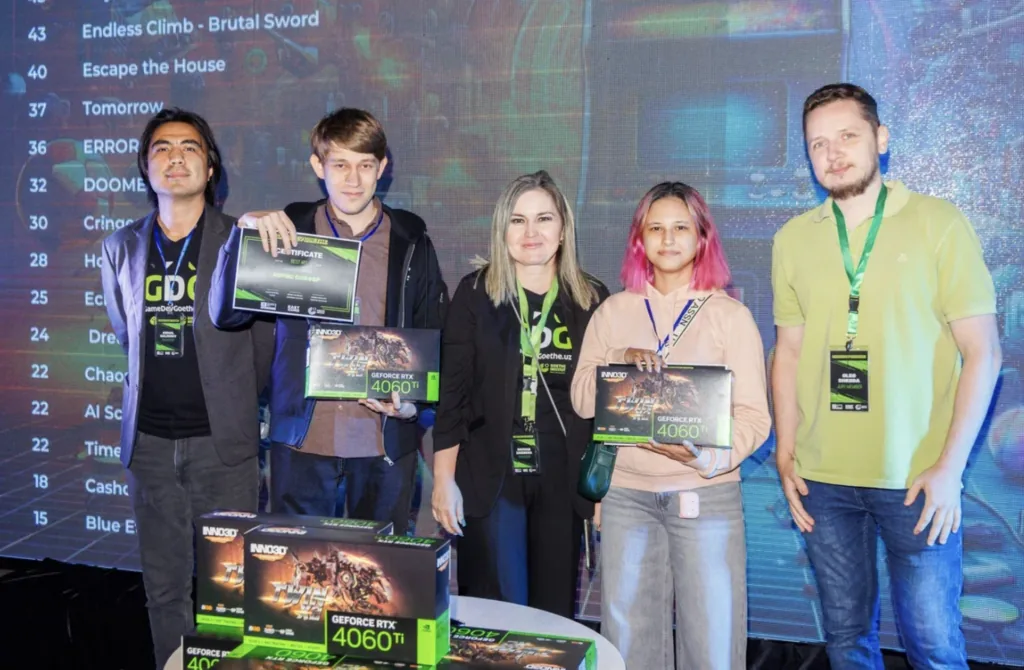
We at East Games are experiencing steady growth. In 2025, we will continue to actively recruit new employees into our team. Currently, for example, we have more than eight open positions, so if you are interested in working in the gaming industry, do not miss announcements of fresh job offers in our Telegram channel.
About new challenges
It is extremely unclear how AI will affect the speed and cost of creating games. There are several viewpoints in the development field: supporters of the first believe that ChatGPT and similar products will eliminate the need for junior developers. Others say that it is not juniors but middle developers who are at risk, because thanks to new tools, one senior can assign tasks to dozens of juniors and achieve the same efficiency.
There are also many questions regarding graphics and visuals. On one hand, generative AI impresses with its results, but often they are unstable. Using them in large and long-term projects seems risky. One thing is to generate an image or short video for an Instagram post, and quite another is to create thousands of units of content for a game, consistent in style and aesthetics.
About the role of new technologies
Testing AI in real conditions, both from the perspective of programming and content generation for games, seems to be the most correct approach. At the same time, we cannot translate the entire team to a new, untested pipeline. However, creating a small R&D team that will focus on experiments and developing a small new project using all the innovations looks like a logical solution.
About future employees
In my opinion, there is a shift in paradigm: we see more and more examples of games created by one person or a small team earning huge sums. A bright example is the medieval city-building simulator Manor Lords.
At the same time, there have been more cases where large studios release a “big project” that ultimately fails completely. For example, Concord, which, according to rumors, cost $400 million to develop.
I think the trend will go towards creating small teams with a small budget for development. In such teams, as in startups, flexibility and versatility are extremely important. If previously narrow specialists in one area were valued, now employees, on the contrary, should have the widest possible outlook and be able to use a large number of tools and solutions to achieve their goals.
We are already observing how our colleagues, for example, from the art department, actively use AI to create mini-programs and utilities to optimize their work, even without being professional programmers.

About the impact of global trends on company strategy
Gaming is becoming more accessible. Previously, to become a gamer, you needed a powerful gaming PC or an expensive console, which was not affordable for everyone. Today, the situation has changed significantly. Mobile gaming has gained popularity due to the affordable cost of devices and brings in the most revenue.
I would note that game consoles have become significantly cheaper. For example, the Xbox Series S costs about $300, which is cheaper than a mid-range smartphone, and a 4K TV can be purchased for $200. So, a cool gaming setup will cost half the price of a new iPhone.
This is why all markets are growing globally, without any particular decline of one market against another. This, in turn, is good news for game studios — you can experiment with all platforms.
Lately, we have been observing an increase in interest in regions that were previously difficult to associate with gaming. For example, Saudi Arabia — in 2019, its gaming market grew by an impressive 39% in just one year. The MENA region has become the fastest-growing gaming market in the world.
For us, this is great news. We are geographically close, united by common history, cultural and spiritual values. This opens up new opportunities for game studios from Central Asia: the MENA region can become a promising market for launching and promoting their products.
What will the company be like in 10 years
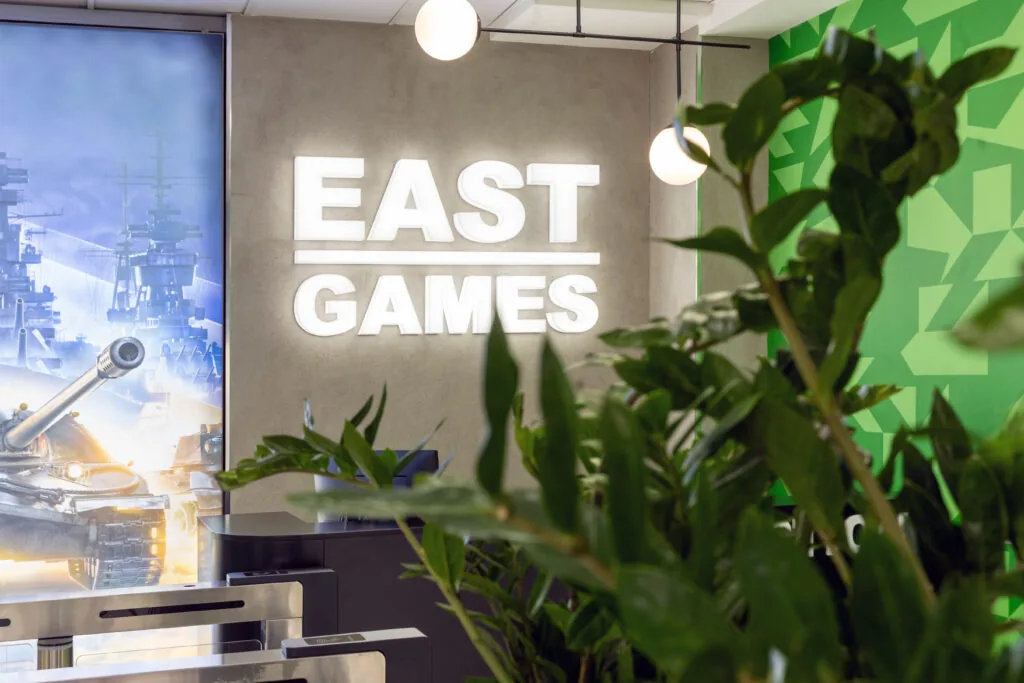
We see ourselves as the largest game studio in Central Asia — both in terms of the number of employees and the number of created game projects, recognizable worldwide.
Additionally, we would like to participate in creating a game project that would reveal the culture and history not only of Uzbekistan but also of the entire Central Asian region as a whole.
About the role of the company in the future
We are already making an active contribution to the development of the ecosystem in Uzbekistan. We want our presence to influence several industries. The first is education: we would like to cooperate more closely with educational institutions to jointly cultivate specialists of international level.
The second industry is related to activities. Conferences, game jams, hackathons — we have started regularly conducting such activities. We would like to do this even more frequently and on a larger scale in the future. I think that such initiatives, on one hand, will increase the interest of our population in game development, and on the other hand, the attention of representatives of the international gaming industry to our region.
Next is the labor market. Currently, there are not as many game studios and game development specialists in Uzbekistan as we would like. Our task is to ensure that our activities positively impact the Uzbek labor market.
The Tech on Telegram Follow The Tech on Telegram
Keep up with the latest technology and startup news.
Related reading





More from this author

News
zypl.ai begins operations in Japan and focuses on next-generation risk models
Mansur Ismagulov

News
Elon Musk's net worth has exceeded $700 billion for the first time
Mansur Ismagulov
Article Interviews
"Central Asian countries should build a joint ecosystem," — Bekhzod Ismoilov on the development of AI in the region
Mansur Ismagulov

Article Interviews
Bloom's Taxonomy and Engineering Levels: A Practical Growth Model
Mansur Ismagulov
Article Useful
How the IT industry in Azerbaijan developed in 2025: key events
Mansur Ismagulov
News
Tajikistan has become a new member of the regional innovation alliance Central Asian Innovation Hubs
Mansur Ismagulov