"We are building a cyber shield for Central Asia and the Turkic World," — Olzhas Satiev on the future of digital security
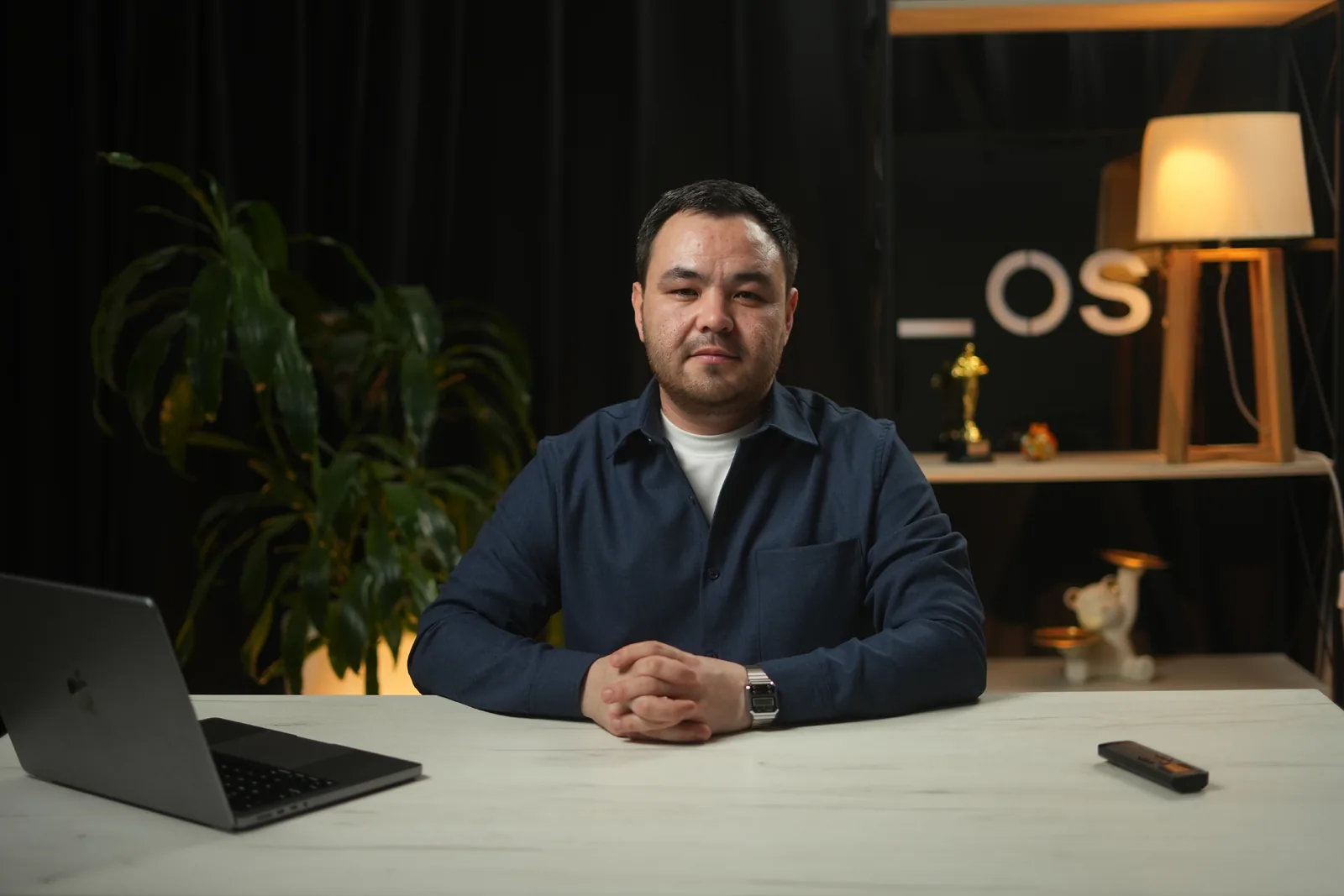
We continue our series of interviews with IT leaders from Central Asia. This time, our guest is Olzhas Satiev, President of the Center for Analysis and Investigation of Cyber Attacks—a key player in the field of cybersecurity in Kazakhstan. Olzhas shared insights on new challenges in the IT industry, the impact of global trends on the company's strategy, and outlined ambitious plans for TSARKA's future.
Author - Mansur Ismagulov

The Tech AI
Get the key points in seconds - a short summary from The Tech AI.
The President of TSARKA, Olzhas Satiev, notes that cybersecurity has become the foundation of technological stability, rather than a temporary trend. The company TSARKA, which has branches in Kyrgyzstan, Uzbekistan, Estonia, Poland, and the United States, exports 25% of its services and develops secure smartphones with hardware encryption. The contribution to R&D accounts for approximately 30% of turnover, while dividends have not been withdrawn for ten years.
Olzhas Satiev, city — Astana, President of TSARKA, Facebook
On global changes and trends
The pandemic accelerated the transition to remote work, leading to an increase in cyber risks. Employees working within a corporate network are protected by the company’s security systems. However, protection is significantly weaker when working from home: a home computer is much easier to hack or infect.
It is important to understand that cybersecurity is not a temporary trend, like artificial intelligence, VR, or metaverses. Cybersecurity is the foundation upon which the stability and security of modern technologies are built.
On new challenges
The development trend of artificial intelligence is closely linked to cybersecurity. For example, Neuralink chips developed by Elon Musk could become targets for hacker attacks, creating threats to brain safety. In the future, cybersecurity will be especially important for protecting spacecraft and other technologies. It matters not only for business but also for the state.
The President of Kazakhstan recently emphasized the need to develop AI in the country. If AI systems regulating data on statistics, budget, and healthcare were hacked, hackers could gain access to people’s personal information and alter data. This could lead to serious consequences, such as changing tax or vaccination recommendations, which would impact long-term security.
This is important because cyber threats are becoming increasingly large-scale and complex, and they can affect the security of society, the economy, and even people’s health.
Furthermore, the growth of cyber-dependency creates new risks for the personal safety of citizens. Data leaks or the creation of fake materials, such as video or voice manipulations, can be used to damage reputations, create false accusations, and even interfere in political processes.
The development and protection of cybersecurity has become a necessity for preserving trust, protecting personal data, and ensuring stability in various spheres of life, from government administration to citizens’ daily activities.
On the role of new technologies
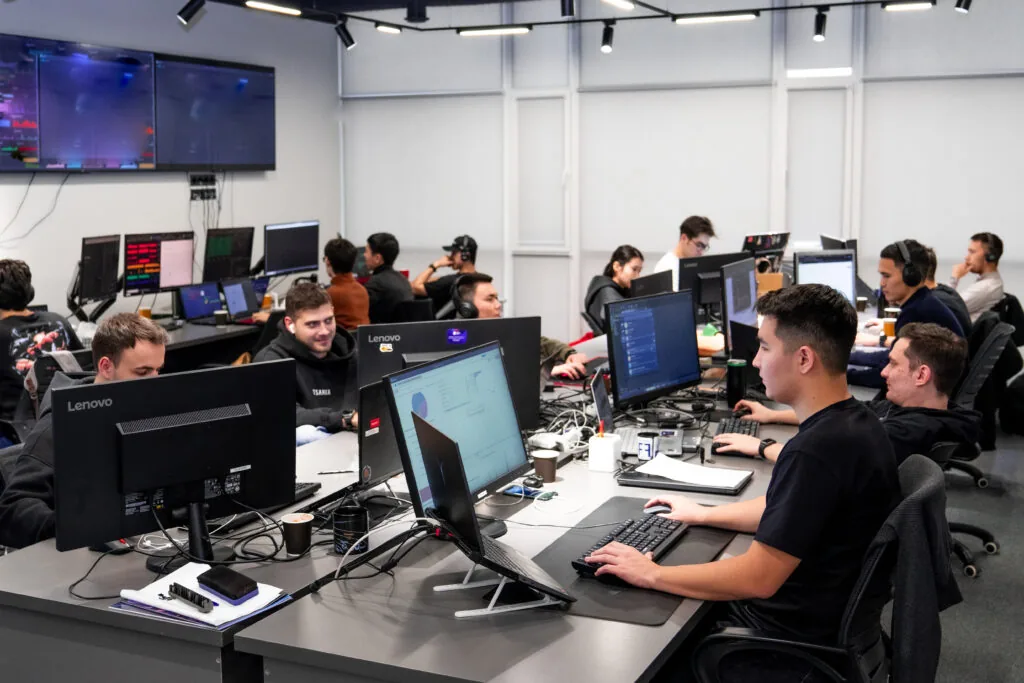
TSARKA is the largest cybersecurity company in Central Asia, with about 100 employees, most of whom are engineers. We are industry leaders and are actively developing branches in Kyrgyzstan and Uzbekistan, as well as having jurisdictions in Estonia, Poland, and the USA. Our company was the first in the region to begin exporting cybersecurity services abroad, with 25% of our turnover coming from the foreign market.
Cybersecurity is DeepTech, and we do not sell raw materials like oil, but rather highly qualified developments and solutions. Our company is building an ecosystem of products and services focused on creating innovative technologies. Recently, we announced the development of a secure smartphone. In Kazakhstan, ordinary smartphones have not been produced, but we are starting from scratch to develop secure devices. Before this, we conducted three to four years of research and development in our R&D and realized that we could implement this project.
The main goal of our company is to create a product system that will help form cybersecurity for states, including Kazakhstan and Kyrgyzstan. We also work on protection for corporations; clients approach us with various cybersecurity needs. In addition, we are engaged in a social project aimed at ensuring security for citizens.
On the employees of the future
The problem with tech specialists lies in the lack of soft skills. Previously, specialists with good hard skills but without communication skills were valued. Today, those who know how to work in a team and communicate are in greater demand. It is better to choose a professional with developed soft skills than a genius with communication problems, because the team will not be able to work effectively with such a person.
I myself was an engineer and also preferred to sit and code rather than communicate with clients. But, having outgrown that phase, I became an extrovert. The division into “I am an introvert and don’t want to communicate” is incorrect thinking. It is important to be able to balance. If you want to work in IT, in large companies, and on large projects, you need to develop soft skills.
On the impact of global trends on company strategy
Sanctions from neighbors affect us, especially in the field of device and hardware production. Many components are ordered from China, but deliveries are becoming more difficult each year due to geopolitics. For example, to develop artificial intelligence, we need video cards from NVIDIA, but their deliveries to Kazakhstan are limited. This is coordinated at a high level, including with the US presidential administration, due to export restrictions.
The world has divided significantly, and governments of countries have realized that restricting technology has become a priority. Previously, there was more focus on restricting the supply of raw materials and products, but today the main attention is on technologies. Kazakhstan needs to balance between major players so that the supply of technologies to the country is not severely restricted. We do not produce our own chips or computers, and so far we only write application software. We do not have our own operating system, antivirus software, or office applications like Word and Excel. If we are restricted from accessing these technologies, it will be a serious problem and development will become impossible. In the context of global changes, what was available five years ago may now be in question.
A long-term strategy for import substitution and protection of sovereignty is necessary. A country will not be independent without technological sovereignty. Kazakhstan is actively developing in digitalization, occupying a place in the top 20 according to the UN. However, restricting access to technologies could lead to collapse and a loss of citizen trust in digitalization.
We are expanding into international markets. In Kyrgyzstan, we are already working with partners, planning entry into Uzbekistan, and even Latin America. We already have a company in the USA and are considering expansion into other countries. Soon, one of our people is traveling to Afghanistan at an invitation to advise local authorities.
It is important for us to enter foreign markets because Kazakhstan is becoming too small for us. We have sufficient competencies to sell abroad. For example, our product WebTotem, a website protection system, is already used on 20,000 websites worldwide, including in Europe and the USA. This is an achievement that confirms our ability to work in international markets.
Our development concept is that of an engineering company, like Google, where most employees are engineers. We hire talented specialists without specific tasks, giving them the freedom to come up with cool ideas. This works for us—we have a strong R&D and an excellent team.
I have a habit: if I meet a cool specialist, I invite them to join us, and then we figure out what to do.
Our products for foreign markets take one to two years to launch. For example, we had a project to create a secure phone. The geek team developed prototypes and showed how the device could be hacked. Studying this, we decided to create a secure smartphone. We developed an MVP with hardware encryption that cannot be hacked remotely. Unlike a VPN, it is significantly more secure. Also, owners can upload their own cryptography, making the phone protected even from us. This project started as a hobby, and now we plan to release the first batch by the end of 2025.
Developing R&D in the company is the key to success. In large companies like Google or Yandex, many innovative ideas are born precisely in their R&D. In Kazakhstan, local companies rarely have a full-fledged R&D, and they often work as service companies, earning money but not developing further. Our company has existed for 10 years, and during this time we have never withdrawn dividends. We invest all our money into our R&D. In fact, about 30% of our turnover goes toward the development of new products and technologies. This is important for us because without a strong R&D we will not be able to create and promote our own products.
What the leader of the future should be like
Entrepreneurs are often lonely people, and in Kazakhstan and the CIS, they are often perceived negatively due to old stereotypes about business from the 80s and 90s. In the USA, the attitude toward entrepreneurs is different: they are valued as the driving force of the economy, creating jobs and innovations.
In Kazakhstan, it is important to change the approach so that officials perceive entrepreneurs as partners, not subordinates. Entrepreneurs deserve respect for the risk they take when starting their business. This is a long-term path, not a short-term race, and entrepreneurship should be directed not only at profit but also at the opportunity to change the world for the better.
Elon Musk is not a state; he did what the whole world could not change in space exploration. Elon Musk’s investors do not invest money for profit, but to become part of history that will fly to Mars.
I met a 24-year-old guy from Silicon Valley who lost his sister due to a genetic disease that could have been prevented. His goal is to avoid such tragedies. With $20 million in investments, he created a DNA test and is now developing an AI doctor that will help predict diseases, especially oncological ones.
No one knew about Kazakhstan as an IT country. When you talk about Kazakhstan, many people do not even understand where it is. We were ranked 118th in the UN’s global cyber readiness index. In cooperation with the Ministry of Digitalization, we conducted long-term work, and over five years improved this indicator fivefold. In 2023, the President signed a law legalizing ethical hackers in the country. This is a unique law; there is nothing like it anywhere in the world. I told about this in the USA, and everyone was shocked.
We hold the KazHackStan hacker conference, which is already among the top 10 global hacker events. We have won in Russia and Turkey, and our guys have won in Thailand and the UAE. We have proven that Kazakhstan has hackers. Because of this, many companies are now headhunting specialists from Kazakhstan.
We are already orienting not only toward the country but also toward the region—building a cyber-shield for Central Asia and the Turkic world. We have memorandums with Azerbaijan, Turkey, Turkmenistan, Kazakhstan, Kyrgyzstan, and Uzbekistan. We have united these countries at conferences and strive to make our region secure.
We understand that if you create a cool product that solves someone’s problems, the money will come on its own. In business, it is important not only to earn but also to work with passion. When you do what you are truly interested in, people will come to you. We have cool hackers on our team, including women, who are willing to be paid two to three times more in the market than we pay.
We have good salaries, but the TSARKA brand and interesting projects are also important. People often stay because it is part of a larger story. Usually, in IT, a person changes jobs every year and a half, but with us, people usually work for three to four years. We calmly let people go if they are not qualified enough or have outgrown us. Sometimes employees leave for large companies and then return when suitable projects appear. This is normal, and I take it calmly.
It is important for employees to feel their involvement in something big and significant. Programmers in Silicon Valley startups are effective not just because it is a job, but because they see rapid user growth, receive investments, and understand that their efforts change the world. This creates an atmosphere where people are willing to work 20 hours a day, not asking about bonuses, because they are part of something important. We try not to force people to work on weekends, but it is important that everyone realizes their responsibility for the project and understands how important it is.
What the company will be like in 10 years
We have an interesting path: through cybersecurity, we are creating a Central Asian analog of Google and Yandex in Kazakhstan. We started with cybersecurity as a service and consulting, then began developing our own products, and are now moving toward phones, hardware, and other technologies. We started making cloud services with a focus on security.
We are creating a network of products analogous to solutions offered by global giants like Google, Yandex, and others, with a focus on security. We are not limited to just cybersecurity; we also engage in education and organizing conferences. Ideally, we have already established ourselves as a group of companies—TSARKA Group—which includes seven or eight companies with different products and has representatives in five countries. This is one of the first international companies to emerge from Kazakhstan.
Our conference, KazHackStan, is not only a unique event but also a brand that has become popular among hackers worldwide. We are proud that our Cybernomad Kazakhstan merchandise is worn by global leaders in the security field. Recently, the CEO of HackerOne noticed our brand and shared it on Twitter, highlighting the international recognition of Kazakhstan in the field of cybersecurity.
We hold a conference for 5,000 people and consider it one of the best in Kazakhstan. All organization is handled by our specialists. The event takes place at a high level, with global speakers, and is organized by professionals who are passionate about their work.
On the role of the company in the future
We have become leaders in the brand base in Central Asia, being the first to enter this sector and taking our place in the market. We have worked hard to become recognizable. When it comes to Kazakh cybersecurity, everyone remembers TSARKA. We are known not only in Kazakhstan but also in Kyrgyzstan, Uzbekistan, and Russia. At international events, it is acknowledged that TSARKA is making significant changes in the industry. And we have achieved all this without advertising—simply by doing our work at a high level.
We have an excellent technological base and wonderful universities such as NU, AITU, and MUIT. Our human resources are at a high level. The main task is to learn how to properly present and sell our potential on the international arena and gain access to investments available in Silicon Valley. We understand that our company, valued at $20-30 million in Kazakhstan, could be worth $200-300 million in Silicon Valley due to greater access to resources and opportunities. Despite this, we are confident that with the right support and development, we will be able to unlock our full potential and reach an international level.
The Tech on Telegram Follow The Tech on Telegram
Keep up with the latest technology and startup news.
Related reading



More from this author

News
zypl.ai begins operations in Japan and focuses on next-generation risk models
Mansur Ismagulov

News
Elon Musk's net worth has exceeded $700 billion for the first time
Mansur Ismagulov
Article Interviews
"Central Asian countries should build a joint ecosystem," — Bekhzod Ismoilov on the development of AI in the region
Mansur Ismagulov
Article Interviews
Bloom's Taxonomy and Engineering Levels: A Practical Growth Model
Mansur Ismagulov
Article Useful
How the IT industry in Azerbaijan developed in 2025: key events
Mansur Ismagulov
News
Tajikistan has become a new member of the regional innovation alliance Central Asian Innovation Hubs
Mansur Ismagulov