"My first job was at Jusan when I was 20," says Baglan Adaskhan about the beginning of his career in IT.
A software engineer shared his journey in IT, his experience at his first job at Jusan, and offered advice to beginners.
Author - Mansur Ismagulov
The Tech AI
Get the key points in seconds - a short summary from The Tech AI.
Baglan Adas Khan, a programmer from Almaty, works at Datopian. He graduated from Satbayev University and is currently studying at MIPT. He began his career at the age of 20 as a tester at Jusan, then transitioned to backend development. To find jobs, he used HeadHunter, Telegram, and LinkedIn. He prepared through LeetCode and self-study. He advises creating projects, using various job search channels, and not being afraid of rejections.
Baglan Adaskhan, city — Almaty, software engineer, Instagram
About me
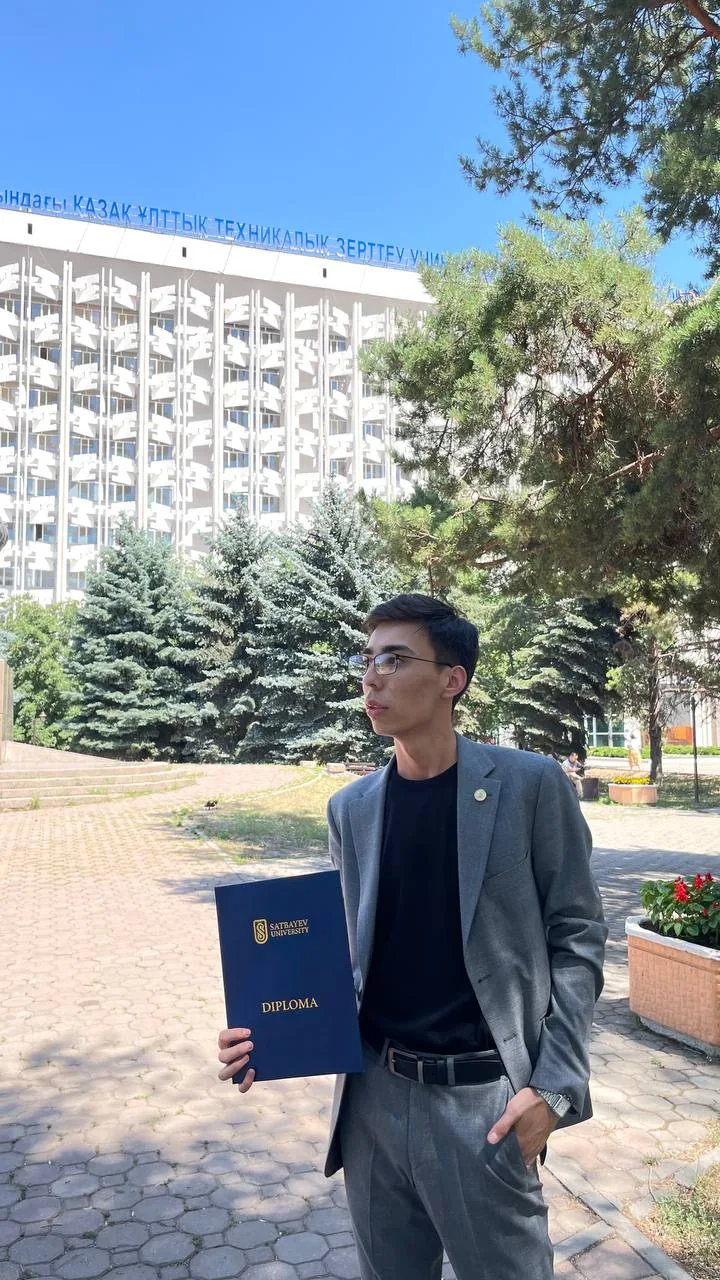
I am a software developer. I received my bachelor's degree at Satbayev University and am currently continuing my studies in the master's program at the National Research Nuclear University MEPhI.
In school, I enjoyed computer science, participated in olympiads, and wrote my first scripts in Pascal. This became my first step into programming. Later, I began studying Python, delved into backend development, and thus IT became my profession.
Currently, I work at the international company Datopian.
About my first job in IT
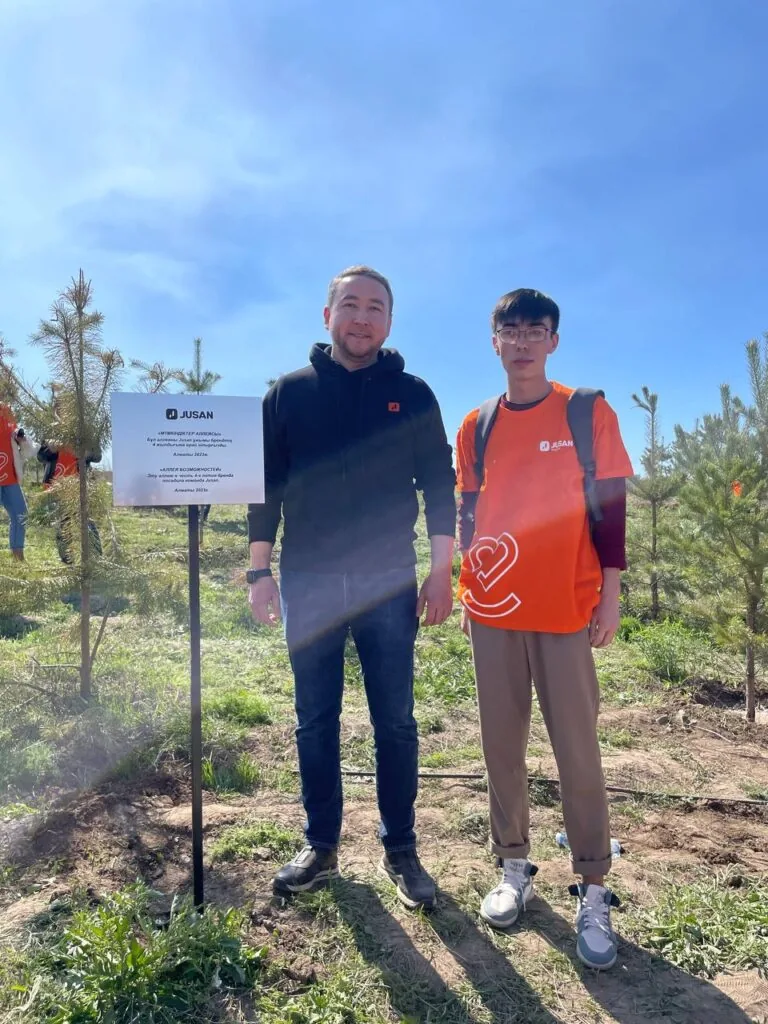
My first job was at Jusan when I was 20 years old. I joined as an automation tester, but after some time, I transitioned to backend development. I was involved in writing automated tests, and then I started working with backend services.
In the summer after my third year, I completed an internship at KazInfoTech, where I worked with databases. At the beginning of my fourth year, I started working as a research assistant at Satbayev University. This experience gave me my first professional skills and self-confidence, even though it was not yet a full-fledged job in the industry.
I searched for a job for a long time — I viewed vacancies on HeadHunter, monitored Telegram channels, but received only rejections. This is normal, but at that time it seemed to me that finding the first job was almost impossible.
One night, I decided to upload my resume to LinkedIn. I woke up in the morning with a message from a recruiter at Jusan — they invited me for an interview. That is how my career in IT began.
The interview processes at different companies varied, but the general scheme was similar. First, there was an HR interview, where they asked about my goals, motivation, and experience, even if it was minimal, how I solve problems, and how I interact with the team.
After that, there was a technical interview, where they checked technical knowledge. I prepared for it using materials on backend development and problems on LeetCode.
The university gave me a foundation — algorithms, data structures, databases — but there was little practical skill for work. The main thing that helped me was self-study, projects, and practical experience.
Among personal qualities, persistence and the ability to learn helped the most. In IT, you always have to figure out something new, and if you have the habit of googling, trying, and figuring things out — this gives a huge advantage.
Difficulties
The biggest problem is the lack of experience. Many companies require it even for interns, which makes the search much more difficult.
It was also difficult without a clear understanding of which skills are actually needed. I seemed to know something, but I didn't know if it was enough for the job.
There were many rejections. I sent resumes to dozens of companies, but almost everywhere either no one responded or they wrote "we chose another candidate."
It was unpleasant, but I understood that this is part of the process. At some point, I changed my strategy:
— I started analyzing job descriptions and improving the skills they required
— I stopped waiting for the perfect vacancy and applied to everything that even slightly fit
— I started using LinkedIn more actively. This ultimately helped me.
The main thing is not to stop. Rejections mean nothing as long as you keep trying.
One of the main difficulties is adaptation. When you join a team, it seems like everyone around knows much more than you do. In the first weeks at work, it is really hard to understand anything — the codebase is huge, processes are complex, it seems like they expect super results from you, while you haven't even figured out how everything works.
How did I cope? I asked questions, googled, and figured things out. The main thing is not to be afraid to ask questions and take on tasks, even if they seem difficult. After a couple of months, you realize that everything is not so scary.
The main difficulty in finding the first job in IT is that everyone requires experience, and if you don't have it, it is difficult to prove that you are suitable.
Another difficulty is not understanding what to study. In IT, there are too many directions, and if you don't have a clear plan, you can waste a lot of time on unnecessary things.
And competition. Even for intern positions, hundreds of people apply, and you need to stand out somehow.

3 tips that will help you find a job in IT
- Do projects — if you don't have work experience, it will be replaced by pet projects, internships, freelance, or even just a well-organized GitHub. The main thing is to show that you can do something.
- Use all job search channels — HeadHunter, Telegram channels, LinkedIn, company career pages. Do not limit yourself to just one method.
- Do not be afraid to apply and go through interviews — even if it seems like you are not qualified enough. The more experience you have with interviews, the higher your chances of getting an offer next time.
The Tech on Telegram Follow The Tech on Telegram
Keep up with the latest technology and startup news.
Related reading







More from this author

News
zypl.ai begins operations in Japan and focuses on next-generation risk models
Mansur Ismagulov

News
Elon Musk's net worth has exceeded $700 billion for the first time
Mansur Ismagulov

Article Interviews
"Central Asian countries should build a joint ecosystem," — Bekhzod Ismoilov on the development of AI in the region
Mansur Ismagulov

Article Interviews
Bloom's Taxonomy and Engineering Levels: A Practical Growth Model
Mansur Ismagulov

Article Useful
How the IT industry in Azerbaijan developed in 2025: key events
Mansur Ismagulov

News
Tajikistan has become a new member of the regional innovation alliance Central Asian Innovation Hubs.
Mansur Ismagulov