"The scale of the projects and the unique corporate culture immediately caught my attention," — Svyatoslav Vasiliev on his career at inDrive
The Head of Product at inDrive shared his work experience and outlined the key skills necessary for product managers.
Author - Mansur Ismagulov

The Tech AI
Get the key points in seconds - a short summary from The Tech AI.
Svyatoslav Vasilyev, Head of Product Mobility Cluster at inDrive (Limassol), holds two higher education degrees: one in engineering and another in economics. In 2011, he began his career at Teligent, then worked with startup CEOs, which led to his role as CPO. At inDrive, he improves the delivery service through a system that allows customers to choose their service provider. He recommends developing visual experience, openness, and communication skills, as well as seeking mentors.
Svyatoslav Vasilev, City — Limassol, Cyprus, Head of Product, Mobility Cluster, LinkedIn
About Me
I have two higher education degrees. The first is in engineering, which I obtained from the Institute of Communications. For a while, I worked in my field at the Swedish company Teligent, where I started as an intern. The company had a branch in Moscow. There, I learned about the profession of product manager and interacted extensively with business functions.
At that time, I had a primitive understanding of what product management was and what to do with it. Therefore, I pursued a second degree in economics, thinking it would help me get closer to business. I was attracted to the idea of a profession that sits at the intersection of technology, business, design, and other fields. It seemed to me that I would be able to shape the future and appearance of the product, bringing value to both users and the company.
In 2011, there were almost no books on product management. Only large corporations occasionally mentioned this profession. There were no courses, resources, thought leaders, or bloggers. Therefore, I had to find study materials on my own.
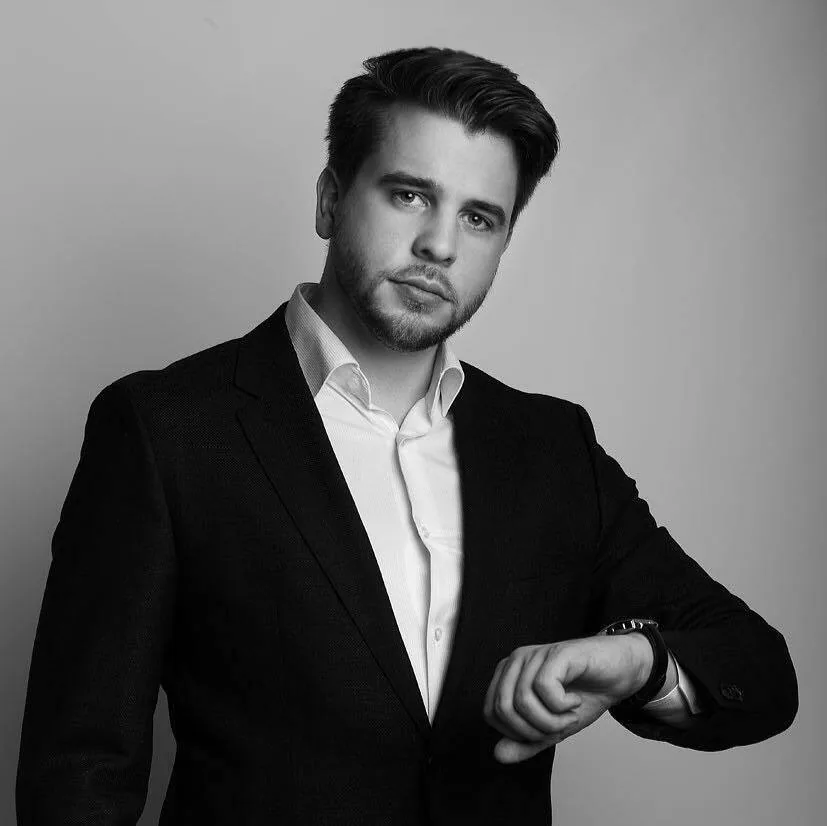
An important factor in my career was that in all my roles, I closely interacted with CEOs and company founders. This completely shapes one's worldview, general mindset, and approach to tasks. I believe every product manager should go through such a school. After all, a hired employee can quit and find another job, but for a founder, their business is everything; they have no room for error. They do everything possible to ensure their business grows and generates revenue.
Thanks to communicating with company founders and constant curiosity, I strived to look at things more broadly rather than just performing specific tasks. I enjoyed piecing together complex pictures and systems, finding patterns among numerous factors: what is happening in the market, what business trends exist, and other prerequisites that might influence outcomes.
The second thing that helped me significantly is communication skills, because product management is all about communication. Since there are many people in companies, and everyone has their own view on how the product should develop, it is necessary to constantly interact with colleagues and build processes so that everyone understands why I focus on the most important aspects rather than less significant or inefficient tasks. All of this led me to the position of CPO.
inDrive is a huge company. Previously, I worked in much smaller organizations where my title was Director of Product, and I reported directly to the founders. However, the tasks were comparable in complexity.

The most interesting, yet challenging, aspect is finding focus areas that will contribute the most to business growth. It is important to achieve a balance between strategic decisions aimed at the future and achieving concrete results in the present. Combining these aspects is simultaneously the most difficult and engaging part of the work.
About my career at inDrive
During my job search, I communicated with representatives of many companies and received several offers, including from inDrive. The scale of projects and the unique corporate culture of inDrive immediately caught my attention.
My typical workday would surprise all my acquaintances outside of IT, as I spend almost all my time on calls. During a workday, I usually have about eight calls, each lasting from 15 to 30 minutes, sometimes longer. I lead different types of meetings: in some, I act as a leader, organizing processes, while in others, I remain a participant, expressing my opinion. I also devote significant attention to tasks such as developing strategies or organizing meetings with the team to discuss results and next steps.

The most interesting and complex project is improving the quality of service and product in our delivery business. The main challenge lies in our unique model, where there is no directive assignment of orders to performers, unlike our competitors. Our customers and performers choose each other and set the price for the service themselves. Our goal is to develop a system that highlights the reliability of performers without violating principles of fairness. We strive to ensure equal opportunities for everyone.
We are developing a system that clearly explains our expectations from performers and service rules. This data is included in communication with customers, allowing them to choose from multiple performer responses with different prices and characteristics. For example, one performer might be more disciplined, while another is faster. This knowledge helps customers decide whether they are willing to compromise on price or prefer to pay more for reliability and service quality.
I believe that in the coming years, the product manager profession will be freed from routine tasks with the help of artificial intelligence. There will be more time to work more intellectually, focusing on data. However, I do not think the profession will disappear in the next 10-20 years. Most likely, it will become more specialized, with an increased emphasis on creative aspects and fewer mechanical tasks.
Recommendations
For a successful product manager, it is important to develop industry insight. They must be able to deeply analyze, understand why some products and businesses are successful while others are not.

Another important aspect is openness. A product manager should rely as little as possible on internal assumptions and expertise. They need to actively listen to facts and user needs. Often, good specialists are not afraid to doubt and test hypotheses instead of sticking rigidly to their own ideas.
Additionally, good communication skills are necessary. This is one of the most social professions, because a product manager talks with development, design, analytics, sales, marketing teams, and business stakeholders every day.
Find experienced leaders through social networks and ask them to mentor you, giving advice, for example, on how to join their company. Show initiative and arrange a meeting. Many people are responsive to such requests because they enjoy sharing their experience, which increases their sense of importance. For a beginner, this knowledge will be valuable, especially if they find a mentor who helps them take the first step in their career.
The Tech on Telegram Follow The Tech on Telegram
Keep up with the latest technology and startup news.
Related reading







More from this author

News
zypl.ai begins operations in Japan and focuses on next-generation risk models
Mansur Ismagulov

News
Elon Musk's net worth has exceeded $700 billion for the first time
Mansur Ismagulov

Article Interviews
"Central Asian countries should build a joint ecosystem," — Bekhzod Ismoilov on the development of AI in the region
Mansur Ismagulov

Article Interviews
Bloom's Taxonomy and Engineering Levels: A Practical Growth Model
Mansur Ismagulov

Article Useful
How the IT industry in Azerbaijan developed in 2025: key events
Mansur Ismagulov

News
Tajikistan has become a new member of the regional innovation alliance Central Asian Innovation Hubs.
Mansur Ismagulov