Who is a QA engineer and why does the business need them so much
In the domestic IT industry, QA engineers and software testers are still often confused. Sometimes even the companies hiring specialists do not fully understand the difference between these professions. What are the responsibilities of a QA engineer, how much do they earn, and what skills should they possess — in our material.
Author - Mansur Ismagulov

The Tech AI
Get the key points in seconds - a short summary from The Tech AI.
Artem Oprev, a QA engineer at Paspay from Karaganda, switched careers after working in the nuclear energy sector. He began his career with manual testing at Yandex and Sberbank, then moved into automation. Salaries range from 400,000 tenge for junior positions to 2.5 million for Head of QA; the specialist plans to become a manager.
Artem Oprev, QA engineer at the payment organization Paspay, shared insights into the profession and his daily responsibilities.
Artem Oprev, city — Karaganda, IT, Automation QA Engineer
About Me
I have two higher education degrees: in radio physics and design, and in the operation of nuclear power plants. In 2020–2021, I worked at the St. Petersburg-based “Atomproekt.” My team was involved in designing a nuclear power plant in the People’s Republic of China.
I was responsible for creating and issuing project documentation, facilitating communication within the laboratory, assigning tasks, and monitoring their completion. By then, I had been working in the field for nine years. I had tried my hand at design, nuclear power plant operation, research, and science, but eventually lost interest.
Additionally, I was dissatisfied with what I perceived as a significant imbalance between the volume of knowledge required, the amount of work, the level of responsibility, and the financial compensation.
Since my previous field, related to the design and operation of nuclear energy facilities, no longer held my interest, I decided to try my hand at IT.
At that time, some of my friends and acquaintances were already working in the IT sector, primarily in software testing. Given the positive reputation of the profession and the opportunity to consult with people who had practical experience, I decided to give it a try.

How I Entered the IT Profession
After talking with my tester friends, I began studying the field independently but ended up with a poorly structured, confusing mix of information in my head. I lacked understanding of how to apply this knowledge and what steps to take next.
At one point, I noticed two-month in-person manual software testing courses that included both theoretical and practical components. I completed them and received my first offer within a week for the position of assessor-tester at Yandex.
I tested Yandex Music and Navigator services, checking whether new functionality broke existing features. I also worked at Sberbank, testing an internal service for managing operational days, and at the Information and Analytical Center under the Committee for State Procurement in St. Petersburg.
When I moved to Kazakhstan, I received several job offers and chose the payment organization Paspay because I found the project interesting and saw opportunities for professional growth there.
Challenges
The main difficulty at the beginning was applying theoretical knowledge in the context of real-world projects. Typically, a junior tester knows more than they can practically execute.
Furthermore, every project is unique in terms of its technology stack, architecture, and implementation of specific software development methodologies. It is necessary to master new tools and testing approaches within a limited timeframe. However, onboarding and mentoring for junior team members are not always organized in a way that makes this process as comfortable and efficient as possible.
With experience comes ease in handling certain tasks. For example, I increasingly encounter patterns or specific functional aspects where I already know which testing technique to apply.
The process remains challenging when I need to determine how the system should work based on documentation plans. Often, the requirements in the documents themselves contain flaws and bugs. This requires significant analytical work to understand how the software should function even before its launch.

What a QA Engineer Should Know and Be Able to Do
The term “tester” is often applied to all specialists involved in software verification. In reality, a tester executes test cases for a specific product, focusing on testing already developed software.
A QA engineer oversees the quality of software throughout all stages of development — from the initial idea to release, when the product is planned, designed, and created. In other words, we think about service quality even before it exists.
Therefore, a QA engineer must confidently master testing theory to understand the role of testing in the software development lifecycle, its goals and tasks, and its relationship with the concept of software quality.
Knowledge and skills in test design are essential, as they allow for the most efficient coverage of functionality with a limited number of checks.
The higher the general technical background in technologies and tools for creating digital products, the more flexible and high-quality the testing process will be.
Soft skills are of great importance for a QA engineer, particularly the ability to establish effective communication with various team members, since there is no single, exhaustive source of information about how and what the software should do in real-world projects.
One must be attentive to details and able to maintain concentration throughout the entire work period.
Currently, at Paspay, I explore already implemented functionality using both manual and automated checks. I work on both the frontend (graphical interface) and backend sides to verify whether the service fulfills all its assigned responsibilities and implements its functions as intended.
How Much a QA Engineer Earns and Career Growth Opportunities
QA engineers are becoming increasingly in demand by businesses, as more products and services are created that users actively integrate into their lives. Currently, if a service does not work perfectly, it is not needed. QA engineers refine functionality to perfection.
The most natural career path, in my opinion, begins with a manual testing position. Later, depending on interest, one can study the stack for functional automated testing of backend and frontend applications. Alternatively, one can move toward non-functional automated testing, such as load testing, performance testing, or even try security testing.
Career development can proceed horizontally, as a technical specialist within a specific testing direction. Over time, one can also take on managerial roles within technical teams or departments.
I want to continue developing in automated testing, strengthen my skills in this area, and eventually take on a managerial position. I have previously held a lead role in the nuclear energy sector, and I found it interesting.
Salary size depends on the company’s scale and industry. On average, a junior-level specialist can earn from 400,000 to 600,000 tenge, a mid-level specialist from 600,000 to 800,000 tenge, and a senior specialist from 800,000 tenge up to one million. A QA Lead earns between 1 and 1.5 million tenge, while a Head of QA earns between 1.5 and 2.5 million tenge.
Recommendations
First and foremost, clearly define what will form the foundation of your personal motivation, what you want to achieve from the profession, so that you do not end up disappointed or waste your time.
Additionally, be prepared to study extensively, both during the period of learning the profession and while working directly. The digital world is continuously evolving, and you must evolve with it to remain a sought-after specialist.
The Tech on Telegram Follow The Tech on Telegram
Keep up with the latest technology and startup news.
Related reading




More from this author

News
zypl.ai begins operations in Japan and focuses on next-generation risk models
Mansur Ismagulov

News
Elon Musk's net worth has exceeded $700 billion for the first time
Mansur Ismagulov

Article Interviews
"Central Asian countries should build a joint ecosystem," — Bekhzod Ismoilov on the development of AI in the region
Mansur Ismagulov

Article Interviews
Bloom's Taxonomy and Engineering Levels: A Practical Growth Model
Mansur Ismagulov

Article Useful
How the IT industry in Azerbaijan developed in 2025: key events
Mansur Ismagulov
News
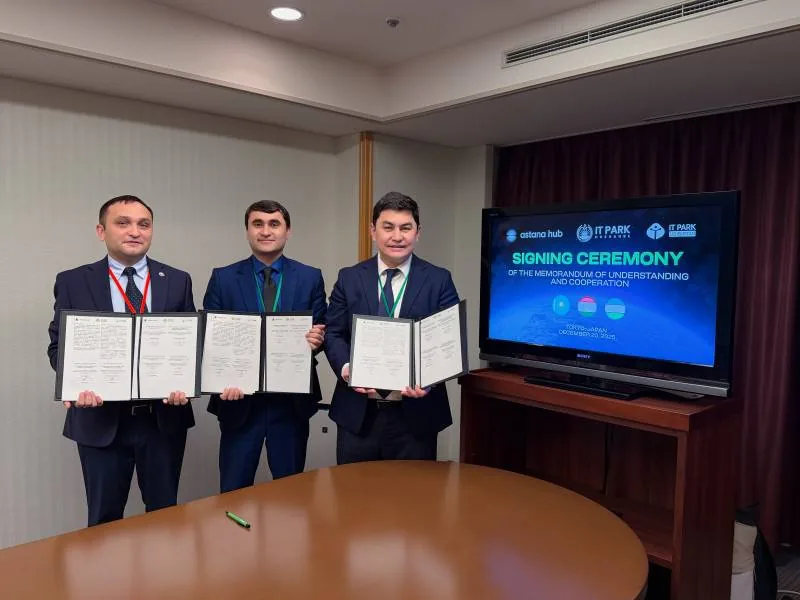
Tajikistan has become a new member of the regional innovation alliance Central Asian Innovation Hubs
Mansur Ismagulov