Where to start a career in cybersecurity: professions, universities, and useful resources
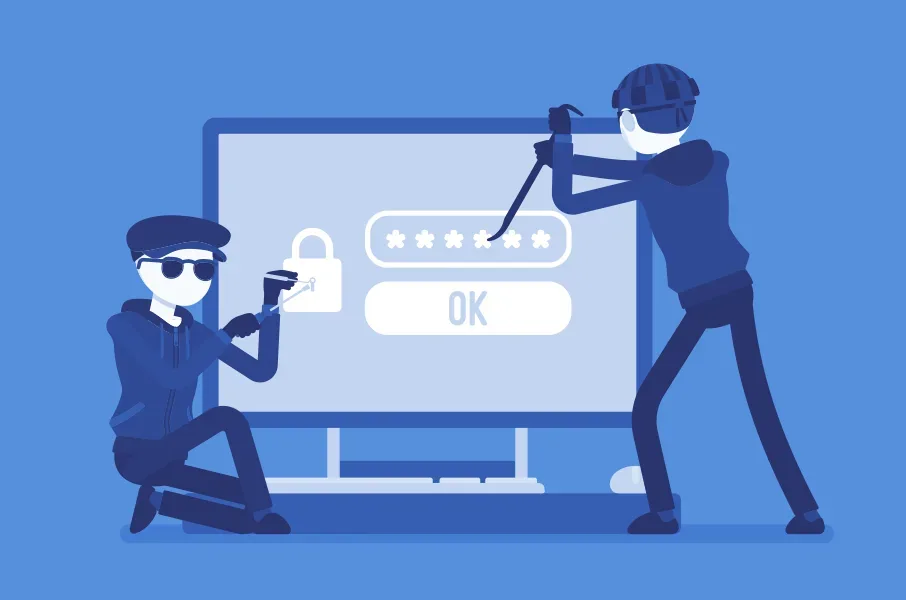
For those interested in information and cybersecurity, we have selected professions, courses, and useful resources. Read more in our review.
Author - Mansur Ismagulov

The Tech AI
Get the key points in seconds - a short summary from The Tech AI.
The text describes the roles of cybersecurity specialists, including analysts, engineers, and penetration testers. It lists universities in Central Asia and around the world offering relevant training programs. Data on online courses is provided, including duration and cost, and YouTube channels and books for studying the topic are recommended.
Data security means protection against hackers, espionage, viruses, internal system errors, and privacy breaches. IT specialists in cybersecurity have many skills and responsibilities.
In-demand professions today
Information Security Analyst — monitors potential cyber threats and assesses security vulnerabilities.
Security Engineer — creates systems and firewalls to protect against cyber threats and provides recommendations.
Security Architect — identifies weaknesses in the cybersecurity system and develops procedures to combat threats.
Information Security Specialist — implements and manages protection systems created by the CISO, ensures privacy, and is responsible for compliance with internal security requirements.
Pentester or Ethical Hacker — an ethical hacker responsible for testing the security of systems to identify and fix vulnerabilities.
Software Developer — creates specialized software or security-related solutions within other software.
Computer Forensics Expert — determines how an incident occurred, who is responsible, and which data and systems were compromised; cooperates with law enforcement agencies if necessary.
Information Security Director — plans, organizes, and monitors all requirements for the company's computers, networks, and data security; works closely with managers at various levels to define the organization's unique cybersecurity requirements.
Universities with Information and Cybersecurity Departments in Central Asia and Around the World
Azerbaijan
Western Caspian University, "Cybersecurity"
Azerbaijan Technical University, Cybersecurity
Kazakhstan
International University of Information Technologies, "Cybersecurity"
Astana IT University, Cybersecurity
Satbayev University, "Information Security"
Eurasian National University, Information Security Systems
Almaty University of Energy and Communications, "Information Security Systems"
Kyrgyzstan
Ala-Too International University, "Cybersecurity and Ethical Hacking"
Kyrgyz State Technical University, "Information Security"
International University of Information Technologies, "Information Security"
Uzbekistan
Tashkent University of Information Technologies, "Cybersecurity"
National University of Uzbekistan, "Information Security"
Around the World
Western Governors University, USA
University of the Potomac, USA
Maryville University of St. Louis, USA
Online Courses
Heimdal Cyber Security for Beginners
A course for ordinary users who want to expand their understanding of cybersecurity.
Duration: 1-2 months
Cost: Free
Skillbox "Information Security Specialist"
The course covers administration, programming, and cybersecurity basics, as well as final projects. Bonus courses are additionally available.
Duration: 12 months
Cost: 58,527 tenge per month
Introduction to Cybersecurity
In this program, you will learn how to assess, support, and monitor the security of computer systems. You will also learn how to assess threats, respond to incidents, and implement security measures to reduce risks.
Duration: 3 months
Cost: Free
Geekbrains "Information Security Engineer"
You will learn data collection and processing, storage design, and working with infrastructure. Improve your qualifications and income level.
Duration: 12 months
Cost: 79,643 tenge per month
Cybersecurity for Everyone
The course is suitable for students with zero or little experience in IT and cybersecurity. It covers a broad context and business aspects, helping to understand modern debates and the rapidly changing security landscape.
Duration: 1 month
Cost: Free
Useful YouTube Channels
Infosec
The channel provides career advice in cybersecurity, training for amateurs, and information on cyber threat protection.
John Hammond
The channel is dedicated to cybersecurity competitions, Capture The Flag tasks, and practical hacking lessons. You will also learn about new hacking methods and cybersecurity issues. There is an opportunity to solve complex tasks in real-time.
The Cyber Mentor
This channel features long and short videos on topics such as Open-Source Intelligence, web application pentesting, various forms of ethical hacking, and more.
HAK5
Here you can find important news in the field of cybersecurity, reasons why users become targets for hackers, and new information about questions and answers related to hacking.
Loi Liang Yang
CISSP, ethical hacker, and CompTIA security expert provides advice and shares lessons on password cracking, file recovery, SQL injections, and Kali Linux for beginners.
Nicole Enesse
The channel covers a wide range of topics related to cybersecurity, personal finance, and technology careers, providing valuable information and advice on how to study and advance in this field.
Books
The Basics of Cyber Safety by John Sammons
The book is an accessible introduction to cybersecurity for beginners, covering topics such as online privacy, working with passwords, malware, and social engineering.
Cybersecurity for Beginners by Raef Meeuwisse
The book describes concepts of cybersecurity, risk management, network security, and incident response.
Social Engineering: The Science of Human Hacking by Christopher Hadnagy
By studying the psychological strategies used by cybercriminals, the book explores social engineering methods and helps you understand how to protect yourself and your organization.
Cybersecurity — Attack and Defense Strategies by Yuri Diogenes and Erdal Ozkaya
This book focuses on attack and defense strategies in cybersecurity, covering typical attack vectors, security fundamentals, and optimal methods for strengthening systems and networks.
Network Security Bible by Eric Cole and Ronald Krutz
A guide to network security covering topics such as firewalls, intrusion detection systems, VPNs, and wireless network security.
Security Engineering: A Guide to Building Dependable Distributed Systems by Ross Anderson
This book provides a detailed look at the principles and practices of building security systems, covering topics such as access control, cryptography, and system vulnerabilities.
The Tech on Telegram Follow The Tech on Telegram
Keep up with the latest technology and startup news.
Related reading






More from this author

News
zypl.ai begins operations in Japan and focuses on next-generation risk models
Mansur Ismagulov

News
Elon Musk's net worth has exceeded $700 billion for the first time
Mansur Ismagulov

Article Interviews
"Central Asian countries should build a joint ecosystem," — Bekhzod Ismoilov on the development of AI in the region
Mansur Ismagulov

Article Interviews
Bloom's Taxonomy and Engineering Levels: A Practical Growth Model
Mansur Ismagulov

Article Useful
How the IT industry in Azerbaijan developed in 2025: key events
Mansur Ismagulov
News
Tajikistan has become a new member of the regional innovation alliance Central Asian Innovation Hubs
Mansur Ismagulov