How to launch a startup in South Korea. The experience of Shamshod Rozikov
Recently, our Telegram channel The Tech hosted a live stream on the topic "How to Launch a Startup in South Korea." Shamshod Rozikov from Uzbekistan shared his experience and discussed the key steps, challenges, and successes in creating and developing a startup in the country. We are sharing the content in text format.
Author - Mansur Ismagulov
The Tech AI
Get the key points in seconds - a short summary from The Tech AI.
Shamshod Rozikov, founder of Catch Words, is studying at Seoul National University and developing a platform for automating language learning using AI. The project received a grant of approximately $3,000 at a startup battle in Korea; currently, beta testing of the B2C product is underway, and work is being done with two partners. Plans include launching the app this year, attracting 10,000 active users, and signing contracts with eight companies.
Shamshod Rozikov, City — Seoul, Founder and CEO of Catch Words
About Me
I am from Uzbekistan, but currently I am studying in South Korea at Seoul National University in the Department of Computer Science.
Previously, I worked with a Korean language center in Uzbekistan, and now I am developing my own mobile application, Catch Words. This is a language learning platform that helps users memorize unfamiliar words by turning them into interactive mini-games. This approach makes the learning process more engaging and effective.
How It All Started
When I was learning Korean, I had to write down new words in a notebook, create flashcards, and invent games for memorization—all manually. Currently, I am studying Japanese and facing the same issue: at language centers, you still need to write down words, translate them, and then manually enter them into an app so that it can generate a game for review. This is inconvenient and time-consuming.
Then I thought—why do all this manually if it can be automated using artificial intelligence? That’s how the idea for Catch Words was born. We created a solution that turns any book into a mobile app with games, quizzes, automatic highlighting of new words, and grammatical structures. All you need to do is upload a book, and the app automatically generates itself for your study.
This is especially important for language centers. Many have their own methodologies and teaching materials, but lack the resources to develop an app—it is expensive and time-consuming: you need to hire both developers and methodologists to create tasks.
With Catch Words, everything is solved in one click. The next day, the center receives a ready-made “turnkey” app.
This is particularly relevant for Korea: there are many language schools here, but due to low birth rates, the number of students is decreasing. Competition is growing, and language centers need to stand out. Having your own app is a significant advantage, especially if it is created quickly and without additional costs.
We started very recently. Currently, we are developing a beta version of a B2C product—an app where regular users can simply photograph a page of a book and immediately receive quizzes for learning based on it.
At the same time, we are working on the B2B segment. We already have two partners—language centers that are waiting for the launch. We have not launched yet, but they are acting as our first users, so to speak, angel users or product evangelists.
About Market Differences
In South Korea, people are accustomed to paying for digital products—they actively use subscriptions and are not afraid to try new applications. If something new comes out, they immediately download it, test it, and check it out. This creates good opportunities for launching mobile apps: high response, quick feedback, and potential monetization from the very first day. The main thing is to retain users after the first contact.
As for Uzbekistan, the situation is different. Competition in the market of digital solutions is low, especially in niche segments. This provides excellent opportunities for startups—you can occupy a niche where no one is represented yet and scale up quickly.
But there are also difficulties. The main obstacle, in my opinion, is the lack of investments and accelerators. I haven’t lived in Uzbekistan for a long time and visit rarely, mostly for family matters, but as far as I remember, there are not many such opportunities there.
In Korea, everything is the opposite: there are many acceleration programs, including those specifically for foreigners. Competitions are held, and winners gain access to accelerators and then to venture funds. It is realistic to attract investments here if you have an interesting product.
Regarding venture culture in Uzbekistan—I cannot say for sure, but I think it is still in its formative stages.
About the South Korean Market
It all started for us with participation in a startup battle for foreigners wishing to start a business in Korea. We had a team—I work in Korea as a blockchain developer—and together with friends, we decided to implement an idea that came to me when I was learning Japanese.
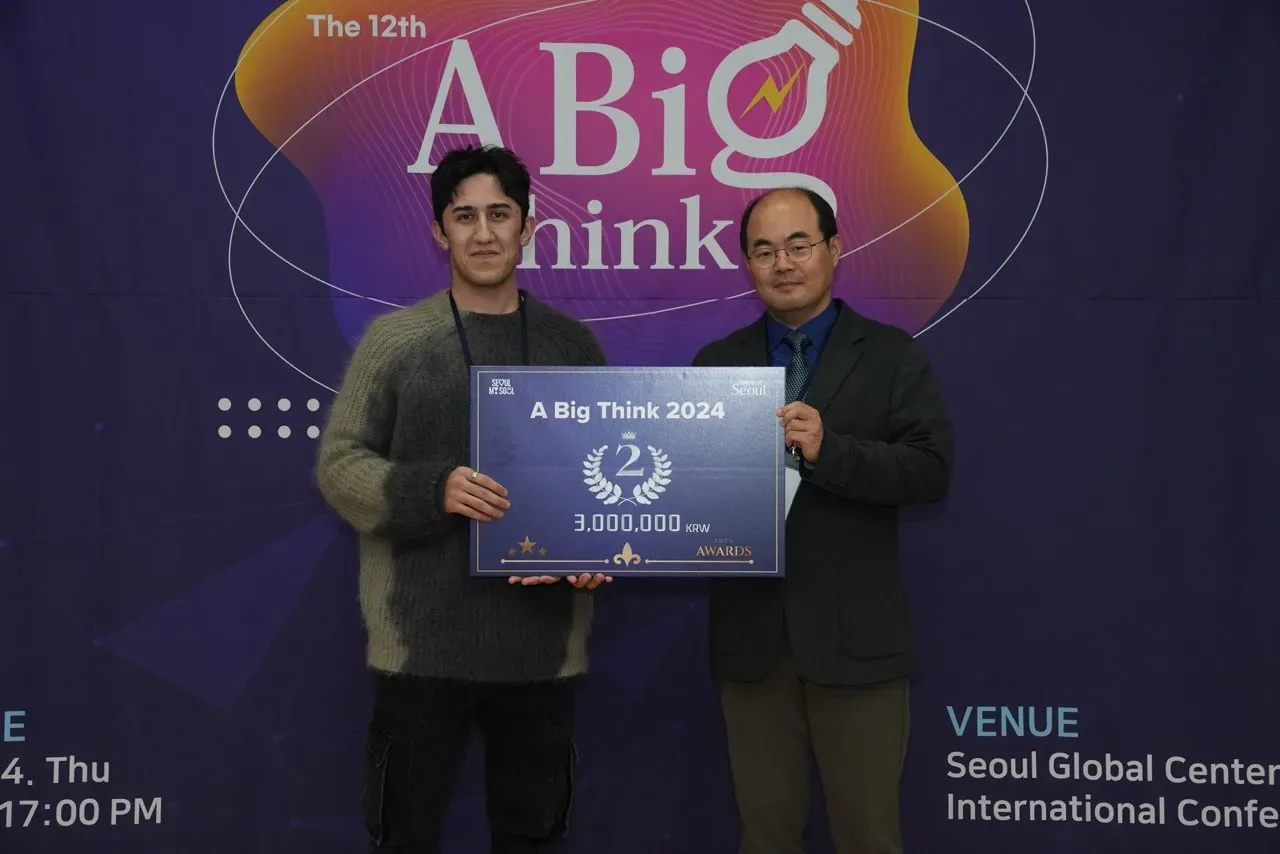
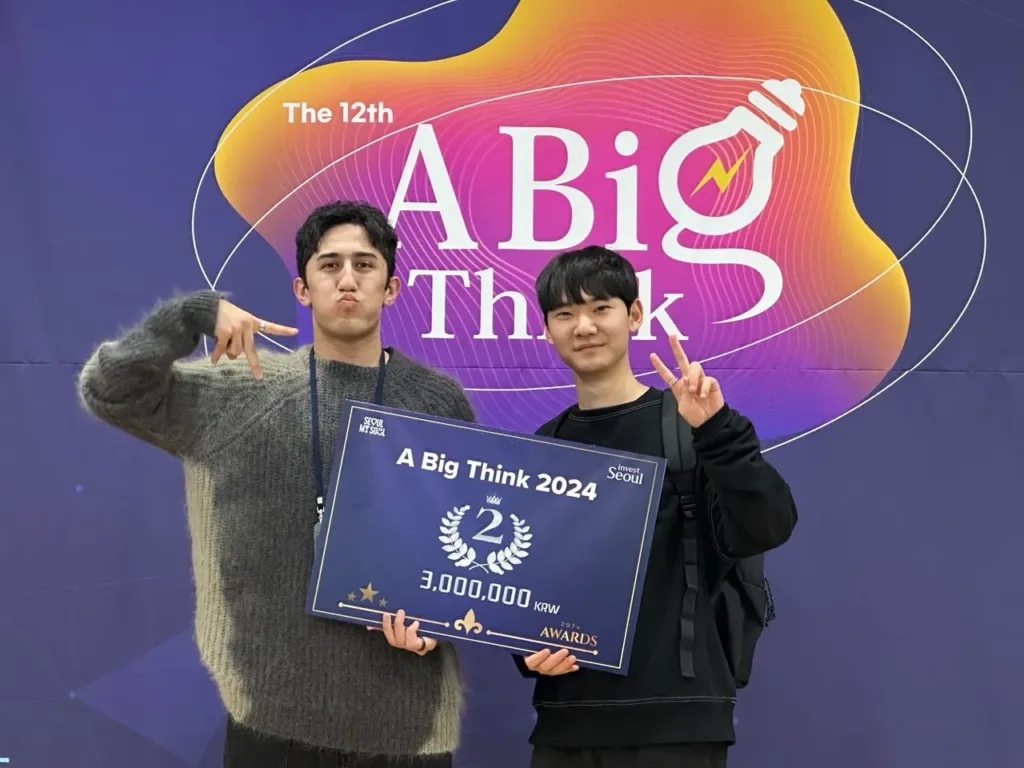
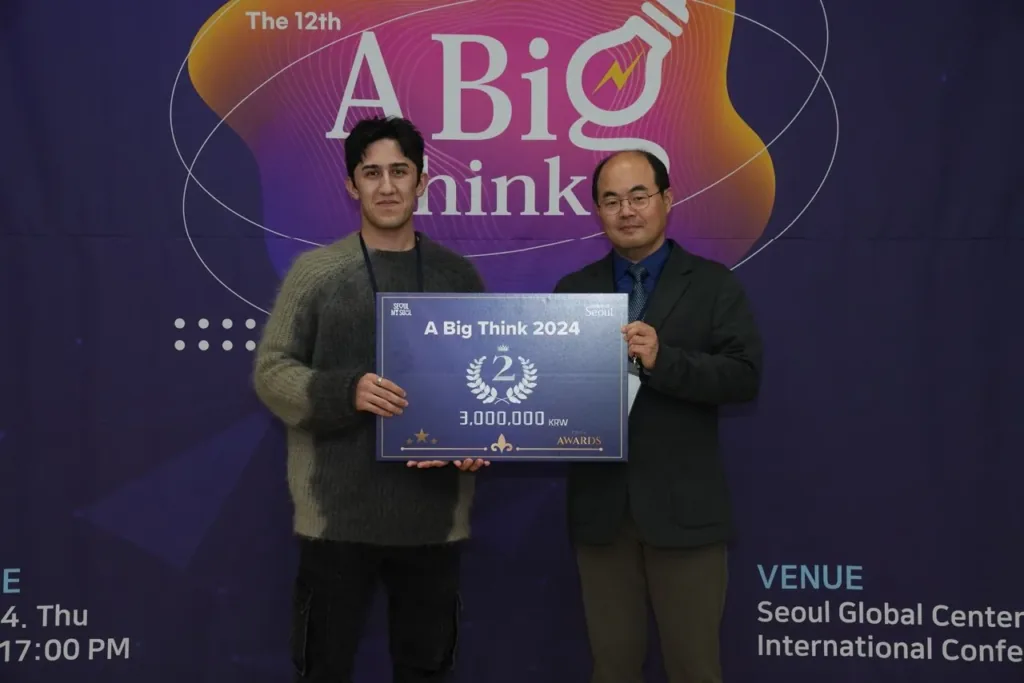
We participated, took second place, and received a grant of about $3,000. The main thing was not the money, but the fact that venture capitalists were there. They approached us themselves, gave out business cards, and offered participation in accelerators. That’s how we connected with one of them.
For now, we do not plan to attract investments—we have a clear business plan and want to launch independently. But the fact that it is so easy to get into an acceleration program here is a big advantage.
I am still studying in Korea, and there are many opportunities for students here: universities regularly hold startup battles where representatives of venture funds come, listen to presentations, and select teams for investment or acceleration.
I have a friend with whom we started. He stayed in the project, and the team participated in a startup competition, receiving $100,000 via SAFE. Then they entered an accelerator and attracted $300,000 in a Seed round at a valuation of $3 million. After that, investors from the US and other countries began approaching them. Korea has a good ecosystem of accelerators and startup support, especially if you show results.
About the Startup Ecosystem in Uzbekistan
I have seen that IT hubs are opening on Instagram, where people with like-minded individuals develop their projects. This is a cool idea that creates a Silicon Valley effect.
I work in the blockchain field and notice how it is developing in Uzbekistan. The country holds conferences and hackathons. The more such events, the better. It would be great if private investors or VCs appeared in Uzbekistan willing to invest in such projects.
Many want to launch IT startups, and if they received investor support, it would help them develop faster.
In Korea, blockchain and cryptocurrency are highly developed. Blockchain is a whole industry, and cryptocurrency is considered part of it. In a gym, I saw elderly people, around 60-70 years old, buying coins on an exchange—it is so popular.
Uzbekistan also has the Uznex exchange, which belongs to a Korean startup, and recently Binance was connected. It is great that now you can make transfers in Uzbekistan through Binance. Uzbekistan should trust the blockchain sector more and give it more freedom.
Hackathons held in Uzbekistan show good progress. The main thing is to develop this at the right pace. It would be wonderful if Uzbekistan had laws regulating blockchain payments, because in Korea there are still problems with this: there is no legislation that allows paying for services with cryptocurrency.
In Uzbekistan, a service is currently being developed that will allow paying for services using cryptocurrency. This is great because there are many blockchain projects that can be connected to ordinary people without requiring them to set up wallets. For example, if a bank offers a 4% interest rate, in blockchain it could be 7% with the same level of security. This approach could attract more investments to the country.
Recommendations
The main mistake is not participating in exhibitions and not doing networking. Connections play a key role. Investors are more likely to invest in someone they know at least a little, rather than in a newcomer who has just come for the first time and is presenting their idea. If an investor has already seen you at some event or meeting, they will have some idea about you, and they will be confident that you can successfully complete the investment round.
Participate in competitions and events to show that you are interested in startups. If investors see your determination, they may offer help or even an idea for a project. With the funding received, you can develop the project and sell it to a company, which will bring you profit.
Plans
We plan to launch the project this year and reach 10,000 active users per month. We also want to sign B2B contracts with eight companies. If everything goes well, we will work on a platform that will allow language centers and book authors to integrate interactive elements, such as games and audio, into their materials. Users will be able to simply scan a QR code on the book and download the app. Everything will be automated: file upload, app creation, and placement in the App Store and Google Play.
In 2026, we plan to scale this and open opportunities for other systems. In general, we have many options for development.
The Tech on Telegram Follow The Tech on Telegram
Keep up with the latest technology and startup news.
Related reading







More from this author

News
zypl.ai begins operations in Japan and focuses on next-generation risk models
Mansur Ismagulov

News
Elon Musk's net worth has exceeded $700 billion for the first time
Mansur Ismagulov

Article Interviews
"Central Asian countries should build a joint ecosystem," — Bekhzod Ismoilov on the development of AI in the region
Mansur Ismagulov

Article Interviews
Bloom's Taxonomy and Engineering Levels: A Practical Growth Model
Mansur Ismagulov

Article Useful
How the IT industry in Azerbaijan developed in 2025: key events
Mansur Ismagulov

News
Tajikistan has become a new member of the regional innovation alliance Central Asian Innovation Hubs
Mansur Ismagulov