How an alumnus from Almaty got into Y Combinator and built a fast-growing AI startup
Self-learning voice AI agents, half a million calls per day, and investments from Y Combinator — the story of an Almaty-based founder who built a world-class startup.
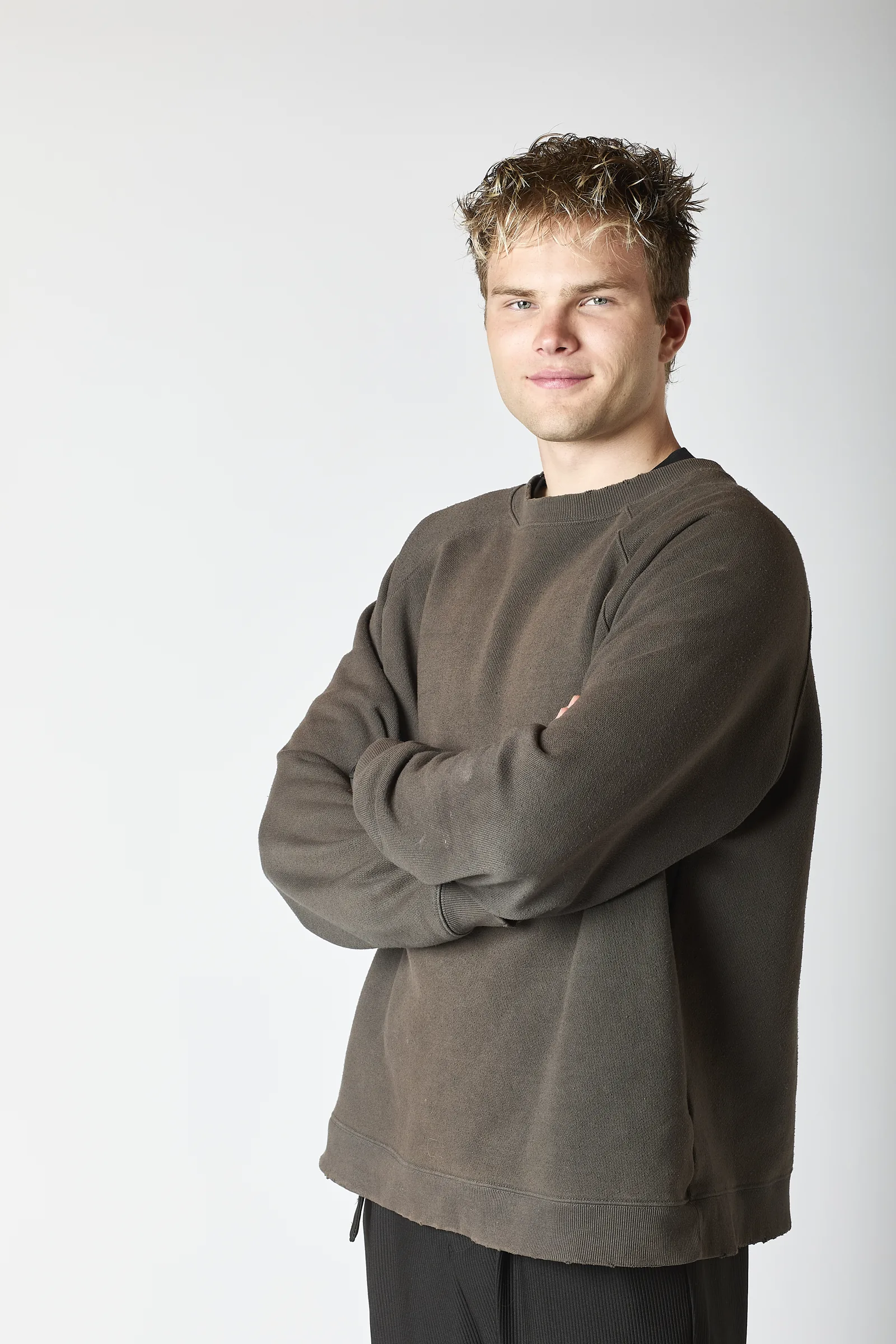
Arcady Telegin, city — San Francisco, co-founder of Leaping AI, Instagram, LinkedIn
How It All Started
I was born and raised in Almaty. Even during my school years, I learned about Y Combinator — they have a news portal called Hacker News. I’ve been reading it since I was 14, and I always thought it would be awesome to one day found my own startup and get into Y Combinator. There was no concrete plan back then — just an inner feeling that someday I would create something of my own.
After high school, I moved to Germany to study in Munich for a bachelor’s degree in computer science. Almost immediately, I found a job at a startup where we were building autonomous industrial robots for cleaning airports and other facilities. Later, I worked at several other companies, including Microsoft. Throughout all this time, one question kept running through my head: “Do I really like this?”
At first, I thought maybe I just needed to join a “cool” company. But after joining Microsoft, I realized that wasn’t the issue. The team was great, the product was interesting — we were working on infrastructure for generative models that create images. But despite all that, I felt something was missing. That’s when I finally understood: I wanted to build something of my own.
In 2022, at university, I studied LLM models before it became mainstream. It was already obvious that these technologies would be able to replace call centers, and I saw huge potential in that. In the evenings, I wrote code, looked for first clients, and showed them my work. When I realized there was strong interest in the product, I dropped out of university, quit my job, and focused entirely on the project.
Later, we applied to Y Combinator — that very American accelerator I had dreamed of since childhood — and got into the winter batch. We raised funding and started growing rapidly.
The Team
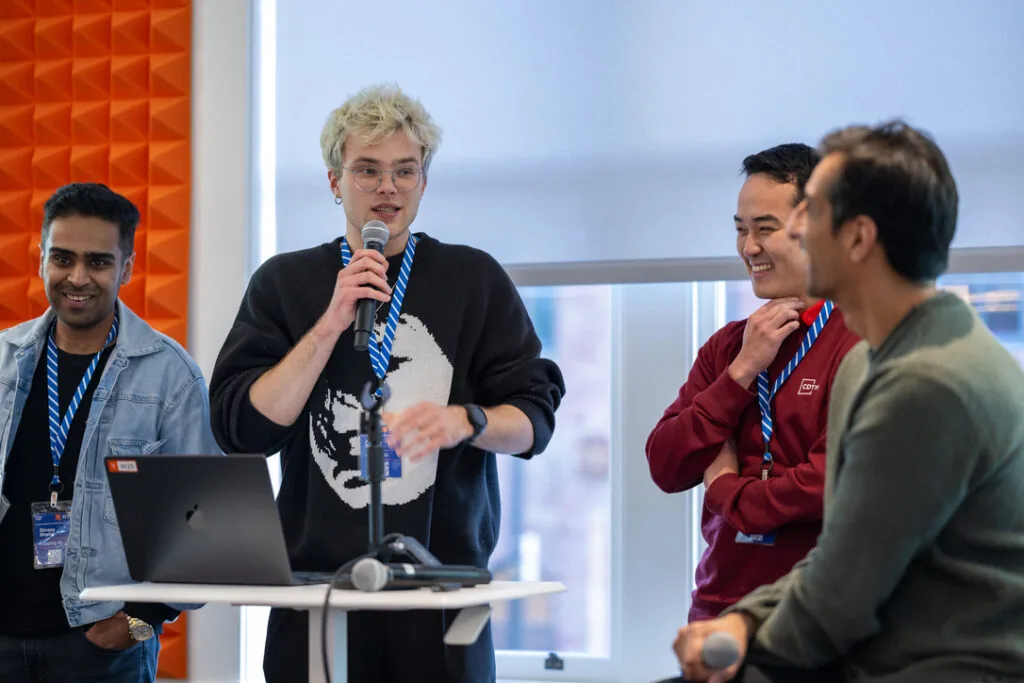
My co-founder was a friend from university who had previously worked at Boston Consulting Group. He was also bored in the corporate environment and joined me. He took care of the business side — finding clients, negotiations — while I handled product development. For almost a year, we worked as a duo, without any employees.
As the project started growing, we began hiring people. Currently, we have about eight employees. The team is small, and this is a conscious choice: fewer people mean lower management costs and greater efficiency. This is a trend in Silicon Valley.
At Y Combinator, there is a section called Request for Startups, where they publish areas in which they want to see new companies. Right now, they are looking for a startup that can achieve unicorn status with a team of no more than a hundred people.
Target Audience
We work with businesses that already have or want to create a call center. These companies provide customer support via phone. Many of them currently don’t even have call centers: if help is needed, customers have to send an email and wait for a response for several days. We help change that.
Our clients include companies in home services, household services, retail chains, and distributors. For example, Germany’s largest wine distributor is our client: 60% of their sales happen over the phone, and our AI agents advise buyers and take orders.
Achievements
At first, we lived on our own funds and small angel investments. Then, after joining Y Combinator, we received $500,000, and upon completing the program in March 2025, we raised another $5 million — the lead investor was Nexus Ventures.
By the end of the Y Combinator program, our revenue was $1 million, and we doubled it in just 10 weeks of the program. We entered the top 3 fastest-growing companies in the batch. Paul Graham, the founder of Y Combinator, invested in us separately — which was especially pleasing.
Today, our system processes about half a million calls per day, sometimes up to 50,000 per hour.
On Challenges
When we started, there were almost no competitors in the market. Today, there are many similar solutions, and the market is gradually becoming saturated. Therefore, we focus on brand development and targeted market entry strategies, for example, concentrating on one vertical and trying to capture as large a share as possible before moving into adjacent fields.
Plans
The next step is to add omnichannel support: not only calls but also email, because this is important for large clients. In the long term, we want to become the leading solution for contact centers — a platform combining artificial intelligence and live operators.
The main lesson I learned is never to give up. It will always be difficult at the beginning: failures, doubts, lack of resources. But if you keep going and don’t lose heart, at some point an opportunity arises, and by that moment you will already be ready, with experience, a product, and an understanding of the market.
As for moving, building a startup in the US, especially in San Francisco and the Bay Area, is much easier. The market is huge there, people are open to innovation, and they are more willing to buy new solutions. In Germany, for example, selling and raising investments was much harder: society is more conservative and skeptical. Building a startup is difficult everywhere, but outside Silicon Valley, it’s even harder.
The Tech on Telegram Follow The Tech on Telegram
Keep up with the latest technology and startup news.
Related reading






More from this author

Article Useful
How to protect your accounts from hacking: 8 settings you should check today
The Tech

Article Useful
500 Global: How the Accelerator Works and Who Can Receive Investments
The Tech

Article Interviews
Game Development in Central Asia: Arkady Moldavski on Developing Reverb and the Growth of the Industry
The Tech

Article Useful
Google, Tesla, BlackRock, and the IMF: Where to Apply for an Internship in Fall 2026
The Tech

News IT
Tesla unveiled the flying electric car Roadster
The Tech

News IT
Intero Biosystems startup won the Startup Battlefield at TechCrunch Disrupt 2026
The Tech