How to change your career at 30 and become a Scrum Team Lead. The story of Oksana Shchoka
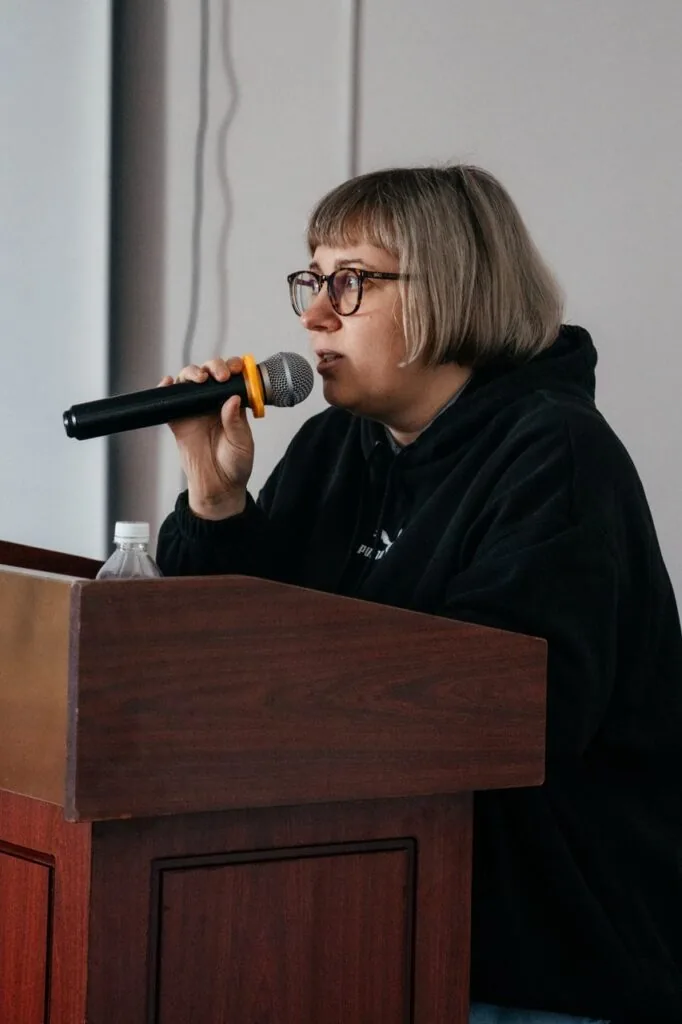
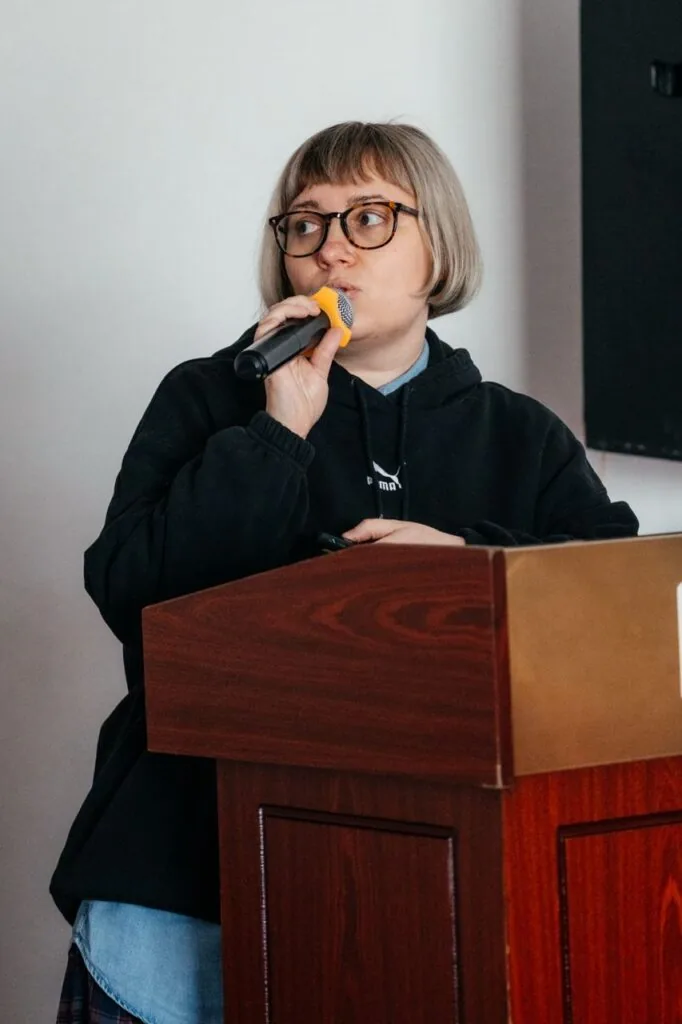
Oksana Shchoka from Almaty shared how she began her journey in IT at the age of 30 and offered several recommendations for beginners.
Author - Mansur Ismagulov

The Tech AI
Get the key points in seconds - a short summary from The Tech AI.
Oksana Shchoka, Scrum Team Lead at Tele2 (Almaty), began her IT career at age 30 as a UX writer at Alfa-Bank Kazakhstan. She holds a degree in philology and marketing. She completed Scrum Master training during the pandemic. She recommends not being afraid to ask questions, viewing rejections as opportunities for growth, and believing in success.
Oksana Shchoka, city — Almaty, Scrum Team Lead, LinkedIn
About Me
I was born in the small town of Kapshagay. Throughout my childhood, I dreamed of becoming a radio host. I loved music, and at that time, besides cassettes and the radio, there was nowhere else to listen to it. I would get lost in the morning and evening radio shows, imagining that one day I would also work on air.
Before graduating from school, my parents and I weighed all the risks of university admission and decided that it would be safer to choose the philology faculty. By the way, our plan failed—I still enrolled in the paid department.
During my final year of university, I printed my resume and took it to the studio of "Russian Radio" and "Europe Plus" every day. They had an office on Furmanov Street, and they placed boxes for resumes in the lobby. I went there as if it were a job and believed in my dream, but not all dreams come true.
My first journalism job was at the publication "Business and Power." Here, my expectations and reality did not match, so I sharply changed fields to marketing. I joined a company where I wrote three to four articles a day with keywords to promote the website in search engines.
Marketing fascinated me greatly, and I decided to get a second higher education. I have two and a half degrees: a philologist in Russian language, a marketer, and a "half" psychologist, since I never finished my third degree.
After studying marketing, I decided to move into advertising. I worked as a copywriter for a long time until I joined the company "Alfa-Bank Kazakhstan."
In 2019, I joined "Alfa-Bank Kazakhstan" as a content manager and became interested in UX writing. In advertising, texts sell, but in UX—they help, and that was closer to me.
Working in a Scrum development team, I completed the internal school of Scrum Masters, as there were almost no specialists at that time. During the pandemic, I decided to master this role and successfully completed the training.
Today, I work at Tele2 as a Scrum Team Lead.
About My First IT Job
I started my IT career at the age of 30 at "Alfa-Bank Kazakhstan" as a UX writer. My task was to help clients quickly and easily get the service they needed on the website, minimizing questions. I liked this job: I collected frequent calls from the call center, rewrote complex sections, and even conducted research with clients. After advertising, this was a real breath of fresh air.
Becoming a Scrum Master, I organized work according to the framework: I conducted mandatory events, interacted with the product owner, identified problematic processes, and helped improve them.
I found the vacancy on hh and simply applied. At that time, "Alfa-Bank" was a stable and progressive place. I passed an in-person interview and a test task—I had to write an article. I was very nervous because I really wanted to work there, but I did not prepare specifically. I do not remember the questions, but I clearly remember the feeling that I did not pass.
Education and personal qualities helped me get hired. For a long time, I regretted enrolling in the philology faculty, thinking it would not be useful. Now I understand that everything was not in vain—even in work not related to text, these skills prove useful. I acquired other skills through my second education, courses, and training.
About Difficulties
There were no difficulties because I did not aim specifically for IT—it just happened that way. Perhaps, if I had set such a goal, everything could have been different. I simply wanted to join a specific company, and I was lucky to end up in an IT team.
Dealing with rejections and failures in job hunting is not easy. Usually, I start digging into myself and looking for what is wrong with me—I do not recommend doing this.
In case of rejection, you should request detailed feedback to understand what the employer lacked and improve on that.
In moments of discouragement, fatalism helps me—everything happens as it should, and I will go where I am supposed to. This helps me accept rejections more easily and see them as opportunities for growth. I understand that I can always develop as a specialist, and that is only for the better.
At first, it was difficult to figure out new terms and processes. I remember being surprised that development is divided into backend and frontend, and they somehow interact—it seemed like magic.
The main thing is not to be afraid to ask if you do not understand something. Previously, I was shy to ask "stupid" questions, but over time I realized: the stupidest question is the one that was not asked.
Now I ask calmly until I figure it out. Understanding processes helps me feel more confident at work.
I think the main difficulty for beginners is insecurity and fear. It may seem that companies employ "sharks" of IT who do not leave chances for young specialists. But this is not so. They are just people who once started their journey.
Many companies have mentoring programs that help beginners grow. The main thing is not to be afraid and to try.
3 Tips That Will Help You Find a Job in IT
- Do not be afraid to ask questions. Questions are your helpers.
- Do not give up. View rejections as an opportunity to improve and develop.
- And remember that your dream job will definitely find you.
The Tech on Telegram Follow The Tech on Telegram
Keep up with the latest technology and startup news.
Related reading







More from this author

News
zypl.ai begins operations in Japan and focuses on next-generation risk models
Mansur Ismagulov

News
Elon Musk's net worth has exceeded $700 billion for the first time
Mansur Ismagulov

Article Interviews
"Central Asian countries should build a joint ecosystem," — Bekhzod Ismoilov on the development of AI in the region
Mansur Ismagulov

Article Interviews
Bloom's Taxonomy and Engineering Levels: A Practical Growth Model
Mansur Ismagulov

Article Useful
How the IT industry in Azerbaijan developed in 2025: key events
Mansur Ismagulov

News
Tajikistan has become a new member of the regional innovation alliance Central Asian Innovation Hubs
Mansur Ismagulov