How to receive invitations from 7 universities around the world at 18 and build a career in AI
How 18-year-old Aqnur Abdikarim from Almaty got into one of the most innovative universities in the world and is building a career in artificial intelligence — between San Francisco, Seoul, and Tokyo.
Author - Mansur Ismagulov
The Tech AI
Get the key points in seconds - a short summary from The Tech AI.
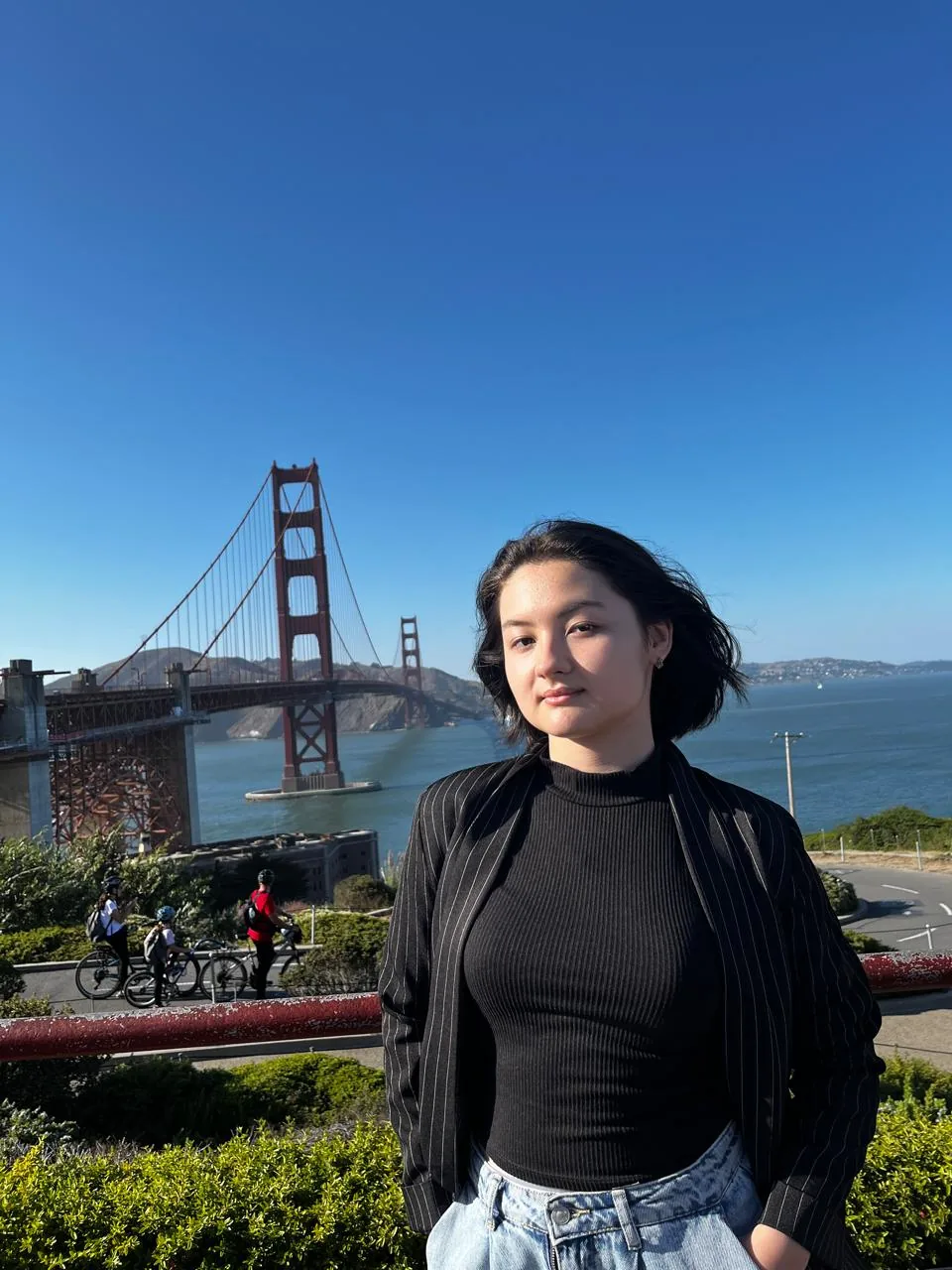
Aknur Abdikarim, a student at Minerva University from Almaty, is studying business and computer science in Seoul on a 100% scholarship. She has lived in San Francisco and Taipei, interned at AI startups, and founded CALI for girls from Central Asia. She plans to return to Kazakhstan in five years to share her experience.
Aknur Abdikarim, city — Seoul, Instagram
When I first learned about Minerva University, I was immediately intrigued by its unconventional approach to education. This system is completely different from traditional education, which has been established since the 18th century. Here, students don't just study theory; they travel through seven countries, immersing themselves in real projects and gaining practical skills.
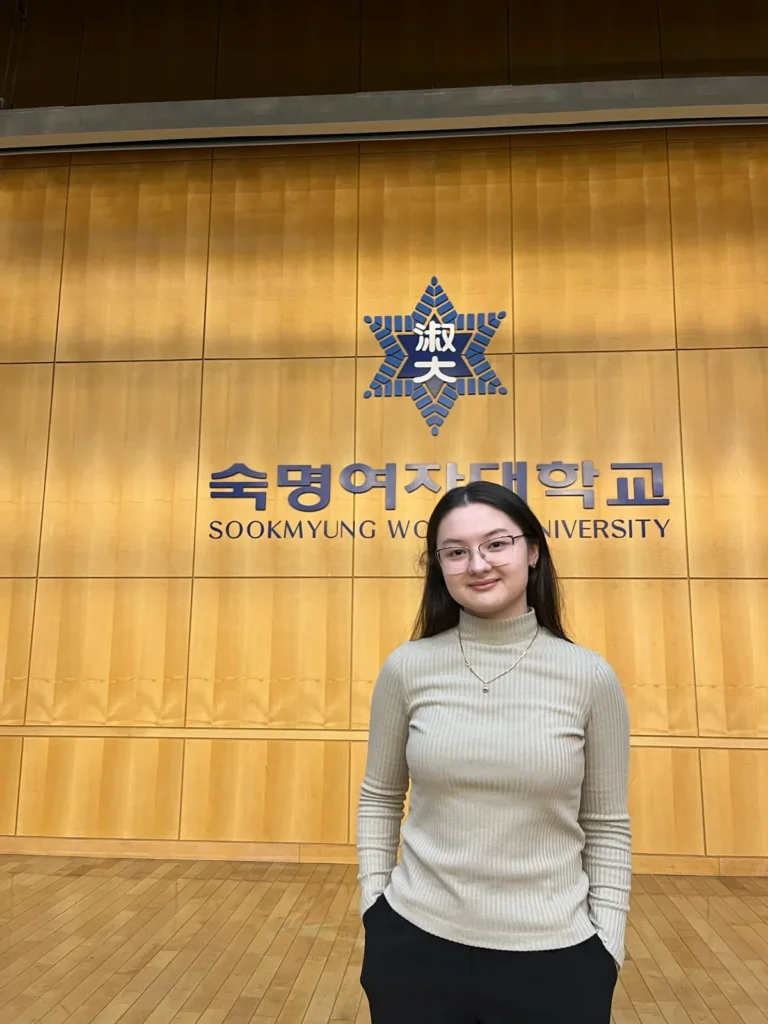
Currently, I live in Seoul, studying business and computer science, interning at startups working with artificial intelligence, and planning to visit all seven countries where Minerva University students study. And all of this with 100% financial coverage from the university.
How it all began
I am from Almaty and attended the Republican Physics and Mathematics School (RFMS), where my interest in technology began to develop as early as the ninth grade. At that time, the school curriculum included in-depth study of programming languages: C++, HTML/CSS, SQL, and Python. These subjects became for me not just academic disciplines, but a true discovery.
I realized that IT is not just a skill; it is a tool for building the future. These languages gave me the feeling that you can create something real and meaningful.
FIRST Robotics experience and first engineering leadership
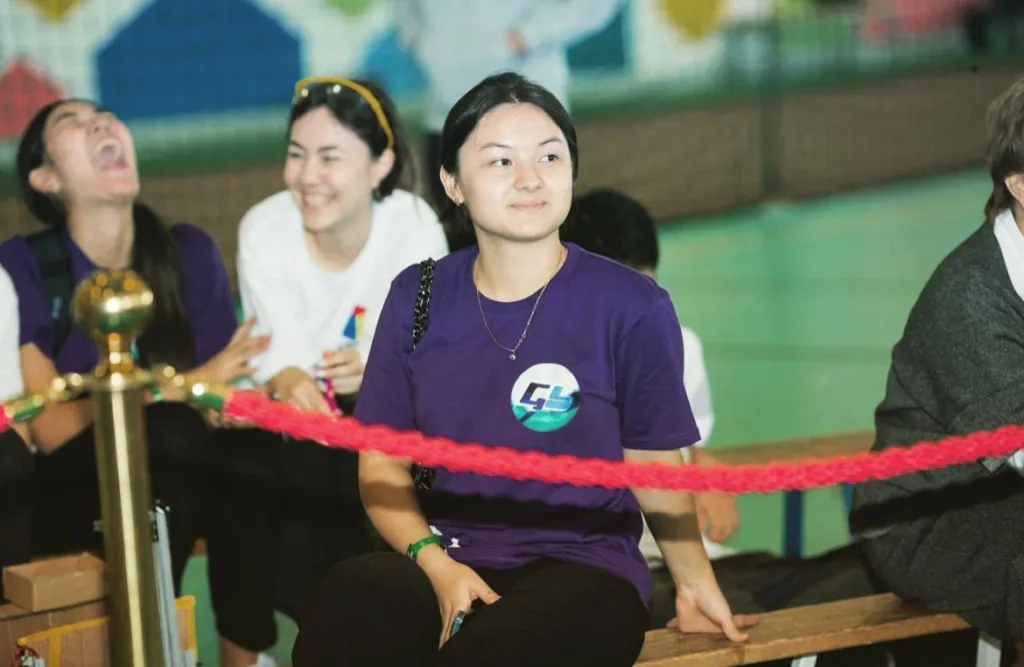
Getting involved with the international FIRST Robotics program was a key milestone for me. Although another team member handled the programming, I took on the engineering aspects and leadership. I designed robots, negotiated with mentors, organized team meetings, participated in competitions, and conducted workshops for schoolchildren.
The team won competitions multiple times, including at the national FIRST Tech Challenge, where we received awards in the Winning Alliance, Think Award, and Design categories. But the most important thing wasn't that.
FIRST taught me to think globally. This is not just an engineering project. It's about asking: how can you use technology to solve real, large-scale, socially significant problems? This mindset became decisive when I applied to university.
Entering the university of the future
I was admitted to Minerva University — an innovative university based in San Francisco with a unique educational model. Unlike traditional universities, Minerva does not have a permanent campus: students live and study in seven countries around the world. The academic process is based on principles of effective learning, combining online lessons with practical work on cases and projects in an international environment.
The admission process was completely unlike applying to regular universities. In addition to standard documents, exams, and interviews, candidates completed seven unique tasks — from logic tests to cases involving solving global problems. An especially important part of the application was a portfolio of 6–10 projects.
My university looks not just for students with good grades, but for people who can adapt, learn quickly, and strive to solve real, large-scale problems. Therefore, the projects I worked on in FIRST, volunteering, and mentoring initiatives for girls in STEM all played a key role.
Relocations, adaptation, and mobile reality
Currently, I am a second-year student pursuing a double major in computer science and business. During this time, I have already lived in San Francisco and Taipei, am now in Seoul, and preparing for my next move — to Tokyo. Even though we live in a new country every four months, the adaptation process has become familiar and even inspiring for me.
The hardest part is packing your life into two suitcases and not knowing when you'll return. But thanks to the university, upperclassmen, and local teams — everything goes smoothly. By the second day in a new country, I find projects, connect with the local community, and feel at home.
Before each semester begins, the university helps with housing, visas, logistics, SIM cards, and even advice on grocery stores. In Korea, for example, I've already started working on an IT project with a local business.
First steps in career: internships and personal projects
Over two years of study, I completed several internships: working as a UI/UX designer, backend developer, and AI developer at a startup. This summer, I will continue working in this field — already in Japan, at The Nippon Foundation lab, which collaborates with my university.
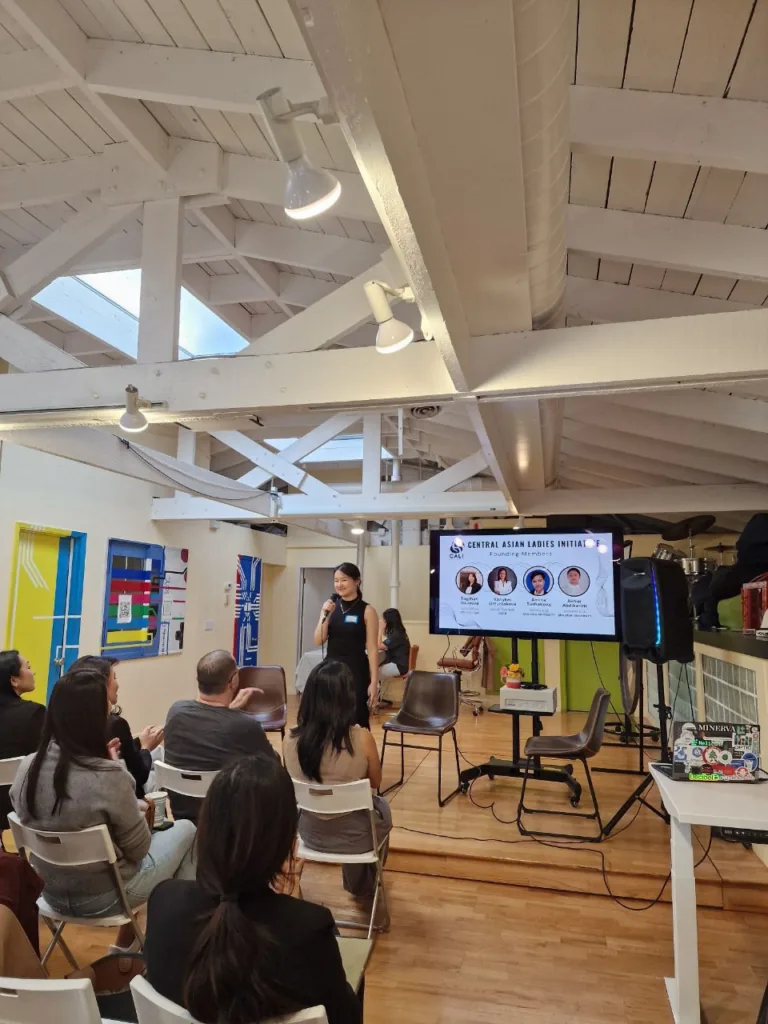
Alongside studies and internships, I became a co-founder of CALI — Central Asian Ladies Initiative, a nonprofit organization that has already brought together over 500 people and continues to grow. This initiative operates in the US and helps girls from Central Asia find career paths in technology, mentors, support, and community.
Looking to the future: startup, global goals, and Kazakhstan
I do not plan to stop where I am. In the coming years, I want to continue my studies and work in the US to gain maximum professional experience, understand business processes, and launch my own startup at the intersection of technology, education, and sustainable development.
I want to create solutions that can be scaled. Something that will benefit not just one company, but society as a whole. Minerva University taught us to think not within the framework of a career, but within the framework of systemic change.
Nevertheless, I do not forget about Kazakhstan. Although I do not plan to connect my professional activities with my homeland in the next five years, I plan to return to share my experience, inspire schoolchildren, and help new generations find their way in the global world.
I believe that you can be useful to your country no matter where you are. It is important not to forget where you came from and not be afraid to go where you can grow.
The Tech on Telegram Follow The Tech on Telegram
Keep up with the latest technology and startup news.
Related reading







More from this author

News
zypl.ai begins operations in Japan and focuses on next-generation risk models
Mansur Ismagulov

News
Elon Musk's net worth has exceeded $700 billion for the first time
Mansur Ismagulov

Article Interviews
"Central Asian countries should build a joint ecosystem," — Bekhzod Ismoilov on the development of AI in the region
Mansur Ismagulov

Article Interviews
Bloom's Taxonomy and Engineering Levels: A Practical Growth Model
Mansur Ismagulov

Article Useful
How the IT industry in Azerbaijan developed in 2025: key events
Mansur Ismagulov

News
Tajikistan has become a new member of the regional innovation alliance Central Asian Innovation Hubs.
Mansur Ismagulov