How Uzbekistan's Shokhrukh Ibrohimov is building a new tech ecosystem in Central Eurasia
Shokhrukh Ibragimov, representative of Silkroad Innovation Hub in Central Eurasia, develops programs for startups and the regional IT ecosystem. Currently, he leads HackAlem AI — one of the largest agentic AI hackathons, which will bring together 3,000 participants. The Tech editorial team spoke with Shokhrukh about how he joined an international team, what the regional AI industry needs today, and why Central Eurasia could become a prominent technological hub.
The Tech AI
Get the key points in seconds - a short summary from The Tech AI.
Shokhrukh Ibragimov, representative of Silkroad Innovation Hub in Tashkent, returned from California for family and regional growth. He leads HackAlem AI — a hackathon with 3000 participants, aimed at positioning Central Eurasia as an AI hub. Ibragimov emphasizes the importance of networking, resilience, and continuous learning for working in the international IT ecosystem.
Shokhrukh Ibragimov, City — Tashkent, Representative of Silkroad Innovation Hub in Central Eurasia
About Me
I am the representative of Silkroad Innovation Hub in Central Eurasia for startup program development and the IT ecosystem. I have been with the company for a little over a year — I joined in June 2025.
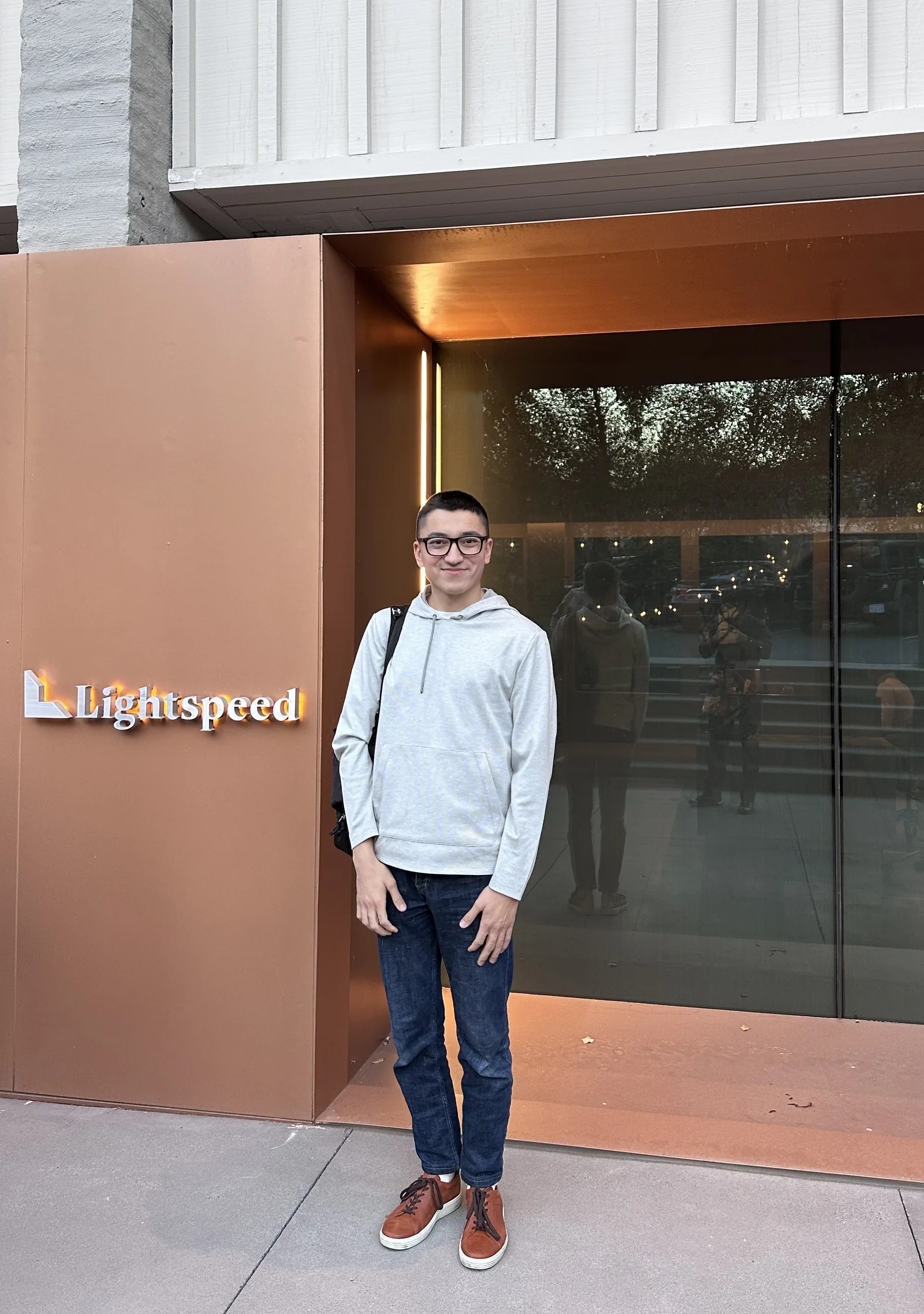
Currently, I live and work in Tashkent. I returned from California for two reasons. The first and main one is family: I somehow fast-forwarded time in my head by 30 years and saw Tashkent there, not Palo Alto. The second is the region's growth. In the US, technology is ahead; it is the world's leading economy. But such growth as ours is nowhere else — and in the Homeland, there are all the opportunities to achieve financial success and benefit people.
How I joined Silkroad Innovation Hub
I have long been following what is happening with startups in our region and how this industry is structured in America. I separately followed Asror Arabjanov — he is from Uzbekistan, and I was genuinely interested in what exactly Silkroad Innovation Hub does: how a team of Central Asian origin builds a bridge between the region and Silicon Valley.
As I was finishing university, I ended up in Silicon Valley at the moment when Silkroad was running a major program: they were assembling the largest business delegation from Central Asia to Silicon Valley. For 12 days, participants learned artificial intelligence from Stanford professors and creative economy at the New York Film Academy in Los Angeles.
I joined the project as a volunteer. The work was under serious pressure and at a high pace, and during these days, I was able to demonstrate my clarity, discipline, and ability to work with people. The team saw potential in me — on the eighth day, they offered me to stay in a full-time position.
I liked the mission of Silkroad Innovation Hub and the caliber of people I saw there. I had no idea what exactly I would be doing, but after thinking it over, I decided to start working at Silkroad — and in the end, I am sure it turned out to be the key decision in my life.
There was no interview in the classical sense. I was evaluated based on my work on the project: how I handled tasks, how I met deadlines, and how I communicated with partners and participants.
I think this is a characteristic of all startups. In a large corporation, you are tested with questions because there is no other way — there are hundreds of candidates. In a startup, you are tested by action because the result is visible immediately and cannot be faked.
Advice for those who want to work in an international company
It is important to understand here: there are two paths, and they are structured completely differently.
The first is large technology companies: Google, Amazon, NVIDIA. The process there is formalized: several rounds, technical interviews, and a check of communication skills. At the same time, it is important not to underestimate referrals: a significant part of hiring in the Valley goes through employee recommendations. A resume submitted internally within the team and a resume submitted through the career portal are two different resumes. Therefore, networking is part of the employment process, especially now, when it is not easy to get into BigTech.
The second path is startups. There is often no formal funnel there. They look not at how you answer questions, but at real skills.
From this comes my main advice: if there is an opportunity to get into a company before a vacancy opens — go for it. Volunteering, events, helping on a project.
Work Features
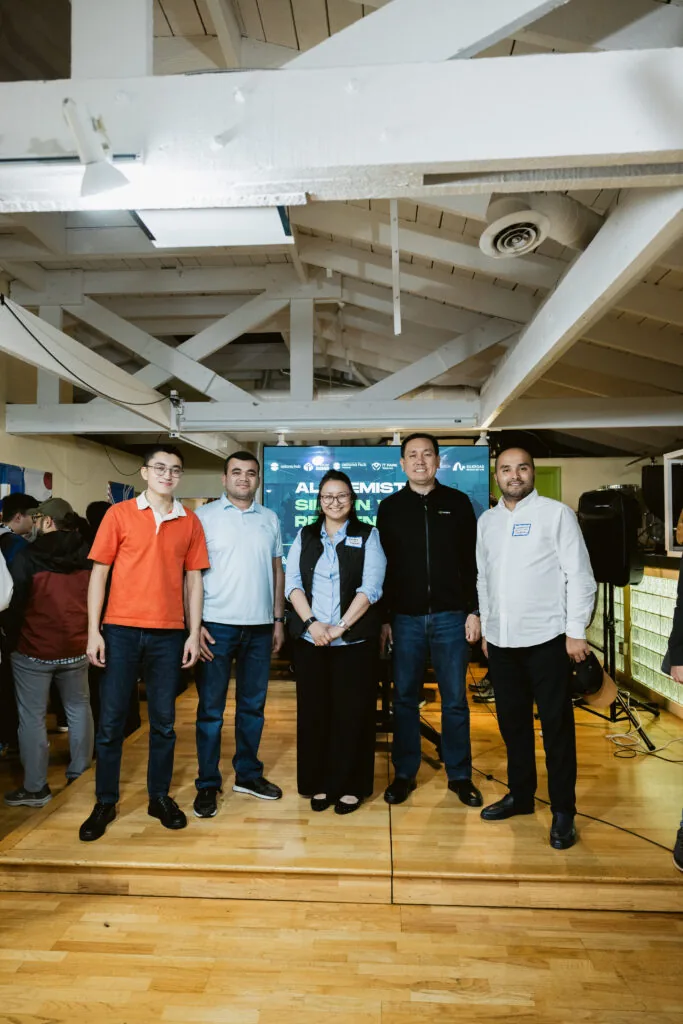
At the moment, I lead HackAlem AI — one of the largest agentic AI hackathons in the world, which will bring together 3,000 participants. I am responsible for the entire project. The hackathon has two goals: to showcase Central Eurasia as an AI hub and to give young developers direct access to cutting-edge AI tools. All participants will receive free access to Codex and API tokens for development. The hackathon is open to students of technical specialties and working professionals. You can apply at hackalem.ai.
In such work, you cannot do without tools that help organize everything. I use Claude the most — right now, you can learn anything through it. Also Jira for project management, Notion for quick notes, and notetaker for recording meetings. It captures action points and allows you to always return to what the meeting was about.
The best tool in any work is the human brain. It is actually difficult to use it correctly, so I spend most of my free time supporting and improving the best tool in my arsenal — my own mind.
At the same time, one of the main difficulties of my work is that there are too few hours in a day. So much is happening in the region right now that it is physically impossible to be everywhere. Hackathons, pitch sessions, meetings with founders, new programs. I want to be at each of them: talk to people, understand what they are building, find those whom we can help. And every time I have to choose.
The second challenge is my own mindset, my boundaries. Working at Silkroad Innovation Hub, I realized that a huge number of things we consider impossible are solved quite simply — if you sit down, think, and remove the limitation from your head. For example, we conducted the AI Leaders program with Stanford University and OpenAI Academy and trained over 800 executives and top managers in AI application strategy. A year ago, we would not have even thought that such a number of people could be trained.
If we talk about skills that help cope with such a load, for me these are three words: resilience, resourcefulness, and learnability.
At the same time, working in my company is professional development in itself. A significant part of our work is organizing educational programs and startup acceleration programs. And by organizing such a program, you inevitably become its participant: you listen to the same professors, analyze the same cases. So new skills are acquired whether you like it or not.
A separate feature of my work is the international team. Everyone has their own work style depending on their background, and this is great because we complement each other. For example, I am from Uzbekistan, so the specifics of working with Uzbek partners are clearer to me than with partners from Kazakhstan — and vice versa for my colleagues. Depending on the task, we cover different areas of work.

The main advantage of an international team is the speed of learning and decision-making. I sometimes joke that in one year at the company, I learned more than in four years at university.
The disadvantage is the difference in time zones. It is difficult to be out of touch for a long time. The first thought after waking up is work, the last thought before sleep is work. Because we are all in different time zones, and there is always a colleague with whom you can discuss a work matter.
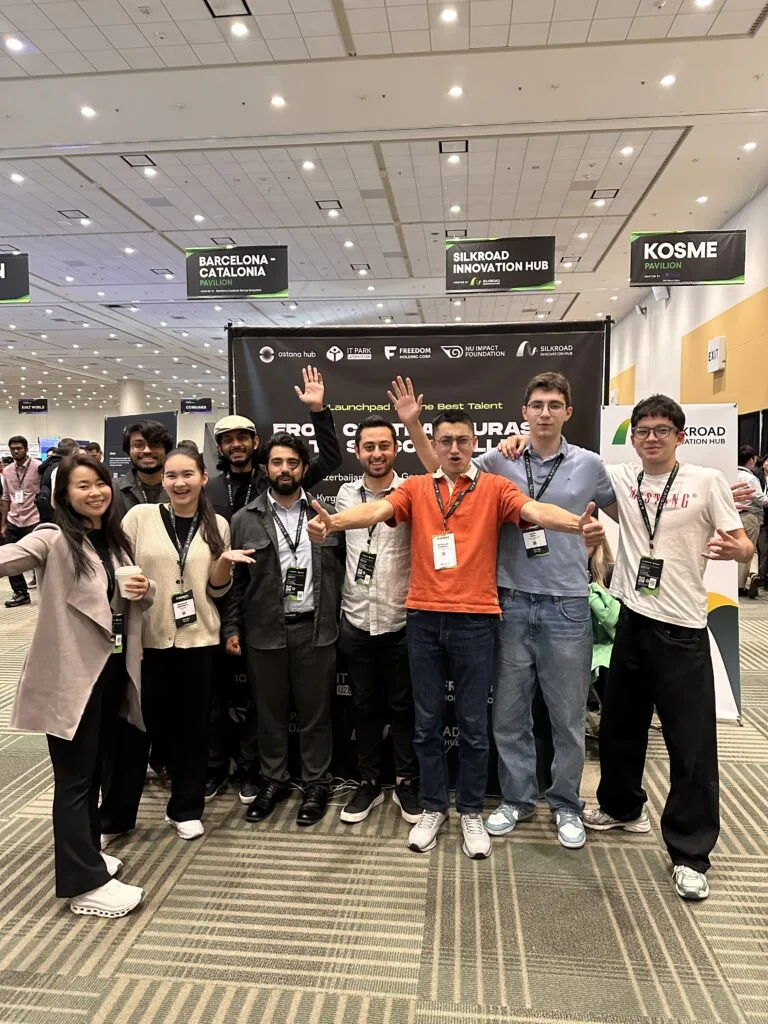
During this time, there have been many memorable projects, but the most memorable one is my first project, TechCrunch Disrupt. I was simultaneously a marketer, a salesperson, and an organizer. A fast feedback loop: made a mistake — found out about it in an hour, not in a quarter. TechCrunch Disrupt was a test for me. The first project where the result directly depended on my work, and the first step in my career.
Since then, I have realized that for success in this field, several things are important. First is experience/observation. You need to understand what is happening in the industry right now: which companies are raising rounds, which technologies are exploding, what neighboring ecosystems are doing. Without this, it is impossible to give founders meaningful advice.
Second is communication. My work is constant communication with founders, investors, and ecosystem representatives. The ability to build relationships and maintain them is often more important than any technical skill.
Third is English. All technologies, all documentation, all key conversations in the industry are in English. Without it, you are simply cut off from half of the information.
And on top of all this — patience. Not in the sense of "enduring," but in the sense of bearing it. In our field, the result is not visible for a long time: you work for months and see nothing, and then everything happens in a short period. From the outside, it seems that it was easy and quick, but behind this are months of work when it seemed that nothing was moving.
And one more thing: the formula for success is the same everywhere — work hard in the right direction, intelligence, and luck. The last component is underestimated, but it matters more than is usually admitted. But luck comes to those who are already in the game — so patience is the way to wait for yours.
About life abroad
In the US, I first went to study. I think this is the best way to relocate and find a job: there is time for adaptation and understanding the local culture. Plus, a diploma from an American university gives a path to the first job — I worked under OPT, a program for graduates. When I moved to California, the company helped me settle in and provided housing. The move was not easy, there were many emergencies, but the company helped me out many times.
There are also huge differences in approaches to work and corporate culture. The work ethic in my company is simply on another level. We do not work just to work — every minute counts. The pace is not always the same, but sometimes it reaches speeds that remind one of a phrase from the series The Bear — EVERY SECOND COUNTS. And this is probably the most valuable thing I brought back — the work standard of Silicon Valley.
To those planning to live and work abroad, I would advise prioritizing learning over earning. Learning > earning. Choosing between study and money, I always bet on study.
If your work is just an exchange of your time for a fixed rate, you should rethink your choice if you have such an opportunity.
The Tech on Telegram Follow The Tech on Telegram
Keep up with the latest technology and startup news.
Related reading






More from this author

Article Useful
How to protect your accounts from hacking: 8 settings you should check today
The Tech

Article Useful
500 Global: How the Accelerator Works and Who Can Receive Investments
The Tech

Article Interviews
Game Development in Central Asia: Arkady Moldavski on Developing Reverb and the Growth of the Industry
The Tech

Article Useful
Google, Tesla, BlackRock, and the IMF: Where to Apply for an Internship in Fall 2026
The Tech

News IT
Tesla unveiled the flying electric car Roadster
The Tech

News IT
Intero Biosystems startup won the Startup Battlefield at TechCrunch Disrupt 2026
The Tech