How to get a job at Booking.com: Kuanysh Rakhmetov's experience
Want to join one of the largest and most successful companies in the world? Kuanysh Rakhmetov shares his experience and explains how he successfully completed all stages of the selection process at Booking.com. Find out which steps helped him achieve his goal, and get useful tips to help you pass the interview and adapt to an international company.
Author - Mansur Ismagulov

The Tech AI
Get the key points in seconds - a short summary from The Tech AI.
Kuanys Rakhmetov, 26 years old, works as a senior software engineer at Booking.com (Amsterdam) for three and a half years. In the Java team, he is involved in modernizing the hotel registration platform from a monolith to microservices. The hiring process required more than a month of interviews, including tests on algorithms and system design.
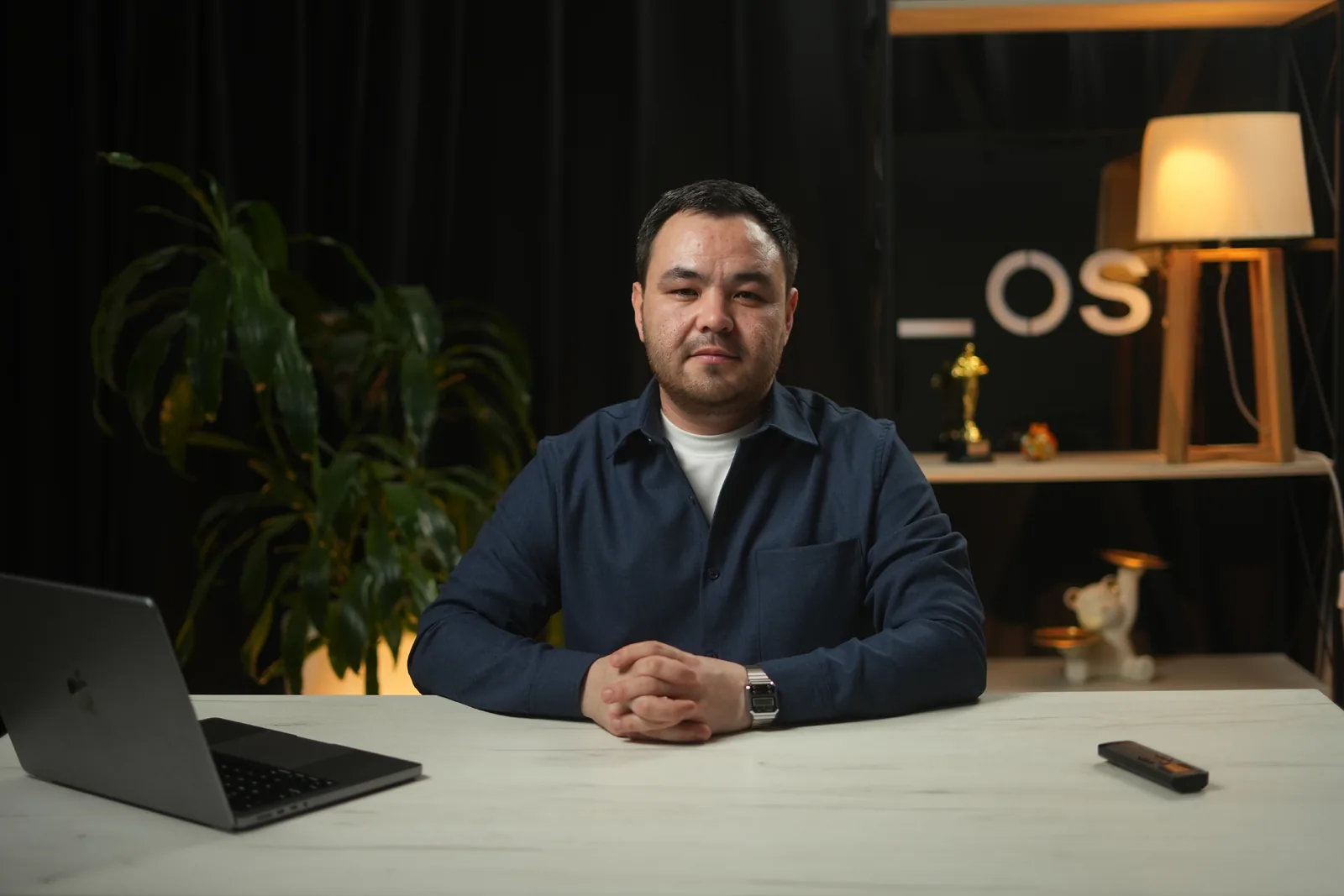
Kuanysh Rakhmetov, 26 years old, city — Amsterdam, senior software engineer, Instagram, LinkedIn
About Me
I live in Amsterdam, Netherlands. I have been working as a senior software engineer at Booking.com for three and a half years.

How to Join Booking.com
I joined the company through the interview process. I submitted my resume for a middle software engineer position on the company's official website. The main, but not the only, criterion was three years of work experience. Fortunately, at that time, I had sufficient work experience in Kazakhstan and applied for this vacancy.
The interview process consisted of several stages, and the entire process took a little over a month.
- Coding interview — there were a couple of coding rounds where algorithmic problems were asked to check my knowledge of data structures and algorithms.
- System design — an interview on system design, where I needed to demonstrate how I develop architecture to solve complex problems.
- Behavioral interview — the final, but no less important stage, where it is assessed how well I fit the company in terms of culture and values.
Each of these stages was important and required special preparation.
The preparation process for interviews is long and requires perseverance, effort, and, most importantly, patience. You may receive rejections or have your resume rejected at the first stage. This is normal, and the most important thing is not to give up.
Rarely does anyone get into their dream company on the first try. Behind every such story are dozens, and sometimes hundreds, of applications submitted before receiving that coveted offer.
Additionally, there are things that are beyond our control. For example, the company may not sponsor relocation for candidates.
During the interview itself, I would advise staying true to yourself. Do not try to demonstrate what you do not know. You can easily be caught out on this. And be positive. There are cases where, instead of a candidate who solved the task excellently but worked silently, they choose someone who interacted with the team throughout the interview. After all, it is easier to work with such a person in a team.

Work Features
I work on a platform that allows partners to easily and quickly register their hotels on Booking.com. Our goal is to minimize friction in the registration process, making it more intuitive and efficient, so that partners can complete all necessary steps in just a few minutes.
We are also actively modernizing the system: migrating functionality from a monolithic Perl architecture to a more modern and scalable Java architecture, which allows us to deliver new features faster.
The main language for developing services is Java. For containerization and managing microservices, we use Docker and Kubernetes. For CI/CD processes, we use GitLab CI, as well as internal tools developed within the company, to accelerate development, testing, and deployment.
The higher you rise, the more you realize that here, technical skills are not the only thing that matters; the ability to manage complex processes and make strategic decisions is also crucial. For example, which architecture should we choose now that will not become problematic for us in three years? In such situations, there is no right or wrong decision. You weigh the pros and cons, consider long-term consequences, and choose the most suitable option.
Another example is interaction with the business and product managers. You need to be able to speak their language, explain technical solutions, and explain the benefits of these solutions for the business in terms of profit and resources spent. And this is a challenge because such negotiations do not always go smoothly, and you need to know how to find a balance.
For a senior engineer, it is critical not only to have technical skills but also communication skills. Of course, deep technical knowledge is essential, but the higher you rise, the more important it becomes to convey your ideas effectively. I have encountered engineers who were technical monsters but could not sell their solutions to the business.
It is important not only to understand the product and technologies but also to be able to explain them to non-technical specialists — managers, designers, and so on.
Organizational skills are also worth noting. For example, I had to lead projects with a team of six to eight people and needed to know how to prioritize, delegate, and deliver tasks on time.
And, of course, problem-solving skills. Ultimately, as engineers, we must be able to solve business problems. If we cannot, then what kind of engineers are we?
The company provides the opportunity to try yourself in different teams, and sometimes changing teams feels like changing companies. There is also the opportunity to switch to a different role, for example, from frontend to fullstack.
The company gathers professionals from all over the world and experts from various fields. And when you are in such an environment, you strive to be better and move forward. Everyone has their own approach to work, and there is much to learn from each other.
I do not see any particular advantages or disadvantages of working in an international team compared to a local one. The main difference is, of course, the language. All our conversations and documentation are conducted in English. At first, it seemed that colleagues might have better language skills, but over time, you realize that English is not native for many either. In my team, people from Romania, Argentina, Turkey, India, and Russia work. Outside of work, we often discuss our cultures and differences, which makes communication more interesting and helps us understand each other better.
I would note that constant communication in English and interaction with colleagues from different cultures helps improve intercultural communication skills. This is important for career growth and working in the global market.
One of the unforgettable moments for me was my promotion to a senior position. I worked on many projects of varying complexity and had the opportunity to work with people from various teams. This experience is probably the most memorable.
For success in our field, it is important not only to do your job well but also to communicate effectively and sell your ideas. I noticed this especially when I spoke with a couple of Principal engineers. The way they are able to influence others and sell their ideas is what led them to this position. They advised me to read more and try myself in different projects rather than focusing on just one.
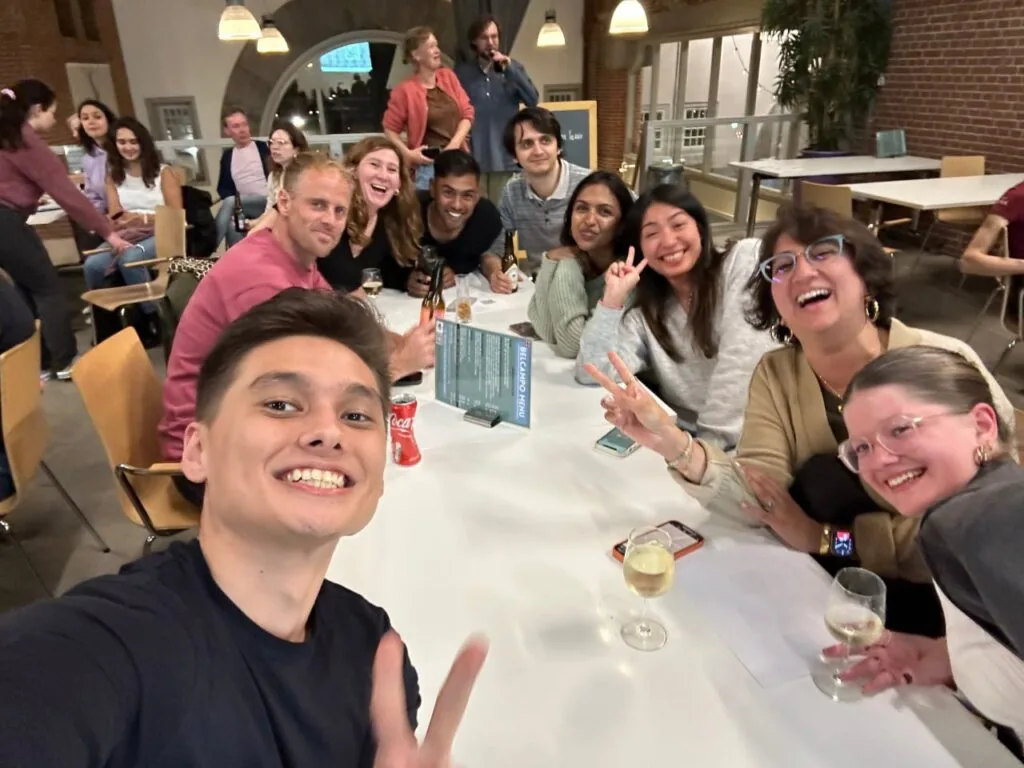
About Life Abroad
I found a job first, and then moved. It is hard to say which path is better, as I have only gone through one. But I would advise finding a job first and then moving. The company provided significant assistance with relocation. Also, living in the country is not cheap, and it will not be easy to live without a job.
The company provides support with relocation, including accommodation for the first month, help with document processing, and finding housing. A relocation package in cash form is also issued for setting up an apartment.
There are certain differences in approaches to work and corporate culture compared to my home country.
1. Openness and feedback.
A feedback culture is accepted here. People calmly discuss problems and express their opinions, even with management. You can invite your department director for coffee and discuss any questions of interest.
2. Work-life balance.
Europeans highly value their non-work time, so here, great attention is paid to work-life balance. Overtime is not encouraged; on the contrary, it can even lead to a reprimand if you work, for example, on weekends.
3. Approach to learning and development.
In Kazakhstan, I had a manager who monitored my development, helped me with career growth, and was interested in my development.
At Booking.com, each employee is responsible for their own development. No one follows you around and gives you tasks that will help you grow to the next level. You go yourself, talk to the right people, and find opportunities for your development.
If anyone is planning a move and life abroad, I would advise taking advantage of every opportunity here. And this does not only apply to work. Communicate with interesting people, learn about the country's history, travel. Take everything from this experience.
The Tech on Telegram Follow The Tech on Telegram
Keep up with the latest technology and startup news.
Related reading




More from this author

News
zypl.ai begins operations in Japan and focuses on next-generation risk models
Mansur Ismagulov

News
Elon Musk's net worth has exceeded $700 billion for the first time
Mansur Ismagulov
Article Interviews
"Central Asian countries should build a joint ecosystem," — Bekhzod Ismoilov on the development of AI in the region
Mansur Ismagulov
Article Interviews
Bloom's Taxonomy and Engineering Levels: A Practical Growth Model
Mansur Ismagulov

Article Useful
How the IT industry in Azerbaijan developed in 2025: key events
Mansur Ismagulov
News
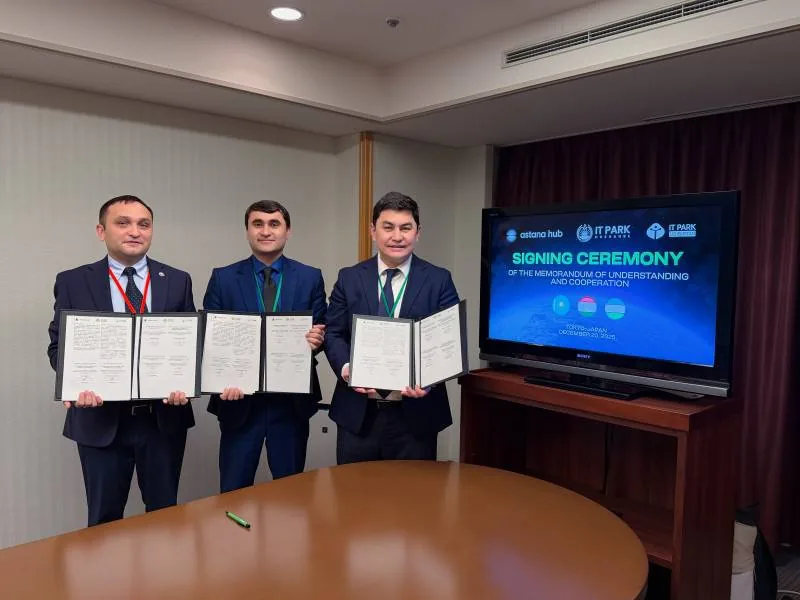
Tajikistan has become a new member of the regional innovation alliance Central Asian Innovation Hubs
Mansur Ismagulov