How to get a job at Bloomberg: Alisher Yerkimbekov's experience
Bloomberg is an international company that provides information, analytics, news, and technology to professionals in the financial sector and business. In this article, our hero shares how to get a job at this company and offers useful advice.
Author - Mansur Ismagulov
The Tech AI
Get the key points in seconds - a short summary from The Tech AI.
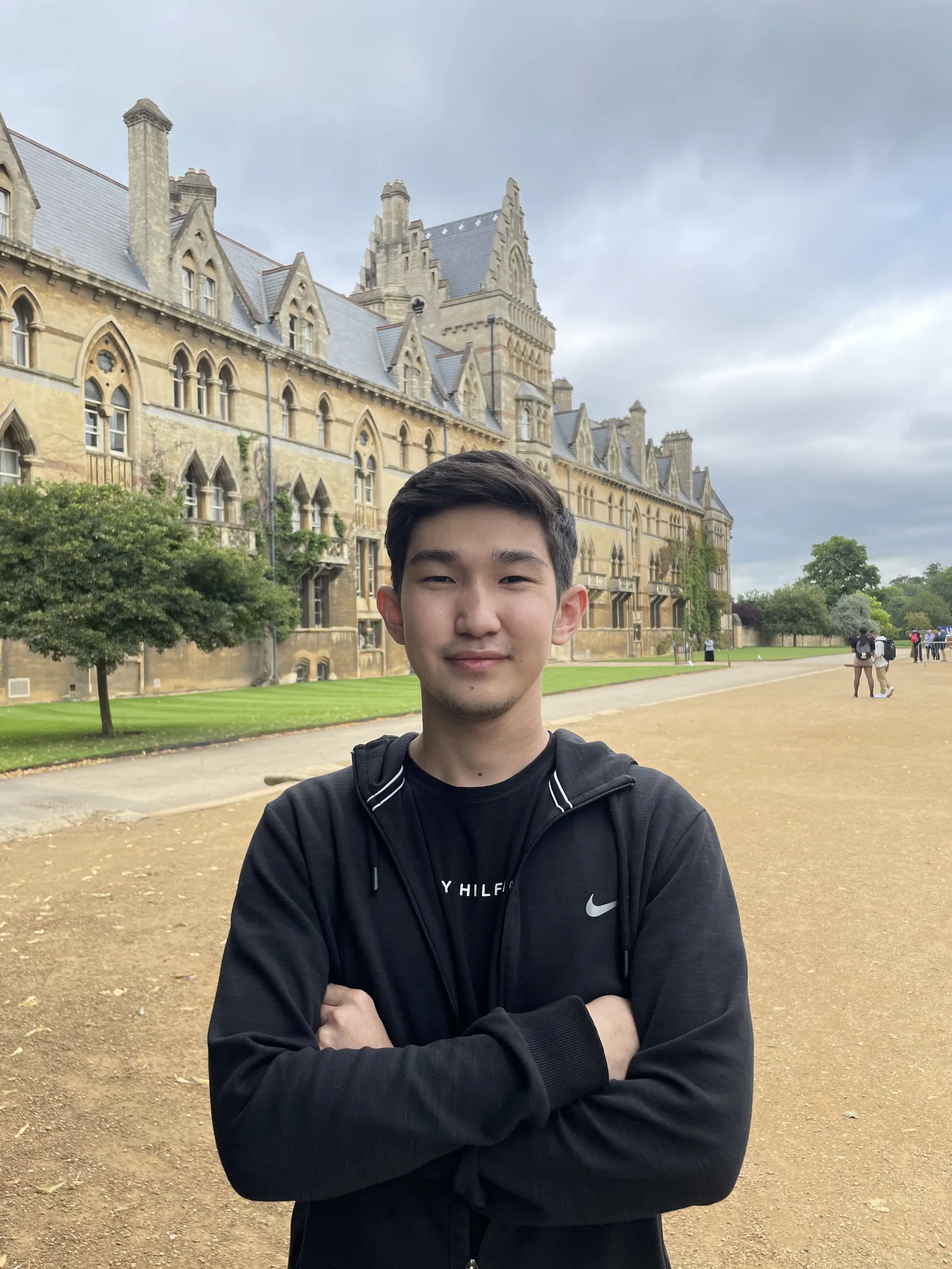
Alisher Yerkimbekov (22 years old, Semey) works as a Software Engineer at Bloomberg (London) since April 2024. His experience includes internships at Google and Yandex, as well as studies at Nazarbayev University. He passed the selection process through a phone interview, an Onsite Interview (Coding, System Design, Behavioral), and prepared for them using LeetCode and studying distributed systems. The company provided visa support for the Skilled Worker Visa and temporary housing in central London.
Alisher Yerkimbekov, 22 years old, city — London, Software Engineer, Linkedin
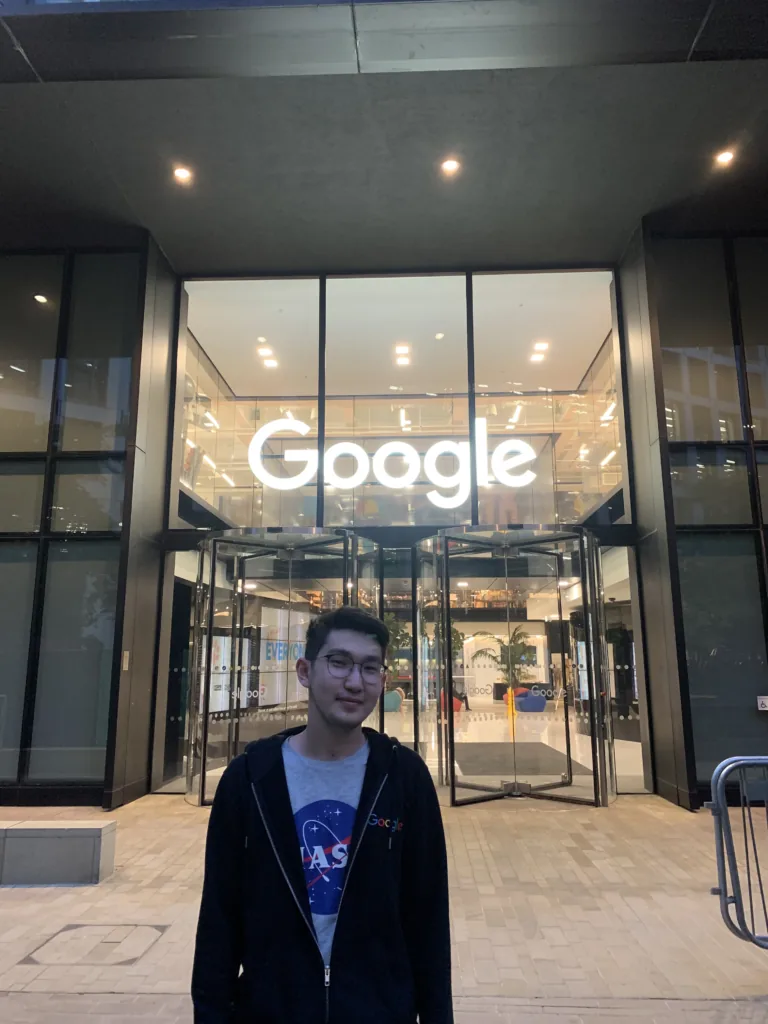
I am from the city of Semey. Currently, I live in London. Since April 2024, I have been working as a programmer at Bloomberg. Previously, I studied at the "Bilim-Innovation" Lyceum in Ust-Kamenogorsk, and then graduated from Nazarbayev University with a degree in Computer Science. During my undergraduate studies, I completed two internships at Google, as well as at Yandex, where I worked as a junior backend developer for six months. Thanks to these internships, I gained valuable experience in solving real-world technical problems and learned about the specifics of working in large technology companies. Before joining Bloomberg, I also worked at the startup TargetAI.

How to get into Bloomberg
I applied for the Software Engineer position in the London office through Bloomberg’s official careers website. After some time, I received a message from the company inviting me to the first stage — a phone interview, or as it is called at Bloomberg, a Phone Interview. This stage is necessary for a preliminary assessment of the candidate’s technical level and includes tasks that need to be solved within a specific time frame.
After successfully completing the first stage, I was invited to an Onsite Interview. This stage includes two technical programming interviews — Coding Interviews, one system design interview — System Design Interview, and one behavioral interview — Behavioral Interview.
Coding Interviews allow the assessment of the candidate’s skills in solving logical and technical problems they may encounter in their work.
The System Design Interview was aimed at evaluating my knowledge in system design and understanding of system architecture. I was asked to design a system, which allowed the interviewers to assess my approach to technology selection, architecture design, load distribution, and ensuring scalability. At this stage, it is important to demonstrate an understanding of potential bottlenecks, knowledge of design patterns, and the ability to propose solutions for ensuring fault tolerance and performance.
The final stage — Behavioral Interview — is an interview where the candidate’s alignment with the company’s values and cultural norms is assessed. Here, you need to demonstrate teamwork skills, responsibility, and stress resistance. Bloomberg and other large companies value the ability to work in a team, and I tried to answer sincerely to demonstrate my experience working with different teams.
For preparation for algorithmic tasks, I recommend practicing on LeetCode and other platforms, which will help develop algorithmic thinking and understand the style of tasks. For the System Design Interview, it is important to study the basics of distributed system design and popular patterns. You need to be able to explain your solutions, considering scalability, reliability, and efficiency. Preparation on the basics of distributed system design and the readiness to explain key trade-offs, such as consistency versus availability, helped me. For the last stage — Behavioral Interview, review the experience from your past projects, choose examples that demonstrate your ability to solve complex problems and work effectively in a team. Use the STAR technique — Situation, Task, Action, Result — to structure your answers.
Useful tips that can help:
- Ask questions to the interviewer — this demonstrates your interest in the company and helps you understand if this organization is right for you.
- Keep an eye on time — interviews are usually limited, so it is important to be able to distribute your time and not get stuck on complex details.
- Conduct as many mock interviews as possible — practice interviews with a friend or colleague will help identify weaknesses and improve confidence.
- Stay calm — questions can be unexpected, and it is important to be able to stay calm, demonstrating flexibility and readiness to solve new tasks.
Work specifics
I work in the metadata team, an internal Core team at Bloomberg. Our main clients are other teams within the company. We are engaged in collecting, processing, and transforming data coming from various sources, enriching it and formatting it into convenient formats for further use. Currently, our project is focused on Semantic Data, as metadata plays a key role in its development. My role in the project is related to developing code in C++ and Python, through which this data passes and is processed.
An important aspect of work is networking and maintaining good communication with colleagues and management. This is the key to effective work, quick problem-solving, and growth within the company. Working in an international team requires flexibility and intercultural communication skills, and, of course, knowledge of the English language. Bloomberg offers many trainings and courses, helping employees strengthen technical and financial knowledge, develop communication and teamwork skills.
One of the most memorable moments was the three-month training we underwent after joining the company. Each day was dedicated to new knowledge and skills, and the program ended with an exhibition of teams where we could choose the direction that interested us. I managed to join the team I had been striving for. And now I am working on projects that truly inspire me.

About life abroad
I applied for the vacancy while in Kazakhstan and moved to London only after receiving an offer from Bloomberg. The company took full responsibility for visa processing and the relocation process, which was a significant advantage for me, as obtaining a Skilled Worker Visa to work in England is quite difficult. Therefore, I recommend applying for vacancies from Kazakhstan, indicating the need for visa support.
Upon arriving in London, I was met by a company car that took me to apartments in the city center, where I lived for the first month — these were also provided by Bloomberg. This temporary housing helped me focus on adapting to work and life in a new city.
From the first days, I noticed the features of the local culture: the English are always friendly, polite, and prone to apologizing even for minor things. Having been here for more than half a year, I feel that the integration process has been successful, largely thanks to new friends with whom I quickly adapted and learned many nuances of life in England.
I recommend preparing for cultural differences, being open to new acquaintances, and trying to make friends among the local residents. This will not only help with adaptation but also make the experience of living abroad more fulfilling.
All opinions expressed by me are exclusively my own and do not reflect the position of the company.
The Tech on Telegram Follow The Tech on Telegram
Keep up with the latest technology and startup news.
Related reading







More from this author

News
zypl.ai begins operations in Japan and focuses on next-generation risk models
Mansur Ismagulov

News
Elon Musk's net worth has exceeded $700 billion for the first time
Mansur Ismagulov

Article Interviews
"Central Asian countries should build a joint ecosystem," — Bekhzod Ismoilov on the development of AI in the region
Mansur Ismagulov

Article Interviews
Bloom's Taxonomy and Engineering Levels: A Practical Growth Model
Mansur Ismagulov

Article Useful
How the IT industry in Azerbaijan developed in 2025: key events
Mansur Ismagulov

News
Tajikistan has become a new member of the regional innovation alliance Central Asian Innovation Hubs.
Mansur Ismagulov