How to get a job at Huawei. Medet Serik's experience
How does work at Huawei's headquarters operate, and what steps must one take to get hired there? An engineer from Kazakhstan shared insights into the rigorous selection process, corporate culture, and working with world-class leaders in Shenzhen. Read more in our article.

Medet Serik, City — Shenzhen, Founder, Instagram
About Me
I am from Kazakhstan. By education, I am an engineer in the field of information and communication technologies. I completed my master’s degree at the Beijing Institute of Technology.
I have been living in China for 11 years. Until recently, for the past six years, I worked at Huawei’s headquarters in Shenzhen. This is the company’s strategic decision-making center and one of the capitals of the Chinese tech ecosystem.
Now I also live in Shenzhen, but I work as an independent consultant. I help companies from Central Asia and China build technological partnerships. My task is to help the parties understand each other’s context and take the cooperation from the first meeting to the signing of a contract. At the same time, I am developing my own projects in the field of smart hardware.

How to Get into Huawei
The hiring process at Huawei was one of the most difficult and lengthy in my career. It took almost six months.
At that time, I was working as an antenna engineer at a Chinese state-owned company in Beijing when Huawei HR first contacted me. The first conversation was over the phone, entirely in Chinese: basic questions about experience, motivation, and life in China.
A few days later, I was invited to an online interview. At the scheduled time, I connected and saw six screens at once. It became clear then that this was a group interview where multiple candidates were being evaluated simultaneously.
Candidates connected from London, Australia, and other countries. The questions were highly technical: data centers, signal processing, fiber optic networks. The format was strict: if one candidate did not answer, another could continue. During the interview, candidates were “filtered out” without explanation—their screens simply disappeared. This added significant stress. In the end, only two of us remained.
A few weeks later, I was invited to interview with the Vice President of the department. This was no longer a technical conversation, but a test of thinking: conflict situations, readiness for high workloads. I was also given a task to explain a complex technical topic to someone without a technical background.
After that, there was another pause. HR informed me that the company was undergoing restructuring and hiring was temporarily frozen. I took this as a polite rejection and accepted another offer from Volkswagen in Shanghai.
And about four and a half months later, when I was already working at Volkswagen, Huawei HR reached out again, asked about my new job, and offered to discuss an offer without additional interviews.
For me, as an ICT engineer, working at Huawei’s headquarters was the highest level of opportunity. I agreed and moved to Shenzhen.

Advice for Those Who Want to Join an International Company
Over the years in China, I interviewed at Tencent, ByteDance, Xiaomi, OPPO, BYD, and other major companies. There were rejections, offers for relocation instead of working at HQ, and sometimes I realized myself that it wasn’t for me.
The main advice when interviewing with Chinese companies is that, in addition to understanding the technical requirements for the position, it is important to be able to clearly and structurally explain your logic. It is important for the interviewer not only what you know, but how you think. If within two or three minutes a person understands your chain of reasoning, you win. Especially in an international environment, where interviewers come from different cultures and are sensitive to the clarity of verbal and non-verbal communication.
Work Features
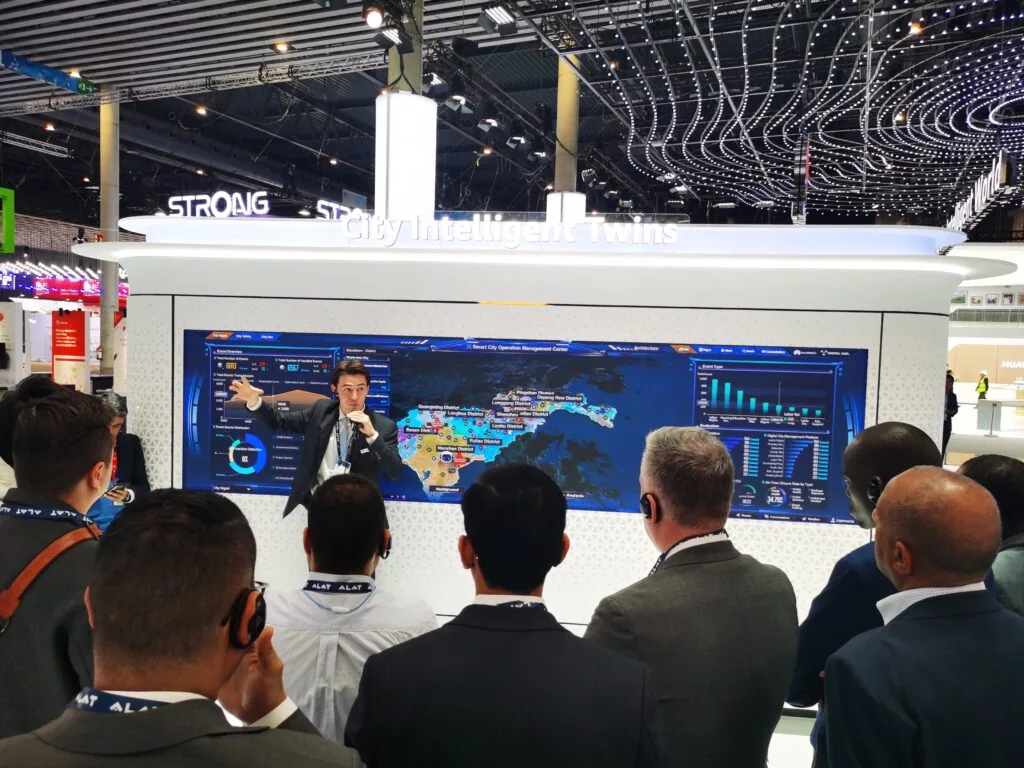
I worked in a team of B2B consultants at headquarters, which supported high-level engagements. These were meetings with country presidents, ministers, and CEOs of Fortune 500 companies. Our task was not to “sell a product,” but to translate technologies into the language of business value. We conducted workshops, strategic sessions, and pre-sales work. We explained how solutions in Smart City, Cloud, AI, and 5G could solve real challenges for governments and industries.
Huawei is a whole ecosystem. Inside, there is everything: from knowledge bases to AI tools that help in daily work. Meetings automatically turn into notes in the required language, documents and white papers are translated in minutes, negotiations take place in “smart” conference rooms, and business trips, visas, tickets, and hotels are arranged through a single app. All this removes routine and allows you to focus on the main thing—work and solutions.
The main challenge is the scale. Huawei operates in many directions at once: operator solutions, corporate systems, and consumer products. From base stations and data centers to cloud, AI, and autonomous vehicles.
Products are constantly updated, and C-level clients can ask any question directly during negotiations. No matter how much you prepare, there is always a depth into which you need to be able to dive quickly. You need to instantly explain new and complex technologies in simple language. For this, we underwent training and took tests every week.
For me, key skills are the ability to constantly adapt and self-learn. In project work, the MTW approach (make things work) is especially important—the ability to bring tasks to completion in conditions of uncertainty. I also try to always remain in the position of a beginner, open to new knowledge and feedback.
There were many opportunities for development. The company has its own university, laboratories, and even coffee spaces specifically created for open knowledge exchange.
Investment in training was felt in practice: from technical training and certifications to programs on communication, negotiation, and media work in crisis situations. Sometimes this reached unexpected formats—professional radio hosts came to work on voice timbre for negotiations, and beauty advisors advised on how to build a business image, down to choosing a suit. This was not about checking a box “completed the course,” but about systematically forming a global managerial profile.
As a foreigner in China, I can say that Huawei became a unique platform for me. It is one of the few Chinese corporations of truly global scale where foreigners can deeply integrate into teams and genuinely influence processes. For me, this was a real school of global business.
As for interesting experiences—almost every day you could meet country presidents, ministers, and CEOs of the largest corporations. People you had previously seen only in the news. The opportunity to communicate with them not only during negotiations but also over a regular lunch was highly motivating, expanded my thinking, and changed my understanding of the world.

About Life Abroad
I first came to study, and only then built my career. For young specialists, this is a more stable path. You adapt, learn the language, understand the culture, and only then enter the market.
Huawei takes care of most of the processes: visa, relocation, housing, onboarding, flights, free fitness centers. This significantly reduces stress and allows you to focus on work.
Huawei is often called “wolf culture.” It is ambitious, results-oriented, and fast-paced. They do not like lone superstars. Systemic, team play is valued. Wolves travel in a pack. This is a combination of high ambition and collective responsibility.
Advice for Those Planning to Work Abroad
When I arrived in China, I realized that I needed to learn the language. Without it, you always stay nearby, but not inside. But over time, it became clear that language alone guarantees nothing.
First, I got used to the country’s culture, then to the company’s culture. And it was there that I realized how important communication is. In the companies I worked for, communication should be smart, but not loud. I have seen many times how people with good ideas lost trust simply because they spoke too much and too loudly, without sensing the context.
China seems huge, but the tech environment, especially in Shenzhen, is actually not that big. At some point, you start to notice that the people you worked with on one project appear in another a year later. This happened to me many times. And then you realize that reputation precedes you.
Over time, I realized that it is important to build not only a resume, but a reputation as a reliable and responsible person. This helps get through difficult moments and opens up new opportunities.
The Tech on Telegram Follow The Tech on Telegram
Keep up with the latest technology and startup news.
Related reading






More from this author

Article Useful
How to protect your accounts from hacking: 8 settings you should check today
The Tech

Article Useful
500 Global: How the Accelerator Works and Who Can Receive Investments
The Tech

Article Interviews
Game Development in Central Asia: Arkady Moldavski on Developing Reverb and the Growth of the Industry
The Tech

Article Useful
Google, Tesla, BlackRock, and the IMF: Where to Apply for an Internship in Fall 2026
The Tech

News IT
Tesla unveiled the flying electric car Roadster
The Tech

News IT
Intero Biosystems startup won the Startup Battlefield at TechCrunch Disrupt 2026
The Tech