How to get a job at Dropbox: Otabek Nurmuhammad's experience
In this article, our hero shares his experience of passing the interview at Dropbox, adapting to an international company, and gives advice to those who dream of working in large IT companies.
Author - Mansur Ismagulov

The Tech AI
Get the key points in seconds - a short summary from The Tech AI.
Otabek Nurmukhamedov, Staff Software Engineer at Dropbox (since August 2025), is from Uzbekistan and lives in Warsaw. He earned his degree from the University of Lodz and co-founded the platform 42.uz. At the company, he is responsible for infrastructure, developing communication and time-management skills.
Otabek Nurmuhammad, City — Warsaw, Staff Software Engineer at Dropbox, otabek.io
About Me
I am from Uzbekistan and truly love teaching. I can confidently say that it is teaching that gave me everything I have today.
My journey in programming began even in school — during computer science classes. After graduating from school, I entered an academic lyceum, where I studied for two years. In my second year, I started programming literally “for food” — I built Telegram bots, web applications, and automated various processes for acquaintances. At some point, I realized: why do everything for free when you can earn money from it? That’s when I received my first salary — $200. At that time, it seemed like a huge sum.
When it was time to apply to universities, I started preparing for the IELTS. I had difficulties with reading and writing, so I decided to automate the preparation process to understand my scores. That’s how I began studying machine learning — using Coursera, Udemy, and other platforms. My first attempts were unsuccessful, but over time, the system started working. With each iteration, I improved it, and later I started offering my tools to others — and this also turned out to be in demand.
After graduating from the lyceum, I was unable to receive a scholarship at the universities I applied to. So I took an academic year to focus on developing my portfolio and practical experience. During this period, I launched my first project — an educational platform called U-EDU, which became a useful solution for many students during the COVID-19 pandemic.
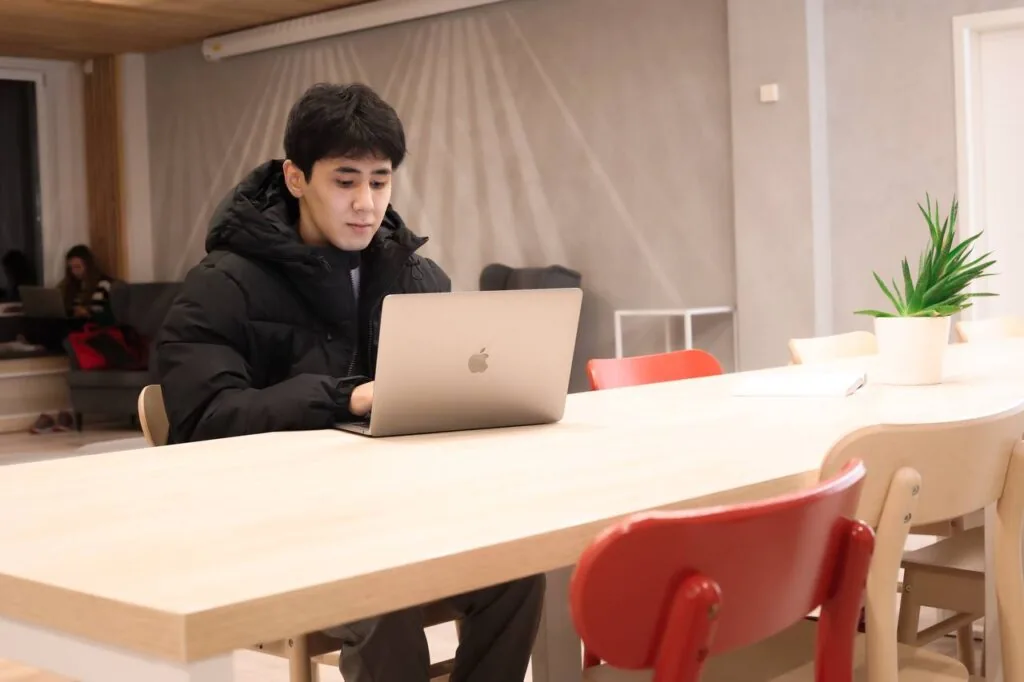
In the spring, I applied to several Chinese universities. After several rejections, I received a 100% scholarship at Shanghai JiaoTong University, which at that time was among the top 50 universities in the world. The studies were conducted online — the borders were closed. When I finally received my visa, I was over the moon, but just a week later the borders closed again, and I never managed to go to the campus. After studying for two years, I lost the scholarship and decided to leave the university. Despite this, I gained valuable experience and met talented people — both among students and faculty.
After that, I started looking for new opportunities — in Europe. I submitted applications to dozens of universities and received partial scholarships at prestigious institutions such as Technische Universität München, Politecnico di Bari, and others. In the end, I chose the University of Lodz in Poland because students there are allowed to combine studies and work. I could not rely on financial support from my family, and that is why I made this decision.
I work at Dropbox as a Staff Software Engineer. My team develops infrastructure software that forms the foundation of the entire Dropbox system. This is one of the most interesting jobs in my career. At that time, I had offers from other major IT companies, such as IBM, Google, Meta, Atlassian, and others.
I enjoy sharing my experience with others — that’s why I run a blog at otabek.io, where you can read more. I work remotely from Warsaw, sometimes from Lodz. I have been working at Dropbox since September 2024. I started as a Senior Software Engineer. Thanks to excellent teamwork, implemented projects, and significant contributions, I soon received a promotion to Staff-level Senior Engineer — I will officially start working in this role in August.
I am also a co-founder of 42.uz — a platform where you can learn programming, prepare for interviews at major tech companies, and learn through practice, rather than just watching videos and going through tutorials. Currently, we only work with the Uzbek-speaking audience, but we are already thinking about scaling and expanding beyond Uzbekistan. I am 100% confident — there are no analogs to our platform in the post-Soviet space.
How to Get into Dropbox
Before moving to Poland, I worked at Mobal.io as a contractor. I liked the atmosphere and the team. After moving, I continued working there for another two months, but then the contract term came to an end.
After that, I started actively looking for a job in Poland — I sent out hundreds of applications. And almost every response started the same way: “Unfortunately…”, “Thank you for your time…”, and so on. It was demotivating.
In one of the articles on my blog otabek.io, I detailed the interview process at IBM. It was exactly at that moment, during this process, that a recruiter from Dropbox unexpectedly wrote to me and offered an interesting vacancy. At that time, I was still negotiating with IBM, but internally I was ready for rejection, telling myself: “If it doesn’t work out — well, it’s not meant to be.”
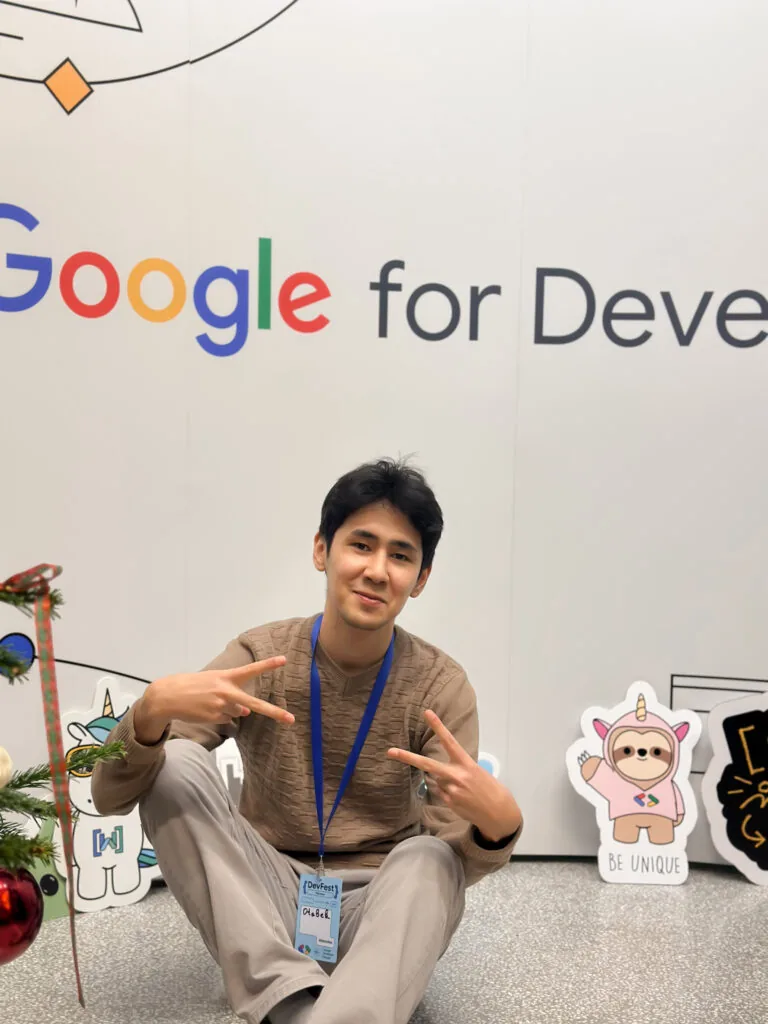
The Dropbox interviews felt similar to FAANG company interviews in terms of atmosphere, but differed with a more flexible and relaxed schedule. I took the technical interviews on the first day, and the system design interview separately, four days later. The final interview, as usual, was with the Hiring Manager.
During the technical part, I was a bit nervous. My first solution didn’t work, and I thought: “Well, that’s it, goodbye Dropbox.” They deeply check knowledge of data structures and algorithms, immersing you in conditions close to a real project — something I hadn’t encountered before. It was unexpected and a bit scary.
At some point, I was asked to implement a solution in parallel — and this was a real surprise for me. Unlike many FAANG companies, Dropbox truly checks knowledge in concurrency, parallel programming, and asynchrony during interviews. Be prepared for this! I proposed a solution for this as well, but unfortunately, I didn’t have time to implement the code — time ran out.
Tips for Those Who Want to Work at an International Company
Even if you don’t know anything about programming, are just starting your IT journey, or already have some experience — learn math and develop problem-solving skills. Yes, companies cannot check all your knowledge in a 45-minute interview, but these skills show that you are familiar with the fundamental basics — and that is enough to build anything in the future.
Believe me, this is the unspoken sign at an interview that shows: you know how to work with HashMaps, arrays, and can write algorithms in code.
And finally, the most important thing: the ability to solve problems is something everyone should master. Everything you see around you was once created as a solution to some problem. All companies in the world are engaged in solving problems. So be a problem solver, not a problem creator.
If you already know how to solve problems — learn to build systems and deliver them to users. Is there a demand for scaling? Learn, think about how to scale. Come up with an algorithm to do it. And continue to develop.
Master fundamental topics. Everything you see around you was created based on these foundations.
Work Features
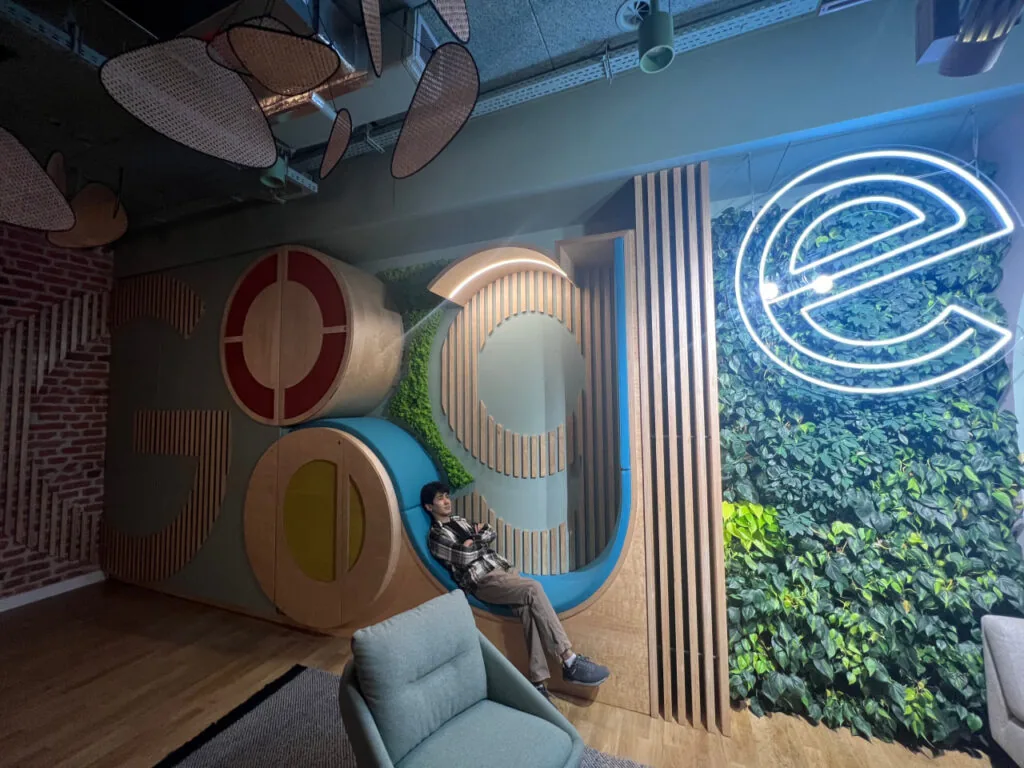
We work on the infrastructure part — that’s where all the company “secrets” are stored. My task in this project is to ensure stable and scalable system operation. I conduct research on various topics to find effective solutions to specific tasks. I analyze the problem, proposed approaches, overall architecture, and evaluate costs and efficiency from the perspective of operations and resources.
Additionally, I share with the team everything I have studied and tested in practice.
As you grow professionally, you have less and less time for writing code. Many other tasks appear that become higher priority. They require your attention, time, concentration, and even more.
To perform my duties effectively, I consider the following skills key: communication, problem-solving, adaptability, and time management.
— communication helps to interact effectively with the team and clearly understand expectations
— problem-solving allows you to proactively handle difficulties and find optimal solutions
— adaptability is important in conditions where everything changes quickly and priorities may shift
— time management helps meet deadlines and maintain a high level of quality.
Together, these skills make you a reliable and productive team member capable of making a stable contribution to the overall success.
Our company places great emphasis on professional development. We have access to internal tech talks, educational sessions, and engineering communities that support a culture of continuous learning and knowledge sharing.
The company also encourages external development: it provides grants for courses, conferences, and certifications. Regular performance reviews and meetings with a career development manager help align personal goals with growth opportunities.
Additionally, we have actively developed mentorship support and collaboration between teams — this gives engineers the chance to improve their skills, take on leadership or technically significant roles, and influence larger projects.
Working in an international team requires the ability to navigate cultural differences, time zones, and communication styles — and at the same time brings huge advantages. It requires a high level of empathy and cultural awareness to build strong relationships and avoid misunderstandings.
The time difference forces us to be more thoughtful about organizing meetings, so we often rely on asynchronous communication — through Slack, documentation, and tools like Dropbox Paper and Confluence.
But the most valuable thing in an international team is the diversity of perspectives and experience, which enhances creativity and helps find solutions faster and more accurately. You gain access to new approaches and different points of view, which helps you grow both as an engineer and in teamwork. Such an environment fosters the habit of proper planning and documentation, since not everyone is online at the same time. As a result, the team becomes more resilient, inclusive, and oriented toward global scale. This teaches you to think big, work at the level of large-scale systems, and take on greater responsibility.
About Life Abroad
When I was a child, I dreamed of moving abroad and living there. I was an ordinary child who sold pies in local shops. My mom baked a whole bowl of pies, but neither my older nor younger sister wanted to sell them. I worried about my mom and took this responsibility upon myself. And now I am grateful for this experience — it taught me sales skills. Yes, I was shy, but I understood that I needed to earn money.
When I arrived in Europe and started discovering new places, amazing people, and opportunities — I liked it here. And what surprised me especially — they have no borders! Isn’t that cool? But, of course, everything has its pros and cons.
Back then, during family arguments, I would say: “I will leave all of you and live a happy life abroad.” Now I regret those words. I can’t say I am absolutely happy, but I wouldn’t say everything is bad either. Perhaps it would be more correct to say: “We will move together and travel to beautiful places.” Maybe then everything would have turned out differently. But anyway, I try my best to bring them here one day.
I came to Poland on a student visa. I lived here, applied for jobs, received rejections and offers. Many of my acquaintances went through the same path. There is no perfect scenario. Probably, this is one of the most accessible ways to find your dream job. But I’m not entirely sure. Some of my friends, for example, did not study in Europe, but simply completed their bachelor’s degree in their home country, applied to a major company, passed the interview, received an offer, and moved.
My company has a relocation package, the size of which depends on the country you are moving to. For Poland, as far as I know, you can receive from $1000 to $3000 — depending on the specific situation of the individual.
My advice: lower your expectations, but give it your all. Disappointments are inevitable. You need to clearly understand where you are going, what awaits you there, and be ready to start from scratch. You will have neither support nor familiar things. But I believe: if you don’t raise your expectations too high and at the same time do everything possible, you will definitely find your place.
The Tech on Telegram Follow The Tech on Telegram
Keep up with the latest technology and startup news.
Related reading







More from this author

News
zypl.ai begins operations in Japan and focuses on next-generation risk models
Mansur Ismagulov

News
Elon Musk's net worth has exceeded $700 billion for the first time
Mansur Ismagulov

Article Interviews
"Central Asian countries should build a joint ecosystem," — Bekhzod Ismoilov on the development of AI in the region
Mansur Ismagulov

Article Interviews
Bloom's Taxonomy and Engineering Levels: A Practical Growth Model
Mansur Ismagulov

Article Useful
How the IT industry in Azerbaijan developed in 2025: key events
Mansur Ismagulov

News
Tajikistan has become a new member of the regional innovation alliance Central Asian Innovation Hubs.
Mansur Ismagulov