How Warren Buffett's empire is structured and why his strategy still works
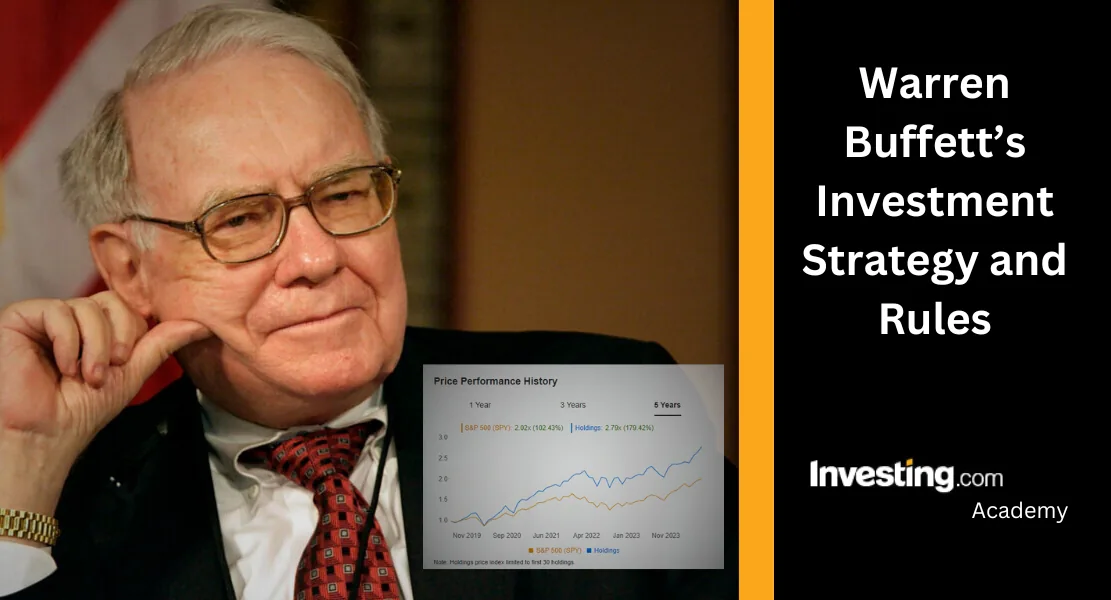
Warren Buffett is one of the most successful investors in history. Over 60 years, he transformed a modest textile business into a conglomerate worth $1 trillion, outperforming the S&P 500 by nearly double in returns. His approach has remained unchanged for decades: buy quality companies cheaply and hold them forever.
How It All Began
Buffett grew up in Omaha, Nebraska, in the family of a stockbroker. By the age of six, he was selling chewing gum to neighbors, and at 11, he bought his first stocks—three shares of Cities Service at $38 each. The stock dropped to $27, but he didn’t sell. When it rose to $40, he sold. Then he watched it continue to climb even higher. He learned the lesson of patience from this experience and remembered it for life.
At Columbia University, he met Benjamin Graham—the father of value investing. Graham taught him to view stocks as ownership stakes in real businesses, rather than just numbers on a screen. His book, The Intelligent Investor, became Buffett’s bible. After graduation, he worked for several years in Graham’s firm, honing his skills.
In 1956, Buffett launched his own investment partnership. This partnership eventually evolved into Berkshire Hathaway—one of the largest conglomerates in the world.
The Essence of the Strategy
Buffett is a proponent of value investing: buying undervalued companies with strong fundamentals and holding them for years, or even decades.
The key criterion is the “economic moat”: a sustainable competitive advantage for the business. This can be a strong brand, high barriers to entry for competitors, or a loyal customer base. These are the types of companies he seeks.
Initially, Buffett followed Graham’s approach literally—looking for stocks trading below the company’s asset value. However, over time, influenced by his partner Charlie Munger, his views evolved. Munger convinced him that it is better to pay a fair price for an excellent business than to hunt for cheap stocks in mediocre companies. This shift changed everything.
Key Rules
Buffett summarized his approach simply:
Rule No. 1 — Never lose money. Rule No. 2 — Never forget Rule No. 1. Behind this joke lies a serious principle: preserving capital is more important than chasing returns.
Then come the other principles. Invest only in what you understand: if you can’t explain the business in five minutes, don’t invest. Look for strong management with a reputation for integrity and honesty. Think in terms of decades, not quarters. Wait for the right moment, even if it means sitting in cash for years—and don’t be afraid to do nothing when there are no good opportunities.
Key Deals
Coca-Cola, 1988. After the market crash, Buffett invested $1.3 billion—he saw not just a beverage, but a global brand with stable earnings. Today, Berkshire receives over $1 billion in dividends annually from these shares.
BNSF Railway, 2009. Buffett called this purchase a “bet on the economic future of the United States.” The railroad provides a steady cash flow and access to critical national infrastructure.
Apple, 2016–2018. Buffett saw Apple not as a tech company, but as a consumer brand with a loyal audience and strong metrics. It is one of the most profitable investments in Berkshire’s history.
The Secret Lies in Compound Interest
Buffett began investing as a child and never stopped for 80 years. Most of his wealth accumulated after he turned 50—this is how compound interest works: the longer your money works, the faster it grows.
He reinvested profits again and again, rarely exiting positions without a compelling reason. His capital grew like a snowball—slowly at first, then like an avalanche at the end. Buffett describes it this way: “My life is like a snowball. The important thing is finding wet snow and a really long hill.”
His wealth is not the result of one lucky bet. It is the outcome of thousands of correct decisions, made patiently and consistently over decades.
Quotes That Became Principles
“Be fearful when others are greedy, and greedy when others are fearful” — the best opportunities arise during moments of panic, not euphoria.
“The stock market is a device for transferring money from the impatient to the patient” — discipline and patience are more important than activity and frequent trading.
“Risk comes from not knowing what you’re doing” — true risk lies not in market volatility, but in misunderstanding the business you invest in.
“Price is what you pay. Value is what you get” — the difference between price and the actual worth of a business is the foundation of his method.
Source: investing.com
The Tech on Telegram Follow The Tech on Telegram
Keep up with the latest technology and startup news.
Related reading







More from this author

Article Useful
How to protect your accounts from hacking: 8 settings you should check today
The Tech

Article Useful
500 Global: How the Accelerator Works and Who Can Receive Investments
The Tech

Article Interviews
Game Development in Central Asia: Arkady Moldavski on Developing Reverb and the Growth of the Industry
The Tech

Article Useful
Google, Tesla, BlackRock, and the IMF: Where to Apply for an Internship in Fall 2026
The Tech

News IT
Tesla unveiled the flying electric car Roadster
The Tech

News IT
Intero Biosystems startup won the Startup Battlefield at TechCrunch Disrupt 2026
The Tech