How to Create Perfect Requirements. Life Hacks and Secrets from an Experienced Analyst at Tekmates
Author - Mansur Ismagulov

The Tech AI
Get the key points in seconds - a short summary from The Tech AI.
Nazherke Abdraim, a senior business analyst at Tekmates from Almaty, shares tips on preparing requirements. Key principles include a clear document structure (considering BABOK and ISO/IEC standards), mandatory content on the first page, and logical grouping of topics. It is important to use visualization in Miro and Figma, conduct expert reviews, and compare As-Is and To-Be processes for clarity within the development team.
Nazhke Abdraim, city — Almaty, senior business analyst at tekmates
When we gather with our mates to discuss various methods for preparing development requirements, we share the life hacks that help us, as analysts, create truly high-quality requirements. This helps avoid misunderstandings or ambiguous interpretations of our documents by other members of the development team. The conversation brings up many interesting ideas and practical tips. I want to share the life hacks that help me do my job more effectively.
Headings and structure are the foundation of usability for any document produced by an analyst
The first thing is a properly organized document structure. For example, if it is a "technical specification," it is important to include all mandatory sections: business requirements, functional and non-functional requirements, security and scalability requirements, as well as other conceptual aspects. If it is a detailed description of a single feature, the document should contain information about its purpose, functionalities, user interaction with them, as well as criteria defining the correct operation of the functionality. It is like building a house: if the foundation is laid incorrectly, everything else may go wrong. So in our work: a clear hierarchy of document headings is the foundation for easy navigation not only for you but also for other project participants who will have to work with this document.
The structure should be logical and sequential so that any project participant can quickly find the necessary information. But here it is important not to overdo it: too detailed a structure can confuse even an experienced specialist. Find a balance between clarity and detail. And of course, do not forget that you can refer to standards such as BABOK, ISO/IEC, which will also help you structure your document correctly.
Table of contents on the first page is a mandatory requirement
A table of contents on the first page is simply a must-have. Especially if your document takes up more than ten pages. It is like a house layout — you always know where everything is and can quickly jump to the needed section.
Logical breakdown into subtopics and duplication of text in the form of graphical representation of information — our best friends
When sections are logically grouped by functional blocks, work goes smoothly. If we are describing a process, say, creating a report, then everything related to this topic should be in one place. No jumping from section to section in search of the needed information.
On the issue of visualization, I adhere to a simple rule: better to see once than to read a hundred times. Diagrams, schemes, graphs — these are not just decoration. This is a way to convey the essence, make the complex simple and understandable. Even the most convoluted process can be laid out neatly with the help of visual tools. In my arsenal, I always have Miro, Figma, and other popular analyst tools for creating clear diagrams and structuring functionality. It is like architectural drawings that help see the entire project as a whole.
Expert review — a fresh look at the document
The ability to quickly review and receive feedback makes the work easier. When we share a document with the team, it is always important to get a fresh perspective. When you build a house, it is always useful to invite an outside specialist to check if there are any errors in the design. So with documents: timely comments can save you from many problems during the development stage.
As-Is and To-Be — the picture before and after
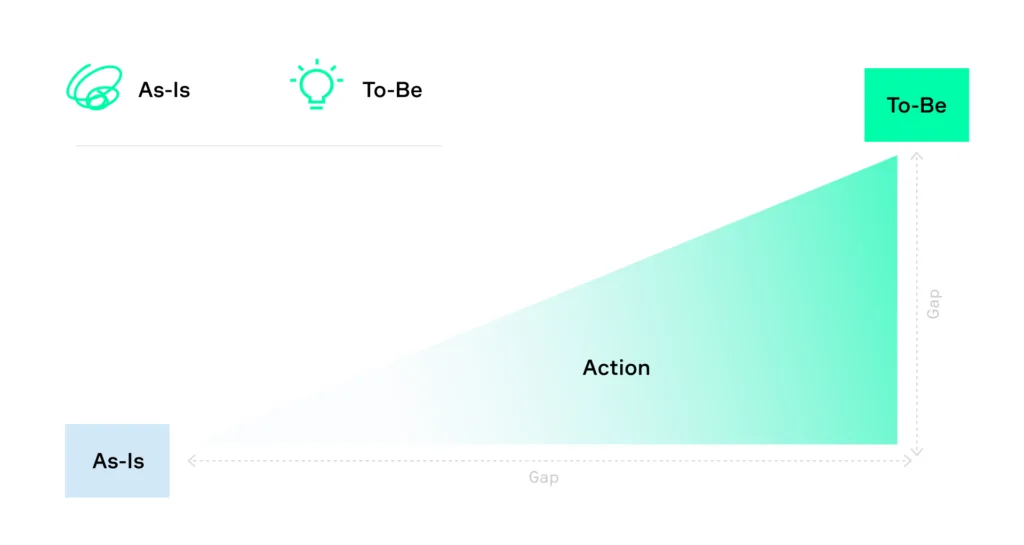
When we talk about processes, it is necessary to show how everything works now, As-Is, and how it will work after implementing changes, To-Be. It is like before and after renovation: you want to see what will change, where new functional elements will be, and where processes will be optimized. This approach helps the team understand what value the new process will bring and what changes await it.
Secrets of visualization and prioritization
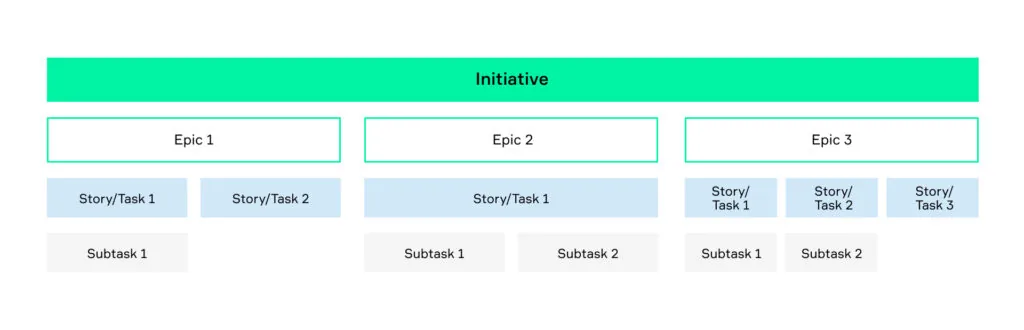
Returning to visualization, I cannot fail to note the importance of creating diagrams and blocks of product features. Here Miro and Figma are our best helpers. Group features by releases, decompose them into user stories, and your team will always know what to focus on first. It is like setting priorities in house construction: first, we lay the foundation, then we build the walls, and only then do we install the roof.
Properly structured information is the key to success
Correct structure, clarity, and timely feedback are not just beautiful words. These are the parts that help us create a truly high-quality product. Remember that an analyst is the link between business and development. Depending on how clearly and competently we convey information, the success of our project depends.
So do not be afraid to experiment, use all available tools. And most importantly, stay in touch with the team. After all, our work is not just documents and diagrams, it is the art of creating a product that works.
Listen to your team, share ideas, and do not forget that in our business, there are no small details. Good luck to everyone in their projects, and may each of your documents be not only useful but also pleasant to work with!
The Tech on Telegram Follow The Tech on Telegram
Keep up with the latest technology and startup news.
Related reading






More from this author

News
zypl.ai begins operations in Japan and focuses on next-generation risk models
Mansur Ismagulov

News
Elon Musk's net worth has exceeded $700 billion for the first time
Mansur Ismagulov

Article Interviews
"Central Asian countries should build a joint ecosystem," — Bekhzod Ismoilov on the development of AI in the region
Mansur Ismagulov

Article Interviews
Bloom's Taxonomy and Engineering Levels: A Practical Growth Model
Mansur Ismagulov

Article Useful
How the IT industry in Azerbaijan developed in 2025: key events
Mansur Ismagulov

News
Tajikistan has become a new member of the regional innovation alliance Central Asian Innovation Hubs
Mansur Ismagulov