How to balance work and fasting during Ramadan: practical tips
During Ramadan, the usual daily routine changes, energy is consumed faster, but you still want to maintain productivity. In this article, we'll explore practical tips that will help you manage your time effectively, stay focused, and work productively even while fasting.
Author - Mansur Ismagulov

The Tech AI
Get the key points in seconds - a short summary from The Tech AI.
Ramadan affects energy and productivity, so it is necessary to adapt your sleep, nutrition, and time management. Ideally, sleep 5–6 hours at night and take a 20–30 minute nap during the day. The most productive hours are the morning after Suhoor and Fajr; dedicate this time to complex tasks and move routine activities to the afternoon or evening after Iftar. To maintain concentration, the "Pomodoro" technique is effective (25 minutes of work, 5 minutes of rest). Physical activity is best performed an hour before Iftar or 1–2 hours after it. It is important to listen to your body, avoid overexertion, and find a balance between work, spiritual practices, and health.
Working during Ramadan requires a special approach, as changes in eating and sleeping patterns can affect energy levels, concentration, and overall productivity. However, with proper daily organization, it is possible to effectively perform work tasks while paying attention to spiritual practices and health care. To do this, it is important to consider several key aspects: sleep, nutrition, time management, physical activity, and psychological well-being.
Optimizing Sleep Schedule
Ramadan changes the usual sleep schedule due to night prayers and Suhoor. Lack of sleep can lead to fatigue, reduced concentration, and irritability, so it is necessary to adapt the rest schedule. The optimal option is to go to bed immediately after Taraweeh to get at least five to six hours of sleep. If possible, a short 20–30-minute nap during the day can help restore energy.
Planning the Workday
During Ramadan, energy levels fluctuate throughout the day, so it is important to distribute tasks wisely. The morning hours after Suhoor and Fajr are the most productive time, when the brain is fresh and better absorbs information. This is the ideal moment for solving complex tasks that require analytical thinking or creativity. During the day, energy begins to decline, so this time is better suited for routine tasks such as working with documents, emails, or simple repetitive actions. After Iftar, you can engage in planning, communicating with colleagues, and less demanding tasks.
Managing Concentration and Reducing Stress
Working in the context of fasting can be more difficult, as energy and concentration levels may decrease. To remain productive, it is important to minimize distractions and use time management techniques. For example, the "Pomodoro" method — 25 minutes of work, 5 minutes of rest — helps maintain concentration and avoid overload. It is also useful to alternate types of activities so that the brain does not get tired from monotonous tasks.
Physical Activity and Maintaining Tone
Many people reduce physical activity during Ramadan, fearing fatigue. However, complete lack of movement can lead to lethargy and worsened well-being. Light exercises, such as walking in fresh air or stretching, can help maintain tone. The optimal time for workouts is either an hour before Iftar, so that energy can be replenished immediately after the session, or one to two hours after Iftar, when the body has already received nutrients.
Mindfulness and Adaptability
Ramadan is not only a period of fasting but also a time of spiritual growth. Therefore, it is important not only to strive for high productivity but also to be attentive to one's own state. If on some days energy levels are low, it is not worth overloading oneself — it is important to listen to the body and distribute the load reasonably.
Conclusion
Productive work during Ramadan is possible if you approach the organization of time, sleep, and nutrition wisely. An optimal sleep schedule, proper nutrition, task management, and mindfulness will help maintain work capacity without harming health. The most important thing is to find a balance between professional activities, worship, and care for one's physical and emotional state.
The Tech on Telegram Follow The Tech on Telegram
Keep up with the latest technology and startup news.
Related reading






More from this author

News
zypl.ai begins operations in Japan and focuses on next-generation risk models
Mansur Ismagulov

News
Elon Musk's net worth has exceeded $700 billion for the first time
Mansur Ismagulov

Article Interviews
"Central Asian countries should build a joint ecosystem," — Bekhzod Ismoilov on the development of AI in the region
Mansur Ismagulov

Article Interviews
Bloom's Taxonomy and Engineering Levels: A Practical Growth Model
Mansur Ismagulov

Article Useful
How the IT industry in Azerbaijan developed in 2025: key events
Mansur Ismagulov
News
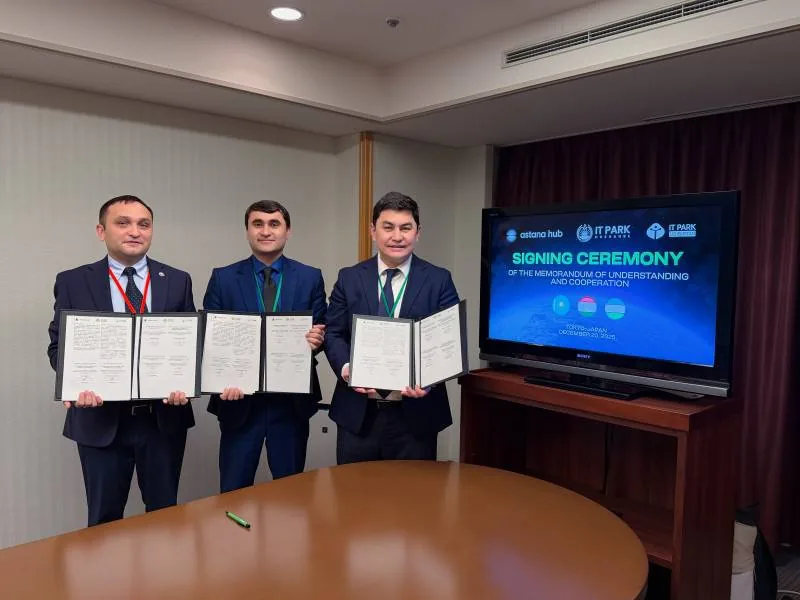
Tajikistan has become a new member of the regional innovation alliance Central Asian Innovation Hubs
Mansur Ismagulov