How to balance fatherhood, freelancing, and AI: the lifestyle of Kaisar Kurmangaliev
Author - Mansur Ismagulov
The Tech AI
Get the key points in seconds - a short summary from The Tech AI.
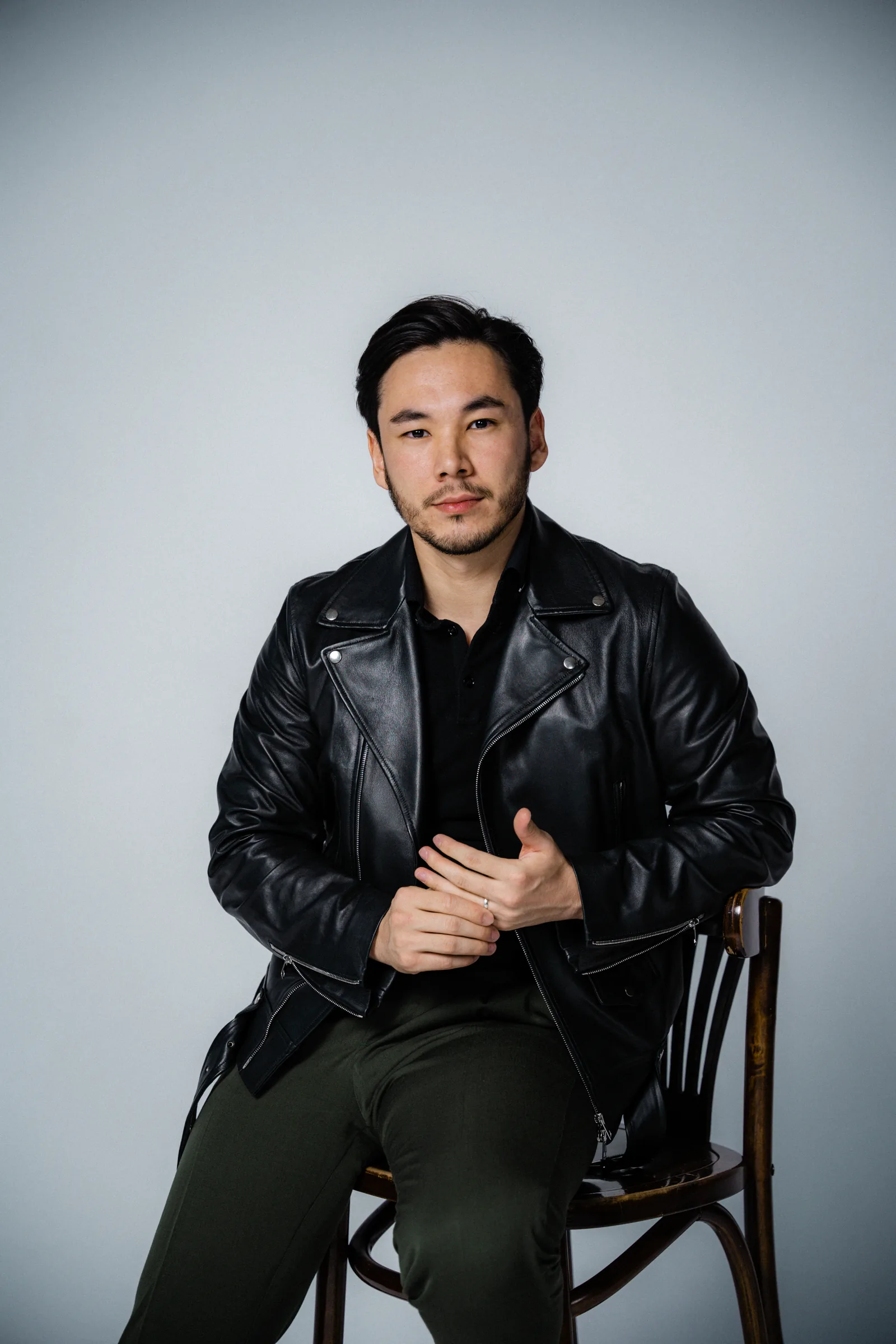
Kaysar Kurmangaliyev from Astana is a marketer with nearly seven years of experience and the only Microsoft-certified AI specialist in the CIS region. He works remotely, balancing his career with fatherhood after the birth of his child three and a half months ago. Kurmangaliyev prefers targeted learning, values the books of Phil Knight and Robert Kiyosaki, uses Apple products, and embraces minimalism in his daily life.
Kaisar Kurmangaliyev is a marketer from Astana, a freelancer, and the first Microsoft-certified AI specialist. In the interview, he shares his approaches to work, self-education, and living without burnout.
Kaisar Kurmangaliyev, city — Astana, freelancer, Instagram
About myself
I position myself as a marketer. I have been working in the marketing field for about seven years, with the most active period being the last two. My specialization involves applied tasks: content marketing, sales, and analytics. I do not delve into technical areas; instead, I focus more on business results. I manage to attract audiences and drive sales — in general, I am an enthusiast with a strong foundation.
I am the only Microsoft-certified AI specialist in the CIS region, so I have a basic understanding of machine learning. But in my heart and by experience, I am a marketer.
At the moment, I do not have a strict work schedule. I used to be quite disciplined, but three and a half months ago, my first child was born. Since then, I have tried to stay closer to home — I set up an office right in the bedroom. Sometimes I work in co-working spaces or cafes, but mostly I try to schedule meetings near my home. I deliberately did not hire a nanny, so I combine work with fatherhood.
We usually wake up between 9:00 and 10:00 AM. I start working at 1:00 PM and work until 8:00–9:00 PM. Everything possible is done remotely.
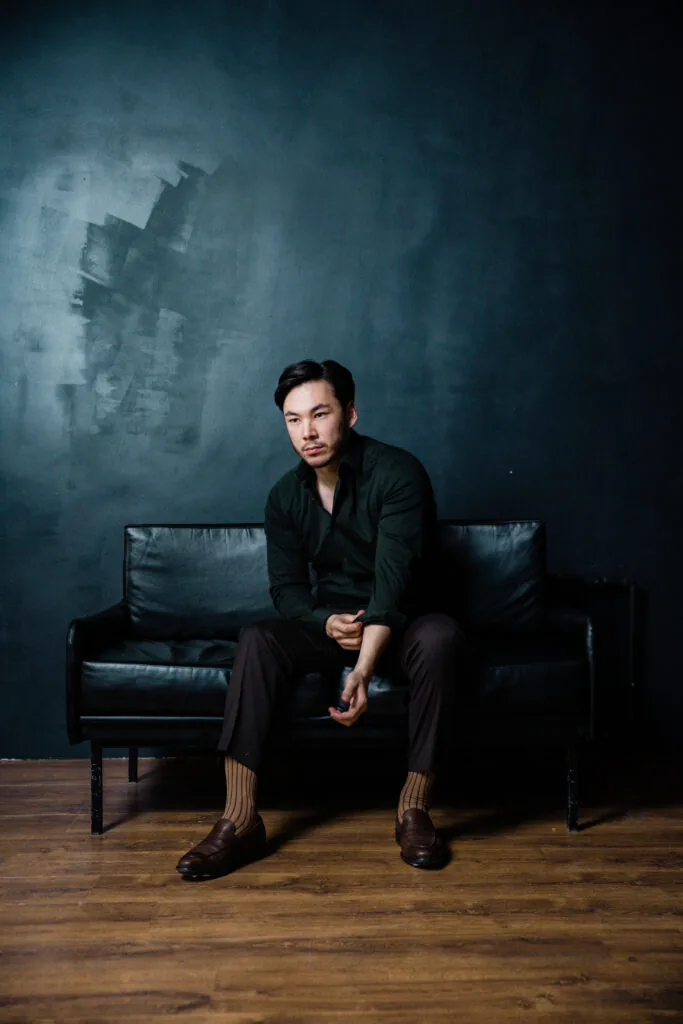
Where and how I learn
I have a small daily routine every day. I start my morning with news about artificial intelligence — this is a field where everything can change drastically within a day. I deliberately do not read politics or world events — they are distracting. My focus is on: AI, marketing, family, business, and a little bit of sports.
I definitely watch YouTube videos from foreign creators who do something interesting with AI — automation, new tools, practical cases. I read autobiographies — I love real stories; they are inspiring. Non-fiction and psychology often contradict each other. I believe there are no universal pieces of advice; the main thing is to understand yourself. The tools are generally known: work hard and with quality, be in the right market — and you will get results.
I have been in the market for a long time and realized that education is designed for thousands of people. If you take strong ideas and one tool from your second or third year of study, that is already super. I prefer to ask authors and consultants targeted questions: “Here is my situation — what would you do?” Often, we do not grow not because of a lack of knowledge, but because we do not know what we do not know. We need someone to highlight this “invisible” gap.
The last time I went through a personal program was about a year and a half ago — with a well-known marketing specialist. It cost more than $10,000. A couple of sessions were enough, where I received several strong ideas that I am still implementing. Everything else was no longer useful. One course may not give an instant effect, but it can create a foundation for the next step. I respect everyone who contributed to my path.
My favorite book is Phil Knight’s “Shoe Dog.” It shows that you can build a business without suffering. I also like Tony Hsieh’s “Delivering Happiness.” He compares business to poker: you do not win when you sit down to play, but when you choose the right table — the niche. And, of course, the classic — “Rich Dad, Poor Dad” by Robert Kiyosaki. I recently reread it and realized that I had lost my passion, turning money into an obligation. This book helped me return the game, lightness, and strategic thinking.
I choose training simply: if the ad catches my attention. As a marketer, I am sensitive to strong marketing. If the headline, pain points, and visuals are all done well, even if it is not my target audience, I still click to look. It means the product is well thought out.
I rarely attend offline events. I do not like large crowds of people, especially as a blogger — I get tense. But I understand that growth comes through people. I am not a super-networker; rather, I have a narrow circle: family and close friends. This may also limit me, as gatherings are ideas, resources, and insights.
One of the most powerful forms of education is simply listening to conversations of people “on a higher level.” I have such acquaintances, and when I am just nearby, listening, I realize: “I do not look at life at all.” It is like playing a game and thinking you can only attack and defend — but there are also jumps, missions, and quests. Such conversations open up new ways of thinking.
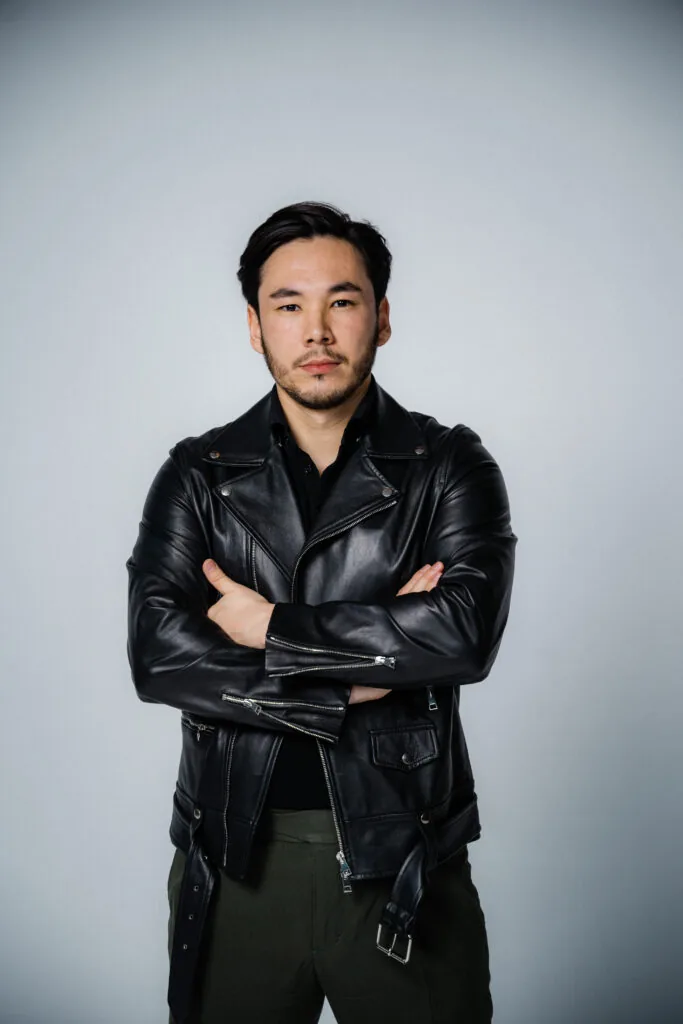
Circle of acquaintances
My circle mainly consists of colleagues in the field — marketers and entrepreneurs. I feel a bit uncomfortable going, for example, to Astana Hub: there are more IT specialists and startup founders, and I am not a programmer or a founder. When the conversation turns to technical topics, I simply have nothing to say.
I have a narrow circle of close friends — from school and those I met at the beginning of my journey when I moved to Almaty. There is a second circle — good acquaintances with whom I can meet at holidays, mostly these are also entrepreneurs and marketers. The third circle — colleagues in the market, with whom I occasionally cross paths. I hardly communicate with representatives of other fields, such as athletes or creative people — I am an introvert, and it is difficult for me to quickly find common ground.
I consciously do not go to networking events — it is not in my schedule. Everything happens by chance: someone writes to me or introduces us.
My principle is not to chase people, but to create a “garden” where the right people come on their own. I develop my personal brand, create content, and try to stay visible. Then it is easier to approach anyone and say: “Hi, I am the one who writes about AI — I can be useful.”
I mainly receive AI knowledge from courses and practice. I recommend a free course from Microsoft — it is understandable even without a technical background. Also, useful materials are available from OpenAI Academy.
I also recommend attending free masterclasses and webinars — even with sales pitches, you can get a base and understand directions: automation, packaging, chatbots, sales. It is especially important for students to use their main advantage — time — to try everything and find their own path.
Where I spend free time
I go to the bathhouse — and by the way, this is an excellent format for networking. The atmosphere is informal, you can calmly talk and get closer. The bathhouse unites, just like sports. I know guys who earn 40 million tenge a month and play football with ordinary guys — for example, waiters. In such moments, social boundaries are erased.
I exercise less. My thing is the bathhouse, walks with my wife, dates, if there is someone to leave my son with. Free time still goes to thinking about work — even with a cup of coffee by the window, I think about strategy.
I used to go to the gym, play ping-pong. At the moment, I do not have a super hobby, but there is a guitar at home — I sometimes play. I love singing karaoke. Boxing is a way to relieve tension, but after training it is hard to think: the brain gets tired.
Recently, I introduced a morning routine: I wake up, drink water, run or walk quickly for 30 minutes, and listen to podcasts. I especially recommend Alex Hormozi — a dollar multimillionaire. His episodes of 20–30 minutes fit perfectly with a run. I listen to them like a mantra — it helps to bring order to my head. Everything is free — I just take the best from what is available.
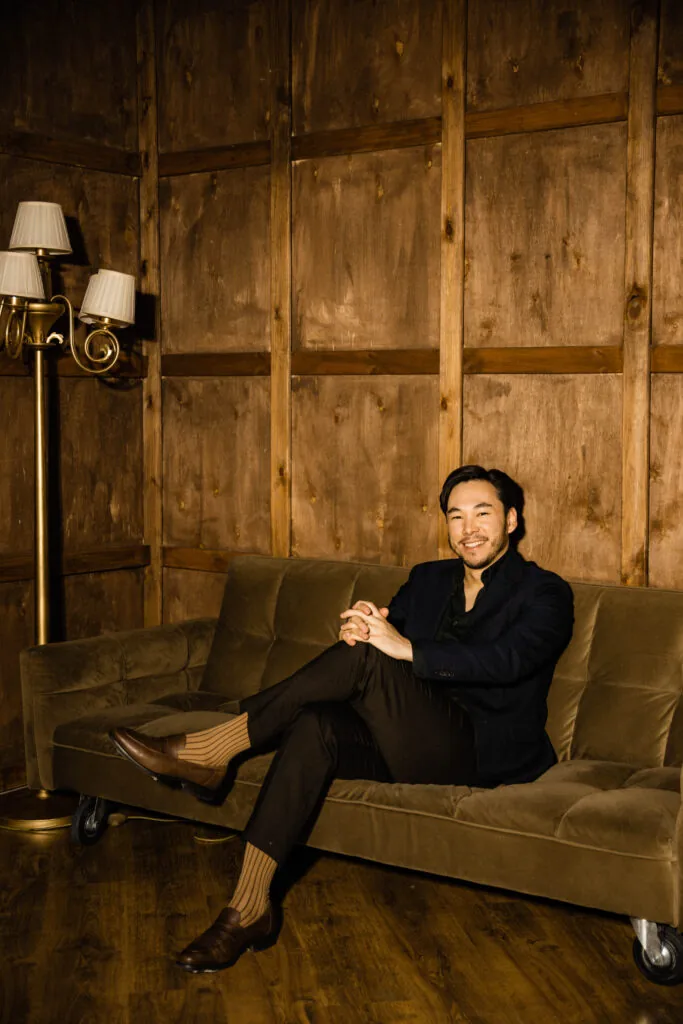
Where to buy what
I have all Apple technology. I like the simplicity: everything is intuitive, everything works. Devices synchronize perfectly. Plus — style and convenience.
I used to be into games, playing 15 hours a week. After the birth of my son, I consciously do not buy a powerful PC — I know I will fall into gaming.
Among other brands, I respect Xiaomi — affordable and high quality. I like Bork for its stylish appearance. I prefer simple, neat things without unnecessary pretension. Even my guitar is black — I love minimalism and “quiet luxury.”
I do not buy technology in official stores — it is more expensive there. For example, a MacBook with an English keyboard cost me 500,000 tenge instead of 750,000 tenge. I buy it in small local stores from entrepreneurs: they find profitable options and resell. The main thing is that the technology works.
The Tech on Telegram Follow The Tech on Telegram
Keep up with the latest technology and startup news.
Related reading







More from this author

News
zypl.ai begins operations in Japan and focuses on next-generation risk models
Mansur Ismagulov

News
Elon Musk's net worth has exceeded $700 billion for the first time
Mansur Ismagulov

Article Interviews
"Central Asian countries should build a joint ecosystem," — Bekhzod Ismoilov on the development of AI in the region
Mansur Ismagulov

Article Interviews
Bloom's Taxonomy and Engineering Levels: A Practical Growth Model
Mansur Ismagulov

Article Useful
How the IT industry in Azerbaijan developed in 2025: key events
Mansur Ismagulov

News
Tajikistan has become a new member of the regional innovation alliance Central Asian Innovation Hubs.
Mansur Ismagulov