How to get an internship at Microsoft: Zhamilya Shakirova's experience
Zhamila Shakirova shared her experience and advice to help students and early-career professionals successfully navigate the path to an internship at Microsoft.
Author - Mansur Ismagulov
The Tech AI
Get the key points in seconds - a short summary from The Tech AI.
Zhamilia Shakirova, a UCSD student from Almaty, secured a Software Engineering Intern position at Microsoft through the Explore program. Key factors in her success were her projects and active involvement in the student organization Women in Computing. The selection process included two interview stages: behavioral and technical (LeetCode). Zhamilia advises not to fear rejections, participate in hackathons, and actively seek out opportunities.
Zhamilia Shakirova, City — San Diego, Explore, Software Engineering Intern @Microsoft, LinkedIn
About Me
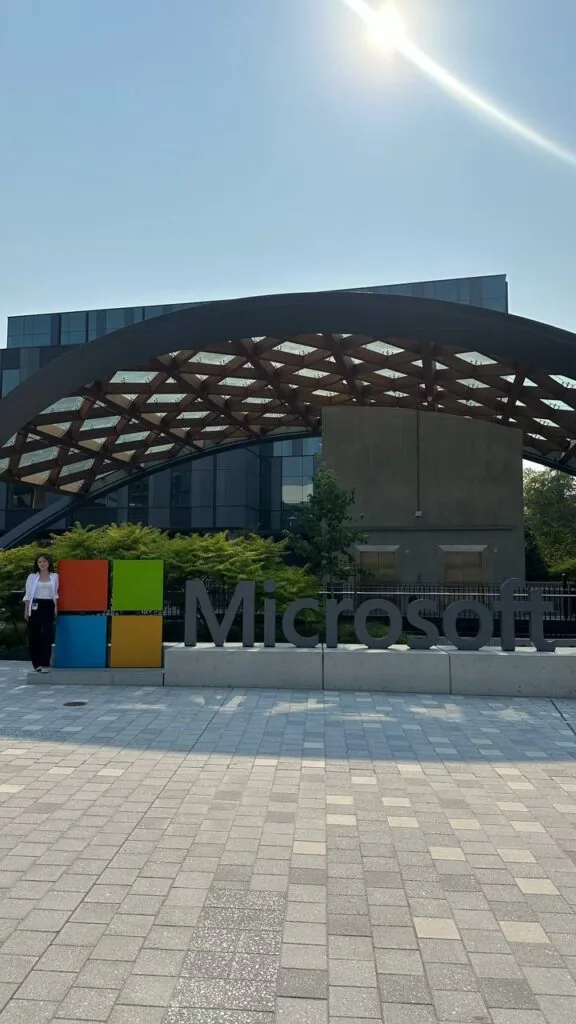
I am from Almaty. I am a third-year Computer Science student at the University of California San Diego. I graduated from the RFMSH (Russian Physics and Mathematics School) in Kazakhstan.
In high school, I worked on projects, but I never had a serious internship. I believe that my resume and projects played a key role in securing the internship. The projects were both from school and university, and I was also active in several student organizations. With this resume, I applied to Microsoft and received an internship offer.

The Application Process
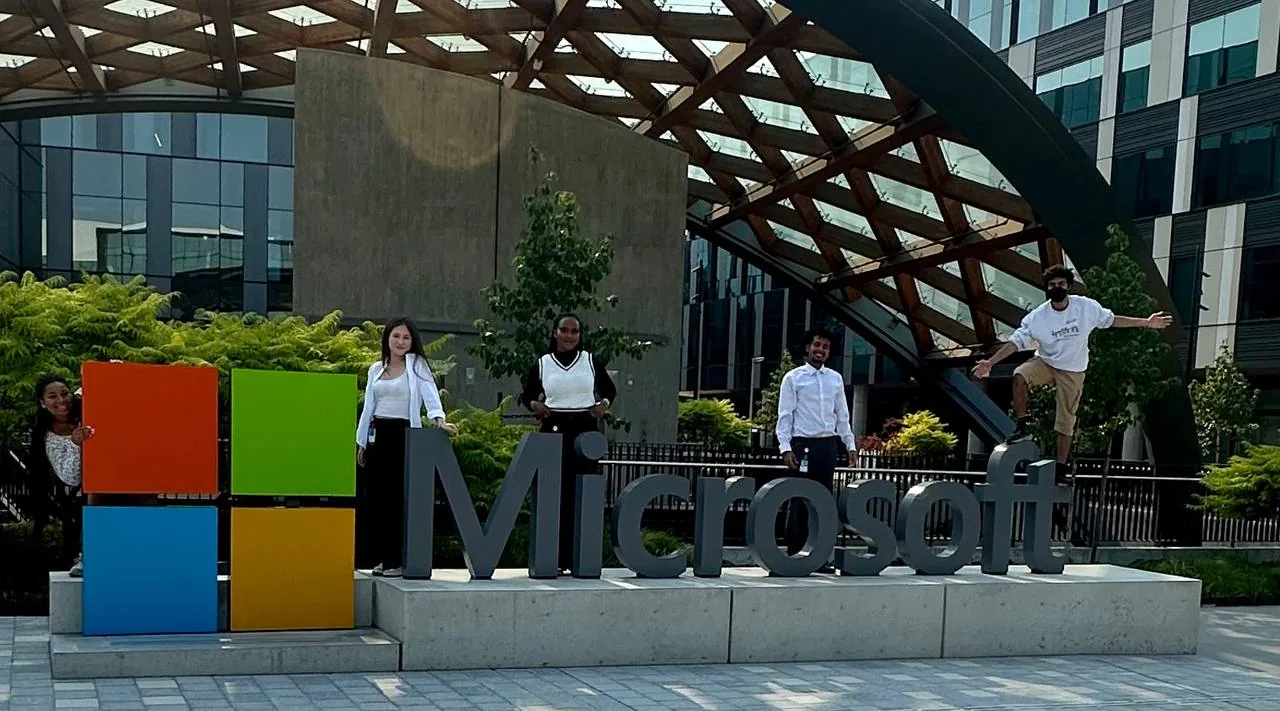
I participated in the Explore Internship, a summer program for first- and second-year students, which included tracks in Product Management and Software Engineering. I worked on a project with two other female students. The Explore Internship is designed for younger students, so the project was somewhat simpler, and the team was small. At the end of the summer, the manager and the company evaluate whether to invite you back. I received a return offer, meaning that next summer I will return as a Software Engineering Intern. Everything depended on the project and how you performed over the three months. The manager looks at whether you were responsible, achieved your goals, and fit well with the team and the company as a whole.
In this regard, Microsoft is different: they evaluate you based on the results of your three-month work, and you do not need to go through interviews again. However, I know that the process can be different at other companies.
To apply for the Explore Internship, you must be a student at an American university, preferably with a focus on technology and an interest in Computer Science.
The requirements for the Software Engineering Internship are higher and can be found on the program's website.
During my internship application, I did not contact the university's career center, but we were given resume templates, and I prepared my resume based on them. I was also part of the student organization Women in Computing, which sponsored our trip to a conference. This marked the beginning of my deeper journey into Big Tech.
When I attended this conference, I started networking with people, submitting my resume via QR codes at company booths, and realized that internships are something I needed to pursue. I cannot say that there was formal mentoring on campus, but there were girls who had already gone through this path and managed to complete internships at companies like Microsoft, Amazon, and others. Seeing them, I understood that an internship at a large corporation was achievable.
I applied for the Microsoft Explore Internship without a referral. I simply went to the website, found the section for internships for first- and second-year students, saw Explore, and submitted my application. I didn't even expect to have a chance and simply forgot about it.
I did not have mentors, but I asked friends how they prepared for interviews and what resources they used. One of the main problems for students is a lack of information. When I started studying Computer Science, I asked those who had already gone through this path, and they recommended sites like NeetCode. It helped me better understand LeetCode problems that previously seemed difficult. Using YouTube channels and resources like Glassdoor, I began preparing by solving LeetCode problems twice a day.

Interview Stages
I had two interview stages, but the process for Software Engineering may vary. The first interview was behavioral and lasted 45 minutes. They asked questions about how I resolve conflicts in a team or distribute tasks if I am not meeting a deadline. They are looking not only for a good engineer but also for someone who creates a safe atmosphere within the team. Then, there were one or two design questions. I also talked about Women in Computing and my experience in Kazakhstan and the US.
The second part was a technical interview with a LeetCode Easy or Medium level problem. My advice is to think out loud. It is important not to start writing code immediately but first to clarify the problem conditions and possible edge cases. The recruiter can help, so it is important to discuss the approach to the solution. Some Explore participants received calls, but in the Tech industry, there is no strict interview structure; it all depends on the team and the recruiter.
Hackathons and Projects
My first hackathon was Teens in AI, an online event during the quarantine. It was a great experience: a concentration of talent, networking, and energy. In my second year, I applied to TreeHacks at Stanford, but I was not accepted. In my third year, with my Microsoft experience, I applied again and received an invitation. This confirms that it is important not only to know how to code but also to present yourself and communicate effectively.
I did not have a team, but the organizers created a Slack channel. I wrote that I was looking for a team and found ideal participants. We worked well together and started working on a project for the hackathon at Stanford, which featured many speakers and activities from companies like NVIDIA and Google.
The process was intense: 36 hours of non-stop work, but we had a great time, rode in a Cybertruck, coded, and made videos. In the end, we presented our projects at the Expo.
Advice
You can land an internship without experience if you have important qualities. For example, I was an intern at Women in Computing, and I think Microsoft values activity and projects. This demonstrates the ability to work in a team and solve problems, not just get good grades. It is also important that the projects are meaningful; for instance, I worked on a project to help women and students. Microsoft values people who use their resources for others.
If I were a first-year student, I would start by looking for student organizations and activities, which are often available at universities. If none exist, create them yourself. This shows initiative and the ability to solve problems. It is also useful to participate in online hackathons and competitions.
Applying for an internship is similar to applying to a university: you show what you have done with the available resources. You created an organization, a project, participated in hackathons — and now you have a resume.
Look for opportunities. Search online for hackathons, scholarships, and internships. I applied everywhere, even without knowing if I would succeed, and wrote to people on LinkedIn who worked in the positions I desired. This way, you understand how the ecosystem works. The main thing is not to be afraid of rejections. Apply to everything, creating your own opportunities through projects and initiatives.
Do not be upset if you do not succeed the first time. I did not get into RFMSH on my first attempt, but I tried again and got in. Programming was also difficult for me, but I gave it a chance, and now I am studying this major. Rejections are experience, and achievements are valued much more.
The Tech on Telegram Follow The Tech on Telegram
Keep up with the latest technology and startup news.
Related reading




More from this author

News
zypl.ai begins operations in Japan and focuses on next-generation risk models
Mansur Ismagulov

News
Elon Musk's net worth has exceeded $700 billion for the first time
Mansur Ismagulov
Article Interviews
"Central Asian countries should build a joint ecosystem," — Bekhzod Ismoilov on the development of AI in the region
Mansur Ismagulov
Article Interviews
Bloom's Taxonomy and Engineering Levels: A Practical Growth Model
Mansur Ismagulov

Article Useful
How the IT industry in Azerbaijan developed in 2025: key events
Mansur Ismagulov
News
Tajikistan has become a new member of the regional innovation alliance Central Asian Innovation Hubs
Mansur Ismagulov